Horticultural LED Grow and Bloom Light: Choosing the Right Lighting for Your Indoor Garden

Light does more than make a plant visible: it drives its growth and flowering. A full-spectrum grow light provides the blue light that thickens foliage and the red light that triggers flowers, all in a single setup.
Understanding how light affects a plant makes it possible to support it at every stage, from seedling to flowering. That’s the focus of this guide: the real effect of lighting on plants, not what to buy.
🌱 How does light trigger growth and then flowering?
Light powers photosynthesis, which produces the plant’s energy; its color and duration then guide growth toward foliage or flowers. The RHS (Royal Horticultural Society) explains that plants perceive light to regulate their development.
In practice, a well-lit plant first develops strong stems and leaves, then shifts to flowering when light signals that it’s time. A grow light can reproduce this signal even in the depths of winter, when natural light becomes too weak.
The key, then, is to provide the right light at the right time. Raw power isn’t what matters; it’s the combination of color, duration, and the plant’s growth stage.
| Effect of light | What happens in the plant |
|---|---|
| Photosynthesis | the plant produces energy from light |
| Vegetative growth | stems and leaves develop, creating dense foliage |
| Flowering | the plant produces buds, then flowers |
🔵 The role of blue and red in the spectrum
Blue light promotes compact foliage and sturdy growth, while red light stimulates flowering and fruiting. A full spectrum combines both to support the plant throughout its life without requiring a change of equipment.
The amount of light useful for photosynthesis is measured in PPFD (photosynthetic photon flux density), a plant physiology metric explained by INRAE. It gives a much clearer picture than wattage of the actual effect on the plant.
A plant deprived of blue light becomes leggy and pale; without red light, it struggles to flower. A full spectrum avoids both problems by covering all the useful wavelengths.
| Light color | Effect on the plant |
|---|---|
| Blue | dense foliage, compact stems, vegetative growth |
| Red | flowering and fruiting |
| Full spectrum | versatility from germination to flowering |
⏳ Photoperiod: what makes your plants flower
The daily duration of light, or photoperiod, triggers or delays flowering depending on the species. It’s just as important as light intensity when it comes to producing flowers.
Some plants flower as the days get shorter, while others flower as they get longer. A timer-controlled lamp lets you reproduce these signals artificially and encourage flowering out of season.
Knowing what type of plant you have can save you a lot of disappointment: giving a short-day plant 16 hours of light delays flowering rather than encouraging it.
| Plant type | Flowering signal |
|---|---|
| Short-day plants (poinsettia) | flower with less than 12 hours of light |
| Long-day plants | flower with 14 hours of light or more |
| Day-neutral plants | flower regardless of day length |
columns: 4
columns_mobile: 2
-
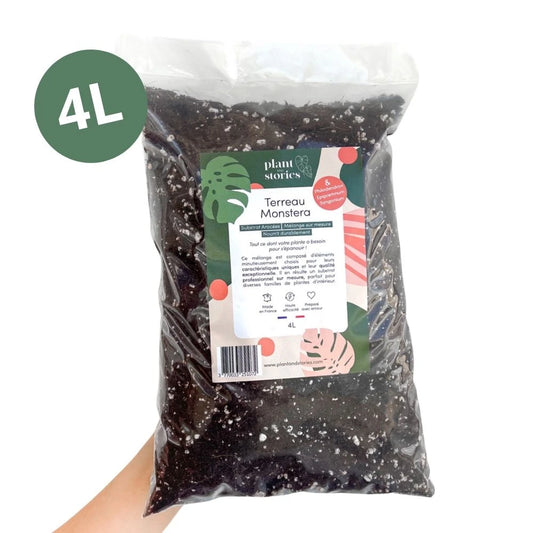
Monstera Soil - Enriched with Mycorrhiza and Bacillus - Araceae Substrate
Regular price From 9,50 €Regular price23,75 €Sale price From 9,50 €Sale -
Plant Addict Living Sphagnum Pack - Sphagnum for Plants - Sphagnum Moss - 3 Sachets
Regular price 26,50 €Regular price28,50 €Sale price 26,50 €Sale -
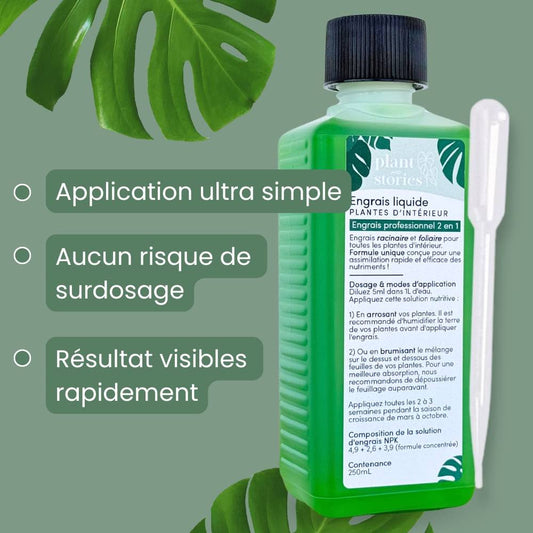
Duo - Universal Substrate 10L + Universal Liquid Fertilizer 250ml + free graduated pipette
Regular price 32,00 €Regular price37,00 €Sale price 32,00 €Sale -
Set of Transparent Araceae Pots - Transparent Growing Pots for Plants
Regular price From 8,97 €Regular price9,75 €Sale price From 8,97 €Sale





📈 Managing each stage: from cutting to flower
Adjust the duration and intensity at each stage to support the plant without shocking it. The same full-spectrum lamp is enough; the main thing is to adjust the schedule over the weeks.
This gradual approach recreates the natural cycle of the seasons: long days in spring to encourage growth, followed by shorter days for flowering. A timer is your best tool for the job.
| Stage | Recommended setting |
|---|---|
| Germination and propagation | 14 to 16 hours per day, lamp 20 to 30 cm away |
| Vegetative growth | 12 to 14 hours, with more blue light for dense foliage |
| Flowering | 10 to 12 hours, with more red light to trigger flowers |
🌡️ Conditions that complement light
Light isn’t everything: temperature, humidity, and watering also need to be right for growth to produce a healthy plant. A well-adjusted lamp won’t help a plant that’s being watered incorrectly.
Under an LED lamp, growth speeds up, so the plant’s needs increase slightly. Keep an eye on these three factors alongside the lighting to avoid creating an imbalance.
| Factor | What to monitor under a grow light |
|---|---|
| Temperature | 18 to 24°C suits most tropical plants |
| Humidity | maintain 50 to 70% for understory plants |
| Watering | water slightly more often; active growth uses more water |

🔎 Why isn’t my plant flowering under the grow light?
A plant that grows but doesn’t flower is often missing the right light signal, rather than light altogether. The cause is usually the duration or color of the light, and more rarely the plant itself.
Three factors explain most cases. An unsuitable photoperiod can prevent a short-day plant from flowering if it gets too much light; a spectrum low in red wavelengths can inhibit flowering; and a plant that’s still young or doesn’t get enough light will focus its energy on foliage before flowering.
Change one setting at a time and give the plant two to three weeks to respond. Adjust the duration first, then the spectrum, before concluding that the species simply needs more time.
💡 Intensity, PAR, and PPFD: what really matters
Beyond color, it’s the amount of useful light that nourishes the plant. This is measured as PAR, the light usable for photosynthesis, while the intensity received by the foliage is expressed in PPFD.
A plant that gets too little light grows slowly, becomes leggy, and flowers poorly, even under a great spectrum. Conversely, light that’s too intense or too close can scorch the foliage. Find the right balance by adjusting the distance, generally 20 to 40 cm, and the duration, rather than turning the power up too high.
A simple rule of thumb: if the foliage stays green and compact, the intensity is right; if it turns pale and leggy, move the lamp closer or increase the duration. Adjusting based on what you observe is better than relying on any theoretical figure.
Also remember that light intensity drops quickly with distance. Moving a lamp just a few centimeters farther away significantly reduces the light reaching the plant, which is why the same lamp can seem effective up close but insufficient from farther away.
| What you observe | What the plant is telling you |
|---|---|
| Dense, green foliage | intensity and duration are well adjusted |
| Leggy stems, pale leaves | not enough light; move the lamp closer |
| Scorched or discolored leaves | lamp is too close; move it farther away |
🍂 How can you recreate the seasons with light?
Indoors, you create the plant’s seasons by controlling how long the lights are on. By first lengthening and then shortening the days, you imitate spring and then fall, guiding the plant from growth to flowering.
In practical terms, provide long days of 14 to 16 hours to encourage vigorous foliage, then gradually reduce the light to 10 to 12 hours to signal flowering. Controlled by a timer, this shift recreates the natural rhythm the plant expects.
Being able to control the light schedule even lets you delay or trigger flowering in the middle of winter, when natural light would never be enough. The lamp then becomes the conductor of the plant’s growth cycle.
However, make the transition gradually: reduce the duration in 30-minute increments over one to two weeks rather than all at once. A sudden change stresses the plant and may cause buds to drop before they open. A gentle adjustment is the key to successful flowering.
| Stage to recreate | Light duration to program |
|---|---|
| Growth stage | 14 to 16 hours per day |
| Maintenance stage | 12 to 14 hours per day |
| Flowering stage | 10 to 12 hours per day |
✅ Our tips for plants that grow and flower
Provide a full spectrum, adjust the duration to suit the growth stage (14 to 16 hours for growth, 10 to 12 hours for flowering), and pair the light with suitable temperature and humidity. This balance is what produces vigorous, flowering plants.
By treating light as a tool you can control, you no longer have to work around the seasons: you can recreate them. Your plants can grow and flower on your schedule, even in the depths of winter.
Remember that light works over time, not overnight. A plant responds to a good adjustment within two to three weeks. Observe, adjust one factor at a time, and give it time to work: patience is what turns a simple lamp into a true engine for growth and flowering.
What changed my winter blooms wasn’t buying a more powerful lamp, but adjusting the duration. When I switched my plants to 12 hours of light with a warmer spectrum, I saw the buds return. Light is a language: learn to speak it, and your plants will respond.

Laura Bruneau
Jardinière & autrice