Terracotta or plastic pots: which should you choose?

Terracotta or plastic? Terracotta is porous: it allows air and water to pass through its walls and dries quickly, making it ideal for plants that dislike excess water. Plastic, which is non-porous, retains moisture longer, making it perfect for plants that like to stay fresh. The rule can be summed up in one sentence: terracotta if you tend to overwater, plastic if you forget. Discover our selection in our range of pots and planters.
This guide explains the differences between the two materials, their advantages and disadvantages, and how to choose based on your plant and watering habits.
Terracotta and plastic: what's the difference?
The difference comes down to one word: porosity. Unglazed terracotta is porous, plastic is not, and this changes everything for the water and air around the roots.
According to the Nebraska Extension, the porosity of clay allows air and moisture to penetrate through the pot walls, where they are used by the fine roots located at the edge of the root ball, and acts like a wick that draws excess moisture out of the potting mix. Plastic, on the other hand, does not have this drainage action: water only escapes through the drainage holes and surface evaporation.
In practical terms, potting mix dries out much faster in a terracotta pot than in a plastic pot. This is the starting point for everything else.
The advantages of terracotta
Terracotta is the choice for plants that do not like to have "wet feet". Its porosity creates a healthy environment for the roots and forgives overwatering.
Because it allows the roots to breathe and draws out moisture, terracotta reduces the risk of rot and is perfect for cacti, succulents, and plants sensitive to excess water. Its weight also makes it stable for large plants. In return, it dries quickly (you need to water more often), breaks easily, and sometimes allows white salt deposits to appear on its walls.
| Terracotta | Detail |
|---|---|
| Porosity | Allows air and water to pass through |
| Ideal for | Cacti, succulents, rot prevention |
| Advantage | Forgives overwatering |
| Disadvantages | Dries quickly, fragile, salt deposits |
The terracotta or plastic question, I always turn it back to my customers: "do you water too much or not enough?". For the one who drowns their plants, I guide them towards terracotta, which forgives. For the one who forgets, towards plastic, which retains moisture. There is no good or bad pot in absolute terms: there is the pot suited to your plant and your hand. For me, for my succulents, it's terracotta without hesitation.
The advantages of plastic
Plastic is the choice of lightness, practicality, and water retention. It is suitable for plants that like a substrate that stays moist.
| Plastic | Detail |
|---|---|
| Water retention | Keeps the root ball moist longer |
| Ideal for | Ferns, Calathea, thirsty plants |
| Advantages | Lightweight, unbreakable, easy to clean |
| Disadvantages | Overwatering, heats up if dark in the sun |
According to Virginia Tech (Virginia Cooperative Extension), plastic containers are non-porous and only lose water through the drainage holes and the surface of the potting mix, which keeps the root ball moist longer. This is ideal for ferns, Calathea, and other thirsty tropical plants, or for gardeners who water infrequently. Lightweight, unbreakable, and easy to clean, plastic is also very practical. Its downside: you have to be careful of overwatering, and a dark pot can heat up in the sun.
columns: 4
columns_mobile: 2
-
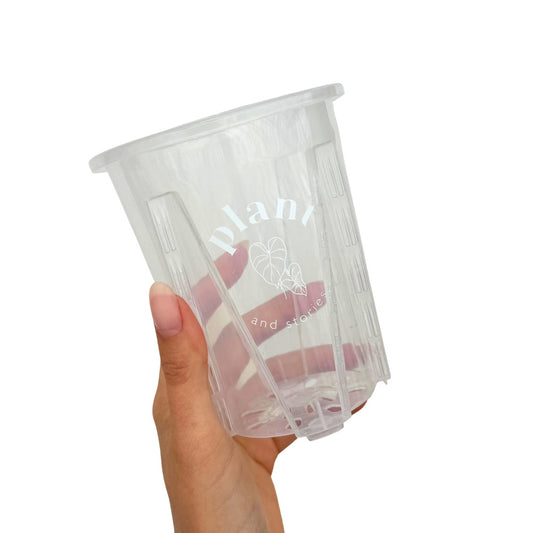
Transparent Plant Pot - Clear Pot with Perforated Growing Holes
Regular price From 1,80 €Regular price1,80 €Sale price From 1,80 € -
Transparent Araceae Pot - Transparent growing pot for plants
Regular price From 1,95 €Regular price1,95 €Sale price From 1,95 € -
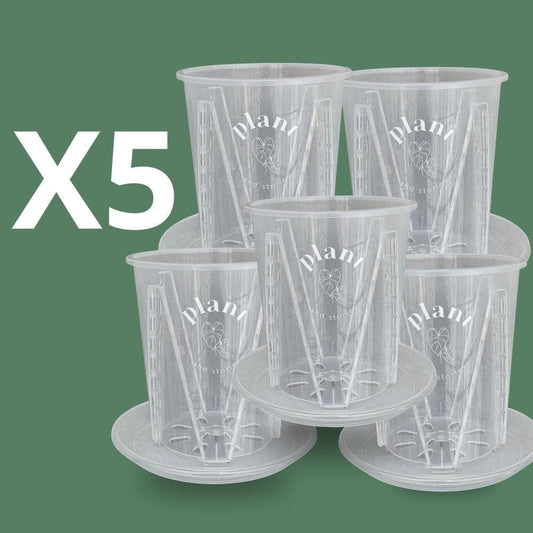
Set of Transparent Araceae Pots - Transparent Growing Pots for Plants
Regular price From 8,97 €Regular price9,75 €Sale price From 8,97 €Sale -
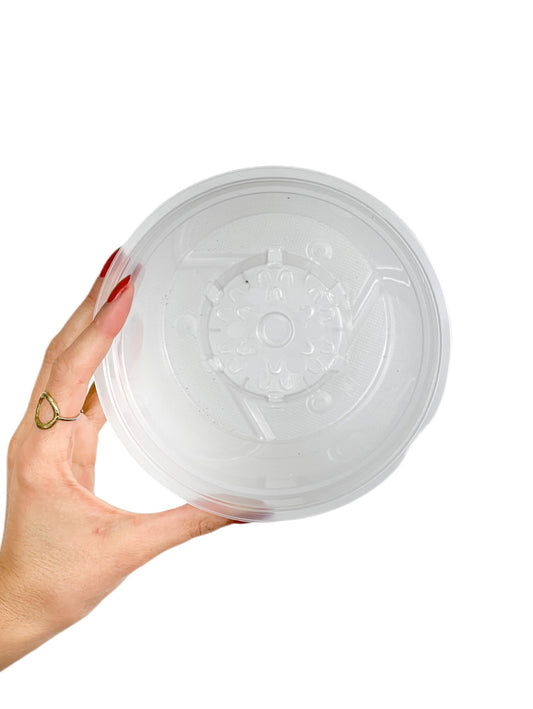
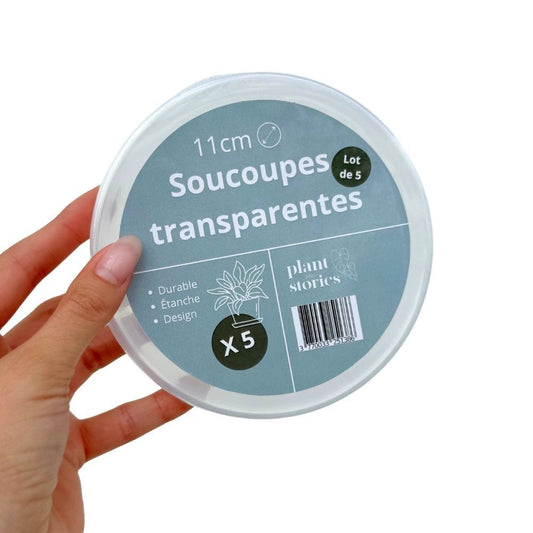
Transparent plant saucers - Rigid saucers - Plant cups
Regular price From 3,00 €Regular price3,50 €Sale price From 3,00 €Sale




What about the other materials?
Terracotta and plastic are not the only options: glazed ceramic, stoneware, or even fabric pots each have their place. It is useful to position them in relation to the two classics.
Glazed ceramic, like stoneware, is non-porous: it behaves more like plastic in terms of water retention, while offering a decorative finish and a good weight. Painted or varnished terracotta partially loses its porosity and also approaches plastic. Fabric pots, very airy, promote excellent drainage but dry out even faster than terracotta. The choice is therefore made on a slider from the most draining to the most water-retaining.
| Material | Behavior towards water |
|---|---|
| Unglazed terracotta | Porous, dries quickly |
| Glazed ceramic, stoneware | Non-porous, retains water |
| Painted terracotta | Reduced porosity |
| Fabric pot | Very airy, dries very quickly |
The question of pot size
Regardless of the material, the size of the pot matters as much as its material. A poorly sized pot cancels out the advantages of the right material.
We choose a pot 2 to 4 cm wider than the current pot, 5 cm at most. A pot that is too large keeps a mass of moist potting mix around roots that are too few to dry it out, which promotes rot, especially in plastic. Conversely, a large plant in a pot that is too small dries out very quickly, especially in terracotta. The balance between material, size, and watering habit is the real key to a successful pot.
| Size error | Consequence |
|---|---|
| Pot too large | Waterlogged potting mix, risk of rot |
| Pot too small | Fast drying, roots cramped |
| Good sizing | 2 to 4 cm larger than the current pot, 5 cm maximum |
| Dark pot in the sun | Potting mix that heats up and dries quickly |
Pot maintenance
A well-maintained pot benefits your plants longer and avoids spreading diseases and pests. A few simple steps are enough.
Before reusing a pot, we clean it carefully to remove salts and any pathogens clinging to the walls. A new terracotta pot benefits from being soaked in water the day before repotting, so that it does not pump the water out of the potting mix at the first watering. White salt deposits on terracotta can be rubbed off with a brush. Finally, we always check that the drainage holes remain clear.
📋 Quick technical sheet (experienced gardeners)
The criteria for choosing between terracotta and plastic, at a glance.
| Criterion | Terracotta / Plastic |
|---|---|
| Porosity | Porous / Non-porous |
| Potting mix drying | Fast / Slow |
| Ideal for | Succulents, cacti / Thirsty plants |
| For whom | Those who overwater / Those who forget |
| Weight | Heavy, stable / Lightweight, mobile |
| Strength | Fragile / Unbreakable |
| Salt deposits | Frequent / Rare |
| Drainage | Hole essential in both cases |
How to choose according to your plant?
The right choice depends on the plant and your watering habits. It is this combination, more than the material alone, that matters.
For a plant that likes to dry out between waterings (cactus, succulent, plant at risk of rot), terracotta is an ally. For a plant that likes constant moisture (fern, Calathea, Maranta), plastic is more suitable. If you have a heavy hand with the watering can, terracotta will compensate; if you often forget, plastic will forgive you. The style of your interior also comes into play, and the planter allows you to reconcile aesthetics and good drainage.
| Your plant / your profile | Recommended material |
|---|---|
| Cactus, succulent | Terracotta |
| Fern, Calathea, Maranta | Plastic |
| You tend to overwater | Terracotta |
| You forget to water | Plastic |
Transparent pots: which model for which plant?
Among plastic pots, our transparent growing pots allow you to see the roots and the moisture of the potting mix. The choice of model depends on the nature of the roots: large roots, araceae pot; fine roots, round transparent pot.
The transparent araceae pot is deeper and perforated at the bottom as well as on the sides, for perfect oxygenation of thick roots. The round transparent pot is perforated at the bottom and is suitable for fine roots.
| Root type | Recommended pot | Plants concerned |
|---|---|---|
| Large roots | Araceae pot, from 10 to 21 cm | Monstera, Philodendron, Alocasia, Colocasia, Anthurium, Pothos, Syngonium, Rhaphidophora, Zamioculcas, Strelitzia |
| Fine roots | Round transparent pot, from 6 to 17 cm | Hoya, orchids, Calathea, Spathiphyllum, Peperomia, Pilea, Fittonia, Tradescantia, begonias, young plants and cuttings |
For size, take a pot 2 to 4 cm wider than the current pot, 5 cm at most: a plant in a 6 cm pot thus fits into a 9 cm round pot or a 10 cm araceae pot.
| Current pot | Round transparent pot | Araceae pot |
|---|---|---|
| 6 cm | 9 cm | 10 cm |
| 7 to 8 cm | 9 or 12 cm | 10 or 12 cm |
| 9 to 10 cm | 12 cm | 12 cm |
| 11 to 12 cm | 15 cm | 14 cm |
| 13 to 14 cm | 17 cm | 16 cm |
| 15 to 17 cm | Araceae pot recommended | 18 or 21 cm |


Diagnosis: use each type of pot properly
Once the material is chosen, a few reflexes draw the best out of it. Here are the main ones.
| Reflex | Benefit |
|---|---|
| Always a drainage hole | No standing water |
| Soak new terracotta | Prevents it from pumping water out of the potting mix |
| Clean reused pots | Remove salts and pathogens |
| Adapt watering to the material | Terracotta: more often |
To find the right container, discover our pots and planters and our growing pots, carefully selected in France.
The right pot with Plant and Stories
Terracotta or plastic, there is no universal winner: the best pot is the one that matches your plant and your way of watering. Terracotta dries quickly and forgives excesses, plastic retains water and forgives omissions. It is up to you to choose according to your plant-watering can duo.
To equip your plants, explore our pots and planters and our plants, carefully selected in France.

Laura Bruneau
Jardinière & autrice