Jasmine: varieties, planting, pruning, and flowering

Jasmine is a popular climbing plant, prized for its star-shaped flowers and fragrance, and capable of covering a wall, pergola or privacy screen. Several very different plants are known by this name: star jasmine (Trachelospermum jasminoides), evergreen and the most widely grown; white-flowering true jasmines (Jasminum officinale); and yellow winter jasmine (Jasminum nudiflorum).
This guide will help you choose the right jasmine for your climate and needs, then plant, prune and train it correctly for long-lasting, fragrant blooms. To see how jasmine compares with other climbers, refer to our guide to climbing plants.
🌼 What is jasmine (and false jasmine)?
The name jasmine covers two distinct botanical families. True jasmines belong to the genus Jasminum (olive family), while the very popular star jasmine is a Trachelospermum (dogbane family): it is often called false jasmine because it is not a jasmine in the botanical sense, despite its very similar fragrance and flowers.
This distinction is useful because it affects how the plant grows: star jasmine is evergreen and keeps its leaves through winter, whereas true outdoor jasmines are generally deciduous or semi-evergreen. Star jasmine and common jasmine are twining climbers: their stems wind around a support and do not attach themselves to a bare wall. Winter jasmine, on the other hand, is not strictly a climber: its long, trailing stems need to be tied and trained onto a support.
Good to know: the milky sap of star jasmine can cause mild skin irritation, so it is best to wear gloves when pruning. True jasmines (Jasminum), on the other hand, are considered safe to grow in the garden.
🧭 Which jasmine should you choose?
Choose according to your climate, the effect you want (evergreen foliage, fragrance, color, flowering season) and the location. Here are the main garden jasmines and their advantages.
| Type of jasmine | Main advantage | Hardiness and use |
|---|---|---|
| Star jasmine (Trachelospermum jasminoides) | evergreen, highly fragrant, white flowers from May to July | -10 to -12 °C once established; best choice for a fragrant privacy screen |
| Common jasmine (Jasminum officinale) | true summer-blooming white jasmine, intensely fragrant | around -10 °C; semi-evergreen to deciduous, for a wall or pergola |
| Winter jasmine (Jasminum nudiflorum) | yellow flowers in the depths of winter, unscented | very hardy (-15 °C); trailing, for training or planting on a slope |
| Tender jasmines (polyanthum, sambac) | abundant, fragrant blooms | frost-tender: conservatory or pot to bring indoors; not hardy outdoors in the ground |
For outdoor planting in most regions, star jasmine remains the top choice: evergreen, fragrant and fairly hardy. Keep polyanthum and sambac jasmines in a conservatory or pot that can be brought indoors for winter.
Let your climate guide your choice: in the north and east, opt for winter jasmine (the hardiest) and plant star jasmine against a warm wall, protecting it during its first few years. In the mild south and west, all types thrive, including the most fragrant common jasmines planted in the ground.
⭐ Star jasmine, the star evergreen climber
Star jasmine (Trachelospermum jasminoides) is the best-selling evergreen climber: glossy green foliage all year round, highly fragrant white star-shaped flowers from May to July, and a dense growth habit that makes it an excellent privacy screen. The RHS (Royal Horticultural Society) and the Missouri Botanical Garden describe it as a vigorous evergreen climber once established.
It grows slowly for the first two years while its roots become established, then puts on vigorous growth and can cover a 4 to 6 m support. It prefers a warm, sheltered position: full sun in the north, partial shade during the hottest hours in the south. Hardy down to -10 to -12 °C once established, it needs protection during its first few winters in colder regions.
🪴 Where and how should you plant jasmine?
Preferably plant in spring (after the last frosts) or early autumn, in ordinary, well-drained soil against a sturdy support. A warm spot sheltered from cold winds is the key to success, especially for star jasmine.
| Step | What to do |
|---|---|
| 1. Choose a location | a wall or fence in sun or partial shade, sheltered from cold winds |
| 2. Set up a support | trellis, mesh or tensioned wires: jasmine is a twining climber and needs something to wind around |
| 3. Prepare the hole | twice as wide as the root ball; add compost and improve drainage in heavy soil |
| 4. Plant and train | set the root ball level with the soil and tie the stems to the support |
| 5. Water and mulch | water thoroughly, then mulch to keep the base cool during the first year |
Choose a support to suit the effect you want: a wooden trellis against a wall, discreet mesh for a privacy screen, or simple horizontal wires to cover an area evenly. Space plants 1 to 1.5 m apart for a climbing hedge, or plant one per panel to be covered.
columns: 4
columns_mobile: 2
-

 Livraison offerte
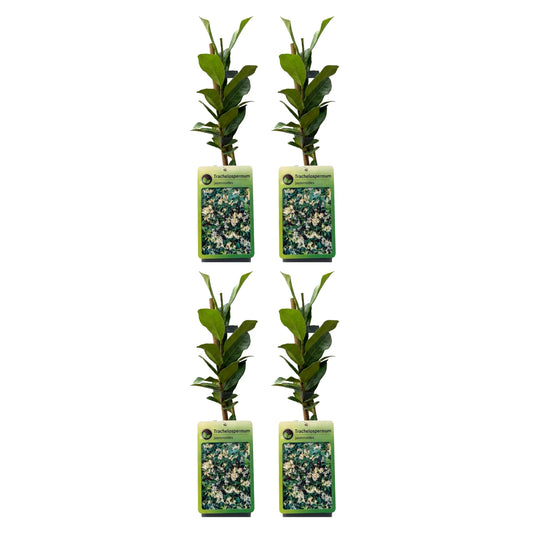
Star jasmine (Trachelospermum jasminoides) – fragrant evergreen climber
Regular price From 54,95 €Regular price54,95 €From 43,96 €Livraison offerte -

 Livraison offerte
Common jasmine (Jasminum officinale) – fragrant climbing plant
Regular price From 39,95 €Regular price39,95 €From 31,96 €Livraison offerte -

 Livraison offerte
Stephan’s Jasmine (Jasminum × stephanense) – fragrant climbing plant
Regular price From 39,95 €Regular price39,95 €From 31,96 €Livraison offerte -

 Livraison offerte
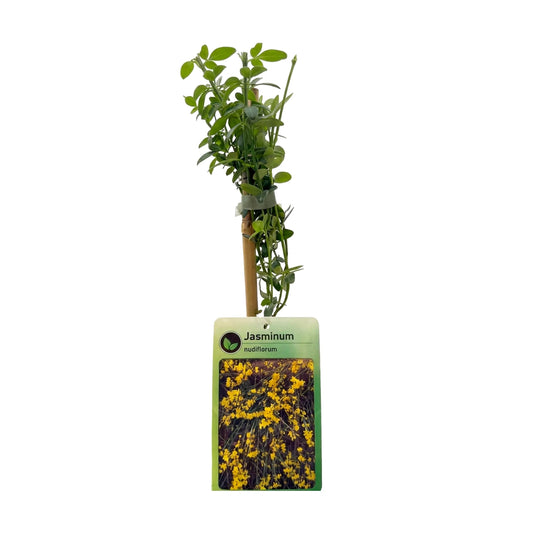
Winter jasmine (Jasminum nudiflorum) - flowering climbing plant
Regular price From 39,95 €Regular price39,95 €From 31,96 €Livraison offerte


✂️ Pruning and training jasmine
The golden rule: prune just after flowering, never before, so you don't sacrifice the flowers. The exact timing depends on the type of jasmine, since they flower at different times of year.
| Type of jasmine | When and how to prune |
|---|---|
| Star jasmine | after flowering (summer): shorten any overlong stems and thin out the plant if it is too dense |
| Common jasmine | after summer flowering: remove dead wood and keep long stems in check |
| Winter jasmine | just after flowering (late winter): cut back the spent stems to encourage fresh growth |
| All types | train as they grow: tie in new stems so they cover the support evenly |
Jasmine tolerates shaping well, so don't hesitate to cut back an overgrown plant; it will grow back. Just avoid severe pruning in late autumn, as this leaves the cuts exposed to frost.
🌸 Flowers, fragrance and privacy screens
Star jasmine and common jasmine have the strongest fragrance, especially in the evening and in warm weather: plant them near a patio, entrance or window. Winter jasmine, meanwhile, is unscented but brightens the garden with yellow flowers when everything else is bare.
| Type of jasmine | Flowering season | Fragrance |
|---|---|---|
| Star jasmine | May to July | intense, especially in the evening |
| Common jasmine | June to September | intense and heady |
| Winter jasmine | December to March | none, but it brings color in the depths of winter |
| Polyanthum jasmine (conservatory) | late winter to spring | very intense |
For a fragrant privacy screen, star jasmine is hard to beat: evergreen, dense and spreading, it screens an overlooked space all year round when grown on mesh or a fence. Allow two to three years for it to cover the area completely as it settles into its growth rhythm.
Pair it with a clematis or a climbing honeysuckle to extend the flowering season: star jasmine provides evergreen foliage and summer fragrance, while its companions bring color in spring and autumn.
🏺 Jasmine in pots and on balconies
Star jasmine grows very well in a large pot on a patio or balcony, with a small trellis to climb. This is also the best way to grow tender jasmines (polyanthum, sambac) that need to be brought indoors for winter.
Choose a container at least 40 cm in diameter with plenty of drainage holes, and use a free-draining potting mix (enriched compost lightened with sand). Pots dry out quickly: water regularly in summer, never let water sit in the saucer, and protect the pot from frost in cold regions.
Bring tender jasmines (polyanthum, sambac) indoors as soon as nighttime temperatures fall below 5 °C, placing them in a cool, bright conservatory: too much warmth in winter weakens them and jeopardizes the next flowering season. Put them back outside once the frosts have passed.
-

Clematis, wisteria, passionflowers, climbing roses and star jasmine to adorn walls, pergolas...
-

Nectar-producing plants & pollinators
Provide food for bees, bumblebees, and butterflies: our selection of outdoor nectar-rich...


🌿 Caring for jasmine throughout the seasons
An established jasmine needs little care: consistent watering in the first year, pruning after flowering and regular training are enough. A spring application of compost supports flowering.
📅 Seasonal care calendar
| Season | Key task |
|---|---|
| 🌸 Spring | New growth; add compost; train young stems; plant; prune winter jasmine after flowering |
| ☀️ Summer | Star and common jasmine in full bloom; water regularly in the first year; prune just after flowering |
| 🍂 Autumn | Suitable time to plant; reduce watering; let the wood mature before winter |
| ❄️ Winter | Dormant; winter jasmine blooms yellow; protect young star jasmine or potted plants below -10 °C |
🐛 Common jasmine problems
Jasmine is hardy; most problems are caused by cold, a lack of flowers or common pests. Here's how to interpret the signs.
| Symptom | Likely cause | What to do |
|---|---|---|
| Brown leaves or dry stems after winter | frost damage to a young or exposed plant | protect with horticultural fleece; cut back in spring and it will regrow from the base |
| Few or no flowers | pruning at the wrong time or a location that is too shady | prune after flowering; provide more sun and warmth |
| White, cottony clusters on stems | scale insects | treat with soft soap or oil; improve air circulation |
| Sticky, blackened leaves | honeydew and sooty mold (aphids, scale insects) | hose down the plant and use soft soap; let beneficial insects do their work |
📋 Jasmine quick facts
| Factor | Guide |
|---|---|
| ☀️ Exposure | sun or warm partial shade, sheltered from cold winds |
| 🪨 Soil | ordinary, well-drained, moist but never waterlogged |
| 🧪 pH | not fussy, from slightly acidic to alkaline |
| 🧗 Support | twining climber: trellis, mesh or tensioned wires (does not attach itself to a bare wall) |
| ❄️ Hardiness | winter jasmine -15 °C; common jasmine -10 °C; star jasmine -10 to -12 °C once established |
| 💧 Watering | regularly in the first year, then moderately; never leave standing water |
| 📏 Size | 4 to 6 m for star jasmine; slow growth for the first two years |
| 🌸 Flowering | star jasmine in May–July; common jasmine in June–September; winter jasmine from December to March |
| 🌸 Fragrance | intense (star and common jasmine); none in winter jasmine |
| 🧰 Care | prune after flowering, train, add compost in spring |
Star jasmine is the climber I recommend most for a living, fragrant privacy screen: evergreen, elegant and easy once established. My one firm piece of advice: give it a warm wall and a proper support to twine around, and never prune it before it flowers. For a shady corner or to brighten up winter, yellow winter jasmine is a valuable addition, even without fragrance.

Laura Bruneau
Jardinière et autrice