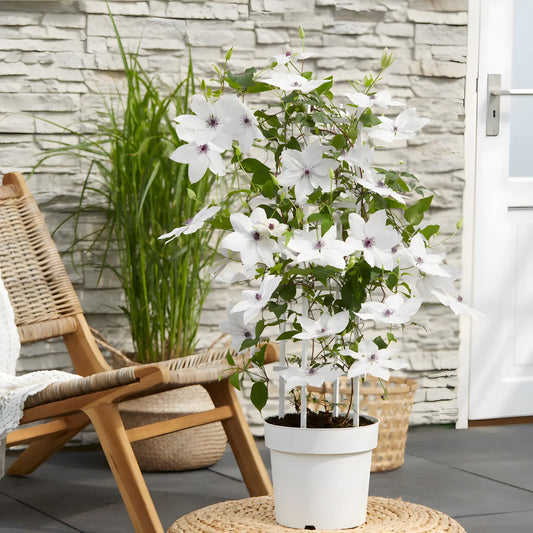
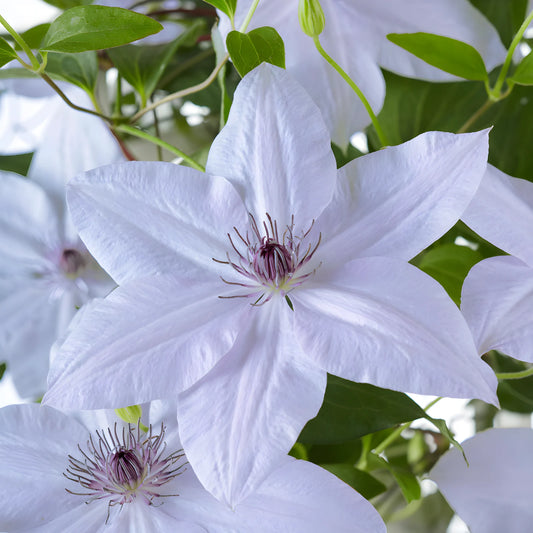
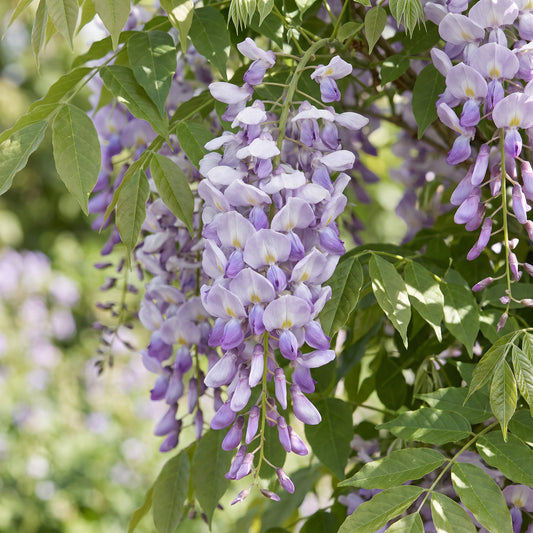
Climbing Plants: The Complete Guide to Choosing and Growing Them Successfully

A climbing plant transforms a bare wall, fence or pergola into a screen of greenery and flowers, without taking up ground space. Clematis, wisteria, honeysuckle, ivy, Virginia creeper: each climbs in its own way, and its climbing method determines the support it needs.
This guide covers the essentials (climbing methods, exposure, soil, distance from the wall and training) to help you choose the right climber and plant it successfully, backed by verified horticultural information.
🌿 Why plant climbing plants?
Climbers make a big impact in very little space: they grow vertically, covering areas where nothing else will grow. Depending on the species, they flower, fill the air with fragrance, produce ornamental berries or form an evergreen privacy screen. A well-chosen, well-trained climber can dress up a façade or screen an overlooking property in one to three seasons.
| Benefit | What it brings to the garden |
|---|---|
| Big impact, little ground space | A climber can cover several square metres of wall from a single plant at ground level. |
| A vertical privacy screen | Ideal for screening an overlooking property, wire fence or unattractive wall. |
| Flowers, fragrance or berries | Depending on the species: spectacular wisteria, fragrant honeysuckle, or ivy that provides food for wildlife. |
| For every aspect | There are climbers for full sun as well as for a shady north-facing wall. |
🔎 Climbing plants at a glance
According to the RHS (Royal Horticultural Society), climbers attach themselves in four ways: with rootlets or adhesive pads (ivy, Virginia creeper, climbing hydrangea), tendrils (passionflower, grapevine), leaf stalks (clematis), or twining stems that wind around a support (wisteria, honeysuckle, jasmine).
The way a plant climbs determines everything: a climber with rootlets can climb a wall on its own, while a twining or tendril-climbing plant needs a support to wrap around. For choosing by aspect, the RHS also lists species that thrive on north-facing walls.
| Feature | Verified details |
|---|---|
| 🧬 A diverse family | Woody or herbaceous plants that climb a support rather than a tree trunk |
| 🔎 Rootlets / adhesive pads | Ivy, Virginia creeper, climbing hydrangea: climb unaided on sound walls |
| 🔎 Tendrils | Passionflower, grapevine: need a trellis or fine wires to grasp |
| 🔎 Leaf stalks | Clematis: climbs by its leaf stalks and needs a fine trellis |
| 🔎 Twining stems | Wisteria, honeysuckle, jasmine: stems wind around a support, which must be sturdy |
| 🔎 Evergreen or deciduous | Ivy and star jasmine are evergreen; clematis, wisteria and honeysuckle are deciduous |
📋 Quick facts
The essentials, all in one place.
| Parameter | At a glance |
|---|---|
| Climbing methods | Rootlets, tendrils, leaf stalks, twining stems |
| Aspect | From a shady north-facing façade to a south-facing wall, depending on the species |
| Soil | Moist but well-drained for most; dig the planting hole 30 to 60 cm from the wall |
| Planting | In spring or autumn, avoiding frost |
| Distance from wall | Dig the hole 30 to 60 cm from the base of the wall |
| Training | Horizontal and vertical wires spaced about 45 cm apart |
| Gap between wall and support | At least 5 cm between the wall and the trellis |
| Height | From 2 to 3 m (small clematis) to over 10 m (wisteria) |
| Hardiness | Most are very hardy (down to around -20°C) |
| Growth | One to three seasons to cover a support, depending on vigour |
📍 Where and when to plant: aspect, soil and support
Start by considering the aspect of the support. A hot, south-facing wall suits wisteria, grapevine and jasmine; a shady north-facing wall or façade is ideal for ivy, climbing hydrangea, some honeysuckles and shade-loving clematis. Most climbers prefer moist, well-drained soil, with their roots kept cool and their tops in the light.
Next, choose a support that suits the plant's climbing method.
☀️ Aspect: From a shady north-facing façade to a south-facing wall, depending on the species
🌱 Soil: Moist but well-drained for most; dig the planting hole 30 to 60 cm from the wall
❄️ Climate: Most are very hardy (down to around -20°C)
🪴 Planting: distance from the wall, support and best practices
Plant in spring or autumn, avoiding frost. The key point, often overlooked: dig the hole 30 to 60 cm from the base of the wall, where the soil is less dry and poor, and angle the plant towards its support. Install the support before planting or at the time of planting.
For training on wires, stretch horizontal and vertical wires about 45 cm apart, leaving at least 5 cm between the wall and the wires to allow airflow and give the plant something to climb on.
| Step | What to do |
|---|---|
| When | In spring or autumn, avoiding frost |
| Distance from wall | Dig the hole 30 to 60 cm from the base, where the soil is less dry and richer |
| Support | Install it before planting, choosing one to suit the plant's climbing method |
| Training on wires | Wires spaced 45 cm apart, with at least 5 cm between wall and wires |
| After planting | Angle the plant towards the support, water it and mulch around its base |
columns: 4
columns_mobile: 2
-

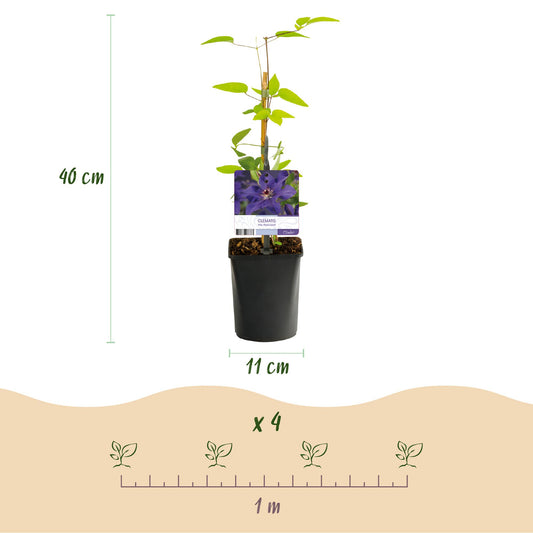
Clematis 'The President' (Clematis) - flowering climber - 9 cm pot - Height 35 cm - Set of 2
Regular price 44,95 €Regular price44,95 €35,96 €Livraison offerte -

 Livraison offerte
Chinese wisteria in a mix of blue, white, and pink (Wisteria sinensis)
Regular price From 79,95 €Regular price79,95 €From 63,96 €Livraison offerte -

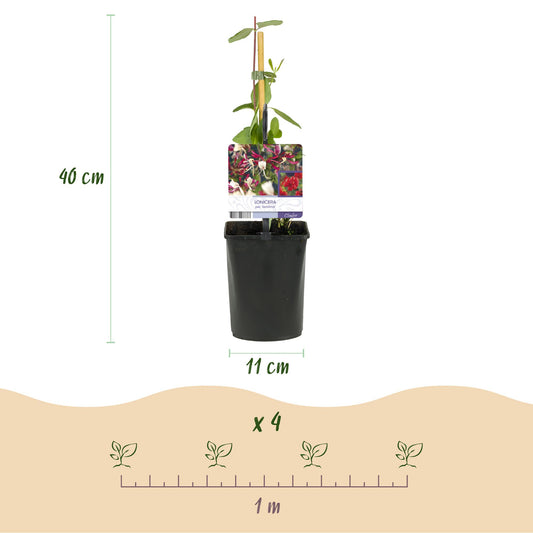
Honeysuckle 'Serotina' (Lonicera) - fragrant climber - 9 cm pot - Height 35 cm - Pack of 2
Regular price 39,95 €Regular price39,95 €31,96 €Livraison offerte -

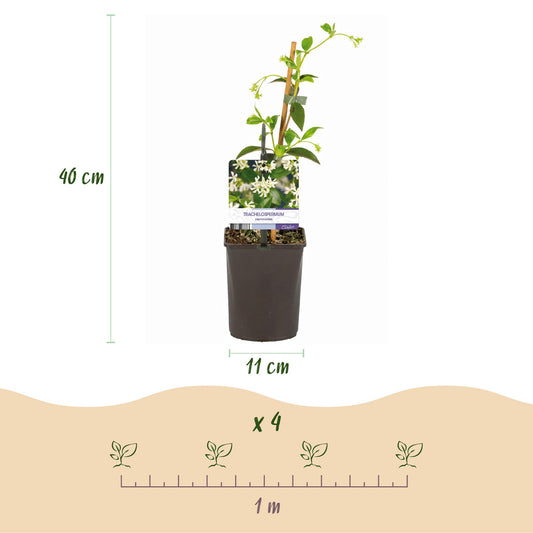
Star Jasmine (Trachelospermum jasminoides) - fragrant evergreen climber - 9 cm pot - Height 35 cm - Pack of 2
Regular price 39,95 €Regular price39,95 €31,96 €Livraison offerte -


‘New Dawn’ Climbing Rose (Rosa) – Flowering Climber – 11 cm Pot – 40 cm Tall – Pack of 2
Regular price 39,95 €Regular price39,95 €31,96 €Livraison offerte


✂️ Care: watering, training and looking after your climber over time
Care depends mainly on the species, but a few tasks are common to all: guide young shoots towards the support during the first year, water while the plant establishes and then during dry spells, mulch around the base to keep it cool, and prune at the right time.
Pruning varies the most: clematis is pruned according to its flowering group, wisteria twice a year, and honeysuckle after flowering.
🧗 Training: Tie young stems to the support during the first year
💧 Watering: Water regularly while the plant establishes, then during prolonged dry spells
🍂 Mulching: Mulch around the base to keep roots cool and weed-free
✂️ Pruning: Depends on the species: by group (clematis), twice a year (wisteria), after flowering (honeysuckle)
🧗 Support: Check its sturdiness every year, especially for wisteria
🍂 A seasonal calendar for climbing plants
The timing varies by species, but there is a general pattern: plant in spring or autumn, train and water during the growing season, and prune during dormancy or after flowering, depending on the plant. Here are the key tasks throughout the year.
📅 Seasonal care calendar
| Season | Key task |
|---|---|
| 🌸 Spring | Planting; guiding young shoots; late-winter pruning of summer-flowering species. |
| ☀️ Summer | Regular training; water during dry spells; summer pruning of wisteria (to 5 to 6 leaves). |
| 🍂 Autumn | Ideal planting season; prune early-flowering species after they bloom; enjoy ornamental berries. |
| ❄️ Winter | Dormant period; winter pruning of wisteria (to 2 to 3 buds) and Group 3 clematis. |
🌱 How to propagate climbing plants
Most climbers are easy to propagate. Cuttings work for clematis, honeysuckle and jasmine; layering (bending a flexible stem to the ground until it roots) is the most reliable method for wisteria and honeysuckle. It's an easy way to grow new plants true to type, and should only be done with healthy, well-established plants.
Avoid growing grafted climbers such as wisteria from seed, as seed-grown plants take a very long time to flower.
🐛 Common problems: diseases, pests and mistakes
Climbers are generally robust, and problems are most often related to the support, aspect or a few foliage diseases. Here are the most common issues and how to fix them.
| Symptom | Likely cause | Solution |
|---|---|---|
| Little or no flowering | ✂️ Not enough light, incorrect pruning time, plant too young | Ensure the right aspect, prune according to the species, and be patient |
| Climber won't attach | ⚠️ Support not suited to the plant's climbing method | Add a trellis or wires for the plant to wrap around or grasp |
| Powdery mildew (white coating) | ☀️ Heat, dry soil around the base, south-facing wall | Mulch, keep the base cool, improve airflow and water regularly |
| Damage to the wall or gutter | ⚠️ Overly vigorous climber in the wrong place | Keep it away from fragile roofs, prune it and choose a dedicated support |
-

Clematis, wisteria, passionflowers, climbing roses and star jasmine to adorn walls, pergolas...


🌿 Our selection
Our go-to choices for a successful start: each link takes you to a dedicated guide.
| Our selection | Why choose it |
|---|---|
| Clematis | The queen of flowering climbers; prune according to its group (1, 2 or 3) |
| Wisteria | Spectacular in spring; vigorous, so plant it only on sturdy structures |
| Honeysuckle | Fragrant and attractive to pollinators; easy to grow in sun or partial shade |
| Climbing rose | Long, repeat flowering; pairs well with clematis |
| Star jasmine | Evergreen and highly fragrant; perfect in a sheltered spot |
| Trumpet vine | Orange trumpets all summer; needs full sun and a sturdy support |
| Virginia creeper | Flame-red foliage in autumn; climbs a wall on its own |
| Ivy | Evergreen and virtually indestructible; king of shade and biodiversity |
| Evergreen climbers | A guide to choosing an evergreen privacy screen for year-round coverage |
🎨 Where to plant them and what to pair them with
Climbers pair beautifully: train a large-flowered clematis through a climbing rose, grow fragrant honeysuckle over a pergola, or plant wisteria against a south-facing wall. You can also combine an evergreen climber (ivy, star jasmine) with a flowering deciduous one to cover a support all year round. Along a shared boundary fence, climbers create a living privacy screen that is lighter and more attractive than a solid fence.
🔑 Rootlet-climbing or trained climber: how to choose?
This is the question that determines everything else. Climbers with rootlets or adhesive pads (ivy, Virginia creeper, climbing hydrangea) attach themselves to a bare wall and need no support, making them ideal for covering a large area without installing anything.
But take care with the wall: the RHS explains that these rootlets do not penetrate sound masonry, but can grow into existing cracks in the mortar and widen them, or spread into gutters and onto roofs. For fragile render, choose a climber that needs training instead.
Climbers with tendrils, leaf stalks or twining stems (clematis, wisteria, honeysuckle, passionflower) need a trellis, wire mesh or taut wires to grasp or wind around. Install the support before planting, and make sure it is strong enough for the plant's vigour.
⚠️ Are climbing plants toxic?
It depends on the species, and it's best to know before planting in a family garden. Several ornamental climbers are toxic or irritating: clematis (irritating sap), wisteria (seeds and pods are toxic if swallowed), ivy (toxic berries) and the berries of many honeysuckles, which are ornamental and not edible.
None are dangerous simply through contact with the foliage, but don't let young children put berries or pods in their mouths, and wear gloves when pruning clematis. See our guides for individual species for more details.
✅ Our expert tips for success
Growing a climber successfully comes down to three decisions, made in order: start with the aspect of the support, choose a species suited to its climbing method, then install the right support before planting. After that, a little guidance during the first year, mulch around the base and pruning at the right time are all it takes. In one to three seasons, a bare wall can become a living work of art.
Passionflower
The mistake I see most often is buying a climbing plant before thinking about what it will grow on. A beautiful clematis or honeysuckle will never cling to a smooth wall: they need a trellis. My advice: choose the support at the same time as the plant, put it in place when you plant, and guide the first stems by hand. After that, it takes care of itself.
The best climbing plants for your needs
There is no single “best” climbing plant, but there is a good climber for every purpose. Here’s how to choose based on the effect you want, with tried-and-tested species.
For a year-round green screen (evergreen): star jasmine (Trachelospermum jasminoides) has glossy evergreen foliage, highly fragrant white flowers in summer, and grows up to 8 to 12 m (hardy down to -10/-5 °C). Ivy (Hedera helix) is evergreen and self-clinging with aerial rootlets; it will cover a wall on its own and withstands temperatures down to -15/-10 °C.
For spectacular blooms: wisteria (Wisteria sinensis), a deciduous, twining and very vigorous climber that grows over 12 m, and trumpet vine (Campsis radicans), which clings by aerial rootlets and grows 8 to 12 m. Its orange to red trumpet-shaped flowers bloom from late summer to autumn, making it ideal for a warm, south- or west-facing wall.
To cover a support quickly: wisteria, trumpet vine and hops (Humulus lupulus), a herbaceous twiner that regrows each spring, establish quickly as long as you provide sturdy support when planting.
For fragrance: honeysuckle and star jasmine fill patios and pergolas with scent in summer. In all cases, match the plant’s climbing method to its support: twining plants and tendril climbers need a trellis or taut wires, while plants with aerial rootlets will cling on their own to a sound surface. Sources: Royal Horticultural Society (rhs.org.uk), plant profiles for Wisteria sinensis, Trachelospermum jasminoides, Campsis radicans, Hedera helix, Humulus lupulus.

Laura Bruneau
Jardinière et autrice