Wisteria: planting, pruning (summer and winter), and flowering

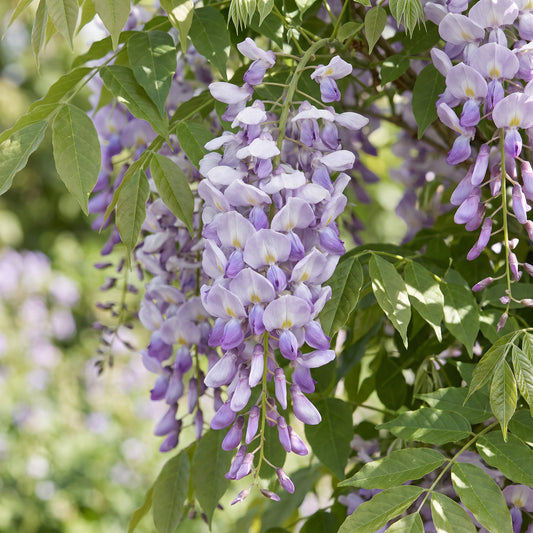
Few plants can rival wisteria in bloom: its long mauve or white racemes, with their delicate fragrance, transform a façade in spring. But this very vigorous climber has two non-negotiable requirements: full sun and a sturdy support, and, above all, two rounds of pruning—one in summer and one in winter. Without this, it produces plenty of wood but few flowers.
Here’s the complete guide to keeping it in check, backed by horticultural data from the RHS and Kew.
🌿 Why plant wisteria?
Wisteria puts on an unrivalled display in spring and lives for a very long time, covering pergolas and façades with cascades of flowers. Hardy and robust, it does, however, need the right location and regular pruning. Given the right care (a grafted plant, full sun, sturdy support, and two rounds of pruning), it flowers reliably every year and becomes the garden’s centrepiece.
| Benefit | What it brings to the garden |
|---|---|
| Spectacular flowering | Long, fragrant racemes in mauve, blue, pink, or white in spring. |
| Very long-lived | A well-established wisteria lives and flowers for decades. |
| Very hardy | Withstands severe cold (below -20 °C, depending on the species). |
| Covers a large area | Ideal for a pergola or a large façade, with sturdy support. |
🔎 Wisteria at a glance
According to Kew POWO (Plants of the World Online), the genus Wisteria (family Fabaceae, like legumes) comprises four species from East Asia and North America.
The RHS (Royal Horticultural Society) highlights its vigorous growth (over 10 m), its need for full sun on a south- or west-facing wall, and the need to prune it twice a year to encourage flowering.
| Feature | Verified details |
|---|---|
| 🏷️ Botanical name | Wisteria (Fabaceae), 4 accepted species |
| 🌍 Origin | East Asia (China, Japan) and North America |
| 🧗 Climbing habit | Twining stems; requires very sturdy support |
| 📏 Height | Over 10 m, spreading up to 20 m against a wall |
| 🌸 Flowering | Spring, with long, fragrant, pendulous racemes |
| 🌸 Time to flower | 3 to 4 years for a grafted plant, up to 20 years for a seed-grown plant |
📋 Quick facts
The essentials, all at a glance.
| Factor | Guideline |
|---|---|
| Hardiness | Very hardy (RHS rating H6, below -20 °C) |
| Position | Full sun, on a south- or west-facing wall or pergola |
| Soil | Fertile and well-drained |
| Planting | October to April, when the ground is not frozen; grafted plants recommended |
| Climbing habit | Twining stems; very sturdy support (wires, framework) required |
| Summer pruning | July–August: shorten shoots to 5 to 6 leaves (about 30 cm) |
| Winter pruning | February: cut these shoots back to 2 to 3 buds (about 10 cm) |
| Flowering | 3 to 4 years after planting for a grafted plant |
| Vigour | Very vigorous; keep it away from gutters and roofs |
| Toxicity | Seeds and pods are toxic if ingested |
📍 Where and when to plant it: position, soil, support
Wisteria needs full sun: plant it against a south- or west-facing wall or pergola, where the warmth encourages flowering. The soil should be fertile and well-drained.
Crucially, its vigorous growth (over 10 m, spreading up to 20 m) means it needs very sturdy support (tensioned wires, a metal framework, or a robust timber structure). Keep it well away from gutters, roof tiles, and downpipes, which it can lift or constrict.
☀️ Position: Full sun, on a south- or west-facing wall or pergola
🌱 Soil: Fertile and well-drained
🧗 Support: Twining stems; very sturdy support (wires, framework) required
🪴 Planting: sunny position, sturdy support, and a grafted plant
Ideally, plant from October to April, when the ground is not frozen, in fertile, well-drained soil at the base of a warm, south- or west-facing wall or a sturdy pergola. Be sure to install the support before planting: use wires or a framework capable of bearing a plant that may eventually weigh several hundred kilos. Train the main stem, water, and mulch. Above all, start with a grafted plant for quicker flowering.
| Step | What to do |
|---|---|
| When | October to April, outside periods of frost |
| Where | Full sun, on a south- or west-facing wall or pergola |
| Support | Very sturdy (wires, framework), installed before planting |
| Plant | Preferably grafted (flowers in 3 to 4 years) |
| Distance from buildings | Keep away from gutters, roof tiles, and downpipes |
columns: 4
columns_mobile: 2
-

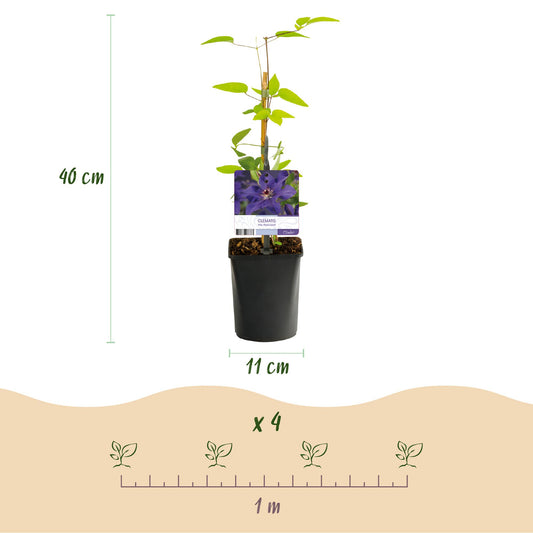
Clematis 'The President' (Clematis) - flowering climber - 9 cm pot - Height 35 cm - Set of 2
Regular price 44,95 €Regular price44,95 €35,96 €Livraison offerte -

 Livraison offerte
Chinese wisteria in a mix of blue, white, and pink (Wisteria sinensis)
Regular price From 79,95 €Regular price79,95 €From 63,96 €Livraison offerte -

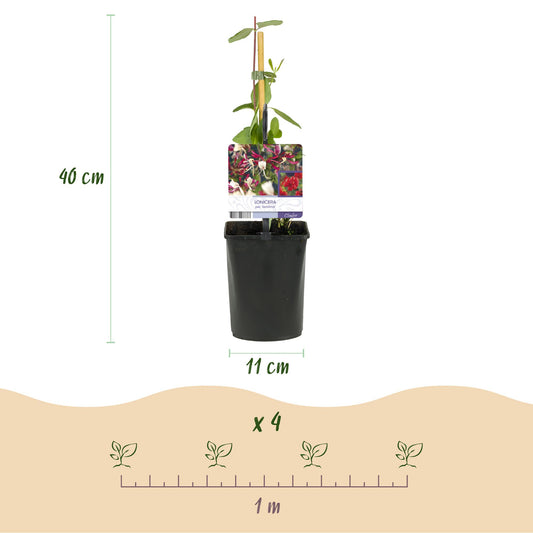
Honeysuckle 'Serotina' (Lonicera) - fragrant climber - 9 cm pot - Height 35 cm - Pack of 2
Regular price 39,95 €Regular price39,95 €31,96 €Livraison offerte -

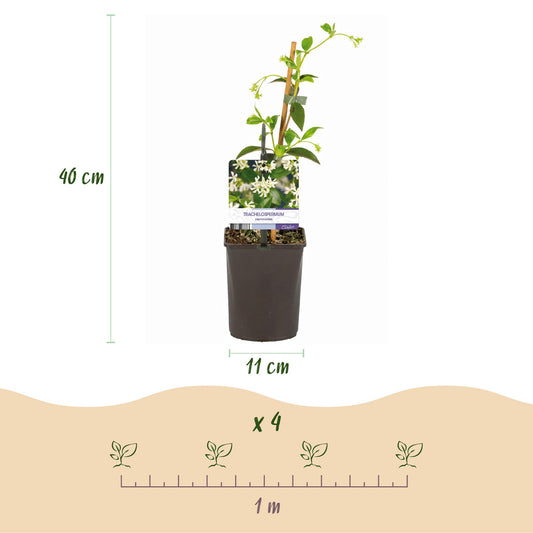
Star Jasmine (Trachelospermum jasminoides) - fragrant evergreen climber - 9 cm pot - Height 35 cm - Pack of 2
Regular price 39,95 €Regular price39,95 €31,96 €Livraison offerte -


‘New Dawn’ Climbing Rose (Rosa) – Flowering Climber – 11 cm Pot – 40 cm Tall – Pack of 2
Regular price 39,95 €Regular price39,95 €31,96 €Livraison offerte


✂️ Care: watering, training, and year-round maintenance
Wisteria care revolves around pruning it twice a year, which is essential for flowering. In summer (July–August), shorten the long, whippy shoots produced that year to 5 or 6 leaves, or about 30 cm. In winter (February), cut those same shoots back to 2 or 3 buds, about 10 cm, to expose the future flower buds.
For the rest: water in late summer (July to September), apply potassium, and check that the support is sturdy.
✂️ Summer pruning (July–August): Shorten the current year's shoots to 5 to 6 leaves (about 30 cm)
✂️ Winter pruning (February): Cut these shoots back to 2 to 3 buds (about 10 cm)
💧 Watering: Water regularly in late summer (July to September), when flower buds are forming
🌱 Feeding: Apply potassium (potassium sulfate) to encourage flowering
🧗 Support: Check its strength every year, as the plant becomes very heavy
🍂 Flowering, pruning, and seasonal care calendar
Wisteria's yearly cycle is governed by its two rounds of pruning and spring flowering. Prune in summer and again in winter, water in late summer to prepare for flowering, then enjoy the racemes in spring. Here are the key tasks throughout the seasons.
📅 Seasonal care calendar
| Season | Key task |
|---|---|
| 🌸 Spring | Spectacular racemes in bloom; check the support after winter. |
| ☀️ Summer | Summer prune (July–August) to 5 to 6 leaves; water consistently to encourage flower bud formation. |
| 🍂 Autumn | Suitable time for planting; stop watering to encourage flower bud formation; tidy up long shoots. |
| ❄️ Winter | Dormant; winter prune (February) to 2 to 3 buds; plant from October to April, when the ground is not frozen. |
🌱 How do you propagate wisteria?
Wisteria is mainly propagated by layering in summer (bend a flexible stem down into a pot of compost until it roots), the most reliable method for home gardeners. Softwood cuttings in spring or hardwood cuttings in winter are also possible. Avoid growing it from seed, however: seed-grown plants may take up to 20 years to flower.
For a quick, true-to-type result, professionals graft wisteria; otherwise, layer a plant that is already flowering.
🐛 Common problems: diseases, pests, and mistakes
The number one problem with wisteria is failure to flower, and there is almost always an explanation. Here are the most common causes and their solutions.
| Symptom | Likely cause | Solution |
|---|---|---|
| Doesn't flower or flowers very little | ☀️ Seed-grown plant is too young, no pruning, not enough sun, or insufficient water in late summer | Start with a grafted plant, prune twice a year, provide full sun, and water in late summer |
| Lots of leaves, no flowers | 💧 Excessive growth, no summer pruning | Shorten shoots to 5 to 6 leaves in summer, then to 2 to 3 buds in winter |
| Buds abort in spring | ❄️ Late frost damage to the buds | Plant it where it is sheltered from morning frosts; avoid frost pockets |
| Support bends or breaks | ⚠️ The plant's vigour and weight | Reinforce the structure; mature wisteria is heavy |
-

Clematis, wisteria, passionflowers, climbing roses and star jasmine to adorn walls, pergolas...


🌸 Wisteria varieties
Choose first and foremost based on how you plan to use it. Here's a reliable selection to help you make an informed choice.
| Variety | What makes it special |
|---|---|
| Wisteria sinensis | Chinese wisteria: flowers before the leaves, strongly scented, very vigorous |
| Wisteria floribunda Multijuga | Japanese wisteria with very long racemes (up to 1 m) |
| Alba | White-flowered wisteria, elegant on a pergola |
| Wisteria frutescens Amethyst Falls | Less invasive American wisteria, repeat-flowering and ideal for small spaces |
| Prolific | Flowers young and abundantly; a good choice for beginners |
🎨 Where to grow it and what to pair it with
Wisteria makes a statement on a large pergola, porch, or sunny façade, where its racemes can hang freely. It can also be trained as a standard tree and grown on its own in a lawn for a sculptural effect. Pair it with a late-flowering clematis to take over after its spring flowering, or let it stand alone: its spring display speaks for itself. Always keep it away from roofs and gutters.
🔑 Why isn't my wisteria flowering?
This is by far the most common disappointment, and there is almost always an identifiable cause.
The RHS points to several reasons: a seed-grown plant that is still too young (it may take 20 years to flower, compared with 3 to 4 years for a grafted plant); pruning that is missing or mistimed; insufficient light; lack of water between July and September, when the buds form; spring frost damage to the buds; or soil that is too low in potash.
The solution combines several steps: start with a grafted plant, grow it in full sun, prune twice a year (in summer to 5–6 leaves, in winter to 2–3 buds), water in late summer, and apply potassium sulfate rather than nitrogen, which encourages leafy growth at the expense of flowers.
⚠️ Is wisteria toxic?
Yes, and this is something to bear in mind in a family garden: wisteria seeds and pods are toxic if swallowed. The pods resemble beans and can attract children. Ingesting them can cause nausea, vomiting, abdominal pain, and diarrhea. The foliage and flowers are harmless to touch.
Best practice: pick up and dispose of the pods before they ripen if young children have access to the area, and explain that they must not eat these “beans.” If ingested, contact a poison control center.
✅ Our expert tips for success
Wisteria takes some effort, but the reward is worth it: start with a grafted plant, give it full sun and bombproof support, keep it away from buildings, and, above all, prune it twice a year, in summer and winter. With these tasks under control, it will reward you with one of the garden's finest displays every spring, for decades.
Climbing plants guide · Which climber should you choose? · Climbing honeysuckle
Wisteria that “refuses to flower” is a classic problem. Nine times out of ten, it's a seed-grown plant that's too young or one that has never been pruned. My straightforward advice: buy a grafted wisteria, preferably one in flower, and get into the habit of pruning it twice a year: in summer to five or six leaves, and in winter to two or three buds. More than anything else, this double pruning is what triggers the racemes.

Laura Bruneau
Jardinière et autrice