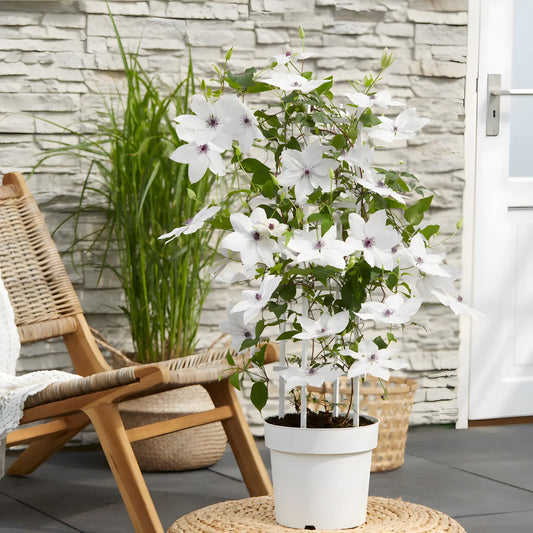
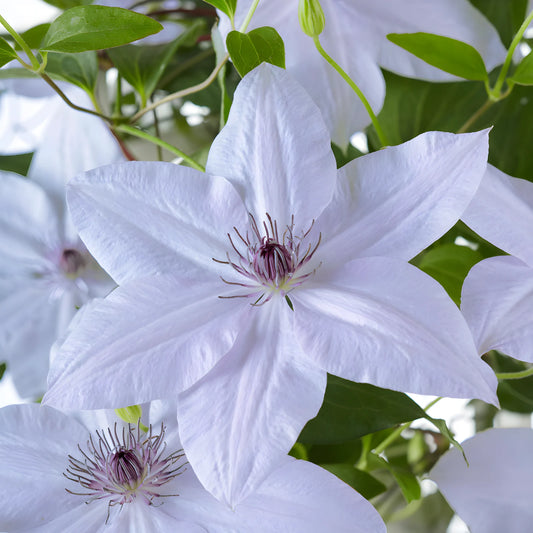
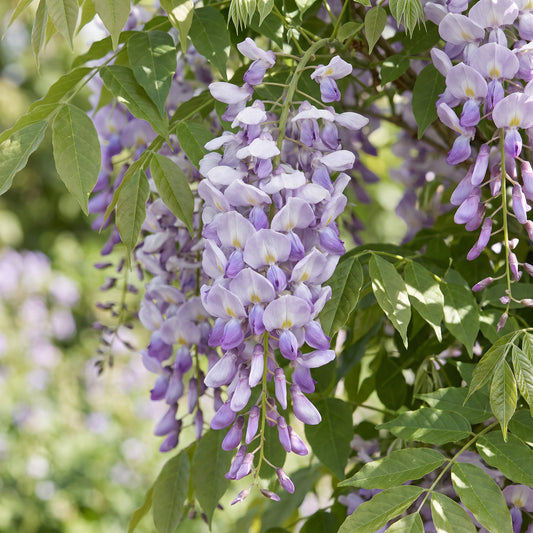
Which climbing plant should you choose? A comparison to help you find the right one.

Clematis, wisteria, honeysuckle, ivy, jasmine, passionflower: choosing a climbing plant mainly depends on three things: the aspect of your wall, the support available and the effect you want (flowers, fragrance, year-round screening). A north-facing wall calls for different species than a south-facing one, and a self-clinging climber needs different training from a twining one.
This comparison matches the most popular climbing plants with the situations they suit best.
🌿 Why choose your climbing plant carefully?
Choosing at random often leads to disappointment: wisteria that grows too vigorously near a gutter, clematis scorched in full sun, or a climber that fails to attach because it has no support. Start with your actual conditions (aspect, support and desired effect) and you can plant a species that thrives without a struggle and covers your wall for years.
| Benefit | What it means for your garden |
|---|---|
| The right plant for the right wall | Choose according to aspect and support, not just on a whim: it’s the key to success. |
| A specific effect | Spectacular flowers, evening fragrance, evergreen foliage: there’s a climber for every preference. |
| A suitable support | Avoid planting wisteria near roofs or ivy against fragile render. |
| Long-lasting coverage | When chosen well, a climber covers its support for years without a struggle. |
🔎 Climbing plants at a glance
According to the RHS (Royal Horticultural Society), each climber has one main requirement: wisteria needs full sun and a very sturdy support, clematis likes its roots in the shade and its head in the sun, and honeysuckle prefers cool partial shade. The RHS also lists species that thrive against a north-facing wall.
This table will help you find the option that suits your situation, then explore further in our dedicated guides.
| Criterion | Verified details |
|---|---|
| 🔎 Clematis | Roots in shade, top in sun; climbs a fine trellis using its leaf stalks |
| 🔎 Wisteria | Full sun, sturdy wall; very vigorous twiner (over 10 m) |
| 🍃 Honeysuckle | Cool partial shade, fragrant; twines to 4–8 m, with ornamental berries |
| 🔎 Ivy | Tolerates shade, evergreen; clings and climbs by itself on sound walls |
| 🔎 Star jasmine | Gentle sunshine, evergreen and fragrant; twines over a sheltered pergola |
| 🔎 Passionflower | Full sun, climbs with tendrils; exotic flowers, somewhat tender |
📋 Quick reference
The essentials, all at a glance.
| Parameter | Guide |
|---|---|
| For a south-facing wall | Wisteria, grapevine, jasmine, passionflower |
| For a shady north-facing wall | Ivy, climbing hydrangea, shade-loving clematis, honeysuckle |
| Most fragrant | Honeysuckle and star jasmine |
| Most spectacular flowers | Wisteria (flower clusters) and large-flowered clematis |
| No support (bare wall) | Ivy, Virginia creeper, climbing hydrangea (self-clinging) |
| Most vigorous | Wisteria (over 10 m): requires a very sturdy support |
| Evergreen (keeps its leaves in winter) | Ivy, star jasmine |
| Distance from the wall | Planting hole 30–60 cm from the base |
| Training | Space wires about 45 cm apart for twiners |
| Best time to plant | Spring or autumn for all |
📍 Where and when to plant: aspect, soil, support
First, consider the aspect of your support. A warm, south-facing wall suits wisteria, grapevine, jasmine and passionflower, all of which need warmth. A north-facing wall or shady facade suits ivy, climbing hydrangea, certain clematis and honeysuckle, which prefer cooler conditions.
Clematis is a good example of the golden rule for flowering climbers: keep the roots shaded and mulched, and let the top grow in the light.
☀️ Aspect:
🌱 Soil:
❄️ Climate: adapt to your region
🪴 Choose according to the support and the effect you want
As well as aspect, consider the support available and the effect you want. A bare wall with no fixtures calls for a self-clinging climber (ivy, Virginia creeper); a trellis or wires can support a twiner or a plant with tendrils. For effect, wisteria puts on a display of flower clusters in spring, honeysuckle and jasmine fill the air with evening fragrance, while ivy and star jasmine provide evergreen foliage all year round.
| Step | What to do |
|---|---|
| Bare wall, no fixtures | Ivy, Virginia creeper, climbing hydrangea (self-clinging) |
| Trellis or wires available | Clematis, wisteria, honeysuckle, passionflower |
| Looking for fragrance | Honeysuckle, jasmine, star jasmine |
| Looking for spectacular flowers | Wisteria, large-flowered clematis, climbing rose as a companion |
| Year-round foliage | Ivy, star jasmine (evergreen) |
columns: 4
columns_mobile: 2
-

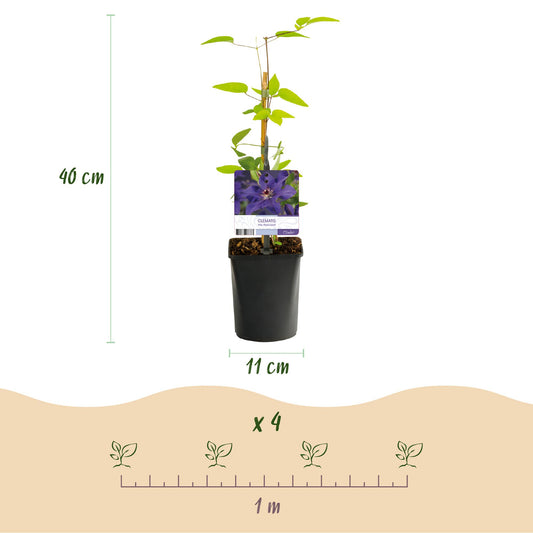
Clematis 'The President' (Clematis) - flowering climber - 9 cm pot - Height 35 cm - Set of 2
Regular price 44,95 €Regular price44,95 €35,96 €Livraison offerte -

 Livraison offerte
Chinese wisteria in a mix of blue, white, and pink (Wisteria sinensis)
Regular price From 79,95 €Regular price79,95 €From 63,96 €Livraison offerte -

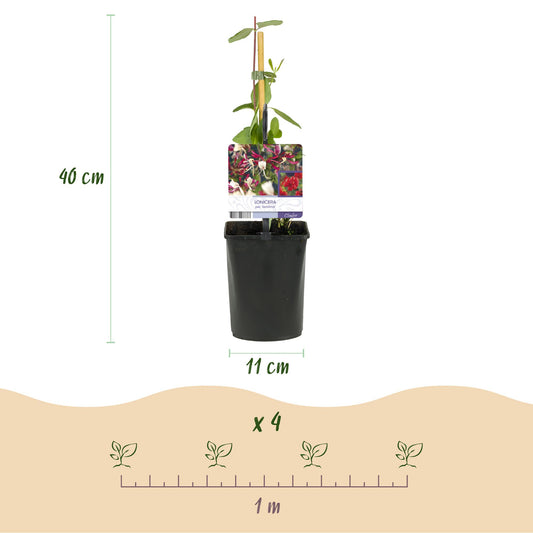
Honeysuckle 'Serotina' (Lonicera) - fragrant climber - 9 cm pot - Height 35 cm - Pack of 2
Regular price 39,95 €Regular price39,95 €31,96 €Livraison offerte -

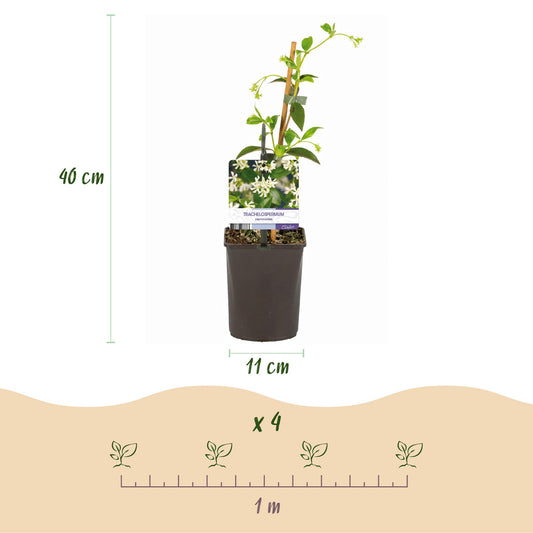
Star Jasmine (Trachelospermum jasminoides) - fragrant evergreen climber - 9 cm pot - Height 35 cm - Pack of 2
Regular price 39,95 €Regular price39,95 €31,96 €Livraison offerte -


‘New Dawn’ Climbing Rose (Rosa) – Flowering Climber – 11 cm Pot – 40 cm Tall – Pack of 2
Regular price 39,95 €Regular price39,95 €31,96 €Livraison offerte


✂️ Care: watering, training and looking after your climber over the years
Each climber has its own pruning requirements: clematis is pruned according to its flowering group, wisteria twice a year, honeysuckle after flowering, and ivy with shears when it gets too big. Our detailed guides provide species-by-species advice.
What they all have in common: guide young stems, keep the roots cool and mulched, and check the support is sturdy, especially for vigorous species.
🔹 Easiest to care for: Ivy, star jasmine, honeysuckle
✂️ Requires careful pruning: Wisteria (twice a year), clematis (depending on group)
🧗 Support to keep an eye on: Wisteria in particular (weight and vigour)
🔹 Keep the roots cool: Clematis (mulch, shade the base)
🔹 Find out more: See our clematis, wisteria and honeysuckle guides
🍂 Create a flowering wall that thrives all year round
The best results come from combining different effects throughout the year: an evergreen climber to provide winter greenery, a spring-flowering climber such as wisteria, and a summer-fragrant one such as honeysuckle. Plant two or three species on the same support to enjoy colour and fragrance over several months.
📅 Seasonal care calendar
| Season | Key task |
|---|---|
| 🌸 Spring | Planting; guiding stems; wisteria and early clematis in flower. |
| ☀️ Summer | Honeysuckle and late-flowering clematis in bloom; regular training and watering. |
| 🍂 Autumn | Ideal planting season; ornamental berries on honeysuckle and ivy. |
| ❄️ Winter | Dormant period; ivy and star jasmine retain their foliage; winter pruning. |
🌱 How to propagate your climbing plant
Good news if you want to cover several supports: most climbers can be propagated for free. Clematis, honeysuckle and jasmine can be propagated from cuttings; wisteria and honeysuckle are easily layered by bending a stem down to the ground. Once you’ve chosen and established your plants, you can propagate your best specimens to cover another wall or give away, starting with healthy plants.
🐛 Common problems: diseases, pests and mistakes
Most failures result from a poor match between plant and situation. Here are the most common selection mistakes and how to avoid them.
| Symptom | Likely cause | Solution |
|---|---|---|
| Wisteria threatening the gutter | ⚠️ Very vigorous species planted too close to the house | Move it farther away, provide a sturdy support and prune twice a year |
| Climber failing to attach | ⚠️ A twiner or tendril climber on a smooth wall with no support | Add a trellis or wires for it to twine around or grip |
| Clematis scorched in summer | ☀️ Roots in full sun in dry soil | Mulch and shade the base, while keeping the top in the sun |
| Disappointing choice | ⚠️ Species poorly suited to the wall’s aspect | Check the actual aspect before buying |
-

Clematis, wisteria, passionflowers, climbing roses and star jasmine to adorn walls, pergolas...


🌿 Our selection
Our must-haves to help you get started with confidence: each link leads to its dedicated guide.
| Our selection | Why choose it |
|---|---|
| Clematis | The best flowering choice for a fine trellis; sun or partial shade |
| Wisteria | For a dramatic display on a sturdy pergola; flowers in spring |
| Honeysuckle | For fragrance and pollinators; tolerates partial shade |
| Star jasmine | For an evergreen, fragrant wall in a mild southern climate |
| Trumpet vine | For spectacular orange trumpets in summer, in full sun |
| Virginia creeper | For covering a large wall by itself and blazing with colour in autumn |
| Ivy | For an evergreen north-facing wall, with little maintenance and benefits for wildlife |
| Evergreen climbers | A guide to year-round green screening, organised by use |
🎨 Where to plant it and what to pair it with
The most beautiful living walls combine different uses: an evergreen (ivy, star jasmine) for winter structure, a flowering climber (wisteria, clematis) for spring, and a fragrant one (honeysuckle) for summer. On a pergola, combining clematis with a climbing rose creates a spectacular effect. On a boundary fence, two or three climbers create a living screen that changes with the seasons.
🔑 Which climber grows fastest?
This is often the first question when you want to screen an overlooking view. The most vigorous climbers are wisteria (which can grow over 10 m and spread up to 20 m against a wall, according to the RHS) and Virginia creeper, which can cover large areas by itself.
Climbing honeysuckle reaches 4–8 m over 5–10 years, a more moderate pace but enough to cover a fence. Bear in mind, however, that the more vigorous a climber is, the sturdier the support it needs and the more regularly it must be pruned to keep it in check.
For a fast but manageable privacy screen, a moderately vigorous climber trained well is often a better choice than unchecked wisteria, which can eventually lift roof tiles and gutters.
🔑 Evergreen or deciduous: which should you choose for a privacy screen?
If the goal is to screen an overlooked area all year round, foliage is a key consideration. An evergreen climber (ivy, star jasmine) keeps its leaves in winter and provides a permanent screen. A deciduous climber (wisteria, clematis, honeysuckle, Virginia creeper) loses its leaves in the colder months: it provides flowers and fragrance in summer, but leaves the view exposed from November to March.
The best strategy is often to combine both on the same support: an evergreen for winter greenery and a flowering deciduous climber for summer colour. This gives you a year-round screen as well as seasonal blooms.
⚠️ Are there any climbers to avoid if you have children?
Several ornamental climbers are toxic or irritating, so it’s worth taking care in a family garden, though there’s no need to rule them out entirely. Wisteria seeds and pods are toxic if swallowed; clematis sap is irritating; and ivy and many honeysuckles have inedible berries. None is dangerous simply from touching the foliage.
A few sensible precautions are enough: don’t let young children put berries or pods in their mouths, wear gloves when pruning, and choose species without tempting fruit near play areas.
✅ Our expert tips for success
Remember the method rather than the list: start with the aspect of your wall, choose a support that suits the plant’s climbing method, then select a species whose effect (flowers, fragrance or evergreen foliage) matches what you want. That’s how you create a successful, long-lasting living wall, rather than ending up with a struggling or overgrown climber.
Passionflower
People often ask me which climbing plant is “the most beautiful”: there’s no absolute answer—it all depends on which one is best suited to your wall. If you’re just starting out and want a safe bet, I recommend a Group 3 clematis (easy to prune in late winter) on a partially shaded wall, or a fragrant honeysuckle on a fence: two reliable, generous growers that are easy to train.

Laura Bruneau
Jardinière et autrice