Full-Sun Plants: Which Ones to Choose?

A sunny corner of the garden, a south-facing patio: these are conditions in which many plants struggle, but others thrive like nowhere else. You just need to choose the right species and prepare the ground. Here’s how to create a beautiful, water-wise full-sun flower bed.
The essentials: which plants thrive in full sun?
In full sun (at least 6 hours of direct sunlight a day), opt for plants suited to dry climates and accustomed to heat and light: Mediterranean plants, sun-loving perennials and grasses. They need well-drained soil rather than rich soil, and require very little water once established. The table below gives you the main groups to look for.
Full sun isn’t a limitation but an opportunity: this exposure produces the most flowers, fragrance and nectar for bees. The only golden rule is to avoid plants that prefer cool, moist soil and embrace a Mediterranean-style garden, where gravel replaces lawn and every plant is chosen for its low water needs rather than its thirst.
| Category | Recommended examples for full sun |
|---|---|
| Mediterranean plants | Lavender, rosemary, sage, rockrose, santolina |
| Sun-loving perennials | Gaura, sedum, yarrow, coneflower |
| Grasses | Stipa, blue fescue, fountain grass |
| Dry-soil shrubs | Juniper, rockrose, laurustinus |
| Herbs | Thyme, oregano, savory |
How to recognize a full-sun plant
A good tip before you buy: look at the foliage. Plants adapted to sun have developed visible strategies to limit water loss, notes the RHS (Royal Horticultural Society). Silvery, hairy, waxy or needle-like leaves, or strongly aromatic foliage, are almost always signs of a plant that loves sun and can withstand drought.
For “sun-baked” gardens, the RHS recommends lavender, lamb’s ear (Stachys), rosemary, mulleins, grasses such as stipa, as well as junipers and Mediterranean cypresses. They all share the same distinctive foliage: an easy clue to spot at the garden center, even before you read the label.
| Plant feature | What it tells you |
|---|---|
| Silvery or gray foliage | Reflects light and limits evaporation |
| Fine or needle-like leaves | Reduces exposed surface area (rosemary, juniper) |
| Waxy or leathery leaves | Retains water in the tissue |
| Hairy or fuzzy foliage | Traps moisture close to the leaf |
| Aromatic foliage | Protective essential oils (lavender, thyme) |
Key facts for a sunny garden
Before planting, here are the essential guidelines for a full-sun flower bed, suitable for most dry-climate plants.
📋 Quick reference (for experienced gardeners)
The essential guidelines for a full-sun flower bed, at a glance.
| Factor | Guideline |
|---|---|
| Exposure | Full sun: at least 6 hours of direct sunlight a day |
| Plant types | Mediterranean plants, perennials and grasses suited to dry climates |
| Soil | Well-drained, preferably poor; winter damp is the enemy |
| Mulch | 2 to 3 inches of gravel rather than bark (RHS) |
| Watering | Water regularly in the first year, then sparingly (RHS) |
| Hardiness (e.g. lavender) | USDA zones 5 to 8 (Missouri BG) |
| Planting | 9 cm pots: plants establish more quickly (RHS) |
| Fertilizing | Little or none: poor soil means more flowers |
| Maintenance | Light pruning after flowering |
| Benefits | Bee-friendly, fragrant and very water-wise |
Prepare the soil and mulch: the secret to a dry garden
In a sunny spot, drainage is everything: most full-sun plants are far more wary of waterlogged soil in winter than of cold. The RHS notes that sandy or chalky soils, which drain naturally, are ideal, while clay soil should be lightened with gravel. A 2 to 3-inch layer of mineral mulch, such as gravel or pumice, limits evaporation and keeps the crown dry, better than bark, which retains moisture.
If your soil is heavy, don’t give up: often all you need is to create a raised area. Mix the soil in the bed with one-third gravel or coarse sand, make a slight mound 6 to 8 inches high and plant on top. The water drains away, the roots can breathe and your Mediterranean plants make it through winter without rotting.
| Step | What to do |
|---|---|
| Check drainage | Sandy or chalky soil is ideal; improve clay with gravel (RHS) |
| Improve if needed | Work in sand and gravel, or plant on a raised mound |
| Mulch | 2 to 3 inches of gravel or pumice (RHS) |
| Avoid | Excess fertilizer and constantly running automatic irrigation |
| Group plants | Group plants according to their water needs (RHS) |
Water wisely: plenty at first, hardly any afterward
Contrary to popular belief, a well-chosen full-sun plant needs almost no watering… once established. The RHS recommends watering new plantings regularly during the first year (up to 3 years for a large specimen), while the roots grow deep. After that, let nature take its course: overwatering weakens plants, makes them leggy and reduces flowering. It’s also better to buy small plants in 9 cm pots, which root more quickly than larger ones.
Planting time matters just as much: fall is ideal, because the rain gives roots time to establish before summer. A plant that roots in fall will handle its first heatwave far better than one planted in May, which would then need constant watering. Whether in the ground or in a pot, water deeply but infrequently rather than giving small amounts every day.
Our top full-sun plants
Some reliable favorites grow well in almost any sunny spot and do just as well in a flower bed as in a pot. Learn more with our guides to Mediterranean plants, lavender and rosemary.
Lavender, for example, grows into a 2- to 3-foot shrub and is hardy in USDA zones 5 to 8 according to the Missouri Botanical Garden, provided the soil is perfectly drained; space plants 12 to 16 inches apart for an even border. Rosemary stays green year-round and releases its fragrance whenever you brush past, while sedums and grasses keep the garden looking good even in the middle of August, without a drop of water.
| Top plant | Why it thrives in full sun |
|---|---|
| Lavender | Fragrant, bee-friendly, USDA zones 5 to 8 (Missouri BG) |
| Rosemary | Evergreen, aromatic and very water-wise |
| Gaura | Light, long-lasting flowers from summer to fall |
| Sedum | Fleshy foliage stores water; virtually indestructible |
| Grasses (stipa) | Movement and lightness, with no maintenance |
Care for your sunny flower bed through the seasons
A full-sun flower bed follows the rhythm of a dry climate: plant and mulch in spring, water sparingly in summer, plant new additions in fall and keep the soil dry in winter. This calendar sums up the essentials.
📅 Seasonal care calendar
| Season | Key task |
|---|---|
| 🌸 Spring | Plant, ensure good drainage and add gravel mulch; start watering to help plants establish. |
| ☀️ Summer | Flowering season: water only recent plantings and let established plants draw water from deep down. |
| 🍂 Fall | The best time to plant Mediterranean plants; gradually reduce watering. |
| ❄️ Winter | A time to rest: above all, avoid standing water; cold, wet conditions are more harmful than dry frost. |
Which plant for which sunny spot? Our picks
The right choice depends on how you’ll use the space and how much water you’re willing to provide. Find your situation in the table below, then choose from the plants available; for a dry garden with no irrigation, Mediterranean plants and grasses are still unbeatable, as our guide to plants that withstand challenging conditions shows.
| Your situation | Recommended options |
|---|---|
| Dry flower bed in full southern sun | Lavender, rosemary, sage |
| Sunny patio pots | Rosemary, grasses, sedum |
| Flowers all summer long | Gaura, coneflower, yarrow |
| Little to no watering | Sedum, grasses, santolina |
| Low evergreen border | Santolina, thyme, dwarf lavender |
| Attract bees and butterflies | Lavender, sage, coneflower |
In a sunny spot, the instinct to water heavily is often counterproductive: too much water and fertilizer make lavender leggy, bare and poor at flowering. Instead, give it poor, well-drained soil, gravel mulch and a little patience in the first year. After that, these plants look after themselves and give you a fragrant flower bed buzzing with bees and surprisingly resilient, even in a heatwave.
columns: 4
columns_mobile: 2
-

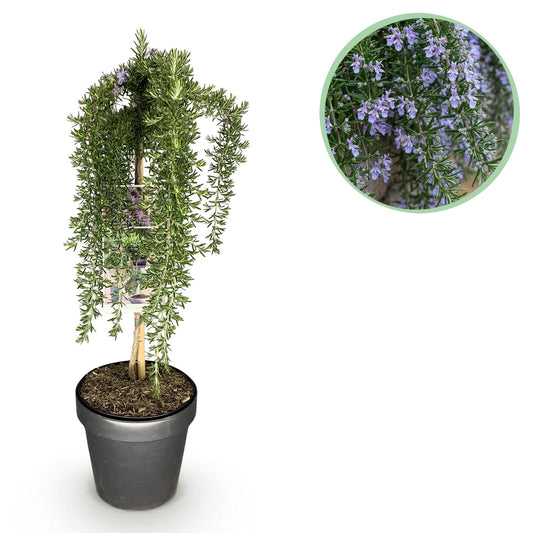
Prostrate Rosemary (Rosmarinus officinalis), Mediterranean perennial, purple flowers, 19 cm pot, Height 70–90 cm
Regular price 69,95 €Regular price -


Rosemary (Rosmarinus officinalis), Mediterranean perennial, purple flowers, 19 cm pot, Height 90 cm
Regular price 69,95 €Regular price -


Wood sage 'Caradonna' (Salvia nemorosa) - melliferous perennial with purple spikes on almost black stems
Regular price From 44,95 €Regular price -

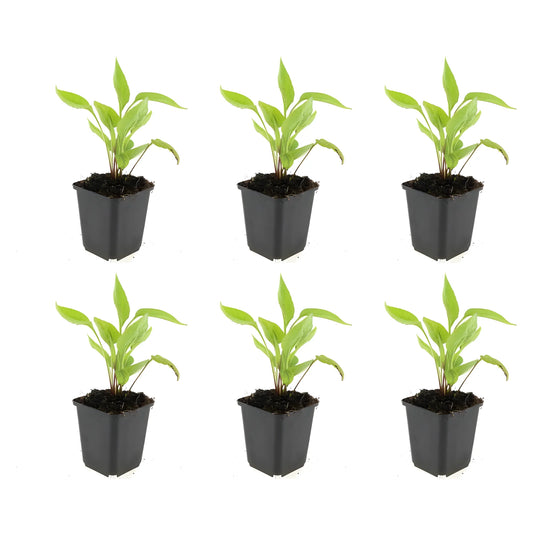
Echinacea 'White Swan' (Echinacea purpurea) - melliferous perennial with large white flowers
Regular price From 44,95 €Regular price -

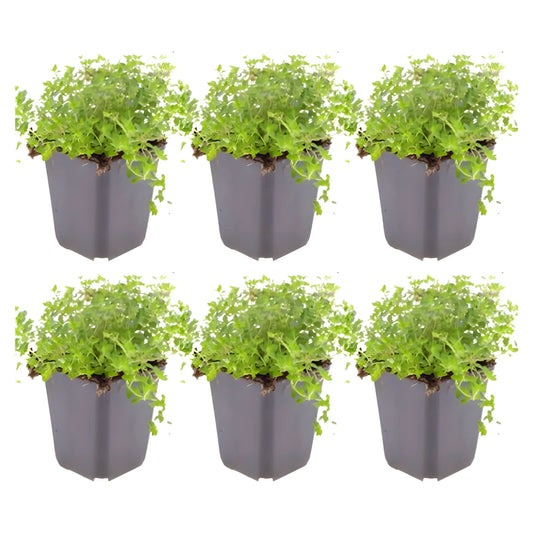
Creeping thyme (Thymus serpyllum) - flowering aromatic groundcover, lawn alternative
Regular price From 39,95 €Regular price -

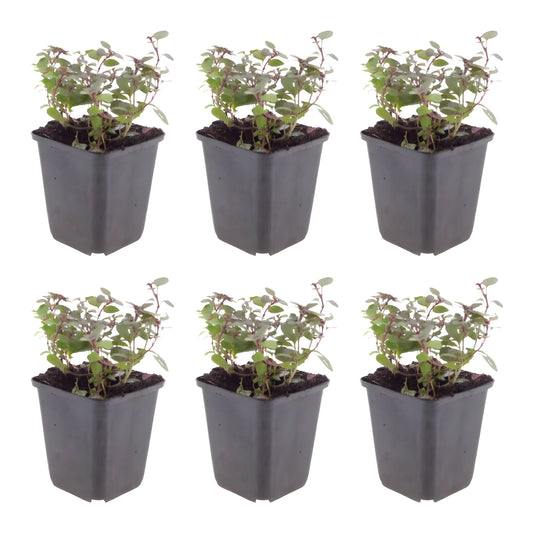
Ornamental Marjoram 'Herrenhausen' (Origanum laevigatum) - melliferous perennial with purple flowers and purple foliage
Regular price From 44,95 €Regular price -

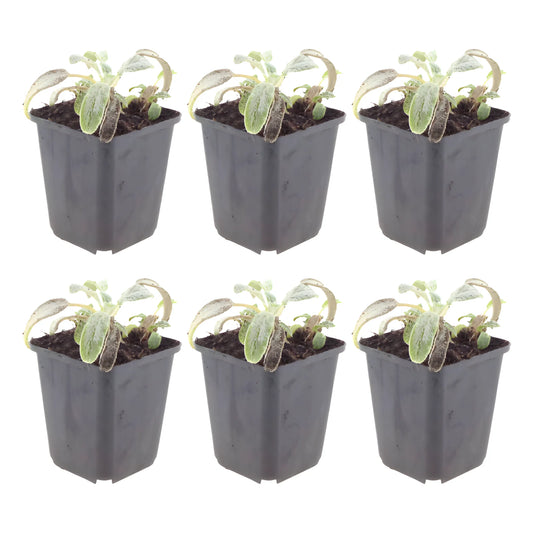
Bear's ear 'Silver Carpet' (Stachys byzantina) - silver-leaved and fuzzy groundcover
Regular price From 49,95 €Regular price -
Blue fescue 'Elijah Blue' (Festuca glauca) - evergreen glacier-blue cushion grass
Regular price From 44,95 €Regular price


In summary: an easy, water-wise sunny flower bed
Remember the formula: plants suited to dry climates, well-drained soil, gravel mulch and watering only during the first few years. With Mediterranean plants, grasses and a few sun-loving perennials, the sunniest spot in your garden becomes the easiest to care for: full of flowers and fragrance, buzzing with bees and water-wise, even in a heatwave.
Start small, with three or four carefully chosen plants and a generous layer of gravel mulch: you’ll see that a successful full-sun flower bed takes mostly common sense and very little effort, season after season.
-

Our flowering outdoor shrubs: buddleias, dogwoods, deutzias, hibiscus, mock oranges and more...


Laura Bruneau
Jardinière & autrice