Catalpa (Catalpa bignonioides): planting, pruning, and globe catalpa

Plant the catalpa in full sun, sheltered from strong winds, in fertile, moist but well-drained soil; once established, it needs almost no pruning and provides dense shade and a spectacular white bloom in summer.
Its botanical name is Catalpa bignonioides, the common catalpa or bean tree, and the RHS rates it H6, meaning hardy to -20 to -15°C. You still need to choose the right form: the large shade tree grows over 12 m tall, while the ball catalpa 'Nana', grafted onto a standard, stays at about head height and almost never flowers.
This guide covers both, from planting to pruning, as well as their drawbacks, problems and differences from paulownia; to see how they compare with other flowering shrubs and small ornamental trees, also consult our guide to flowering shrubs.
🌿 Why plant a catalpa, and its drawbacks
The catalpa combines three rare benefits for a garden tree: enormous leaves that provide cool shade in midsummer, late flowering after most trees have finished blooming, and rapid growth.
According to North Carolina State University Extension (NC State Extension), its heart-shaped leaves measure about 10 inches long by 6 inches wide (approximately 25 × 15 cm), and its fragrant, 1.5-inch (about 4 cm) bell-shaped flowers are white, marked with yellow and purple.
The same source also lists its drawbacks: messy fruit, an irregular, twisting branch structure, leaves with an unpleasant smell when crushed, a need for plenty of space, and possible wind and hail damage. In a small garden, the ball catalpa avoids most of these drawbacks, at the expense of flowering.
| Benefit | What it means for you |
|---|---|
| Dense shade in summer | Leaves up to 25 cm long (RHS) cool a patio or a corner of the lawn |
| Midsummer flowering | White panicles appear after spring-flowering trees have finished blooming |
| Rapid growth | A shade tree that establishes faster than most fine timber species |
| Undemanding soil requirements | Chalk, clay, loam or sand; acidic to alkaline soil; tolerates heavy clay (RHS) |
🔎 Catalpa at a glance
According to Plants of the World Online (POWO) from the Royal Botanic Gardens, Kew, Catalpa bignonioides Walter, published in 1788 in Flora Caroliniana, is the accepted name for the species in the Bignoniaceae family; it is native to the area from eastern Texas to southern Georgia (Alabama, Florida, Georgia, Louisiana, Mississippi and Texas).
POWO records it as introduced in several European countries, including Germany, Spain, Italy, Hungary, Romania and Bulgaria, as well as in China, Korea and several US states. Its synonym Bignonia catalpa L. recalls its relationship to trumpet vines.
According to Trees and Shrubs Online, it arrived in England around 1726, brought back by Mark Catesby, and later spread through European gardens in the 18th and 19th centuries. The genus has 8 accepted species according to the genus Catalpa on POWO, distributed across North America, the Caribbean and China.
| Feature | Verified details |
|---|---|
| 🏷️ Botanical name | Catalpa bignonioides Walter (1788), synonym Bignonia catalpa L. |
| 🧬 Family | Bignoniaceae |
| 🌳 Type | Fast-growing deciduous tree with a broad, rounded crown |
| 🌍 Origin | Southeastern United States, from eastern Texas to southern Georgia (POWO) |
| ❄️ Hardiness | RHS H6: -20 to -15°C; USDA zones 5a to 9b (NC State) |
| 🍃 Foliage | Deciduous, heart-shaped leaves up to 25 cm (RHS), opposite or in whorls of three |
| 🌸 Flowering | Summer; conical panicles of 3 to 4 cm white flowers marked with orange and purple (RHS) |
| 📏 Mature size | Over 12 m tall and over 8 m wide in 20 to 50 years (RHS) |
📋 Quick growing guide
Essential growing information at a glance.
| Parameter | Guideline |
|---|---|
| Position | Full sun, sheltered from strong winds |
| Soil | Fertile, moist but well-drained; chalk, clay, loam or sand; any pH |
| Hardiness | RHS H6, -20 to -15°C; young shoots are sensitive to late frosts |
| Watering | Monitor during dry spells for the first two growing seasons, then self-sufficient in moist soil |
| Planting | October to April, ideally in autumn or winter when the ground is not frozen (RHS) |
| Pruning | Minimal (RHS pruning group 1); pollarding or coppicing in late winter is optional |
| Flowering | Summer for the common catalpa; rare for ball catalpa 'Nana' |
| Care | Easy; collect seed pods and watch for verticillium wilt |
| Toxicity | No information found in our sources (ASPCA, NC State) |
📍 Where and when to plant a catalpa
Plant the catalpa in full sun: the RHS Catalpa bignonioides profile says it tolerates all aspects but recommends a sheltered position, as strong winds tear its large leaves, and advises protecting young trees from late spring frosts.
For the common catalpa, allow room for a large tree, over 8 m wide, well away from buildings, paths and patios that could be soiled by its fallen seed pods and flowers. The ball catalpa, by contrast, fits in a courtyard or city garden: the RHS recommends a south- or west-facing position.
As for timing, the RHS gives October to April as the best planting period; a container-grown tree can be planted at any time of year, but establishes better in autumn or winter.
☀️ Common catalpa: A large, sunny, sheltered lawn, several metres from the house, for summer shade
🏡 Ball catalpa: Courtyard, city garden, entrance or avenue planting, in a sheltered south- or west-facing position
🚫 Avoid: Wind tunnels, the edge of a patio or pool (seed pods, flowers), dense shade
🪴 Planting a catalpa in the ground
The catalpa is not fussy about soil type: the RHS (Royal Horticultural Society) grows it in fertile, moist but well-drained soil and notes that it tolerates heavy clay. NC State Extension also says it suits acidic, neutral or alkaline soils and can tolerate moisture, although it prefers good drainage.
Follow the RHS guide to planting trees: make a hole no deeper than the root ball but at least three times as wide, keep the root collar level with the soil, and stake tall trees, removing the stake after two growing seasons.
The same source recommends staking tall trees or those with a heavy crown: this applies to the ball catalpa grafted onto a standard, whose dense crown catches the wind.
| Step | What to do |
|---|---|
| 1. Choose the right time | October to April, when the ground is not frozen; autumn is ideal for a container-grown tree |
| 2. Dig | Make a hole no deeper than the root ball and at least three times as wide |
| 3. Position | Keep the root collar level with the soil; ensure the ball catalpa's graft union is well above the ground, at the top of the stem |
| 4. Stake | Place the stake on the side facing the prevailing winds; remove it after two growing seasons |
| 5. Water and mulch | Water thoroughly and mulch, leaving 10 cm clear around the trunk |
columns: 4
columns_mobile: 2
-

Japanese Flowering Cherry 'Kojo-no-mai' (Prunus incisa) - ornamental flowering cherry - 19 cm pot - Height 90 cm
Regular price 69,95 €Regular price69,95 €55,96 €Livraison offerte -


'Golden Spirit' smoke tree (Cotinus coggygria) - golden-foliaged shrub - 12 cm pot - Height 35 cm
Regular price From 39,95 €Regular price59,95 €Sale price From 39,95 €39,95 €From 31,96 €Livraison offerte Sale -

Butterfly bush 'White Profusion' (Buddleja davidii) - nectar-rich shrub - 17 cm pot - Height 45 cm
Regular price From 39,95 €Regular price39,95 €From 31,96 €Livraison offerte -


Common lilac 'Mme Lemoine' (Syringa vulgaris) - scented shrub - 17 cm pot - Height 45 cm
Regular price 49,95 €Regular price49,95 €39,96 €Livraison offerte -

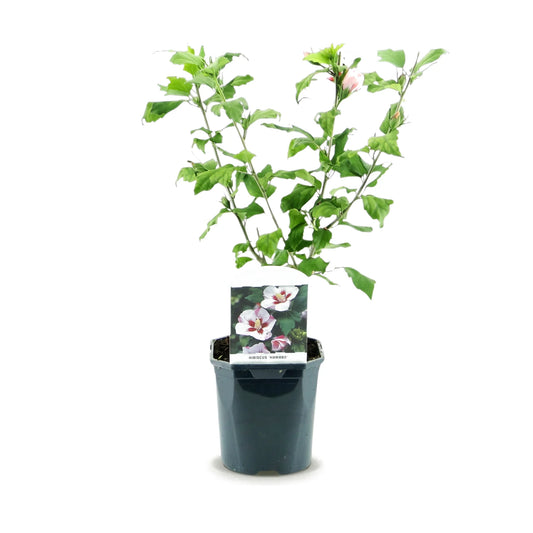
Hibiscus 'Hamabo' (Hibiscus syriacus) - flowering shrub - 17 cm pot - Height 45 cm
Regular price From 44,95 €Regular price44,95 €From 35,96 €Livraison offerte -

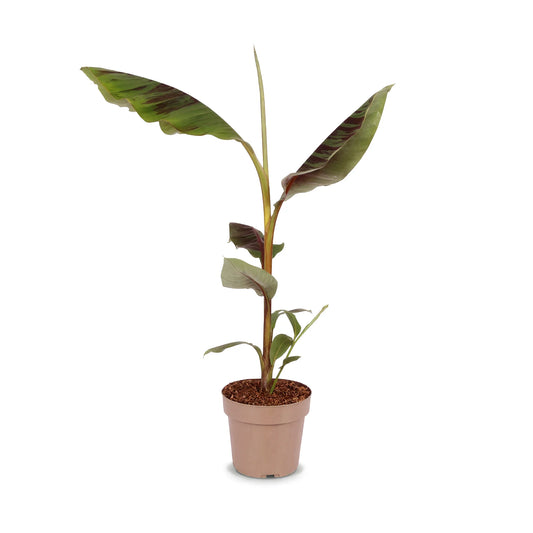 Livraison offerte Sold out
'Ever Red' Banana Plant (Musa) - Purple-Leaved Banana Plant - 21 cm Pot - Height 90 cm
Regular price 64,95 €Regular price64,95 €51,96 €Livraison offerte Sold out


✂️ Catalpa care: watering, seed pods and monitoring
An established catalpa needs very little care: most attention is needed during the first two or three years. In dry weather during the growing season, the RHS recommends 30 to 50 litres of water per square metre per week for young trees, and keeping a circle at least 1.2 m in diameter free of grass around the base for three years.
NC State Extension describes it as easy to grow and fast-growing, with no serious problems. The main chore is clearing up: its capsules, which grow to 24 to 56 cm according to Trees and Shrubs Online, ripen and turn brown in autumn, then fall over the course of winter.
💧 Watering: 30 to 50 L/m² per week in dry weather for the first few seasons (RHS)
🔹 Weed control: Keep a circle at least 1.2 m wide around the base free of grass for the first three years (RHS)
🌱 Fertilizer: Not needed in fertile soil; add compost around the base in spring if the soil is poor
🔹 Seed pods and leaves: Collect in autumn and winter near paths and patios
🔹 Rootstock suckers: On a ball catalpa, cut off any shoots growing on the stem below the crown
🍂 Pruning catalpa and ball catalpa, flowering and winter
The catalpa does not need pruning: the RHS Catalpa bignonioides profile places it in pruning group 1, for trees that need minimal pruning; simply remove dead, damaged or poorly placed wood.
To encourage larger leaves, the RHS states on its 'Aurea' profile that pollarding or coppicing in late winter or early spring increases leaf size; the RHS coppicing guide also lists Catalpa among the trees suitable for this treatment and recommends cutting to 5 to 7.5 cm above the ground from February to March.
The ball catalpa is also in pruning group 1 according to the RHS 'Nana' profile.
If its crown gets too wide, the RHS method described in its pollarding guide applies: shorten the current year's shoots back to the previous cuts in late winter or early spring, repeating annually to maintain a consistent size.
As for flowering, NC State Extension places it from early to late summer, later than that of Catalpa speciosa; in cool climates with short summers, Trees and Shrubs Online describes it as quite late, in August.
📅 Seasonal care calendar
| Season | Key task |
|---|---|
| 🌸 Spring | Plant until April; pollard or coppice in late winter; protect young shoots from late frosts |
| ☀️ Summer | Common catalpa's white flowers; water young trees in dry weather; remove rootstock suckers |
| 🍂 Autumn | Seed pods ripen in autumn; plant container-grown trees; collect leaves |
| ❄️ Winter | Persistent seed pods remain on the tree: collect them from the ground; lightly prune dead wood when there is no frost |
🌱 Propagating catalpa: seeds, cuttings and grafting
The RHS lists three propagation methods: sowing seeds, taking softwood cuttings and grafting.
For ball catalpa, the RHS 'Nana' profile specifies softwood cuttings in late spring or grafting in winter; Trees and Shrubs Online describes it as a grafted clone, generally top-grafted onto a stem, a form that rarely flowers.
Seeds are sown from the winged seeds inside the pods, but seedlings do not come true to variety. Self-seeding is also something to watch for: NC State Extension notes that it can escape cultivation thanks to its winged seeds.
In France, the ranked list of invasive alien species in Rhône-Alpes (National Alpine Botanical Conservatory, 2020) gives it a rating of 1, “non-invasive taxon.” Pulling out young seedlings that sprout at the base is still good practice.
🐛 Common problems: causes and solutions
The catalpa is a hardy tree: the RHS says it is generally free of pests and lists only verticillium wilt and, more rarely, honey fungus among its diseases. NC State Extension also mentions powdery mildew, twig dieback, leaf spots and catalpa sphinx caterpillars, which are rarely fatal. Here are the most common symptoms and what to do.
| Symptom | Likely cause | Solution |
|---|---|---|
| Branches wilt and dry out in summer | 🍄 Verticillium wilt, a disease listed by the RHS | Cut affected branches back to healthy wood, disinfect the tool, and do not replant a susceptible tree in the same spot |
| Leaves torn after a windstorm | 🌬️ Large leaves are vulnerable to wind (RHS); wind and hail damage (NC State) | Plant in a sheltered spot; damage is cosmetic |
| Leaves eaten in summer | 🐛 Catalpa sphinx caterpillars (NC State), rarely fatal | Tolerate them, or hand-pick them from a young tree; the tree will grow new leaves |
| White powder on leaves | 🍄 Powdery mildew, listed by NC State | Thin out the canopy, avoid wetting the foliage, and collect fallen leaves |
| Catalpa not flowering | ⚠️ Ball catalpa 'Nana', which rarely flowers (RHS); young tree; hard pruning in late winter or a cool summer | For flowers, choose the common catalpa, plant it in full sun, and avoid severe pruning |
| Vigorous shoots below the head of a ball catalpa | ⚠️ Rootstock suckers | Cut them flush with the stem as soon as they appear, or they will take over |
-

Our flowering outdoor shrubs: buddleias, dogwoods, deutzias, hibiscus, mock oranges and more...


🌸 Catalpa varieties
The genus contains 8 species according to POWO, but only a few forms are commonly grown in gardens. Here are the ones you may encounter, along with what our sources say about each. We don't currently offer catalpas in our shop.
| Variety | What makes it special |
|---|---|
| Catalpa bignonioides (common catalpa) | A large shade tree, eventually growing to over 12 m (RHS), with summer white flowers and long pods |
| Catalpa bignonioides 'Nana' (ball catalpa) | Grafted onto a stem, with a dense, rounded crown; grows to 1.5–2.5 m in 5–10 years and rarely flowers according to the RHS; originated in Paris around the 1840s (Trees and Shrubs Online) |
| Catalpa bignonioides 'Aurea' (golden catalpa) | Golden-yellow leaves up to 30 cm long in spring, turning green in summer; awarded the RHS AGM (Award of Garden Merit) |
| Catalpa 'Purpurea' | Young shoots and leaves are dark purple, turning dark green; classified by some sources as C. bignonioides and by others as Catalpa × erubescens |
| Catalpa speciosa (northern catalpa) | A related species that is hardier according to NC State (USDA zones 4a to 8b) and flowers earlier, from late spring to early summer |
| Catalpa bungei and Catalpa ovata | Chinese species accepted by POWO, distinct from the North American common catalpa |
🎨 Plants to pair with catalpa
A common catalpa planted on its own in a lawn makes a fine specimen tree; beneath its canopy, choose shade-loving perennials to plant beneath trees that can cope with the dense shade in summer.
Catalpas are often confused with paulownia (Paulownia tomentosa): paulownia bears pale purple flowers in spring, before or alongside its leaves, and produces woody oval capsules, whereas catalpa flowers white in summer, after leafing out, and bears long pods.
For a garden of full-sun plants, a ball catalpa pairs well with purple smoke bush (Cotinus) or butterfly bush (Buddleja); for another ornamental tree with striking foliage, consider ginkgo (maidenhair tree) or Magnolia grandiflora.
Explore our ornamental trees and shrubs, alternatives to catalpa, our flowering shrubs, and our outdoor flowering plants.
⚠️ Is catalpa toxic?
We can't answer with certainty: we couldn't find a catalpa entry in the ASPCA's (American Society for the Prevention of Cruelty to Animals) list of toxic and non-toxic plants, and the NC State Extension profile does not provide any toxicity information. In the absence of a reliable source, we cannot say that it is either toxic or safe.
As a precaution, keep children and pets from chewing on the leaves, flowers, or pods, and consult a veterinarian or poison control center if any part is ingested. Finally, note that according to NC State Extension, the leaves give off an unpleasant smell when crushed.
✅ Our expert tips for success
A thriving catalpa comes down to a few simple rules: full sun in a sheltered spot, fertile, moist but well-drained soil, regular watering for the first two years, and enough room to grow. First, choose the right form: the common catalpa for shade and summer flowers in a large garden, or the ball catalpa for a courtyard or small garden, accepting that it will rarely flower.
Prune sparingly, only in late winter; remove rootstock suckers from grafted forms and collect pods near walkways.
A catalpa in bloom on a July evening is one of the sights that make me love park trees. In a medium-sized garden, though, I more often recommend the ball catalpa for its neat, rounded shade over a table. Before planting a large one, I encourage you to carefully consider the available space and picture its mature canopy. And if you're deciding between it and paulownia, weigh up both options: in my view, catalpa is the easier tree to live with in the garden.

Laura Bruneau
Jardinière et autrice