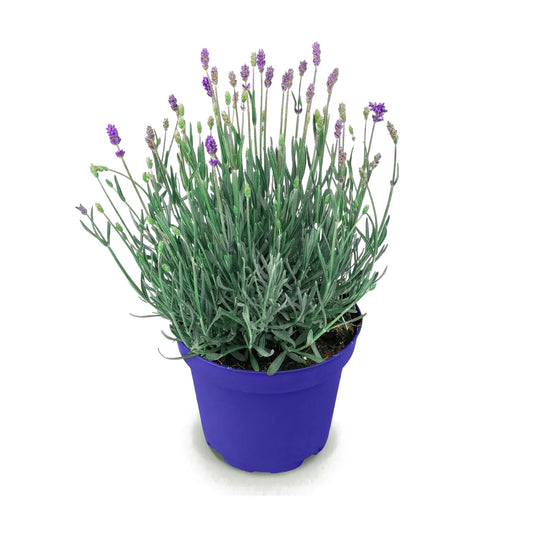
Lavender: Complete Guide to Planting, Pruning, and Care

Lavender embodies the Mediterranean garden all on its own: its fragrance, color, and the hum of bees immediately evoke the Southern sun. Yet, this plant with its easy-going reputation has specific requirements. When planted correctly, pruned properly, and situated in the right place, it can live for about ten years and flower generously every summer. This comprehensive guide covers planting, delicate pruning, harvesting, and drying to help you make the most of your lavender.
💜 Lavender, the fragrant queen of dry gardens
True lavender (Lavandula angustifolia), also known as fine lavender, is the most sought-after variety. It is both the most hardy, withstanding temperatures from -15 to -20°C, and the most fragrant, making it the queen of flower beds and the basis of the finest essential oils. It forms compact clumps 30 to 40 cm high.
A sun-loving plant that thrives in poor soil, lavender hates dampness and rich soil above all else. It lives for about 10 years, provided it is pruned every year to prevent it from becoming bare. Depending on the variety and climate, it flowers from June to August.
| Criterion | Lavender at a glance |
|---|---|
| Botanical name | Lavandula angustifolia (true lavender) |
| Height | 30 to 40 cm for true lavender |
| Flowering | From June to August |
| Hardiness | -15 to -20°C for true lavender |
| Exposure | Full sun essential |
| Lifespan | About 10 years with annual pruning |
🌸 True lavender or lavandin: what are the differences?
True lavender and lavandin are often confused, yet their uses differ. Lavandin is a natural hybrid that is larger, with longer flower spikes and is much more productive in essential oil. It is what you see in the large purple fields of Provence, grown for perfumery and distillation.
True lavender, on the other hand, remains smaller and hardier, and its fragrance is considered finer and more subtle. Lavandin's fragrance is stronger but more camphor-like. For a small private garden, true lavender is often the best choice; for producing a lot of oil, lavandin wins out.
| Criterion | True lavender | Lavandin |
|---|---|---|
| Nature | Species (angustifolia) | Sterile hybrid |
| Size | 30 to 40 cm | Larger and wider |
| Hardiness | -15 to -20°C | Less hardy |
| Essential oil | Fine, low yield | Abundant, more camphor-like |
☀️ Soil and exposure: where to plant lavender
Lavender requires full sun: this is the number one condition for flowering. In shade or partial shade, it becomes leggy, flowers little, and lives for a shorter time. Choose the brightest and warmest spot in the garden.
As for the soil, it requires poor, dry, very well-drained, and preferably alkaline earth. It thrives where many plants fail, on stony and arid soils. Its mortal enemy is standing water, which rots the roots in winter.
In heavy or clay soil, do not give up: plant on a mound or in a rock garden, incorporating gravel and sand for drainage. Lavender also grows very well in pots, provided you ensure impeccable drainage at the bottom of the container.
| Condition | Recommendation |
|---|---|
| Exposure | Full sun, essential |
| Soil | Poor, dry, well-drained, alkaline |
| Avoid | Standing water and rich soils |
| Heavy soil | Plant on a mound, add gravel and sand |
| Pot culture | Possible with careful drainage |
columns: 4
columns_mobile: 2
-

Ceanothus Repens (Ceanothus), flowering Mediterranean shrub, light blue flowers, 19 cm pot, Height 90 cm
Regular price 69,95 €Regular price69,95 €55,96 €Livraison offerte -


Ceanothus Victoria (Ceanothus), flowering Mediterranean shrub, purple flowers, 19 cm pot, Height 90 cm
Regular price 69,95 €Regular price69,95 €55,96 €Livraison offerte -


Eucalyptus Azura (Eucalyptus gunnii), Mediterranean ornamental shrub, 19 cm pot, Height 70-90 cm
Regular price 74,95 €Regular price74,95 €59,96 €Livraison offerte -

 Livraison offerte Sold out
Hidcote Lavender (Lavandula angustifolia), Mediterranean perennial, 17 cm pot, Height 30 cm - Pack of 6
Regular price 84,95 €Regular price84,95 €67,96 €Livraison offerte Sold out -
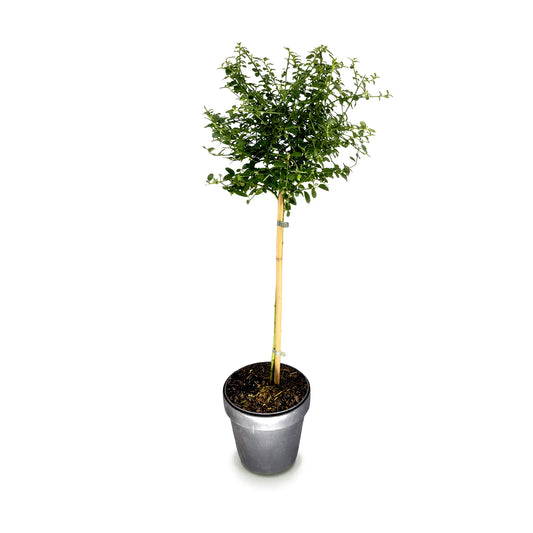
Olive (Olea europaea), Mediterranean ornamental shrub, 19 cm pot, Height 90 cm
Regular price 69,95 €Regular price69,95 €55,96 €Livraison offerte -

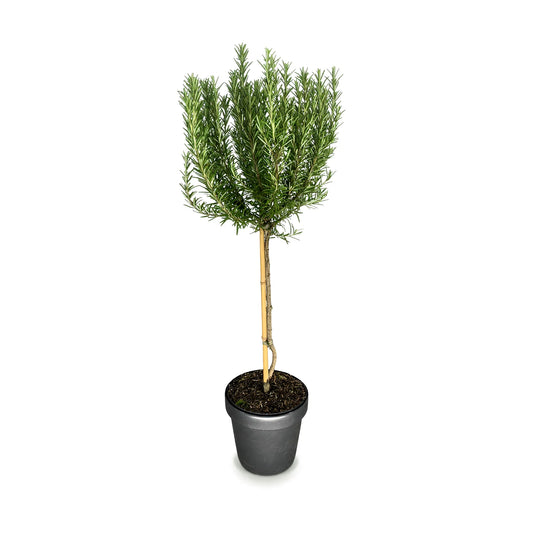
Rosemary (Rosmarinus officinalis), Mediterranean perennial, purple flowers, 19 cm pot, Height 90 cm
Regular price 69,95 €Regular price69,95 €55,96 €Livraison offerte -

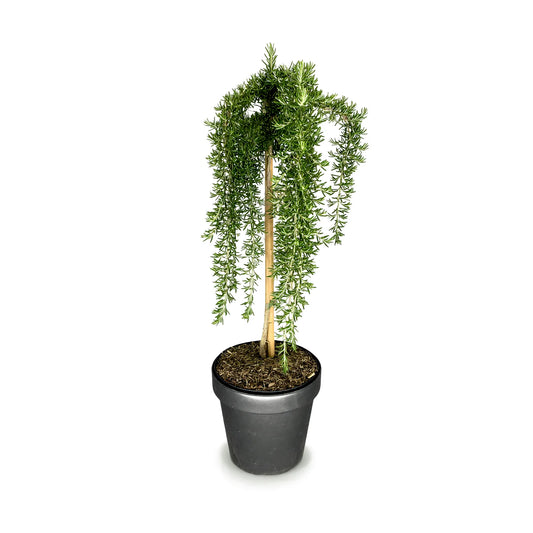
Prostrate Rosemary (Rosmarinus officinalis), Mediterranean perennial, purple flowers, 19 cm pot, Height 70–90 cm
Regular price 69,95 €Regular price69,95 €55,96 €Livraison offerte


🌱 Planting lavender: timing, spacing, and pots
Lavender is preferably planted in spring, after the last frosts, or in autumn in mild climates. Spring gives the roots the whole growing season to establish themselves before the first winter, which is often the most critical.
For a regular and dense border, space the plants 30 to 40 cm apart: they will grow together to form a continuous ribbon. Never plant too deep, and avoid mulching with damp organic matter at the base, which retains water.
Water at planting to ensure establishment, then space out watering very quickly. Once established, lavender is a drought champion and requires almost no more watering when planted in the ground.
For a low hedge or a regular checkerboard pattern, allow about 6 to 7 plants per square meter, respecting the spacing of 30 to 40 cm. In a pot, choose a container at least 30 cm in diameter, with holes in the bottom, filled with a very well-drained substrate (gravel or coarse sand mixed with potting soil), without a layer at the bottom: the drainage hole is enough to drain the water. A substrate that retains too much water in a pot is the leading cause of failure, long before the cold.
✂️ Pruning lavender without cutting into old wood
Pruning is the action that determines the longevity of your lavender. It is done after flowering, at the end of summer, once the flower spikes have faded. A light shaping prune in early spring is also possible.
The absolute rule: never prune into old wood. Unlike other shrubs, lavender does not regrow from bare, stripped wood. Only cut back the current year's stems, always leaving some green foliage on the pruned part.
In practical terms, shorten the current year's shoots by one-third to one-half, forming a compact and regular ball. This annual pruning prevents the plant from becoming bare in the center and significantly extends its lifespan.
| Question | Answer |
|---|---|
| When to prune? | After flowering, at the end of summer |
| How much to cut? | One-third to one-half of the current year's stems |
| Old wood | Never: it does not regrow from bare wood |
| Shape to achieve | Compact and regular ball |
📅 Caring for lavender throughout the seasons
This calendar summarizes the key actions to support your lavender throughout the year.
📅 Seasonal maintenance calendar
| 🌸 Spring | Planting after frosts; light shaping prune; start of vegetation growth. |
| ☀️ Summer | Full flowering from June to August; harvesting flower spikes; pruning after flowering. |
| 🍂 Autumn | Planting in mild climates; light cleaning; avoid excess water. |
| ❄️ Winter | Dormancy; monitor drainage; no severe pruning or watering. |
🌾 Harvesting and drying lavender
The timing of the harvest is crucial for the fragrance. Cut the flower spikes just before the flowers fully open, when the first ones begin to open: this is when the essential oils are most concentrated. Work in dry weather, preferably in the morning after the dew has evaporated.
For drying, form small bouquets, tie the stems together, and hang them upside down in the shade, in a dry and well-ventilated place. The shade preserves the purple color and fragrance, which full sun would cause to fade.
Once dry, your bouquet will fragrance the home or closets for a long time, or can be turned into sachets. It is one of the great rewards of growing lavender, along with the ballet of bees in summer.
Allow about one to two weeks for complete drying, depending on the ambient humidity and the thickness of the bouquets. Do not tie the stems too tightly: air must circulate between the flower spikes to prevent mold. Dried flowers retain their fragrance for many months and are equally suited for decoration and scented uses in the home.
🚫 Why isn't my lavender flowering? Common problems
Lavender that does not flower is always disappointing, but the cause is almost always identifiable. In the vast majority of cases, it is a lack of sun: planted too much in the shade, lavender produces foliage but few flowers.
The second common cause is a lack of pruning. Without annual pruning, the plant becomes bare, spreads out, and flowers less and less. Soil that is too rich or too damp completes the picture of classic mistakes.
| Problem | Cause | Solution |
|---|---|---|
| Does not flower | Lack of sun | Replant in full sun |
| Bare plant | Lack of pruning | Prune every year after flowering |
| Root rot | Damp or heavy soil | Improve drainage, plant on a mound or in a pot |
| Foliage without flowers | Soil too rich in nitrogen | Do not fertilize, keep the soil poor |
💐 Using and combining lavender in the garden
Beyond its beauty, lavender is a valuable ally for the gardener. Honey-producing, it attracts bees and butterflies all summer. Planted as a border along a path, it structures the space and releases its fragrance at the slightest touch.
It pairs wonderfully with roses, drought-tolerant perennials, and grasses in water-efficient beds. Its silvery foliage persists in winter and brings light to the garden even out of season.
It also makes an excellent companion in the vegetable garden, where its fragrance helps keep certain unwanted insects away from neighboring crops. As a pruned low hedge or in free-form clumps, it adapts to all garden styles, from the most formal to the most natural and wild.
Easy once its needs are understood (sun, well-drained soil, and proper annual pruning), lavender generously rewards the gardener year after year with its fragrance and blue-purple flower spikes. Three habits are enough to keep it beautiful for a long time: full sun, impeccable drainage, and annual pruning after flowering, without ever cutting into old wood.
-

Our flowering outdoor shrubs: buddleias, dogwoods, deutzias, hibiscus, mock oranges and more...


Mediterranean Plants Guide · Rosemary · Aromatic Plants (Lavender, Rosemary)
With lavender, everything comes down to the pruning shears. Prune every year after flowering, at the end of summer, shortening the current year's shoots by one-third to one-half to form a compact ball. But always leave a fringe of green foliage below your cut: as soon as you see bare grey wood, stop, because it will not regrow. Without this pruning, the plant becomes bare in the center and flowers less and less.

Laura Bruneau
Jardinière et autrice