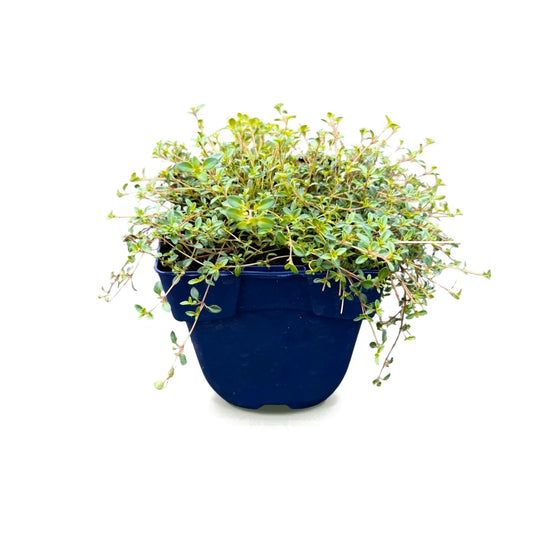
Stachys byzantina (Lamb’s Ear): Planting and Care

To grow Stachys byzantina successfully, plant it in full sun in well-drained soil, even poor soil, water it only during its first season and cut back the faded flower spikes: excess water, never cold or drought, is what causes it to decline. This perennial with silvery, woolly foliage has several common names: lamb’s ear, bear’s ear or Byzantine woundwort.
It forms a very soft-to-the-touch evergreen carpet, ideal for a border, rock garden or dry garden. This guide complements our guide to ground-cover perennials for a low-maintenance flower bed and draws on the RHS, Kew, NC State Extension, and the universities of Wisconsin and Florida.
🌿 Why plant lamb’s ear in the garden
Lamb’s ear brings silvery light to sunny borders and covers the ground without asking for anything in return. According to the RHS (Royal Horticultural Society), it forms an evergreen carpet of thick, soft leaves densely covered in white down, reaching 10 to 50 cm (4 to 20 in) tall and spreading 50 cm to 1 m (20 in to 3 ft) wide.
The RHS lists it among plants for pollinators and describes its cultivar ‘Big Ears’ as drought-resistant, a weed-suppressing ground cover and suitable for sensory gardens.
NC State Extension also describes it as resistant to deer, rabbits and drought, and recommends it for children’s gardens and sensory gardens.
| Benefit | What it means for your garden |
|---|---|
| Evergreen silvery foliage | Woolly gray-white leaves brighten the border all year (evergreen foliage according to the RHS) |
| Ground cover for full sun | A carpet spreading 50 cm to 1 m (20 in to 3 ft) per plant, helping suppress unwanted weeds |
| Drought and poor soils | Once established, it needs no watering; chalk, loam or sand suit it (RHS) |
| Sensory garden and pollinators | Soft leaves to touch, with pink-purple flower spikes visited by bees and butterflies |
🔎 Lamb’s ear (Stachys byzantina): at a glance
According to Plants of the World Online (POWO) from the Royal Botanic Gardens, Kew, Stachys byzantina K.Koch is an accepted name, published in 1849; Stachys lanata Jacq. and Stachys olympica Poir. are synonyms, which explains why “Stachys lanata” can still be found in garden centers.
The species belongs to the Lamiaceae family, which also includes lavender and sage. Its native range extends from Crimea and northern Turkey to the Caucasus and northern Iran; France is among the areas where it has been introduced, along with Germany, Great Britain and Spain.
Don’t confuse it with betony, Stachys officinalis, which POWO now considers a synonym of Betonica officinalis, another species also sold under the name Stachys.
| Category | Verified details |
|---|---|
| 🏷️ Botanical name | Stachys byzantina K.Koch (1849); synonyms Stachys lanata Jacq., Stachys olympica Poir. (POWO) |
| 🧬 Family | Lamiaceae, the family of lavender, sage and catmint |
| 🌳 Type | Evergreen to semi-evergreen herbaceous perennial, spreading by stems that root at the nodes |
| 🌍 Origin | Crimea, northern Turkey to the Caucasus and northern Iran; introduced, among other places, to France (POWO) |
| ❄️ Hardiness | H7 for the species, ‘Silver Carpet’ and ‘Big Ears’, meaning hardier than -20°C (-4°F) (RHS); USDA zones 4a to 9b (NC State) |
| 🍃 Foliage | Oblong leaves 10 to 15 cm (4 to 6 in) long and 5 to 6 cm (2 to 2.4 in) wide, thick and covered in white woolly down (NC State) |
| 🌸 Flowering | Small purple or pink flowers in whorls on interrupted spikes in summer; May to July according to NC State |
| 📏 Mature size | 10 to 50 cm (4 to 20 in) tall, spreading 50 cm to 1 m (20 in to 3 ft) in 2 to 5 years (RHS); flower stems up to 60 cm (24 in) (University of Wisconsin) |
📋 Quick growing guide
Essential growing information, all in one place.
| Growing requirement | Guideline |
|---|---|
| Light | Full sun, south-facing aspect; tolerates exposed sites (RHS); light partial shade in hot climates |
| Soil | Chalky, loamy or sandy, well-drained, acidic, neutral or alkaline (RHS); tolerates clay if water drains away (NC State) |
| Hardiness | H7: hardier than -20°C (-4°F) on the RHS scale |
| Watering | At planting and during the first season; thereafter only during prolonged drought, and never on the foliage |
| Planting | March to early May or late September to October, when the soil is not waterlogged (RHS) |
| Pruning | No pruning needed; remove faded flower spikes to prolong the plant’s life (RHS) |
| Flowering | Summer, May to July (NC State); ‘Big Ears’ from June to September (RHS); ‘Silver Carpet’ rarely flowers |
| Care | Very easy in dry soil; divide every 2 to 4 years (NC State) |
| Toxicity | No toxicity reported by the RHS or NC State; no verified ASPCA listing |
📍 Where and when to plant Stachys byzantina
Reserve the sunniest, best-drained spot in the garden for lamb’s ear. The RHS grows it in full sun, in a south-facing position, in moderately fertile, well-drained, chalky, loamy or sandy soil, and notes that ‘Silver Carpet’ needs protection from excessive winter moisture.
NC State Extension also recommends sand, loam and even clay, provided the soil is very well drained, and advises planting it on a mound or slope in hot, humid regions to prevent root rot. The University of Wisconsin adds that light shade suits it in hot climates.
☀️ Ideal: South-facing path border, rock garden, dry slope, base of a low wall, dry garden bed with lavenders
🌥️ Acceptable: Light partial shade in southern France; amended clay soil on a mound, provided water drains quickly
🚫 Avoid: Dense shade, a damp hollow, the base of a downspout, an area reached by an automatic sprinkler
🪴 How to plant lamb’s ear, step by step
Drainage matters far more than soil fertility.
According to the RHS guide to planting perennials, perennials can be planted in spring, from March to early May, or in fall, from late September to October, when the soil is moist but not waterlogged; dig a hole just wide and deep enough for the root ball, without burying the base of the stems, then water thoroughly.
For spacing, the same source recommends planting slightly closer together than the plants’ mature spread: a plant 60 cm (24 in) wide should be planted about 50 cm (20 in) from its neighbors. NC State Extension recommends spacing of 30 to 90 cm (12 to 36 in), depending on the effect desired.
| Step | What to do |
|---|---|
| 1. Choose a spot | Full sun, soil that never stays waterlogged, away from automatic sprinklers |
| 2. Prepare the soil | Loosen the soil, add gravel or coarse sand to heavy soil, and form a mound if needed |
| 3. Plant | Set the root ball level with the soil, keeping the crown and base of the leaves above ground, with no organic mulch against the leaves |
| 4. Water | Water thoroughly at planting (RHS), then keep the soil just slightly moist while the plant establishes |
| 5. Space | About 40 to 50 cm (16 to 20 in) between plants for a continuous carpet in two to three seasons |
columns: 4
columns_mobile: 2
-

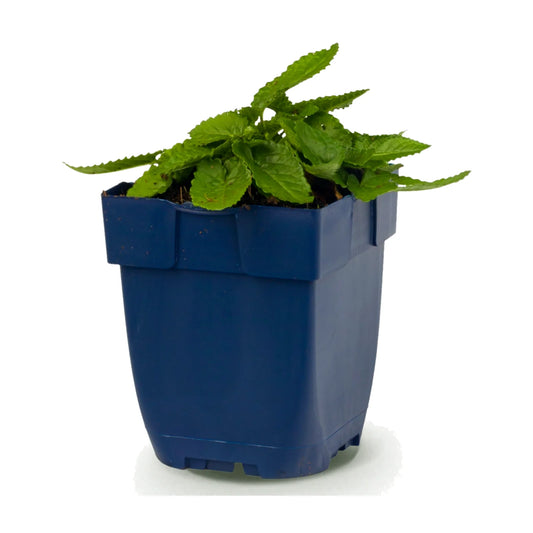
Betony 'Ukkie' (Stachys officinalis) - compact bee-friendly perennial - 11 cm pot - Height 15-25 cm
Regular price From 39,95 €Regular price39,95 €From 31,96 €Livraison offerte -


‘Six Hills Giant’ Catmint (Nepeta faassenii) – bee-friendly perennial – 11 cm pot – Height: 25 cm
Regular price From 39,95 €Regular price39,95 €From 31,96 €Livraison offerte -


Lavender 'Hidcote' (Lavandula angustifolia) - fragrant honey-producing perennial - 11 cm pot - Height 25 cm
Regular price From 39,95 €Regular price39,95 €From 31,96 €Livraison offerte -

 Livraison offerte
Thyme (Thymus) – aromatic perennial – 11 cm pot – height 25 cm
Regular price From 64,95 €Regular price64,95 €From 51,96 €Livraison offerte -

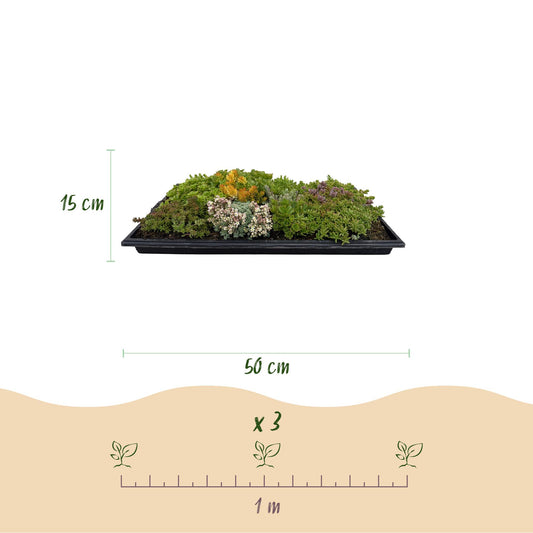
Sedum Mat (10 species) – Perennial succulent ground cover – Pack of 2 – Height: 20 cm
Regular price 69,95 €Regular price69,95 €55,96 €Livraison offerte -

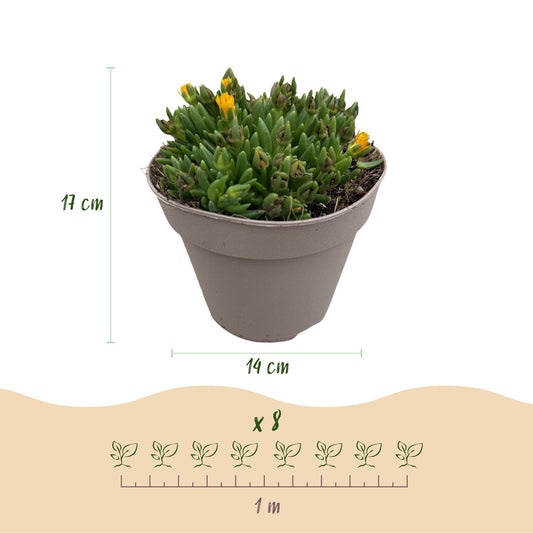
Perennial ice plant (Delosperma) – flowering ground cover – 14 cm pot – height 17 cm
Regular price From 49,95 €Regular price49,95 €From 39,96 €Livraison offerte -

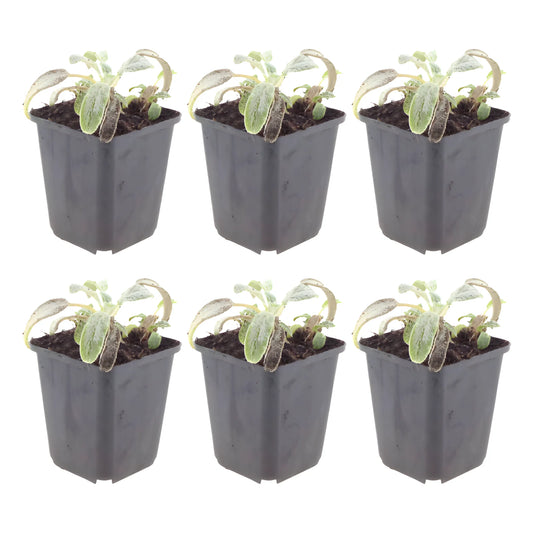
Bear's ear 'Silver Carpet' (Stachys byzantina) - silver-leaved and fuzzy groundcover
Regular price From 49,95 €Regular price49,95 €From 39,96 €Livraison offerte -


Betony 'Hummelo' (Stachys officinalis) - melliferous perennial with purplish-pink spikes
Regular price From 49,95 €Regular price49,95 €From 39,96 €Livraison offerte


✂️ Caring for lamb’s ear: watering, flower spikes and cleanup
A well-sited lamb’s ear needs very little care. Water only while it is establishing and during prolonged drought, always at the base: NC State Extension notes that wet leaves encourage disease, especially during humid summers. The RHS says no pruning is needed, but recommends removing the flowers to prolong the plant’s life.
According to the University of Wisconsin-Madison Extension horticulture program, many gardeners cut flower stems as soon as they appear, which also improves the plant’s vigor and encourages new leaves. In spring, simply remove any leaves damaged over winter.
💧 Watering: Regularly during the first season, then only during prolonged drought, and never on the foliage
🌱 Fertilizer: Not needed: the RHS recommends only moderately fertile soil
🔹 Faded flower spikes: Cut back at the base to prolong the plant’s life (RHS); can be removed as soon as they appear
🧹 Cleanup: Remove rotten or damaged leaves in spring and after a rainy summer
🍴 Division: Every 2 to 4 years (NC State), when the center of the clump begins to thin out
🍂 Lamb’s ear through the seasons
In spring, plant, divide old clumps and clear away damaged leaves. Summer is the season for flower spikes, from May to July according to NC State Extension and through September for ‘Big Ears’ according to the RHS; this is also when stormy, wet weather can cause the foliage to rot. In fall, plant new specimens while the soil is still warm.
In winter, cold poses no threat to the plant: according to the RHS hardiness scale, H7 corresponds to temperatures below -20°C (-4°F). The University of Wisconsin, however, reports winter damage where the soil stays wet.
📅 Seasonal care calendar
| Season | Key task |
|---|---|
| 🌸 Spring | Plant from March to early May; divide older clumps; remove leaves damaged over winter |
| ☀️ Summer | Flowers from May to July (September for ‘Big Ears’); cut back faded spikes; water only during prolonged drought |
| 🍂 Fall | Plant from late September to October; remove rotten leaves after rain |
| ❄️ Winter | Dormant; evergreen foliage; watch for standing water around the base, especially in heavy soil |
🌱 Propagating lamb’s ear: division, rooted offsets or seed
Lamb’s ear almost propagates itself: NC State Extension explains that it spreads by stems that root at the nodes and can spread aggressively in favorable conditions. The RHS recommends dividing it or taking rooted offsets in spring, as growth begins. Replant them straight away at the same depth and water them.
The species can also be sown in a seed tray under a cold frame in fall or spring, according to the RHS; sterile cultivars such as ‘Cotton Boll’, however, can only be propagated by division, notes the University of Wisconsin.
🐛 Common problems: causes and solutions
Lamb’s ear has few pests and diseases, contrary to what some fact sheets claim: the RHS lists slugs, caterpillars and powdery mildew, while NC State Extension reports leaf rot caused by high humidity or excessive rainfall. Almost all problems therefore come down to water. Here’s how to read the signs.
| Symptom | Likely cause | Solution |
|---|---|---|
| Brown, soft leaves at the center of the clump | 🍄 Rot caused by moisture or excessive rain (NC State) | Remove affected leaves, stop watering, improve drainage or replant on a mound |
| The center of the clump is thinning out | 🌱 Crown rot in overly wet soil, or an old clump | Divide the clump and replant vigorous offsets in well-drained soil |
| Plant disappears after winter | 💧 Soil waterlogged in winter (University of Wisconsin) | Replant at the top of a slope or on a mound with gravel |
| Leaves have been chewed | 🐛 Slugs or caterpillars (RHS) | Hand-pick them in the evening; use traps; remove nearby damp hiding places |
| Unusual white, powdery coating | 🍄 Powdery mildew (RHS) | Remove affected leaves, improve airflow around the clump, water at the base |
| Clump spreads beyond its allotted space | ⚠️ Stems root at the nodes (NC State) | Pull out excess offsets in spring and replant them elsewhere |
-

Cover the ground with ease: our outdoor ground cover plants blanket slopes,...


🌸 Our Stachys byzantina varieties
Here are the best-documented forms, with the source for each description (RHS, NC State Extension, University of Wisconsin). The sources do not always agree on flowering times; we note this where relevant.
| Variety | What makes it special |
|---|---|
| Stachys byzantina (species) | Silvery carpet 10 to 50 cm (4 to 20 in) tall, purple or pink flower spikes in summer, H7 (RHS) |
| 'Silver Carpet' | Dense carpet of gray-white leaves up to 10 cm (4 in) long, H7 (RHS); rarely flowers according to NC State: the choice for ground cover without flower spikes |
| 'Big Ears' | Large grey-green leaves, pink to purple flowers from June to September according to the RHS, which lists 'Countess Helen von Stein' as a synonym; NC State says 'Helene von Stein' rarely flowers and is more heat-tolerant |
| 'Cotton Boll' | Sterile: woolly tufts replace the flowers along the stems; spreads more slowly and is sensitive to wet soil in winter (University of Wisconsin) |
| 'Primrose Heron' | Pink flowers and yellow leaves in spring (NC State) |
| 'Ukkie' (11 cm pot) | Stachys sold as 'Ukkie' in our shop; cultivar not described by the RHS or NC State |
🎨 Which plants to pair with lamb's ear
Its silvery foliage softens the blues, purples and pinks of full-sun perennials. At the front of a dry border, it pairs well with catmint, lavender, cotton lavender and perovskia, which have similar needs.
In a rock garden, plant it near sedums and Delosperma.
Its flower spikes also attract a remarkable visitor: according to the University of Florida (UF IFAS), the female wool-carder bee (Anthidium manicatum), native to Europe, western Asia and North Africa, scrapes the woolly hairs from lamb's ear to line her nest.
To plan your border, browse our ground covers, including our Stachys, our full-sun plants, our perennials for borders and all our outdoor plants.
⚠️ Is lamb's ear toxic or edible?
We found no authoritative source declaring it toxic: neither the RHS nor NC State Extension reports toxicity, and NC State even recommends it for children's gardens. We were unable to consult an ASPCA profile for this species, so we cannot say that it is safe for dogs and cats.
As for the “medicinal properties” and edibility often mentioned online, POWO only mentions medicinal uses, without details, and no other source we consulted documents them: we offer no health or cooking advice and recommend that you do not eat it.
✅ Our expert tips for success
Growing Stachys byzantina successfully comes down to three rules: full sun, soil that never stays wet, and limited watering while it gets established. Choose 'Silver Carpet' for a silvery mat without flower spikes, 'Big Ears' for large leaves, and cut off faded spikes to extend the plant's life.
Hardy to H7 according to the RHS, lamb's ear is unfazed by cold but dislikes moisture: plant it on a mound in heavy soil, divide it every 2 to 4 years, and it will cover your dry borders for years.
Lamb's ear is the plant everyone touches as they walk by: children stroke it like a comfort blanket. I learned the hard way that it can't cope with a stormy summer under automatic irrigation, so I now keep it at the top of the border, where it's dry. I cut off most of the flower spikes to keep the mat looking neat, but always leave a few for the bees. With lavender and catmint, it brings incomparable softness to a dry border.

Laura Bruneau
Jardinière et autrice