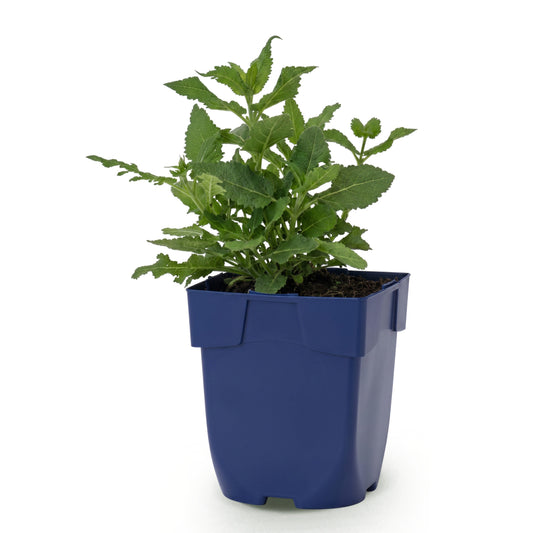
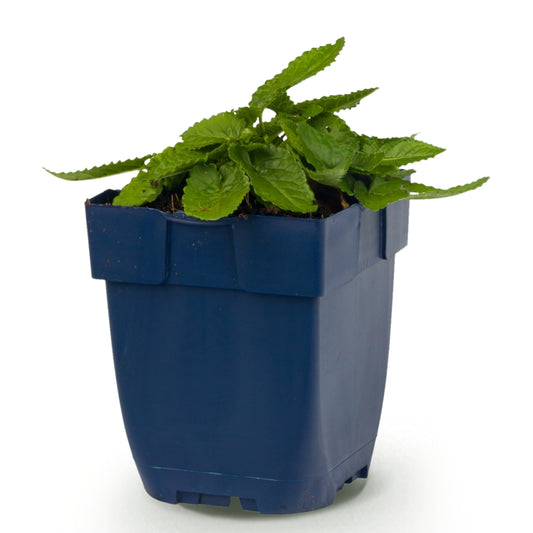
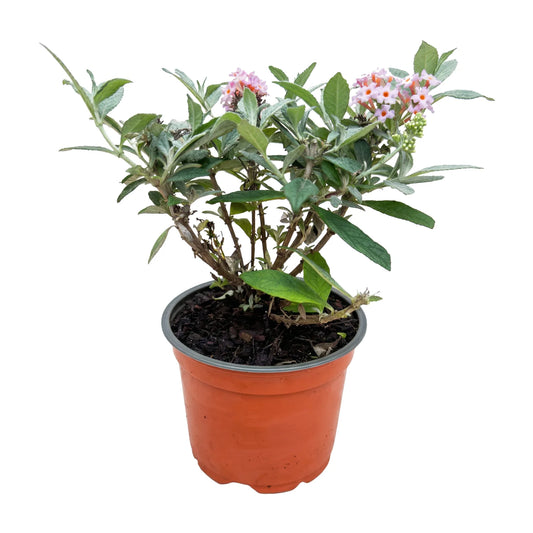
Perovskia (Russian sage): planting, pruning, care

To grow Perovskia successfully, plant it in full sun in well-drained soil, even poor or chalky soil, water it only during its first year, then cut it back hard at the start of every spring.
Sold under the name Perovskia atriplicifolia, it is now called Salvia yangii according to Plants of the World Online (POWO), the Royal Botanic Gardens, Kew database: it is therefore a true sage, in the Lamiaceae family. Gardeners know it as Russian sage, Afghan sage, or Afghan lavender.
With its silvery foliage and drought-tolerant blue flower spikes, it deserves a place in our guide to dry gardens and drought-tolerant plants. This guide covers its identity, planting, pruning, varieties, and the few problems to watch out for.
🌿 Why plant Russian sage in the garden
Russian sage brings something to the border that few perennials can offer late in the season: a lasting blue haze above silvery foliage.
According to the RHS (Royal Horticultural Society), it forms a deciduous, woody-based clump with upright white stems, aromatic, finely cut gray-green leaves no more than 5 cm long, and long panicles of tiny blue flowers in late summer and early autumn.
It is listed among the RHS’s “Plants for Pollinators.” According to NC State Extension, its foliage has a strong, aromatic scent when crushed, and the plant is resistant to deer and rabbits.
| Benefit | What this means for you |
|---|---|
| Long flowering period | June to October according to NC State; around two months of flowering according to the University of Wisconsin |
| Drought tolerance | Prefers occasionally dry soil and is mainly susceptible to standing water (NC State) |
| Pollinators | Bees and butterflies visit the flowers; RHS “Plants for Pollinators” label |
| Few problems | No serious pests or diseases once established (NC State, University of Wisconsin) |
🔎 Perovskia at a glance
According to Plants of the World Online, the accepted name is Salvia yangii B.T.Drew, published in 2017 in the journal Taxon (volume 66, page 141); Perovskia atriplicifolia Benth. is a homotypic synonym, and Perovskia pamirica a heterotypic synonym. Its native range covers Afghanistan, Pakistan, Tibet, the western Himalayas, and Xinjiang; POWO records it as introduced in Austria, Germany, and New Mexico.
According to the University of Wisconsin horticultural extension, it grows in the hills and grasslands of Central Asia up to about 2,400 m; the genus was named around 1840 by Russian botanist Karelin in honor of B. A. Perovsky, governor of the Russian province of Orenburg, although the plant is not native to Russia.
The name “Siberian sage,” sometimes used in garden centers, is therefore misleading. In terms of cold hardiness, the RHS rates it H5, or -15 to -10 °C according to the RHS hardiness scale; NC State Extension lists it for USDA zones 5a to 9b, and Wisconsin for zones 4 to 9.
The Perennial Plant Association named it Perennial Plant of the Year in 1995, notes the University of Wisconsin.
| Feature | Verified details |
|---|---|
| 🏷️ Botanical name | Salvia yangii B.T.Drew (2017); synonym: Perovskia atriplicifolia Benth. (POWO) |
| 🧬 Family | Lamiaceae, like lavender, rosemary, and sages |
| 🌳 Type | Deciduous subshrub with a woody base, grown as a perennial |
| 🌍 Origin | Afghanistan, Pakistan, Tibet, western Himalayas, Xinjiang (POWO) |
| ❄️ Hardiness | RHS H5: -15 to -10 °C; USDA zones 5a to 9b (NC State) |
| 🍃 Foliage | Gray-green to silvery, finely divided, aromatic when crushed, on white stems |
| 🌸 Flowers | Panicles of small violet-blue tubular flowers, from late summer into autumn |
| 📏 Mature size | 1 to 1.5 m tall and 0.5 to 1 m wide in 2 to 5 years (RHS) |
📋 Quick growing guide
The essentials of growing it, at a glance.
| Factor | Guideline |
|---|---|
| Exposure | Full sun, at least 6 hours a day (NC State); south- or west-facing (RHS) |
| Soil | Well drained: chalky, loamy, or sandy; acidic to alkaline pH (RHS) |
| Hardiness | RHS H5, -15 to -10 °C |
| Watering | Regularly during the first growing season, then hardly at all; never allow water to stand |
| Planting | In spring, once the soil has drained; space plants about 45 cm apart (Wisconsin) |
| Pruning | Hard prune in early spring, to 15 to 30 cm above ground according to sources |
| Flowers | June to October (NC State), violet-blue |
| Care | Very easy; avoid rich soil, fertilizer, and shade, which cause the stems to flop |
| Toxicity | No ASPCA listing; no toxicity data reported by NC State |
📍 Where and when to plant Perovskia
Plant Perovskia in the sunniest spot in your garden: NC State Extension calls for at least 6 hours of direct sunlight a day, and the RHS recommends a south- or west-facing position. As for soil, the RHS grows it in chalky, loamy, or sandy ground with an acidic, neutral, or alkaline pH, as long as it is well drained; NC State adds that poorly drained or waterlogged soils should be avoided.
Poor soil suits it better than rich soil: a note from Iowa State University Extension observes that stems flop in fertile soil or when light is insufficient. Plant in spring, once the soil has drained, so the crown can establish before its first winter.
☀️ Ideal: A dry, south-facing border, slope, rock garden, gravel border, or warm spot at the base of a wall
🪨 Soil: Poor, stony, or chalky, and above all well drained; plant on a mound or add gravel in heavy soil
🚫 Avoid: Partial shade, clay soil waterlogged in winter, very rich soil, or fertilized ground
🪴 Planting Perovskia in the ground
Planting is straightforward as long as you meet its need for good drainage. The University of Wisconsin recommends spacing plants of the species about 45 cm apart; allow more room for larger cultivars, which spread up to 1 m according to the RHS. In a dry garden, plant it alongside other heat-loving plants featured in our guide to designing a Mediterranean border.
During the first year, water at the base to help the roots establish; after that, let the plant take care of itself, as it prefers occasionally dry soil according to NC State.
| Step | What to do |
|---|---|
| 1. Choose a spot | Full sun, at least 6 hours a day, facing south or west, and away from standing moisture |
| 2. Prepare the soil | Loosen the soil and add gravel or sand to heavy soil; do not enrich it with compost or manure |
| 3. Space the plants | About 45 cm for the species (Wisconsin), 60 cm to 1 m for larger cultivars |
| 4. Plant | Moisten the root ball, keep the crown level with the soil, and firm the soil gently |
| 5. Water and mulch | Water thoroughly at planting, then use mineral mulch (gravel) rather than organic mulch |
columns: 4
columns_mobile: 2
-


Lavender 'Hidcote' (Lavandula angustifolia) - fragrant honey-producing perennial - 11 cm pot - Height 25 cm
Regular price From 39,95 €Regular price39,95 €From 31,96 €Livraison offerte -

 Livraison offerte Sold out
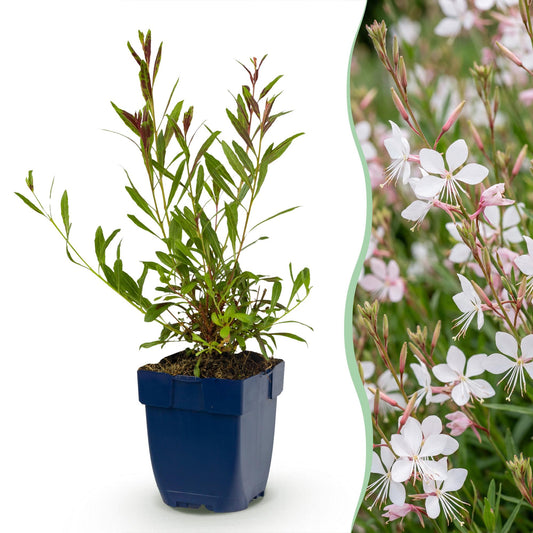
Gaura 'Whirling Butterflies' (Gaura lindheimeri) - melliferous perennial - 11 cm pot - Height 25 cm
Regular price From 39,95 €Regular price39,95 €From 31,96 €Livraison offerte Sold out -


‘Six Hills Giant’ Catmint (Nepeta faassenii) – bee-friendly perennial – 11 cm pot – Height: 25 cm
Regular price From 39,95 €Regular price39,95 €From 31,96 €Livraison offerte -


Ornamental sage 'Schneehügel' (Salvia nemorosa) – nectar-rich perennial – 11 cm pot – height 25 cm
Regular price From 39,95 €Regular price39,95 €From 31,96 €Livraison offerte -

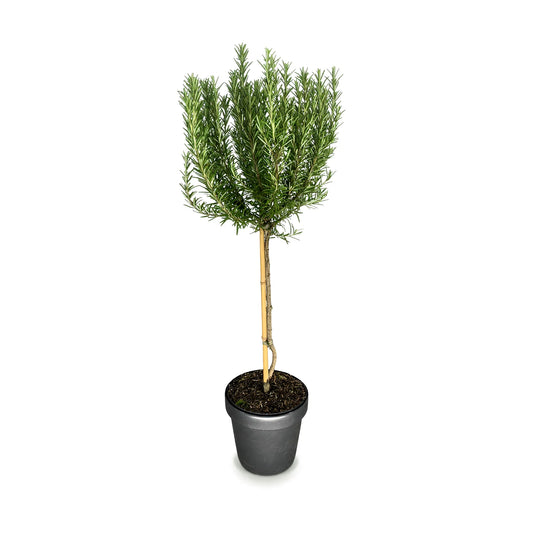
Rosemary (Rosmarinus officinalis), Mediterranean perennial, purple flowers, 19 cm pot, Height 90 cm
Regular price 69,95 €Regular price69,95 €55,96 €Livraison offerte -


Coneflower 'Magnus' (Echinacea purpurea) - melliferous perennial - 11 cm pot - Height 25 cm
Regular price From 39,95 €Regular price39,95 €From 31,96 €Livraison offerte -


Buenos Aires verbena ‘Lollipop’ (Verbena bonariensis) – nectar-rich perennial – 11 cm pot – height 25 cm
Regular price From 39,95 €Regular price39,95 €From 31,96 €Livraison offerte -

 Livraison offerte
Thyme (Thymus) – aromatic perennial – 11 cm pot – height 25 cm
Regular price From 64,95 €Regular price64,95 €From 51,96 €Livraison offerte


✂️ Caring for Perovskia: watering, soil, and support
Once established, Russian sage needs almost no care. Water only during the first growing season in dry weather, then stop: NC State describes it as a plant that likes occasionally dry soil. Do not fertilize it: Iowa State notes that stems flop in fertile soil, and NC State says the plant tends to spread or flop.
The University of Wisconsin notes that young plants flop a little more than established ones. If your border is exposed to wind, surround the clump with sturdy companion plants rather than using conspicuous stakes.
💧 Watering: Water regularly in dry weather during the first year, then not at all except during extreme drought in pots
🌱 Fertilizer: None: rich soil makes the stems flop (Iowa State)
🍂 Mulch: Mineral mulch (gravel, pumice) to keep the crown dry
🔹 Support: Sturdy companion plants or a discreet ring if the stems flop
🧣 Winter: Leave the silvery stems in place for winter interest, then prune in spring
🍂 Pruning Perovskia: when and how much
Pruning is the key task. All sources agree on the timing: in early spring, once the worst of the cold has passed.
The RHS places the plant in pruning group 6 and recommends cutting it back hard in early spring; the RHS guide to pruning summer-flowering shrubs cites it as an example and advises cutting the previous year’s stems back to one or two buds on the woody framework in early or mid-spring.
Recommended heights vary by source: a few centimeters above ground for NC State, around 30 cm for the University of Wisconsin, and 15 to 20 cm for Iowa State. NC State also recommends cutting it back to around 30 cm after the first hard frost in fall. Wisconsin explains that annual pruning prevents the plant from becoming too woody.
📅 Seasonal care calendar
| Season | Key task |
|---|---|
| 🌸 Spring | Hard prune in early spring when buds have swollen; plant; take softwood cuttings in late spring (RHS) |
| ☀️ Summer | Flowers from June according to NC State; take semi-ripe cuttings (RHS); no watering needed for established plants |
| 🍂 Fall | Flowers until October; leave stems in place; optionally cut back to 30 cm after the first hard frost (NC State) |
| ❄️ Winter | Dormant; silvery silhouettes in the garden; watch for standing water around the base |
🌱 Propagating Perovskia: cuttings, seeds, and division
The RHS recommends propagation by cuttings: take softwood cuttings in late spring or semi-ripe cuttings in summer. The University of Wisconsin recommends taking softwood cuttings about 8 to 10 cm long in summer to reproduce a cultivar faithfully.
Growing from seed is possible but slow: according to the same source, germination takes 1 to 4 months at around 16 to 18 °C, and a cold period of 10 days to 6 weeks at around 2 to 7 °C may help. Division is possible but slow, Wisconsin notes.
Iowa State also reports that the plant self-seeds and spreads by rhizomes when conditions suit it: these offshoots are easy to remove.
🐛 Common problems: causes and solutions
Perovskia is known for being hardy: NC State Extension reports no serious pests or diseases, and the RHS says it is generally pest-free. However, the RHS lists a few possible diseases: crown and root rot, powdery mildew, verticillium wilt, and, rarely, honey fungus. Most problems are caused by an unsuitable site: too much shade, too much water, or too much fertilizer.
| Symptom | Likely cause | Solution |
|---|---|---|
| Stems flop and open out in the center | ☀️ Soil too rich, not enough sun (Iowa State), or a young plant | Stop fertilizing, move it into full sun, and prune lower in spring |
| Crown turns black and plant declines in winter | 🍄 Crown and root rot (RHS), waterlogged soil | Improve drainage, plant on a mound, and stop watering in winter |
| White coating on the leaves | 🍄 Powdery mildew (RHS) | Open up the clump, avoid watering the foliage, and remove affected stems |
| Entire stems wilt in summer | ⚠️ Possible verticillium wilt (RHS) | Cut off affected stems; do not replant a sage in the same spot |
| Plant becomes bare and very woody at the base | ✂️ No annual pruning (Wisconsin) | Cut it back hard at the start of every spring |
| Young shoots appear around the clump | ⚠️ Self-seeding and rhizomes (Iowa State) | Pull out or lift the offshoots and replant them elsewhere |
-

Nectar-producing plants & pollinators
Provide food for bees, bumblebees, and butterflies: our selection of outdoor nectar-rich...


🌸 Perovskia varieties
Several cultivars are popular in gardens, with considerable differences in height. The RHS has awarded its Award of Garden Merit to 'Blue Spire' (see the RHS 'Blue Spire' profile) and describes the compact RHS profile for 'Little Spire'. Table sources: RHS for the first three rows, University of Wisconsin for the rest (approximate conversions). NC State also lists 'Blue Steel' and 'Crazy Blue'.
| Variety | What makes it special |
|---|---|
| Salvia yangii (type species) | 1 to 1.5 m tall, 0.5 to 1 m wide; blue flowers in late summer and early autumn; H5 |
| 'Blue Spire' | Award of Garden Merit; 1 to 1.5 m; violet-blue flowers in large, feathery panicles; finely cut leaves |
| 'Little Spire' | Compact: 0.5 to 1 m tall and wide; violet-blue flowers from late summer to early autumn; ideal for a small border or gravel garden |
| 'Filigran' | Very finely cut, lace-like foliage; bright blue flowers; approximately 60 to 90 cm |
| 'Longin' | Stiff stems and upright habit, pale purple-lavender flowers; approximately 1.2 m tall |
| 'Denim 'n Lace' | Purple flowers, less finely cut leaves; approximately 85 cm tall by 1.2 m wide |
🎨 Which plants to pair with Perovskia
Perovskia pairs well with plants that share its love of sun and dry conditions.
In a blue-and-silver border, pair it with lavender, cotton lavender or catmint; for continuous flowering, add perennial sage (Salvia nemorosa), yarrow and coneflower.
The airy stems of gaura and Buenos Aires verbena lighten its silhouette, while ornamental grasses extend the effect into winter.
At the back of the border, the butterfly bush continues to feed butterflies; our border of nectar-rich perennials for bees and butterflies explores these combinations.
Also discover our nectar-rich plants to pair with Perovskia, our full-sun plants and our Mediterranean plants.
⚠️ Is Perovskia toxic or dangerous?
We found no entry devoted to Russian sage in the ASPCA (American Society for the Prevention of Cruelty to Animals) list of toxic and non-toxic plants, and the NC State Extension entry provides no toxicity information.
In the absence of a source, we cannot say that it is either toxic or safe: as with any ornamental plant, keep pets from chewing it and consult a veterinarian if it is ingested.
The “danger” often mentioned is more about its spread: Iowa State says it can self-seed and spread by rhizomes, and that some gardeners consider it invasive, although it is not listed in the U.S. national database of invasive species.
✅ Our expert tips for success
Growing Perovskia successfully comes down to three rules: full sun, poor, well-drained soil, and hard pruning in early spring. Also remember that it is now called Salvia yangii, is hardy to -15 to -10 °C according to the RHS, and cultivars range from 0.5 to 1.5 m: choose 'Little Spire' for a small space and 'Blue Spire' for a generous border.
With no fertilizer or watering once established, it flowers from summer to autumn, much to the delight of bees.
For me, Perovskia is the plant that bridges summer and autumn in a dry border: when the lavenders have finished flowering, its blue haze takes over. The mistake I see most often is fussing over it: enriched soil, regular watering, and the stems flop over. I plant it in poor soil, leave it alone, and bring out the secateurs in spring without hesitation. And I love running my hand through its foliage to release its fragrance.
🎨 Which plants to pair with Perovskia
Perovskia pairs well with plants that share its love of sun and dry conditions.
In a blue-and-silver border, pair it with lavender, cotton lavender or catmint; for continuous flowering, add perennial sage (Salvia nemorosa), yarrow and coneflower.
The airy stems of gaura and Buenos Aires verbena lighten its silhouette, while ornamental grasses extend the effect into winter.
At the back of the border, the butterfly bush continues to attract butterflies; our border of nectar-rich perennials for bees and butterflies explores these combinations.
Also discover our nectar-rich plants to pair with Perovskia, our full-sun plants and our Mediterranean plants.
⚠️ Is Perovskia toxic or dangerous?
We found no entry devoted to Russian sage in the ASPCA (American Society for the Prevention of Cruelty to Animals) list of toxic and non-toxic plants, and the NC State Extension entry provides no toxicity information.
In the absence of a source, we cannot say that it is either toxic or safe: as with any ornamental plant, keep pets from chewing it and consult a veterinarian if it is ingested.
The “danger” often mentioned is more about its spread: Iowa State says it can self-seed and spread by rhizomes, and that some gardeners consider it invasive, although it is not listed in the U.S. national database of invasive species.
✅ Our expert tips for success
Growing Perovskia successfully comes down to three rules: full sun, poor, well-drained soil, and hard pruning in early spring. Also remember that it is now called Salvia yangii, is hardy to -15 to -10 °C according to the RHS, and cultivars range from 0.5 to 1.5 m: choose 'Little Spire' for a small space and 'Blue Spire' for a generous border.
With no fertilizer or watering once established, it flowers from summer to autumn, much to the delight of bees.
For me, Perovskia is the plant that bridges summer and autumn in a dry border: when the lavenders have finished flowering, its blue haze takes over. The mistake I see most often is lavishing it with care: enriched soil, regular watering, and the stems flop over. I plant it in poor soil, leave it alone, and bring out the secateurs in spring without hesitation. And I love running my hand through its foliage to release its fragrance.

Laura Bruneau
Jardinière et autrice