Rainwater: Watering and Benefits for Your Plants

Watering with rainwater gives your plants soft, slightly acidic water with no chlorine: exactly what sensitive tropical plants need. The rule fits in one sentence: clean rainwater for delicate plants, water that has been left to stand for robust ones. Find everything you need to pamper your plants in our collection of indoor plants.
This guide explains why rainwater is beneficial, which plants benefit most, how to collect it cleanly, and how to use it without getting it wrong.
✅ Why is rainwater beneficial for plants?
Rainwater brings together three qualities that tap water doesn't always have: it's soft, slightly acidic (with a pH of around 5.5 to 6.5, compared with 7 to 8 for many tap waters), and free of chlorine and fluoride. These characteristics make it ideal for many houseplants.
Its softness means it contains virtually no mineral salts (limescale), which are responsible for white deposits and harmful buildup in the potting mix. According to the U.S. Environmental Protection Agency (EPA), clean rain is slightly acidic, with a pH of around 5, which suits tropical plants that like a slightly acidic potting mix. As it falls, rainwater also picks up traces of atmospheric nitrogen.
Finally, rainwater is at room temperature (around 18 to 20 °C), which avoids the shock of water that's too cold for the roots. These benefits explain why plants often seem to green up after a rainfall. Rinsing the foliage with rainwater every 15 days also helps limit limescale deposits.
⚖️ Rainwater or tap water: what's the difference?
The main difference comes down to the additives in tap water: chlorine and fluoride, added to make it safe to drink, can bother some sensitive plants. Limescale, meanwhile, builds up in the potting mix over time with each watering.
Horticultural extension specialists note that chlorine and chloramine, while safe in drinking water, can harm sensitive plants, and that changing the type of water often reduces browning at the tips of leaves. The University of Florida (IFAS Extension) also points out in its guides to houseplants that water quality and salt buildup are among the common causes of brown leaf tips. That doesn't mean tap water is poisonous: most robust plants tolerate it perfectly well.
| Criteria | Rainwater | Tap water |
|---|---|---|
| Chlorine / fluoride | Absent | Often present |
| Hardness (limescale) | Very soft | Varies, often hard |
| pH | Slightly acidic | More neutral to alkaline |
| Temperature | Room temperature | Often cold |
Rainwater is my little secret for Calatheas and carnivorous plants, which hate limescale. You can really see the difference in the tips of their leaves. But I always reassure my customers: there's no need to feel guilty if you use tap water for your robust plants. Just leave the water to stand overnight. After years of experience, I save rainwater for the most delicate plants, and everyone's happy.
👍 Which plants benefit most from rainwater?
Plants that are sensitive to chlorine, fluoride, and limescale benefit most from being watered with rainwater. With these plants, you can quickly see the difference in their foliage.
Marantaceae (Calathea, Maranta), Dracaena, spider plants, and carnivorous plants are especially responsive: their leaf tips often turn brown with hard or chlorinated water, and they recover their healthy appearance with soft water. Acid-loving tropical plants also appreciate rainwater's slightly acidic pH. Calatheas are among the biggest beneficiaries. By contrast, robust plants like pothos, philodendrons, and monsteras tolerate tap water perfectly well: there's no need to save your precious rainwater for them; it's better to keep it for species that genuinely benefit from it.
columns: 4
columns_mobile: 2
-
Graduated watering bulb pipette, precision watering bulb
Regular price From 5,00 €Regular price5,00 €Sale price From 5,00 €5,00 €From 4,00 € -
Plant sprayer, mist spray bottle, fine mist, 250ml
Regular price From 5,00 €Regular price5,00 €Sale price From 5,00 €5,00 €From 4,00 € -
Plant cleaning gloves - Anti-limescale
Regular price 10,00 €Regular price10,00 €Sale price 10,00 €10,00 €8,00 € -
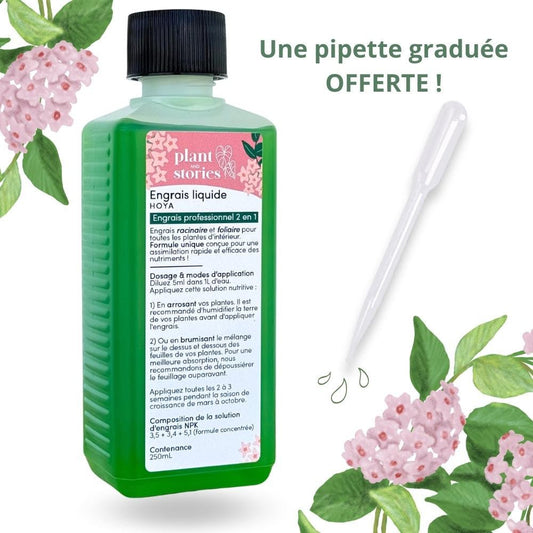
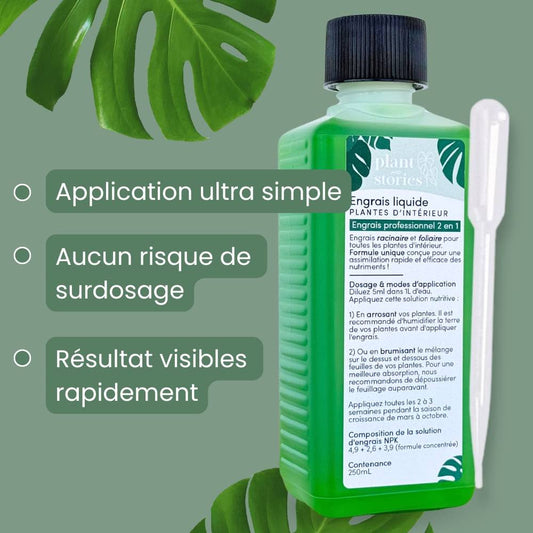
Fertilizer for All Indoor Plants - 250ml Liquid Fertilizer - Root and Foliar Fertilizer + Free Graduated Pipette!
Regular price 18,00 €Regular price20,00 €Sale price 18,00 €18,00 €14,40 €Sale




| Sensitive plant | Reaction to hard water |
|---|---|
| Calathea, Maranta | Pronounced brown leaf tips |
| Dracaena | Sensitive to fluoride; spots and burns |
| Spider plant | Frequent brown tips |
| Carnivorous plants | Very sensitive: soft water is essential |
🪜 How to collect rainwater cleanly
Collecting rainwater is simple, but cleanliness is essential: dirty or stagnant rainwater can do more harm than good. Collect rainwater in a clean, covered container. A single shower can fill several liters from a 10 m² roof, and ideally the water should be used within 5 to 7 days.
A rain barrel, bucket, or basin placed outside will do. The important thing is to keep the container clean, free of debris and algae, and to cover the supply to prevent mosquitoes and stagnation. In winter, melted snow works just as well. Just make sure to follow your local regulations for rainwater collection. One last practical tip: if you live in a city, avoid collecting the first drops of a shower, which wash pollution that has built up on the roof and gutters. Let it rain for a few minutes before putting out your container, or use a system that diverts the first flush. Rainwater collected this way—clean and clear—will keep for several weeks in a closed container, away from light.
| Good practice | Why |
|---|---|
| Clean container | Prevents bacteria and algae |
| Covered supply | Keeps out mosquitoes and debris |
| Melted snow in winter | An alternative to rain |
| Local regulations | Collection may be regulated |
📋 Quick reference (for experienced gardeners)
Rainwater essentials at a glance.
| Parameter | Guide |
|---|---|
| Benefits | Soft, chlorine- and fluoride-free, slightly acidic |
| pH of clean rain | About 4 to 5 (EPA) |
| Temperature | Room temperature, no shock |
| Target plants | Calathea, Dracaena, carnivorous plants |
| Collection | Clean, covered container |
| Tap water alternative | Leave to stand overnight (to remove chlorine) |
| Limitation | It's not a fertilizer |
| Winter | Melted snow can be used |
💧 Using rainwater in your daily routine
Rainwater is used just like any other watering water, with one caveat: it's not a fertilizer. Its small amount of nitrogen doesn't replace appropriate fertilizing during the growing season.
Water as usual, respecting each plant's needs and without overwatering just because the water is better quality. If you're short on rainwater, you can alternate with tap water that's been left to stand overnight, which lets the chlorine evaporate (but doesn't remove fluoride or limescale). Ideally, save rainwater for your most sensitive plants.
| Use | Tip |
|---|---|
| Regular watering | As usual, without overdoing it |
| Fertilizing | Still necessary: rainwater isn't enough |
| Short on rainwater | Tap water left to stand overnight |
| Priority | Save it for sensitive plants |


🆚 Alternatives to rainwater
When you can't collect rainwater, several options provide water of similar quality for sensitive plants. Each has its benefits and limitations.
Tap water left to stand for 24 to 48 hours loses its chlorine, but retains its fluoride and limescale. Filtered water reduces chlorine and some minerals. Demineralized or reverse-osmosis water is very pure, with almost no minerals, making it ideal for the most delicate plants, but it lacks useful nutrients. Often, the best compromise is to alternate between water types depending on the plants.
| Water | Benefit | Limitation |
|---|---|---|
| Rainwater | Soft, acidic, free | Must be collected cleanly |
| Tap water left to stand | Simple, chlorine-free | Retains fluoride and limescale |
| Filtered | Less chlorine and fewer salts | Filter needs maintenance |
| Demineralized / reverse osmosis | Very pure | No useful minerals |
🩺 Diagnosis: water and foliage health
Water quality often shows on the leaves. Here's how to interpret the signs.
| Symptom | Likely cause and solution |
|---|---|
| Brown leaf tips | Fluoride/limescale: switch to rainwater |
| White surface deposits | Limescale: use soft water and rinse the potting mix |
| Pale or spotted leaves | Chlorine sensitivity: use water left to stand or rainwater |
| Slow growth despite everything | Not enough fertilizer: rainwater isn't fertilizer |
To care for your plants, our range of fertilizers and plant care products and our Calatheas will help you achieve flawless foliage.
💚 Lush foliage with Plant and Stories
Rainwater is a simple gift for your plants: soft, acidic, and free of additives, it especially enhances sensitive species. Collected cleanly and used wisely, it's the perfect complement to your plant care, but never a replacement for fertilizer. It's also an eco-friendly, economical choice that reduces your tap water use while making your plants happy.
To create your own jungle, explore our houseplants and plant care products, carefully selected in France. A gesture as simple as collecting rainwater can transform the look of your most delicate plants, season after season, for foliage without a single brown edge.