Lower Leaves Turning Yellow: Causes and Solutions

When the lower leaves of a plant turn yellow, three causes are the most common: natural aging, overwatering, and nitrogen deficiency. The good news: it’s usually nothing serious. The rule of thumb is simple: one or two old leaves turning yellow is normal; several at once with waterlogged potting soil points to excess water. Find everything you need to diagnose and care for your plants in our fertilizers and plant care range.
This guide will help you distinguish between the causes, make the right diagnosis based on the condition of the potting soil, and take the right steps to restore your plant’s vigor.
Yellowing lower leaves: is it serious?
In most cases, no: yellowing in the lowest, oldest leaves is often a natural process. The plant sheds its old leaves, now shaded by the upper foliage, to focus its energy on new growth.
So there’s no need to panic if one or two lower leaves turn yellow slowly while the rest of the plant is thriving. This is normal renewal, especially common in plants that naturally lose their lower leaves as they grow into tree-like forms.
However, if several leaves turn yellow at once, the yellowing progresses quickly, or other signs appear, you should look for an underlying cause that needs addressing. This is where observing the potting soil and the plant becomes essential. The good news: anyone can make the diagnosis, and it mainly comes down to a few simple clues. We’ll go through them cause by cause so you know exactly what to look for and how to respond.
Natural aging
Aging is the most reassuring cause: every leaf has a limited lifespan, and the oldest ones eventually turn yellow and fall off. This is a normal part of the plant’s life cycle.
You can recognize it by its slow pace and where it occurs: only the very oldest leaves at the bottom are affected, one at a time, while the plant continues to produce healthy new growth at the top. No action is needed, apart from gently removing yellow leaves for appearance’s sake. Many houseplants originally grow as trees and naturally shed their lower leaves as they mature.
| Sign of natural aging | What you observe |
|---|---|
| Number | One or two leaves at a time |
| Location | Only the lowest and oldest leaves |
| Rate | Slow and gradual |
| Rest of the plant | Healthy, with new growth |
The question I get asked most often is, “My plant is losing its lower leaves—is it sick?” Nine times out of ten, no: it’s just the natural cycle. Before I worry, I touch the potting soil. If it’s waterlogged, I look at the watering. If it feels normal and only one or two old leaves are turning yellow, I remove the leaf and move on. After years of experience, this simple finger test has saved me from plenty of unnecessary panic.
| Overwatering | Underwatering |
|---|---|
| Waterlogged potting soil | Dry soil, pulled away from the pot |
| Soft leaves | Curled, brittle leaves |
| Uniform yellowing | Brown edges first |
| Base may turn black | Plant feels light when lifted |
Overwatering: the leading cause of problems
When several lower leaves turn yellow at the same time, overwatering is the most likely culprit. By far, it’s the leading cause of problematic yellowing in houseplants.
Too much water suffocates the roots, preventing them from absorbing water and nutrients properly. This often causes the lower leaves to turn uniformly yellow. The telltale sign: the potting soil remains constantly moist or even waterlogged, including several days after watering. You may also notice a blackened stem base or fungus gnats. The solution is to let the soil dry out more between waterings and check that the pot drains properly.
columns: 4
columns_mobile: 2
-
Digital Thermometer Hygrometer
Regular price From 5,99 €Regular price5,99 €Sale price From 5,99 € -
Plant sprayer, mist spray bottle, fine mist, 250ml
Regular price From 5,00 €Regular price5,00 €Sale price From 5,00 € -
Graduated watering bulb pipette, precision watering bulb
Regular price From 5,00 €Regular price5,00 €Sale price From 5,00 € -
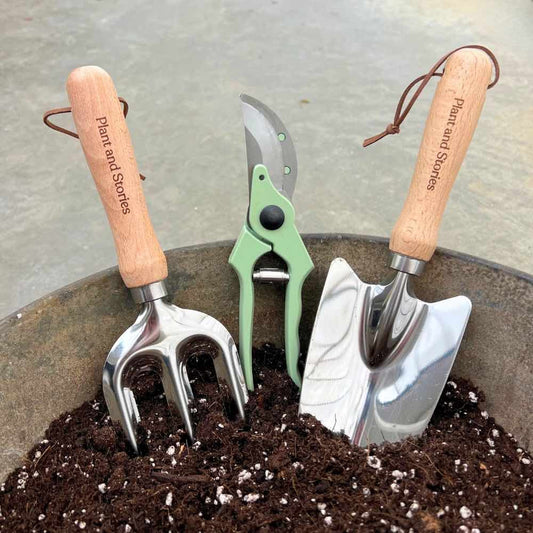
Gardening Tool Kit - Set of 3 Essential Tools - Garden Tool Set
Regular price 15,95 €Regular price29,95 €Sale price 15,95 €Sale




Nitrogen deficiency and other nutrient deficiencies
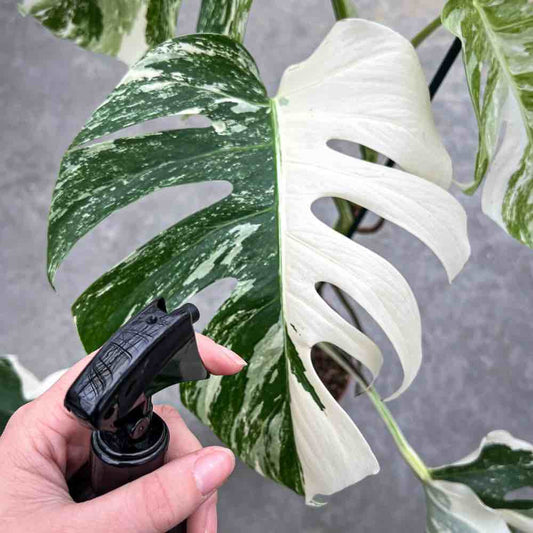
If you’re watering correctly and the plant is getting enough light, yellowing lower leaves may indicate a nutrient deficiency, most often nitrogen. This is common in plants that haven’t been repotted or fertilized for a long time.
According to the University of Connecticut (CAHNR), deficiencies in mobile nutrients such as nitrogen first appear on older leaves (the lowest ones): the plant moves nitrogen to new growth, causing the old leaves to turn uniformly yellow. Unlike with overwatering, these leaves remain firm and dry rather than soft. The University of Maryland Extension also notes that iron chlorosis (yellowing with green veins) is the most common deficiency, but it tends to affect younger leaves.
| Deficiency | Affected leaves and appearance |
|---|---|
| Nitrogen | Lower leaves, uniform yellowing |
| Magnesium | Older leaves, yellowing between the veins |
| Iron | Young leaves, green veins |
| Solution | Fertilize, repot, adjust the pH |
Other possible causes
Beyond the three main causes, other factors can make lower leaves turn yellow. It’s worth knowing about them so you don’t overlook anything.
Underwatering, unlike overwatering, causes yellowing along with soft or curled leaves and completely dry potting soil that has pulled away from the pot. A lack of light can also prompt the plant to shed its lower leaves, which are less useful. Finally, stress (cold drafts, a change of location, recent repotting) or pests can cause temporary yellowing. In every case, looking at the whole plant and its surroundings will help you determine the cause.
| Other cause | Distinctive sign |
|---|---|
| Underwatering | Dry soil, soft leaves |
| Lack of light | Lower leaves shed, stretched stems |
| Stress (cold, moving) | Sudden, temporary yellowing |
| Pests | Marks, webs, or clusters on the foliage |
How can you prevent lower leaves from turning yellow?
Prevention is better than cure: a few simple habits can significantly reduce avoidable yellowing. It all comes down to balancing water, light, and nutrients.
Water only when the surface of the potting soil has dried out, make sure the pot drains well, give each plant the light it needs, and fertilize during the growing season to prevent deficiencies. Repotting every year or two refreshes depleted soil. With this balance in place, the only leaves that turn yellow will be the few that do so as part of the natural aging process—and that’s nothing to worry about.
📋 Quick reference guide (for experienced gardeners)
Key points for diagnosing yellow lower leaves at a glance.
| Factor | What to look for |
|---|---|
| Most common harmless cause | Natural aging |
| Most common problematic cause | Overwatering |
| Decisive test | Touch the potting soil (is it damp?) |
| One or two leaves | Often normal |
| Several at once | Likely excess water |
| Soft leaves | Overwatering |
| Firm, pale leaves | Nutrient deficiency (nitrogen) |
| Green veins, young leaf | Iron chlorosis |
Make the right diagnosis step by step
Diagnosis is a process of elimination based on three things: the potting soil, the number of affected leaves, and their texture. A few seconds is all it takes to identify the likely cause.
Start by touching the potting soil. If it’s waterlogged, the cause is overwatering. If it feels normal, count the affected leaves: one or two old leaves at the bottom point to natural aging. If several lower leaves are turning uniformly pale and remain firm, consider nitrogen deficiency. Finally, if the young leaves at the top are yellowing with green veins, it’s more likely to be an iron deficiency.
| Observation | Likely cause |
|---|---|
| Waterlogged soil, soft leaves | Overwatering |
| Dry soil, curled leaves | Underwatering |
| 1–2 old lower leaves | Natural aging |
| Pale, firm lower leaves | Nitrogen deficiency |


Diagnosis: what to do depending on the cause
Once you’ve identified the cause, the right course of action becomes clear. Here’s a summary.
| Cause | What to do |
|---|---|
| Natural aging | Remove the leaf; nothing else is needed |
| Overwatering | Let the soil dry out; check the drainage |
| Underwatering | Water thoroughly and rehydrate the soil |
| Nitrogen deficiency | Fertilize and consider repotting |
To help your plants, our range of fertilizers and plant care products and our potting soils will restore their vigor.
Healthy, vigorous plants with Plant and Stories
Yellowing lower leaves aren’t necessarily a bad sign: often, it’s simply part of the natural cycle. The best first step is the finger test and a careful look at the plant—these help distinguish aging from excess water or nutrient deficiency, and guide you toward the right solution.
For healthy plants, explore our houseplants and carefully selected plant care products, chosen with care in France. Learning to read these small signals is already a big step toward helping your plants thrive for years to come.

Laura Bruneau
Jardinière & autrice