What are the advantages of nematodes in biological control?

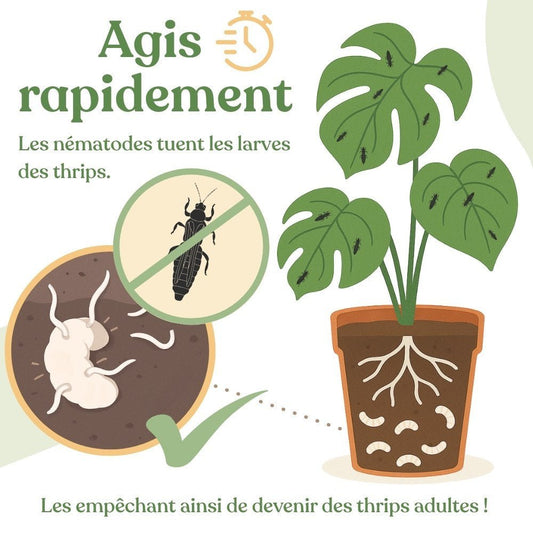
What if the best defense for your plants was already in the soil? Entomopathogenic nematodes are microscopic worms that parasitize insect larvae in the soil without harming plants, you, or your pets.
They are one of the pillars of modern biological pest control. Here’s why they outperform insecticides, and how to get the most out of them, from Felti nematodes against fungus gnats to nematodes against thrips.
🔬 What exactly is a nematode?
Nematodes are worms invisible to the naked eye, found everywhere in moist soils: they are even among the most abundant animals on the planet. There are thousands of species, with very different lifestyles. Some are harmful to crops, while others, known as entomopathogenic nematodes, are valuable allies for gardeners.
These are the ones we’re interested in: they target only specific insects, parasitizing them from the inside, then naturally disappear once their work is done and their host is depleted. No residue remains in the soil, and beneficial wildlife (earthworms, pollinators, and beneficial insects) is unharmed. This makes nematodes an excellent choice for anyone who wants to garden without pesticides.
🧬 Beneficial nematodes for the garden (and their targets)
There’s no one-size-fits-all nematode: each major pest type has its own species. This is a strength, not a limitation: by targeting the pest precisely, nematodes achieve a level of effectiveness no broad-spectrum product can match, without harming beneficial insects. So choose your nematode based on the pest you want to control.
| Species | Main target | Typical use |
|---|---|---|
| Steinernema feltiae | Fungus gnats, sciarid flies | Houseplants and seedlings |
| Steinernema carpocapsae | Thrips, soil-dwelling caterpillars | Indoors and in the vegetable garden |
| Heterorhabditis bacteriophora | Vine weevil larvae, white grubs | Lawns, flower beds, outdoor pots |
For thrips, the tiny insects that silver and distort foliage, Steinernema carpocapsae in our Carpo nematodes take over, targeting larvae that have fallen into the growing medium. Choosing the right species is half the battle: a nematode suited to its target works quickly, while the wrong one won’t work at all.
🎯 How they eliminate soil-dwelling insects
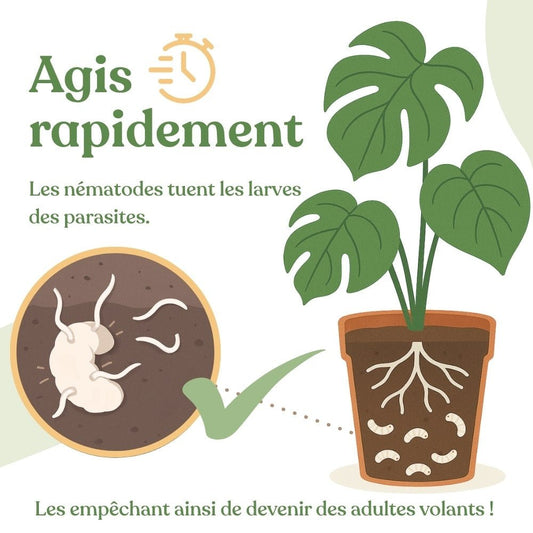
A nematode locates a larva using the chemical signals it emits, approaches it through the film of water in the soil, then enters through its natural openings. Once inside, it releases a symbiotic bacterium that neutralizes the larva within a few dozen hours.
The nematode then feeds and reproduces inside its host before a new generation sets off to hunt, so the effects last well beyond the initial application. This explains why nematodes work where surface treatments fail: they tackle the problem in the growing medium, exactly where the larvae live, rather than where the adults fly.
🔬 How they work at a glance
| Feature | Steinernema feltiae |
|---|---|
| 🌳 Type of organism | Entomopathogenic nematode, a microscopic soil-dwelling worm |
| 🔎 Target | Fungus gnat larvae (sciarids) |
| 🔎 Mode of action | Enters the larva and releases a bacterium that neutralizes it from within |
| ⏳ Time to take effect | About 72 hours |
| 🌡️ Ideal temperature | Soil temperature between 10 and 25 °C |
| 🚨 Safe for | Plants, people, pets, and pollinators |
| 🔎 Storage | Refrigerate and use promptly |
| 🔎 Application | Dilute in watering water and apply preferably in the evening |
⚖️ Nematodes vs. insecticides: the real showdown
Compared with an insecticide, nematodes may seem to have a disadvantage: you won’t see dramatic results within the hour. But the apparent speed of chemical treatments is misleading, since they only affect adults on the surface and leave larvae to thrive in the soil. On everything that really matters—depth of action, lasting results, and safety—nematodes come out on top.
| Criterion | Nematodes | Chemical insecticide |
|---|---|---|
| Target | Larvae in the soil | Mostly adults on the surface |
| Lasting effect | Deep action that breaks the life cycle | Short-lived effect; repeated applications needed |
| Safety | Safe, leaves no residue | Precautions required; residue may remain |
| Soil health | Preserved | Often disrupted |
columns: 4
columns_mobile: 2
-
Felti Nematodes (SF) - Soil fly control - Fungus gnat control - Sciarid control
Regular price From 12,99 €Regular price19,50 €Sale price From 12,99 €Sale -

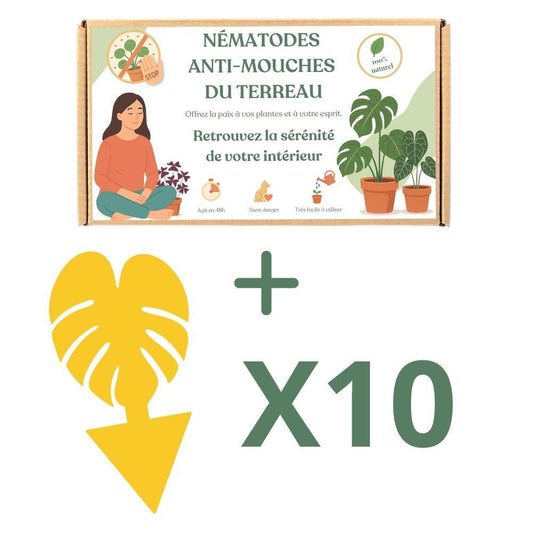
Nematode Duo for Gnat and Thrip Control + 20 Free Sticky Traps - 10 Million Nematode Pack for Each
Regular price 45,00 €Regular price62,96 €Sale price 45,00 €Sale -
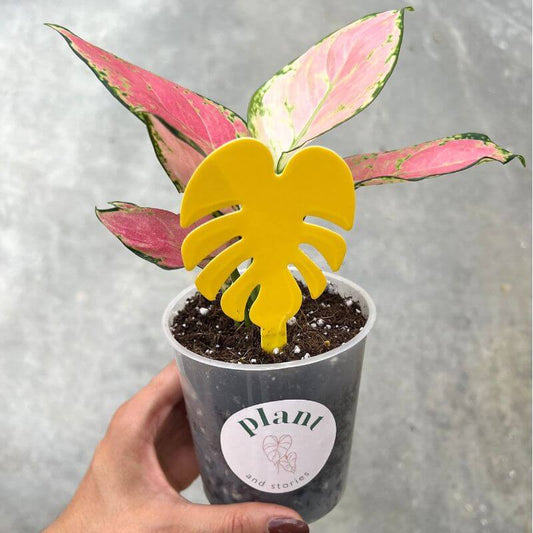
Yellow Sticky Traps for Fungus Gnats - Fungus Gnats - Double-Sided
Regular price From 7,50 €Regular price7,50 €Sale price From 7,50 € -
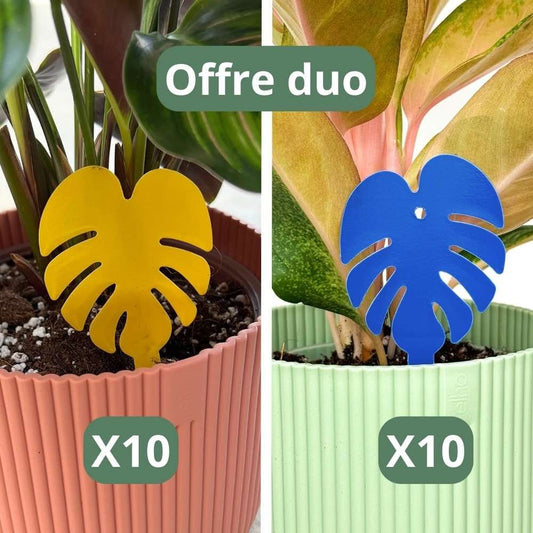
DUO OFFER - Blue Thrips Traps + Yellow Fungus Gnat Traps - Chromatic Sticky Traps
Regular price 14,00 €Regular price15,00 €Sale price 14,00 €Sale




🌡️ Conditions for effective results
Like all living organisms, nematodes need a favorable environment to work quickly and effectively. It’s nothing complicated, but these few conditions are non-negotiable: they—not the dose—determine whether the treatment succeeds.
| Factor | Ideal conditions |
|---|---|
| 💧 Moisture | Keep the soil moist for 10 to 15 days after application |
| 🌙 Light | Apply in the evening, away from UV rays |
| 🌡️ Temperature | Soil temperature between 10 and 25 °C |
| 🧪 Compatibility | Do not use chemical treatments within 7 days |
📅 Working nematodes into your gardening calendar
Used at the right time, nematodes become a preventive measure as much as a treatment. Rather than waiting for an infestation, work them into your gardening routine when soil temperatures bring pests back to life. That’s when early application can prevent a great deal of damage by breaking the first generations before they multiply.
📅 Seasonal care calendar
| Season | Key action |
|---|---|
| 🌸 Spring | Key season: treat as soon as pests become active and soil temperatures rise above 10 °C. |
| ☀️ Summer | Monitor and reapply if the heat triggers another insect life cycle. |
| 🍂 Autumn | Treat before bringing plants indoors to keep your home pest-free all winter. |
| ❄️ Winter | There’s little activity in the cold: prepare for the next season and keep the soil healthy. |
🛠️ Common myths and mistakes
Because they’re invisible and alive, nematodes are surrounded by a few myths that can put people off unnecessarily. Clearing them up is often the difference between a gardener who embraces biological pest control and one who goes back to the spray bottle out of uncertainty.
| Myth | The facts | What to do |
|---|---|---|
| They’re dangerous to my pets | 🐛 False—they target specific insects | Use them indoors without worry |
| You can see results right away | ⚠️ Larvae die within 72 hours, but this isn’t visible | Look for fewer adults after 1 to 2 weeks |
| A packet keeps for a long time | ⚠️ No—they’re living worms | Keep refrigerated and use promptly |
| They replace all other prevention | ⚠️ No—they’re one part of an integrated approach | Combine with traps and careful watering |
✅ Key takeaways
Nematodes offer targeted, lasting, and safe biological pest control. They work where chemicals fail—in the soil—and preserve the balance of your garden and home.
Choose the species based on the pest: Steinernema feltiae for fungus gnats, Steinernema carpocapsae for thrips, and Heterorhabditis bacteriophora for soil-dwelling larvae in the garden. Stored correctly and applied at the right time, they make insecticide sprays unnecessary while preserving everything that makes living soil so rich.
I recommend nematodes to anyone who wants healthy plants without chemicals. Once you understand how nature works, you’ll never go back to insecticide sprays.

Laura Bruneau
Jardinière & autrice