

When should you cut off a damaged leaf?

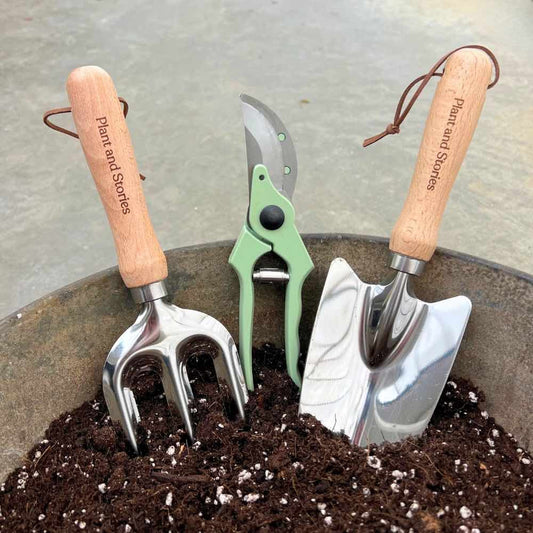
When should you cut off a damaged leaf? As soon as a leaf is mostly brown, yellow, or dead, you can remove it: it will never turn green again and drains the plant’s energy. If only the tip of a leaf is damaged, cut off just the dry part. The rule in a nutshell: remove what’s dead, preserve what’s still green, and use clean scissors. Find everything you need in our range of tools.
This guide explains when to cut off a leaf, how to do it cleanly, when to simply trim the tip, and why leaves get damaged.
Should you cut off a damaged leaf?
It depends on how extensive the damage is. A dead, completely brown or yellow leaf won’t recover, so you may as well remove it. A leaf that is still mostly green, on the other hand, continues to nourish the plant and is worth keeping.
A yellow or brown leaf has lost its chlorophyll and won’t turn green again. There’s no point keeping it, since it continues to use energy the plant could put toward new growth. Removing it allows the plant to focus its resources on healthy foliage. It also improves the plant’s appearance and helps limit disease.
A good rule of thumb: if more than half the leaf is damaged, remove the whole leaf. If only the edges or tip are affected, you can simply trim off the dry part.
Completely damaged leaf: how to remove it
Remove a dead or badly damaged leaf at its base, where it joins the stem. There are two ways to do this: cut it off or remove it by hand if it comes away easily.
If the leaf is completely dead and comes away with a gentle tug, you can carefully remove it by hand without forcing it, so you don’t injure the plant. Otherwise, use clean, sharp scissors to cut the petiole at its base, close to the main stem, without nicking it. Then discard or compost the leaf. This simple step gives the rest of the plant a boost.
| Leaf condition | What to do |
|---|---|
| Dead, comes away easily | Remove by hand, without forcing it |
| More than 50% damaged | Cut at the base with clean scissors |
| Dry edges or tip | Trim only the dry part |
| Still mostly green | Keep it; it nourishes the plant |
This question comes up all the time: “Should I cut it off or not?” My rule of thumb is simple: if more than half the leaf is damaged, I remove the whole thing; if it’s just the brown tip, I trim it to follow the shape of the leaf. And I’ll say it again: a yellow leaf will never turn green again, so there’s no point waiting. But remember, cutting off the leaf doesn’t solve the underlying problem. If your plants keep turning brown, that’s a sign to pay attention to, not just a reason to reach for the scissors.
Trimming only the damaged tip
When only the edges or tip of a leaf are dry, but the rest is still green and alive, don’t remove the whole leaf. Just trim off the damaged part to preserve the surface that’s still photosynthesizing.
As recommended by University of Maryland Extension, trim dry or brown leaf tips cleanly with sharp scissors. The trick is to follow the leaf’s natural shape rather than cutting straight across: the result is much less noticeable. Leave a thin margin of dry tissue so you don’t cut into the green part, as cutting into healthy tissue can often cause the cut edge to turn brown again.
columns: 4
columns_mobile: 2
-
Large Faux Leather Potting Mat - Plant Potting Mat
Regular price 29,95 €Regular price34,95 €Sale price 29,95 €Sale -
-
Gardening Tool Kit - Set of 3 Essential Tools - Garden Tool Set
Regular price 15,95 €Regular price29,95 €Sale price 15,95 €Sale -
Plant cleaning gloves - Anti-limescale
Regular price 10,00 €Regular price10,00 €Sale price 10,00 €




| Removal method | When to use it |
|---|---|
| Remove by hand | Dead leaf that comes away easily |
| Cut with scissors | Attached leaf; cut at the base |
| Trim the tip | Dry edge on a leaf that’s still green |
| Cut with pruning shears | Thick or woody stem |
Disinfecting your tools properly
One detail makes all the difference: keeping your tools clean. Dirty scissors can spread diseases and pests from one plant to another.
Always use clean, sharp scissors or pruning shears, and disinfect the blades between plants, for example with rubbing alcohol. Blunt blades crush the tissue instead of making a clean cut, slowing healing. A clean cut made with a clean tool heals quickly and reduces the risk of infection. This hygiene habit is especially important when pruning a plant you suspect may be diseased.
| Good tool-care habit | Why |
|---|---|
| Sharp blades | Clean cut that heals quickly |
| Disinfect between plants | Prevents the spread of disease |
| Small scissors for small leaves | Greater precision |
| Pruning shears for thick stems | Clean cut without crushing |
Should you cut off yellow leaves or wait?
Yellow leaves often leave you wondering whether to cut them off right away or let them fall on their own. The answer depends on the situation and your preference.
A leaf that turns yellow as part of the natural aging process will eventually fall off by itself. You can leave it until it comes away, or remove it sooner for appearance’s sake. If the yellowing spreads or is accompanied by other signs, however, it’s best to remove the affected leaves and, above all, look for the cause. There’s no urgency to remove an isolated yellow leaf, but leaving a decaying leaf on the soil can encourage fungi and pests.
| Yellow leaf | What to do |
|---|---|
| Aging, isolated | Let it fall or remove it, as you prefer |
| Yellowing is spreading | Remove it and look for the cause |
| Leaf fallen onto the soil | Remove it for hygiene |
| Still a little green | Wait; it’s still nourishing the plant |
When stems become bare
Sometimes it’s not just a leaf but an entire stem that’s the problem: it may be long, bare, or dried out. Pruning it encourages fuller regrowth.
If a stem is too long and sparse, you can cut just above a node (the point where a leaf joins the stem): new shoots will grow from there. A stem that’s completely dry or rotten at the base should be removed entirely. Bear in mind, though, that new growth only comes from a healthy node, never from the cut itself on a leaf. That’s why you should always cut into green, living tissue.
📋 Quick reference (for experienced gardeners)
At a glance: when and how to cut a damaged leaf.
| Factor | Rule of thumb |
|---|---|
| Dead leaf or > 50% damaged | Remove entirely |
| Dry edges or tip | Trim only the dry part |
| Leaf mostly green | Keep it |
| Cutting off a whole leaf | At the base, near the stem |
| Trimming a tip | Follow the shape of the leaf |
| Tools | Clean, sharp, and disinfected |
| Maximum amount | No more than a third at a time |
| Major pruning | Preferably during the growing season |
How many leaves should you remove at a time?
It’s important to be moderate: leaves are needed for photosynthesis, and removing too many at once weakens the plant. Don’t overdo it.
According to University of Arizona Cooperative Extension, you should never remove more than a quarter to a third of the live foliage in a single growing season, or you risk stressing the plant. So if a plant has a lot of yellow leaves, remove them gradually, in stages, rather than all at once. Major pruning is best done in spring or summer, when the plant is growing and can recover quickly.
| Rule | Details |
|---|---|
| Maximum at one time | One-third of the live foliage |
| Many yellow leaves | Remove in stages |
| Best time | Spring and summer |
| Isolated dead leaves | Can be removed at any time |


Diagnosis: why do leaves get damaged?
Removing a damaged leaf addresses the symptom, not the cause. If the problem keeps coming back, you need to investigate further.
| Common cause | What to check |
|---|---|
| Lower leaves turning yellow | Often watering |
| Brown, dry tips | Air too dry, salt buildup, watering |
| Upper leaves yellow on the window side | Too much direct sunlight |
| Recurring leaf damage | Check for pests and disease |
To care for your plants, explore our gardening tools and our fertilizers and plant care products, carefully selected in France.
Healthy plants with Plant and Stories
Cutting off a damaged leaf is simple: remove what’s dead, trim only the tips of leaves that are still green, and use clean tools without overdoing it. And remember that leaves that are frequently damaged are a sign to pay attention to, beyond just a reason to reach for the scissors.
For thriving plants, explore our indoor plants and plant care products, carefully selected in France.

Laura Bruneau
Jardinière & autrice


