Quarantining a New Plant: The Guide

Quarantining a new plant means isolating it from the rest of your collection for about two to four weeks, giving you time to spot any pests before they spread. The rule can be summed up in one sentence: every new plant goes through a period of isolation and observation before joining the others. Discover what you need to protect your plants in our range of fertilizers and plant care products.
This guide explains why quarantine is essential, how to set it up, what to look for, and when it is safe to introduce your plant.
Why quarantine a plant?
A newly arrived plant is the most common way pests are introduced to a collection. Quarantine protects your existing plants by giving you time to observe and treat the newcomer.
Greenhouses, stores, and transport are places where pests spread easily, and a plant may harbor eggs or insects that are not immediately visible. Once in contact with other plants, spider mites, scale insects, or thrips can spread quickly. Isolating the new plant breaks this chain of contamination.
Quarantine also benefits the plant itself: it gives it time to acclimate to your light and watering routine without competition or additional stress. It is therefore doubly beneficial. Preventing an infestation is also much easier than treating one: once a pest has established itself on several plants, it can often take weeks of repeated treatments to get rid of it, while a properly managed quarantine addresses the problem at the source, on a single plant, before it can spread.
How long should quarantine last?
The recommended duration is generally between two and four weeks. This period is sufficient to spot most pests, many of which have life cycles that make them visible within a few weeks.
According to the Mississippi State University Extension, plants received as gifts should be quarantined and carefully monitored for at least one week before being placed with the others. Two weeks is a good baseline; if you have any doubts or if the plant was purchased in a high-risk setting, extend the period to four weeks. This duration gives any eggs time to hatch and symptoms time to appear.
| Situation | Recommended duration |
|---|---|
| Healthy plant, reliable source | 2 weeks |
| Doubts or high-risk source | 3 to 4 weeks |
| Suspicious signs | Extend until treatment is complete |
| Gifted plant | At least 1 to 2 weeks |
Quarantine is your collection's life insurance. I have seen too many enthusiasts introduce a single infested plant and end up with spider mites everywhere within a few weeks. My routine: every new plant goes into a separate, well-lit room, and I inspect the undersides of the leaves every two or three days. Two to three weeks later, if everything is clean, it joins the others. This simple habit has saved me from many disasters.
| Isolation rule | Why |
|---|---|
| Separate room | Prevents spread |
| No leaf-to-leaf contact | Pests can move |
| Dedicated saucers and tools | Avoid cross-contamination |
| Good light | Avoid stressing the plant |
How to set up quarantine?
Quarantine should be separate, but not punitive: the plant needs good conditions to stay healthy. Ideally, use a different room with appropriate light.
Place the new plant in a room other than where your collection is kept: a guest room, office, bright bathroom, or well-lit corner, away from the other plants. Avoid leaf-to-leaf contact and shared saucers or plant pots, as pests can move and water splashes can spread problems. Even in a small home, a few meters of distance is better than nothing.
columns: 4
columns_mobile: 2
-
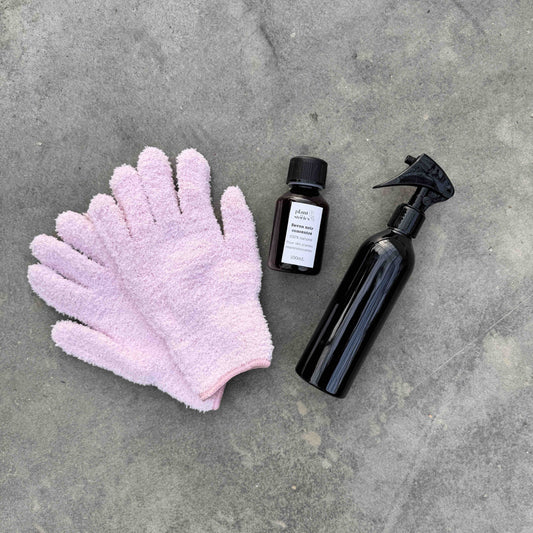
250ml plant sprayer + 100ml bottle of concentrated black soap for plants
Regular price 8,00 €Regular price9,75 €Sale price 8,00 €Sale -
Complete Plant Care Routine Pack - 250ml Spray Bottle + Concentrated Black Soap + Pair of Cleaning Gloves
Regular price 15,95 €Regular price19,95 €Sale price 15,95 €Sale -
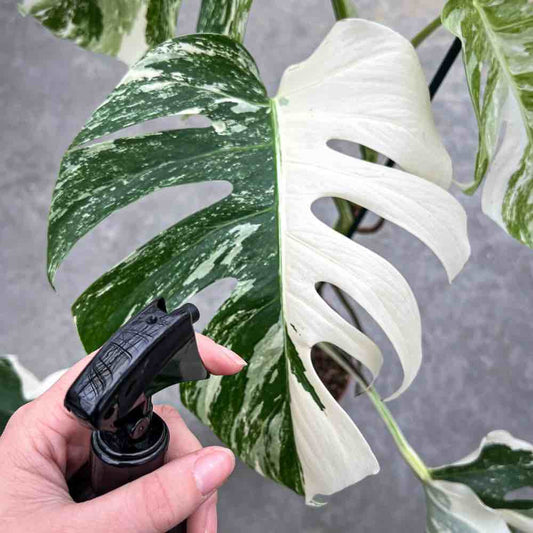
Plant sprayer, mist spray bottle, fine mist, 250ml
Regular price From 5,00 €Regular price5,00 €Sale price From 5,00 € -
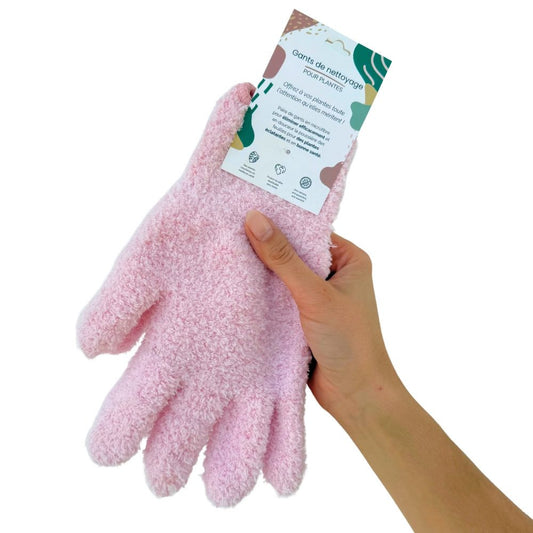
Plant cleaning gloves - Anti-limescale
Regular price 10,00 €Regular price10,00 €Sale price 10,00 €




What to look for during quarantine?
Regular inspection is the heart of quarantine. Look for signs of pests and diseases by examining the areas they prefer.
According to the Washington State University Extension manual, every new plant should be quarantined away from the others for a few weeks to ensure it does not harbor insects that were missed during the initial inspection. Examine the tops and undersides of the leaves, the leaf axils, stems, and the surface of the potting mix. Watch for fine webbing (spider mites), cottony clusters (scale insects), tiny flying specks (thrips, fungus gnats), and spots on the foliage.
| Pest | Sign to look for |
|---|---|
| Spider mites | Fine webbing, stippled leaves |
| Scale insects | White cottony clusters |
| Thrips | Silvery streaks, black specks |
| Fungus gnats | Small flies in the potting mix |
Inspect the plant even before buying it
The best quarantine starts in the store: it is better to avoid buying an already infested plant than to have to treat it later. A careful examination before purchase saves a lot of time.
Before heading to the checkout, turn over a few leaves to inspect their undersides, check the leaf axils and the base of the stems, and take a look at the potting mix. Any sign of webbing, cottony clusters, moving specks, or suspicious sticky residue should lead you to pass on that plant and choose another. Also avoid plants sold in waterlogged potting mix, as their roots may already be affected. This initial screening greatly reduces unpleasant surprises at home.
| Check in the store | What to look for |
|---|---|
| Undersides of leaves | Webbing, specks, clusters |
| Leaf axils and stems | Scale insects, eggs |
| Potting mix | Fungus gnats, excessive moisture |
| Overall condition | Firm foliage, no spots |
Quarantine and plants coming in from outdoors
Quarantine is not just for purchased plants: it also applies to those that spent the summer outdoors and are being brought in for the fall. They may have picked up pests in the garden.
Before reintroducing an outdoor plant to your indoor collection, inspect it carefully, wash the foliage and pot with warm water, and isolate it for one to two weeks. A plant that has spent time outdoors is particularly likely to have brought in hitchhikers. The same approach applies to cuttings and plants exchanged among enthusiasts, as these are also opportunities to introduce pests.
📋 Quick technical guide (for experienced gardeners)
Key points for successfully quarantining a new plant at a glance.
| Parameter | Key point |
|---|---|
| Purpose | Prevent the spread of pests |
| Duration | 2 to 4 weeks |
| Location | Separate, well-lit room |
| Avoid | Leaf-to-leaf contact, shared saucers |
| Inspection | Undersides of leaves, stems, potting mix |
| Frequency | Every 2 to 3 days |
| If pests are found | Treat and extend isolation |
| Introduction | Stable and pest-free plant |
What to do if you find pests?
Discovering a pest during quarantine is exactly what it is designed for. Treat the plant while keeping it isolated.
Depending on the pest, use the appropriate method: a shower with insecticidal soap or neem oil for spider mites, dabbing with alcohol for scale insects, yellow traps and drying out the potting mix for fungus gnats. Repeat the treatment for several weeks to cover successive generations, and only reintroduce the plant when it is completely clean. Patience helps prevent a relapse that could contaminate the entire collection.
| Pest detected | Initial action |
|---|---|
| Spider mites | Shower, soap or neem, humidity |
| Scale insects | Alcohol on a cotton swab, isolate |
| Fungus gnats | Dry out the potting mix, yellow traps |
| Thrips | Blue traps, soap, remove affected leaves |


Diagnosis: when to introduce the plant?
The plant is ready to join the others when it meets a few simple conditions. Here is the checklist.
| Condition | Check |
|---|---|
| Time elapsed | 2 to 4 weeks of isolation |
| No visible pests | Repeated clean inspection |
| Stable plant | Healthy new growth |
| Light transition | Acclimate gradually if necessary |
To protect your plants, discover our range of fertilizers and plant care products and our gardening tools, carefully selected in France.
A protected collection with Plant and Stories
Quarantine is the simplest and most effective way to preserve your collection: isolate, observe, treat if necessary, and then introduce a healthy plant. This simple routine of a few weeks helps you avoid many infestations and large-scale treatments.
To grow your collection with peace of mind, explore our indoor plants and plant care products, carefully selected in France. This simple routine of a few weeks quickly becomes second nature, and your entire collection will thank you for it.

Laura Bruneau
Jardinière & autrice