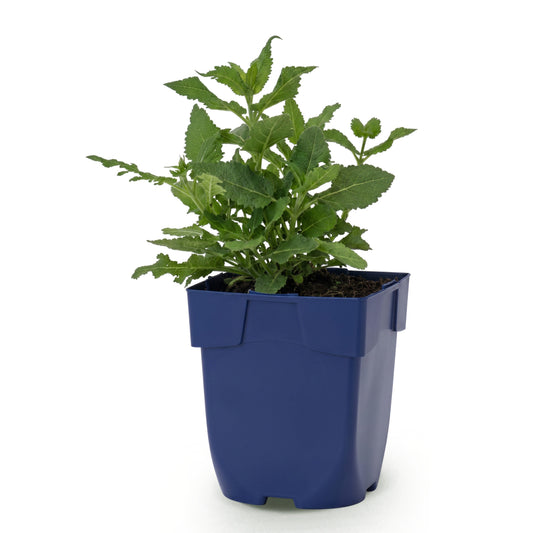
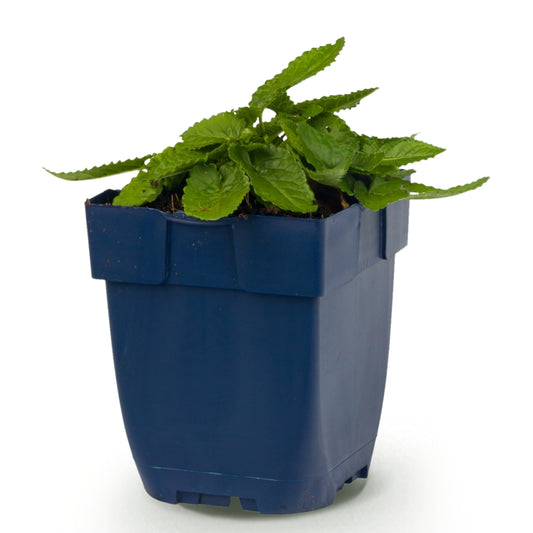
Buenos Aires Verbena (Verbena bonariensis): The Guide

To grow Buenos Aires verbena successfully, plant it in full sun in well-drained soil, leave its dry stems in place all winter, cut them back in spring when new growth appears at the base, and keep an eye on its self-sown seedlings. Verbena bonariensis bears small purple-lilac flower heads on upright, almost bare stems that seem to float above the other plants.
This airy silhouette has made it a star of naturalistic borders, among grasses and prairie perennials. It holds a place of honor in our guide to creating an easy perennial border, as well as in our pollinator perennial border for bees and butterflies.
This guide brings together verified information from the RHS, Kew botanists, NC State Extension, and the University of Wisconsin, and answers frequently asked questions: reseeding, invasive status, winter care, and confusion with culinary verbenas.
🌿 Why plant Buenos Aires verbena in the garden
Buenos Aires verbena adds height without obscuring other plants: according to the University of Wisconsin Extension, its airy habit allows plants placed behind it to remain visible, making it suitable for the middle or even the front of a border. Its branched, upright stems hardly flop.
According to the RHS (Royal Horticultural Society), it flowers from summer to autumn and carries the 'Plants for Pollinators' label.
It thrives by the sea, in gravel gardens, in prairies, and in pots, and tolerates drought once established, according to NC State Extension.
| Strength | What it brings to your garden |
|---|---|
| 'Transparent curtain' effect | Height in the middle of the border without obscuring the perennials placed behind |
| Summer to autumn flowering | Purple-lilac flower heads renewed for months |
| Pollinator magnet | Bees and butterflies on the flowers, granivorous birds on the seeds |
| Low maintenance | Accepts poor or stony soil if well-drained, and tolerates drought once established |
🔎 Buenos Aires verbena's ID card
According to Plants of the World Online (POWO) by Kew Royal Botanic Gardens, the accepted name is Verbena bonariensis L., published by Linnaeus in 1753; it belongs to the Verbenaceae family. Its native range extends from southeast and southern Brazil to southern South America: Argentina, Paraguay, Uruguay, Chile, and Peru.
POWO notes that it has been introduced to many regions, including Spain, Portugal, Italy, Belgium, and Great Britain, but does not list it in France.
Be careful with homonyms: culinary verbena, Verbena officinalis, is another species, native to France, and lemon verbena, Aloysia citrodora, is a shrub from a different genus, native to southern Bolivia and northwestern Argentina.
For NC State Extension, Verbena bonariensis is identified by its lanceolate leaves and tubular flowers of about 0.6 cm, grouped in heads of about 5 to 7.5 cm.
| Criterion | Verified detail |
|---|---|
| 🏷️ Botanical name | Verbena bonariensis L. (1753) |
| 🧬 Family | Verbenaceae |
| 🌳 Type | Deciduous, upright herbaceous perennial; grown as an annual in cold climates (NC State) |
| 🌍 Origin | Southeast and southern Brazil to southern South America (POWO) |
| ❄️ Hardiness | H4 according to the RHS, i.e. -10 to -5 °C; USDA zones 7 to 11 according to NC State |
| 🍃 Foliage | Oblong to lanceolate leaves, few in number, mostly at the base |
| 🌸 Flowering | Small purple-lilac flowers in branched heads, from summer to autumn (RHS) |
| 📏 Adult size | 1.5 to 2.5 m tall by 10 to 50 cm (RHS); about 60 cm for 'Lollipop' |
📋 Quick technical sheet
Essential growing information, all at a glance.
| Parameter | Guideline |
|---|---|
| Exposure | Full sun, south or west; exposed or sheltered site (RHS) |
| Soil | Well-drained or moist but well-drained, chalky, loamy, or sandy, moderately fertile |
| Hardiness | RHS H4: -10 to -5 °C; dry mulch in winter in cold regions |
| Watering | At planting and during establishment; then only during prolonged drought |
| Planting | In spring, once frosts have passed; sow indoors from autumn to early spring |
| Pruning | Cut back in spring when new growth appears at the base; remove faded flowers in autumn if no seeds are desired |
| Flowering | From summer to autumn, purple-lilac |
| Maintenance | Easy; watch for powdery mildew and reseeding |
| Toxicity | No ASPCA sheet; RHS and NC State Extension are silent |
📍 Where and when to plant Buenos Aires verbena?
Place Buenos Aires verbena in full sun, where water does not stagnate in winter. The RHS recommends a south or west exposure, chalky, loamy, or sandy soil, well-drained or moist but well-drained, regardless of its pH, and says it thrives in seaside, gravel, or prairie gardens.
NC State Extension counts on at least 6 hours of direct sunlight per day, accepts light partial shade and clay or stony soils if they drain. Plant in spring, once frosts have passed, so that the clump establishes before its first winter.
☀️ Ideal: Naturalistic border, prairie, gravel garden, full-south border, among grasses
🌥️ Acceptable: Light partial shade, large deep pot on a sunny terrace
🚫 Avoid: Shade, heavy soil waterlogged in winter, immediate vicinity of a fragile natural environment
🪴 Planting Buenos Aires verbena in the ground or in a pot
Planting depends on drainage and sun. In the ground, loosen the soil without enriching it: the RHS plant sheet calls for moderately fertile soil, and an excess of fertilizer does not benefit a prairie plant. Add gravel to heavy soil.
Space according to spread: 10 to 50 cm for the species according to the RHS, which remains narrow despite its height. In a pot, prefer a compact form like 'Lollipop', a container with drainage holes, and potting mix lightened with sand or gravel; the pot exposes the roots more to the cold.
| Step | The right thing to do |
|---|---|
| 1. Choose the location | Full sun, soil that never remains waterlogged, middle of the border or border edge |
| 2. Prepare the soil | Loosen, add gravel to heavy soil, no manure |
| 3. Install the root ball | At soil level, without burying the crown, tamping down lightly |
| 4. Water | A good watering at planting, then when the soil dries during establishment |
| 5. Group | Plant in small groups and plan for neighboring grasses |
columns: 4
columns_mobile: 2
-


Buenos Aires verbena ‘Lollipop’ (Verbena bonariensis) – nectar-rich perennial – 11 cm pot – height 25 cm
Regular price From 39,95 €Regular price39,95 €From 31,96 €Livraison offerte -

 Livraison offerte Sold out
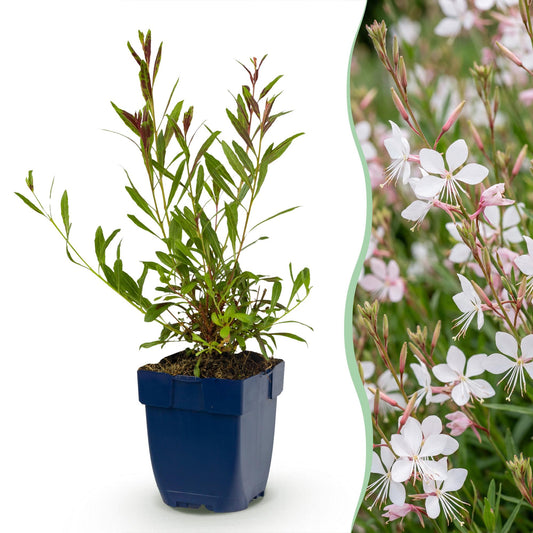
Gaura 'Whirling Butterflies' (Gaura lindheimeri) - melliferous perennial - 11 cm pot - Height 25 cm
Regular price From 39,95 €Regular price39,95 €From 31,96 €Livraison offerte Sold out -

 Livraison offerte Sold out
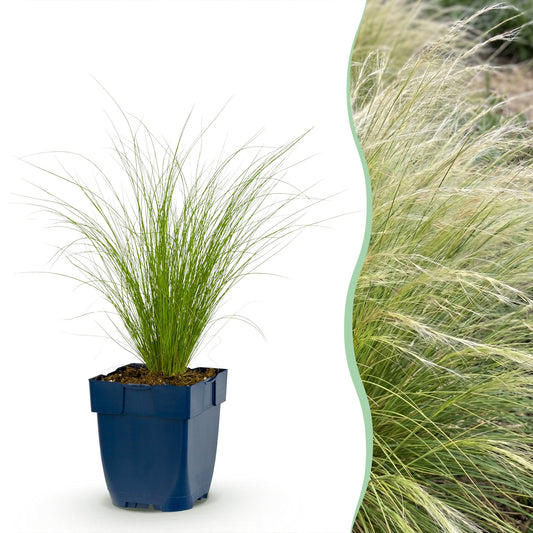
Angel's hair 'Ponytails' (Stipa tenuissima) - ornamental grass - 11 cm pot - Height 25 cm
Regular price From 39,95 €Regular price39,95 €From 31,96 €Livraison offerte Sold out -

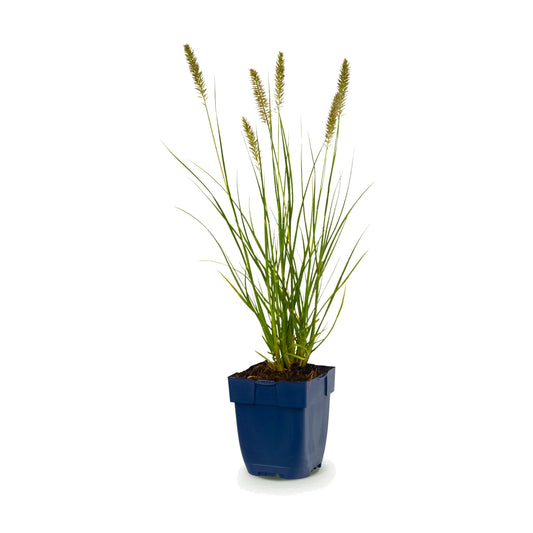
Bottlebrush grass 'Hameln' (Pennisetum alopecuroides) - ornamental grass - 11 cm pot - Height 25 cm
Regular price From 39,95 €Regular price39,95 €From 31,96 €Livraison offerte -


Coneflower 'Magnus' (Echinacea purpurea) - melliferous perennial - 11 cm pot - Height 25 cm
Regular price From 39,95 €Regular price39,95 €From 31,96 €Livraison offerte -


Ornamental sage 'Schneehügel' (Salvia nemorosa) – nectar-rich perennial – 11 cm pot – height 25 cm
Regular price From 39,95 €Regular price39,95 €From 31,96 €Livraison offerte -


Buenos Aires Verbena (Verbena bonariensis) - airy perennial with purple flowers, butterfly magnet
Regular price From 39,95 €Regular price39,95 €From 31,96 €Livraison offerte -


Wood sage 'Caradonna' (Salvia nemorosa) - melliferous perennial with purple spikes on almost black stems
Regular price From 44,95 €Regular price44,95 €From 35,96 €Livraison offerte


✂️ Buenos Aires verbena care: watering, faded flowers, reseeding
Buenos Aires verbena care involves just a few steps. Once established, it tolerates drought according to NC State Extension: water especially during establishment and in pots. The RHS advises cutting off faded flowers in autumn if you do not want seeds; otherwise, leave them for birds and seedlings.
The University of Wisconsin notes that it reseeds abundantly and that pinching young plants in spring produces a more branched and compact plant. The RHS notes aphids, thrips, leafhoppers, and powdery mildew; NC State does not consider them a serious problem.
💧 Watering: In the ground, at establishment and then during prolonged drought; in a pot, when the substrate has dried on the surface
🌱 Fertilizer: Unnecessary in the ground; moderately fertile soil is sufficient (RHS)
🔹 Faded flowers: Cut off in autumn if you do not want seedlings (RHS)
🔹 Self-sown seedlings: Transplant or pull out young plants in spring; pinch those you want to keep
🧣 Winter: Keep the dry stems; dry mulch in cold regions (RHS)
🍂 When and how to prune Buenos Aires verbena
To prune Buenos Aires verbena, wait until spring: the RHS advises cutting back the stems when new growth appears from the base. Dry stems left over winter protect the crown, feed birds, and, according to NC State Extension, wild bees nest in these hollow stems.
Regarding cold, the H4 rating corresponds to -10 to -5 °C according to the RHS hardiness scale. In cold zones, the RHS recommends dry mulch in winter; as with many sun-loving perennials, waterlogged soil is more dangerous than frost alone.
In the United States, the University of Wisconsin often grows it as an annual in regions colder than zone 7a.
📅 Seasonal maintenance calendar
| Season | Key action |
|---|---|
| 🌸 Spring | Cut back when the base regrows, plant after frosts, sort self-sown seedlings |
| ☀️ Summer | Flowering; water pots and young plants as needed |
| 🍂 Autumn | Flowering until autumn; cut off faded flowers if no seeds are desired |
| ❄️ Winter | Dormancy; stems left in place, dry mulch in cold regions, pots sheltered from rain |
🌱 Sowing and propagating Buenos Aires verbena
The RHS advises sowing in pots at 18-21 °C from autumn to early spring, or letting the plant reseed itself. According to the University of Wisconsin, sow indoors 8 to 12 weeks before the average date of the last frosts, lightly covering the seeds, which germinate in the dark; germination is slow and irregular.
NC State Extension also mentions root cuttings. For 'Lollipop', the RHS sheet for 'Lollipop' recommends herbaceous cuttings: seedlings do not necessarily reproduce the variety.
🐛 Common problems: causes and solutions
Buenos Aires verbena causes few problems, and most come from soil that is too wet, a lack of sun, or stagnant humidity at the end of summer. Here are the most common signs and the answers from the RHS, NC State Extension, and the University of Wisconsin.
| Symptom | Probable cause | Solution |
|---|---|---|
| White powder on leaves | 🍄 Powdery mildew (RHS, NC State) | Air out the clumps, remove affected parts, do not wet the foliage |
| Plant missing in spring | ❄️ Wet or cold winter below the H4 threshold, exhausted crown | Replant in well-drained soil, keep the stems over winter, transplant a seedling |
| Seedlings everywhere in the border | ⚠️ Abundant self-sowing (Wisconsin) | Cut off faded flowers in autumn, pull out excess young plants |
| Leggy stems, few flowers | ☀️ Lack of sun | Move to full sun, at least 6 hours a day (NC State) |
| Deformed or spotted leaves | 🐛 Aphids, thrips, or leafhoppers (RHS) | Encourage beneficial insects, spray with water, remove heavily affected stems |
| Brown and soft crown | 💧 Heavy and waterlogged soil | Lighten the soil with gravel, water less |
-

Nectar-producing plants & pollinators
Provide food for bees, bumblebees, and butterflies: our selection of outdoor nectar-rich...


🌸 Our varieties of Buenos Aires verbena
Buenos Aires verbena is sold mainly in its typical, very tall form, and in dwarf forms that are easier in pots. Here are the best documented.
| Variety | Its strength |
|---|---|
| Verbena bonariensis (type) | 1.5 to 2.5 m, H4, RHS Award of Garden Merit: the form for naturalistic borders |
| Buenos Aires verbena 'Lollipop' | Dwarf form of about 60 cm, H4, short-lived perennial according to the RHS; ideal in a pot or border edge |
| 'Little One' | Another dwarf form of about 60 cm, purple-lilac flowers from midsummer to autumn, H4 according to the RHS |
| 'Vanity' | Approximately 75 cm, 2022 All-America Selections winner according to the University of Wisconsin |
| 'Meteor Shower' | Approximately 50 to 75 cm according to the University of Wisconsin, listed among the compact forms |
🎨 What to pair with Buenos Aires verbena
Buenos Aires verbena is a naturalistic garden plant: the RHS recommends it in meadows, gravel gardens, and wildlife gardens. Meadow grasses are its best companions: panic, stipa, and fescues support its stems and extend the meadow effect, and you will find other ideas among our ornamental grasses.
As for perennials, the combination of Buenos Aires verbena and gaura is an airy classic; add an echinacea, a yellow rudbeckia or a perennial sage for a pollinator border. In a dry garden, it slips between the low clumps.
To compose the border, draw from Verbena bonariensis and our other perennials for borders, our pollinator plants and our outdoor flowering plants, or browse all our outdoor plants.
⚠️ Is Buenos Aires verbena invasive, toxic, or good in herbal tea?
Invasive? It self-seeds abundantly according to the University of Wisconsin, and NC State Extension notes that it has naturalized in the United States, from North Carolina to Florida and Texas, and that some sources describe it as invasive; it advises keeping it away from natural areas.
According to the Washington State Noxious Weed Control Board, it has been on its watch list since 2012.
In Europe, POWO (Kew) reports it introduced in Spain, Italy, or Great Britain, but not in France; in France, the National Botanical Conservatory of Franche-Comté describes it as occasional and very rare, without classifying it among invasive exotic species.
We did not find a national classification: cut the faded flowers near natural areas. Toxic? We did not find any ASPCA fact sheet, and the RHS as well as NC State Extension report nothing: an absence of information is not proof of safety. In herbal tea?
No: the verbena for herbal tea is lemon verbena, Aloysia citrodora, or medicinal verbena; no consulted source describes any culinary use of Buenos Aires verbena. To grow the real ones, see our aromatic perennials for herbal tea.
✅ Our expert tips for success
Succeeding with Buenos Aires verbena comes down to four steps: full sun, rather poor well-drained soil, stems kept over winter, and pruning in spring when the base regrows. Rated H4 by the RHS, meaning -10 to -5 °C, it appreciates dry mulch in cold regions.
Let a few seedlings take over from tired roots, but cut the faded flowers if your garden borders a natural area. In return, it brightens the grasses and feeds the pollinators from summer to autumn.
Buenos Aires verbena is the perennial I recommend to add height without weighing down a border. I love seeing it rise above the grasses, covered in butterflies in late summer. I always keep its dry stems until spring, and I sort through its seedlings without regret: I keep a few, and pull up the others. In a pot, I prefer a dwarf form like 'Lollipop'.

Laura Bruneau
Jardinière et autrice