More than 100,00 € missing translation: "t:settings_schema.cart_progress_bar.settings.text_motivation_last.default" is not present in any of the ["en"] schema locale files
0 €
100,00 €
🚨 2026 Advent Calendar - Limited Edition!
9.9/10 OVER 3121 REVIEWS ⭐⭐⭐⭐⭐
FREE DELIVERY TO A PICK-UP POINT ON ORDERS OVER €100
188K ON INSTAGRAM @plantandstories.shop - JOIN US ! :)
The Yucca needs infrequent watering, about every two to three weeks, allowing the substrate to dry out completely between waterings. It is happy with low ambient humidity, with no need for misting, and can tolerate temperatures of up to 30°C without suffering. Regularly dusting its leaves with our anti-limescale cleaning gloves helps keep its foliage looking vibrant.
What kind of light is best for a yucca?
The Yucca requires bright to direct light, with several hours of sunlight each day if possible, unlike most houseplants. A spot near a south- or west-facing window is ideal, as its rigid foliage is not at risk of scorching. If natural light remains insufficient in winter, a full-spectrum grow light will help maintain its vigor.
Why are the leaves on my yucca turning yellow?
Yellowing Yucca leaves are most often caused by'overwatering or'poorly draining soil that suffocates the roots. It may also be'a natural process: the oldest leaves turn yellow and gradually fall off as the trunk grows. Checking the moisture deep in the soil and spacing out waterings is generally enough to fix the problem.
Can you put a yucca outside in the summer?
The Yucca does very well outdoors in summer, as soon as nighttime temperatures rise above 12°C, on a sunny terrace or balcony. Gradually introducing it to full sun prevents light shock after a winter spent indoors. It should be brought back inside before the first chilly autumn nights, as its cold tolerance is limited.
How do you repot a yucca?
The Yucca is repotted in spring, in a container that is only slightly larger and has good drainage to prevent water from pooling around the roots. A well-draining mineral mix suited to fine roots, including coarse sand or pumice, recreates the conditions of its natural habitat. After receiving the plant, it is advisable to wait 2 to 3 weeks for it to acclimatize before repotting.
Everything you need to know about Yucca
What are the most popular varieties of yucca?
The Yucca Elephantipes remains the most common variety grown indoors, recognizable by its thick, gnarled trunk topped with long, rigid, dark green leaves. Multi-trunk forms are also available and particularly prized for their sculptural appearance. Its slow growth in a pot makes it a long-lasting plant that gains character over the years.
Is yucca toxic to cats and dogs?
Yes, according to the'ASPCA, yucca is toxic to cats and dogs if ingested, causing vomiting and digestive problems. Its pointed, stiff leaves also pose a risk of mechanical injury to curious pets. It is recommended that it be kept out of reach in homes with four-legged companions.
Which Yucca should I choose for a low-light apartment?
Yucca's are not suited to dimly lit rooms: they need a very bright spot, with a few hours of direct sunlight each day if possible. In a dark interior, the plant'quickly becomes leggy and loses its vigor. A conservatory, a south-facing windowsill, or a very bright room is better suited to this plant, which originates from arid regions.
Can you put a yucca in a living room?
The living room is o'ne of the Yucca’s favorite spots, provided it has a bright window or a south-facing exposure. Its structured form and striking trunk make it a centerpiece of the decor, particularly in large spaces. It also appreciates the stable temperatures generally found in this living space.
Where can I buy a high-quality yucca plant?
Plant and Stories offers a selection of Yuccas sourced from French and European growers, chosen for the strength of their trunks and the density of their foliage. Each plant benefits from'fast, secure delivery, with packaging designed to protect the rigid foliage during transit. The online store makes it easy to compare the different heights available to suit the'space you have in mind.
Yucca
Yucca needs bright light with a few hours of direct sunlight a day and very infrequent watering, once the potting mix has dried out several centimeters down.
The essentials at a glance:
☀️ Light: bright, a few hours of direct sunlight
💧 Watering: very infrequent, potting mix dry several centimeters down
🎚️ Difficulty: hardy, low-maintenance
🍃 Foliage: stiff rosettes on a woody trunk
🌍 Origin: arid regions of Central America and Mexico
Yucca: the sculptural plant that asks for almost nothing
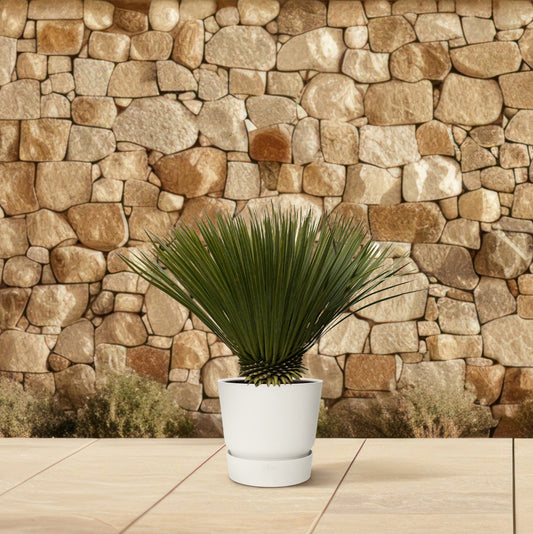
Some plants take our forgetfulness in stride, and Yucca is one of them. Native to the arid regions of Central America and Mexico, this genus includes around forty species adapted to dry climates, recognizable by their rosettes of stiff, pointed leaves borne on a woody trunk. One of the most popular varieties for growing indoors is Yucca Elephantipes, prized for its gnarled trunk and deep green foliage, which adds structure to any living room.
Yucca care: bright light and minimal watering
Yucca needs bright light, ideally with a few hours of direct sunlight a day, and tolerates high temperatures with ease. Watering should be very infrequent: it's best to wait until the potting mix is dry several centimeters down before watering again, as excess water is the leading cause of root rot. Choose our mineral, well-draining potting mix enriched with essential nutrients, which recreates the dry conditions of its natural habitat.
Buy your Yucca from Plant and Stories
Our Yuccas are carefully selected from French and European growers to ensure a well-formed trunk and dense foliage on arrival. Each plant is carefully packaged for fast, secure delivery straight to your living room. Hardy, striking, and low-maintenance, Yucca is the ideal plant for bright interiors and busy schedules.