Sacred Bamboo (Nandina): Colorful Foliage and Care

Heavenly bamboo is a misleading name: it isn’t a bamboo at all, but an evergreen shrub with an airy habit that resembles one. Its real asset is its foliage, which blazes red with the first cold weather and brightens the winter garden. Compact, easy to grow and low-maintenance, nandina can be planted anywhere, from borders to containers.
This guide explains how to plant it, care for it and choose the right variety.
🌿 Why plant heavenly bamboo?
Plant heavenly bamboo for its evergreen foliage, which changes color throughout the year and turns red all winter, just when the garden needs it. Its fine, airy habit adds lightness without the invasive growth of true bamboo. It’s an easy, compact, low-maintenance shrub.
The RHS (Royal Horticultural Society) values it for its hardiness and long-lasting ornamental appeal, particularly its autumn and winter colors.
| Benefit | What it brings to the garden |
|---|---|
| Fiery foliage | Evergreen foliage turns bright red in autumn and winter, creating a spectacular display |
| A bamboo look, without the drawbacks | The airy habit of bamboo, without creeping rhizomes or invasive growth |
| Compact and low-maintenance | Moderate size (0.5 to 2 m) and virtually no care required |
| Versatile | Thrives in full sun or partial shade, in borders, edging or containers |
🔎 Heavenly bamboo at a glance
Heavenly bamboo belongs to the genus Nandina, in the barberry family (Berberidaceae), not the bamboo family. The species is Nandina domestica, described by the RHS (Royal Horticultural Society), and native to Asia. Its upright stems carry fine, evergreen foliage that shifts from green to red with the seasons.
The species typically flowers in summer (with white flowers), followed by decorative red berries; many modern compact varieties do not produce them.
| Feature | Verified details |
|---|---|
| 🏷️ Botanical name | Nandina domestica |
| 🧬 Family | Berberidaceae |
| 🌍 Origin | East Asia (China, Japan) |
| 🌳 Type | Evergreen shrub with an airy, upright habit |
| 📏 Height | 0.5 to 2 m, depending on the variety |
| 🍃 Foliage | Evergreen, fine-textured, red in autumn and winter |
| 🌸 Flowering | Small white flowers in summer (species type) |
| ☀️ Exposure | Full sun to partial shade |
| 🍒 Fruit | Red berries in autumn and winter (depending on variety; toxic) |
| ❄️ Hardiness | About -15°C |
📋 Quick reference guide
The essentials, all in one place.
| Feature | At a glance |
|---|---|
| Botanical name | Nandina domestica |
| Family | Berberidaceae |
| Type | Ornamental evergreen shrub |
| Exposure | Full sun to partial shade |
| Soil | Ordinary, moist, well-drained soil; tolerates all pH levels |
| Hardiness | About -15°C |
| Height | 0.5 to 2 m |
| Foliage | Evergreen, colored in autumn |
| Growth | Moderate, non-spreading |
| Uses | Borders, edging, containers, light screening |
📍 Where and when to plant heavenly bamboo: sun or partial shade
Plant heavenly bamboo in full sun or partial shade: in full sun, its autumn and winter colors are brightest; in partial shade, the foliage stays greener, but the shrub still thrives. It is not fussy about soil and grows in any ordinary, moist, well-drained soil, whatever the pH. Shelter it from cold, drying winds, which can turn the foliage brown.
Allow 0.6 to 1 m between plants for an edging. Plant in autumn or spring, when the ground is not frozen, and water well during the first year.
☀️ Exposure: Full sun to partial shade
🌱 Soil: Ordinary, moist, well-drained; tolerates all pH levels
❄️ Climate: Hardy to about -15°C
🪴 How to plant heavenly bamboo, step by step
Planting heavenly bamboo is very easy, as it establishes readily and adapts to almost any soil. The key is well-drained soil and keeping it moist during the first few years. One plant is enough to make a lovely display, or plant several along an edging.
| Step | What to do |
|---|---|
| Soak | Immerse the root ball in a bucket of water until thoroughly soaked |
| Dig | Dig a hole twice as wide as the root ball in well-drained soil |
| Plant | Position the crown level with the soil, backfill and firm down |
| Water | Water generously to settle the soil around the roots |
| Mulch | Spread mulch to retain moisture during the first year |
columns: 4
columns_mobile: 2
-

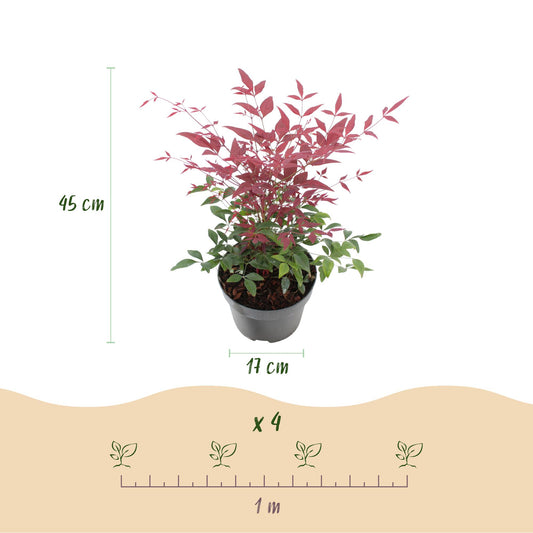
Sacred bamboo (Nandina domestica) - evergreen shrub with colourful foliage - 17 cm pot - Height 45 cm
Regular price From 64,95 €Regular price64,95 €From 51,96 €Livraison offerte -

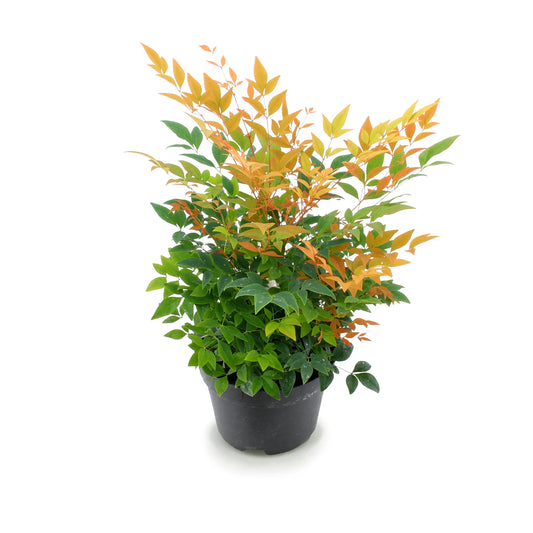
Sacred bamboo 'Gulf Stream' (Nandina domestica) - evergreen shrub with colourful foliage - 17 cm pot - Height 45 cm
Regular price From 44,95 €Regular price44,95 €From 35,96 €Livraison offerte -

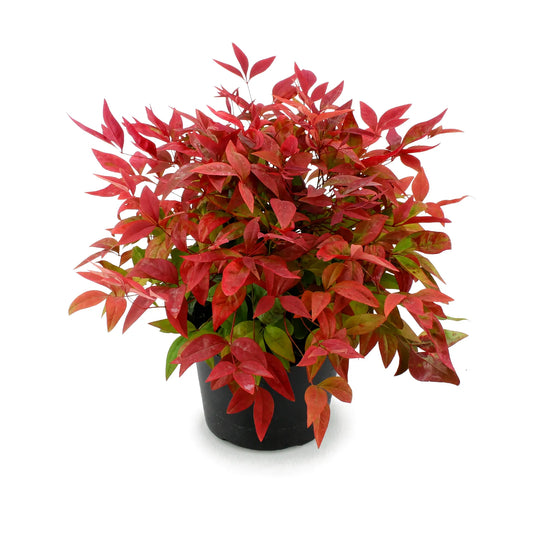
Sacred bamboo 'Blush Pink' (Nandina domestica) - evergreen shrub with colourful foliage - 17 cm pot - Height 40 cm
Regular price From 44,95 €Regular price44,95 €From 35,96 €Livraison offerte -

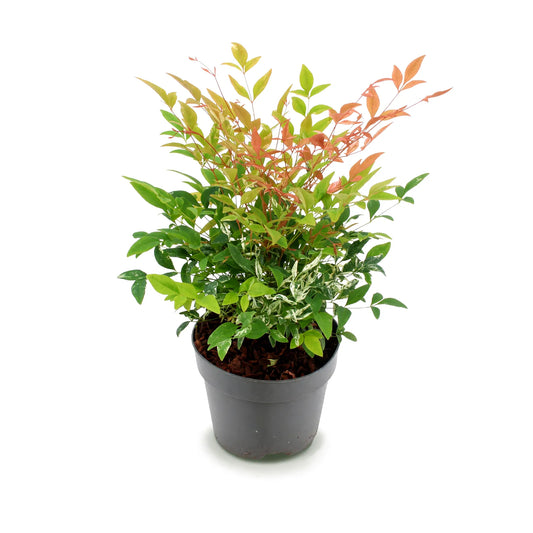
Sacred bamboo 'Twilight' (Nandina domestica) - evergreen shrub with colourful foliage - 17 cm pot - Height 45 cm
Regular price From 44,95 €Regular price44,95 €From 35,96 €Livraison offerte -

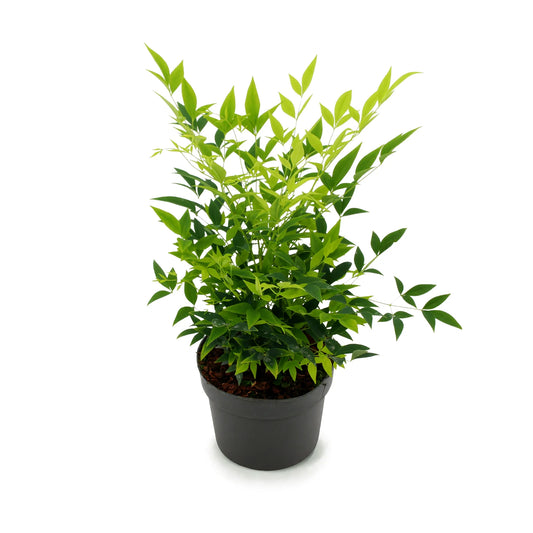
Sacred Bamboo 'Lemon Lime' (Nandina domestica) - evergreen shrub with colourful foliage - 17 cm pot - Height 45 cm
Regular price From 44,95 €Regular price44,95 €From 35,96 €Livraison offerte -

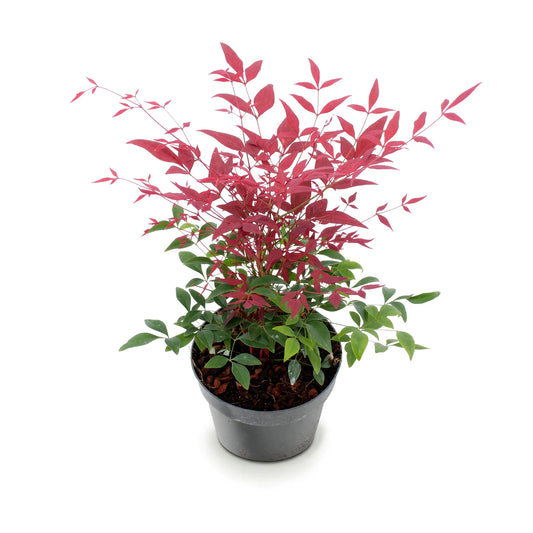
Sacred bamboo 'Obsessed' (Nandina domestica) - evergreen shrub with colourful foliage - 17 cm pot - Height 45 cm
Regular price From 44,95 €Regular price44,95 €From 35,96 €Livraison offerte


✂️ Caring for heavenly bamboo: virtually no maintenance
Heavenly bamboo is one of the easiest shrubs to grow: it needs virtually no maintenance. Simply keep the soil moist during the first few years and, if needed, remove an old stem at the base to rejuvenate the clump.
💧 Watering: Keep the soil moist for the first two years and during dry summers
✂️ Pruning: No shaping needed: simply remove the oldest stems at the base to rejuvenate the plant
🍂 Mulching: Mulch around the base to retain moisture and suppress weeds
🌱 Feeding: A spring application of compost is more than enough
🧣 Protection: Shelter it from cold, dry winds, which can turn the foliage brown in winter
🍂 Heavenly bamboo through the seasons
Heavenly bamboo has a simple seasonal calendar: it is ornamental year-round, reaching its peak in autumn and winter when its foliage turns red. New shoots, often colorful, appear in spring. Summer brings discreet white flowers on the species type.
📅 Seasonal care calendar
| Season | Key task |
|---|---|
| 🌸 Spring | New shoots are often tinged red or bronze; planting is possible, and the foliage turns green again. |
| ☀️ Summer | The species type produces discreet white flowers in panicles, and glossy green foliage; keep the soil moist. |
| 🍂 Autumn | The foliage turns a blazing red, with red berries on some varieties; this is the ideal time to plant. |
| ❄️ Winter | The red foliage reaches its peak, with decorative berries: heavenly bamboo brightens the winter garden. |
🌱 How to propagate heavenly bamboo
Propagate heavenly bamboo by dividing the clump in spring, separating rooted stems, or by taking semi-ripe cuttings in summer. These methods faithfully reproduce colorful varieties. You can grow the species type from seed collected from the berries, but it is slow; bear in mind that the berries are toxic and handle them with care.
🐛 Common problems: diseases, pests and mistakes
Heavenly bamboo is hardy and virtually disease-free; the rare problems are caused by cold, dry conditions affecting the foliage or by excessively poor soil. Here’s what to do.
| Symptom | Likely cause | Solution |
|---|---|---|
| Browning foliage in winter | ❄️ Cold, dry winds or prolonged frost | Shelter the shrub from prevailing winds; damaged foliage will be replaced in spring |
| Clump thinning at the base | ⚠️ Old stems have not been renewed | Cut one or two old stems down to the base each year to fill out the clump |
| Dull autumn colors | 💧 Too much shade or overly rich soil | Give it more sun and avoid excess nitrogen to bring out the colors |
| Weak growth, pale foliage | 🌱 Poor or dry soil | Add compost and keep the soil moist in spring |


🌸 Our heavenly bamboo varieties
Choose according to size and foliage color: here are some reliable options, most of them compact and berry-free.
| Variety | What makes it special |
|---|---|
| Gulf Stream | Compact and dense, with fiery red foliage in autumn and winter; no berries |
| Obsessed | Bright red new shoots and a compact, eye-catching habit |
| Blush Pink | Soft pink new shoots create a highly decorative pastel effect |
| Lemon Lime | Bright lime-green foliage offers a change from the usual red |
| Twilight | Pink-white variegated foliage creates a striking graphic effect |
🎨 Where to plant it and what to pair it with
Plant heavenly bamboo along an edging, in a border or in a container, where its light, colorful foliage complements other flowering shrubs for a colorful garden. It creates beautiful winter displays alongside ornamental grasses and other evergreens. As it does not spread, it poses no risk of becoming invasive.
Place it in full sun for the best colors and shelter it from cold, drying winds.
⚠️ Is heavenly bamboo toxic?
Warning: heavenly bamboo’s red berries are toxic. They contain cyanogenic compounds that can be dangerous if ingested by people, pets or some birds. Keep children and animals away from the fruit, and opt for modern compact varieties (‘Gulf Stream’, ‘Obsessed’) that produce few or no berries. The foliage is of little concern.
If any berries are ingested, contact a doctor or veterinarian promptly.
✅ Our expert tips for success
To grow heavenly bamboo successfully, remember that it is one of the easiest shrubs in the garden: provide well-drained soil, give it sun for the best colors, shelter it from dry winds, and it will need almost no care. Choose a compact, berry-free variety if you have children or pets.
In return, it offers evergreen foliage that blazes all winter, with the lightness of bamboo but none of its invasive growth.
I recommend nandina to anyone who dreams of growing bamboo but is afraid of it spreading. It’s the perfect compromise: an airy habit and winter color, but a well-behaved, non-spreading clump. My one practical tip: choose a compact, berry-free variety if you have pets or young children, as the red fruit is toxic. Otherwise, this shrub really asks for nothing.

Laura Bruneau
Jardinière et autrice