Dappled willow (Salix integra): planting, pruning and care

The shrimp willow gets its nickname from its young pink and cream shoots, which crown the shrub with a tangy cloud of color in spring. Behind this spectacular foliage is an easy, hardy and very vigorous willow that thrives in borders or containers and can be grown as a bush or as a small standard tree.
The secret to beautiful color comes down to one thing: pruning in late winter. This guide explains how to plant, prune and care for it so you can enjoy vibrant colors year after year.
🌿 Why plant a shrimp willow?
You plant a shrimp willow above all for its uniquely variegated foliage: as the buds break, the young shoots are pink, then cream, before turning green marbled with white—a gradient that brightens the garden from March to June. It is also an easy, fast-growing shrub that quickly fills out.
The RHS (Royal Horticultural Society) lists it among the most ornamental willows, prized for its changing foliage and light, rounded shape. As a bush, in a container or as a standard: it suits every use, from small gardens to balconies.
| Benefit | What it brings to the garden |
|---|---|
| Pink young shoots | In spring, the foliage emerges pink and cream, creating a spectacular “shrimp” effect |
| Fast growth | Like all willows, it grows quickly and fills out nicely in one or two seasons |
| Easy and hardy | Hardy to around -15°C, it thrives in almost any moist soil |
| Versatile | As a bush, in a container or grafted onto a standard to form a small tree: choose the shape you prefer |
🔎 Shrimp willow at a glance
Shrimp willow is the cultivar 'Hakuro-nishiki' (also sold as 'Flamingo') of the species Salix integra, in the willow family (Salicaceae). The Missouri Botanical Garden notes that the species is native to Asia (China, Japan, Korea and eastern Siberia), where it grows naturally along waterways and in damp meadows, which explains its preference for moist soil.
It is a deciduous shrub with a rounded shape and lance-shaped leaves reaching 10 cm long. In spring, inconspicuous yellow catkins appear on the bare wood before the leaves.
| Feature | Verified details |
|---|---|
| 🏷️ Botanical name | Salix integra 'Hakuro-nishiki' |
| 🏷️ Other name | Shrimp willow 'Flamingo', variegated willow |
| 🧬 Family | Salicaceae |
| 🌍 Native range | China, Japan, Korea, eastern Siberia |
| 🌳 Type | Deciduous shrub with a light, rounded shape |
| 📏 Height | 1.5 to 2.5 m in 10 to 20 years |
| 🍃 Foliage | Deciduous, lance-shaped leaves up to 10 cm long, pink-variegated before turning green |
| 🌸 Flowers | Yellow catkins in March and April, on bare wood |
| ☀️ Exposure | Full sun to partial shade |
| ❄️ Hardiness | Around -15°C (RHS H5) |
| 🌡️ Climate zone | USDA Zones 5 to 7 (Missouri Botanical Garden) |
📋 Quick reference
The essential details, all in one place.
| Feature | Details |
|---|---|
| Botanical name | Salix integra 'Hakuro-nishiki' ('Flamingo') |
| Family | Salicaceae |
| Type | Deciduous shrub with variegated foliage |
| Exposure | Full sun to partial shade |
| Soil | Moist to wet, fertile, well-drained, any pH |
| Hardiness | Around -15°C (RHS H5) |
| Height | 1.5 to 2.5 m |
| Foliage | Deciduous, variegated pink, cream and green |
| Growth | Fast |
| Uses | Borders, containers, standard form, waterside planting |
📍 Where and when to plant a shrimp willow: sun and moist soil
Plant shrimp willow in full sun for the brightest color on its young shoots; it also tolerates partial shade, where the foliage stays a little greener. The key, inherited from its waterside origins, is keeping the soil moist: give it moist to wet, fertile, well-drained soil, whatever the pH.
It tolerates clay and heavy soils, but dislikes prolonged drought. Allow around 1 m between plants in a border. Ideally, plant in fall or spring, when the ground is not frozen, and water regularly during the first year.
☀️ Exposure: Full sun to partial shade
🌱 Soil: Moist to wet, fertile, well-drained, any pH
❄️ Climate: Around -15°C (RHS H5)
🪴 How to plant shrimp willow, step by step
Planting shrimp willow is simple: like all willows, it establishes very easily as long as it has enough water at first. Well-prepared soil kept moist during the first year ensures quick establishment and vigorous growth.
| Step | What to do |
|---|---|
| Soak | Immerse the root ball in a bucket of water until thoroughly soaked |
| Dig | Dig a hole two to three times wider than the root ball in loosened soil |
| Plant | Set the root collar level with the soil (or the graft union for a standard) |
| Water | Water generously to settle the soil around the roots |
| Mulch | Spread a thick layer of mulch to keep the soil moist all summer |
columns: 4
columns_mobile: 2
-


‘Flamingo’ Dappled Willow (Salix integra) – shrub with pink variegated foliage – 17 cm pot – height 40–50 cm
Regular price From 49,95 €Regular price49,95 €From 39,96 €Livraison offerte -


Flamingo dappled willow (Salix integra) – shrub with pink variegated foliage – 17 cm pot – height 70–80 cm
Regular price From 54,95 €Regular price54,95 €From 43,96 €Livraison offerte -


'Flamingo' Dappled Willow (Salix integra) - Shrub with pink variegated foliage - 19 cm pot - Height 90–100 cm
Regular price From 59,95 €Regular price59,95 €From 47,96 €Livraison offerte -


‘Flamingo’ Dappled Willow (Salix integra) – shrub with pink variegated foliage – 23 cm pot – height 140–160 cm
Regular price 74,95 €Regular price74,95 €59,96 €Livraison offerte -


Photinia Little Red Robin (Photinia x fraseri), evergreen hedging plant, 19 cm pot, Height 90 cm
Regular price 69,95 €Regular price69,95 €55,96 €Livraison offerte -


'Golden Spirit' smoke tree (Cotinus coggygria) - golden-foliaged shrub - 12 cm pot - Height 35 cm
Regular price From 39,95 €Regular price59,95 €Sale price From 39,95 €39,95 €From 31,96 €Livraison offerte Sale -

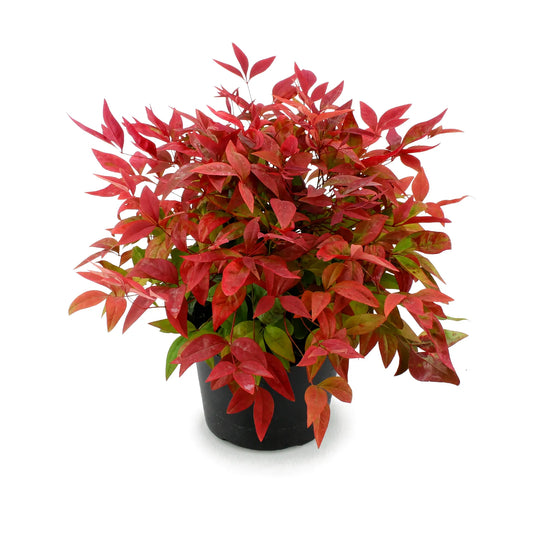
Sacred bamboo 'Blush Pink' (Nandina domestica) - evergreen shrub with colourful foliage - 17 cm pot - Height 40 cm
Regular price From 44,95 €Regular price44,95 €From 35,96 €Livraison offerte


✂️ Caring for shrimp willow: moisture and monitoring
Caring for shrimp willow comes down to two things: water and a little monitoring. Like any willow, it needs moisture and hates drying out; in return, it is forgiving of almost everything. Pruning, which is essential for its color, is covered in detail below.
💧 Watering: Keep the soil consistently moist, especially in pots and during dry summers
🍂 Mulching: A thick layer of mulch around the base reduces evaporation and the need for watering
🌱 Feeding: A spring application of compost supports vigorous foliage growth
👀 Monitoring: Improve air circulation and clear away fallen leaves to help prevent leaf spots
🔹 Standard form: On a grafted plant, remove any shoots growing below the graft union
🍂 Shrimp willow through the seasons
The shrimp willow's calendar revolves around one peak: spring budbreak, when its young pink shoots steal the show. Late-winter pruning sets the stage for this display by encouraging the shrub to produce as many colorful new shoots as possible.
📅 Seasonal care calendar
| Season | Key task |
|---|---|
| 🌸 Spring | Spectacular budbreak: young shoots emerge pink, then cream; prune in late winter just beforehand and water regularly. |
| ☀️ Summer | Foliage variegated white and green, bright and luminous; keep the soil moist and mulch to help it get through summer without stress. |
| 🍂 Fall | Foliage turns green before dropping; an ideal time to plant in moist soil, before the frosts. |
| ❄️ Winter | Bare silhouette and often orange-tinged shoots; late winter is the time to prune and bring back the color. |
🌱 How to propagate shrimp willow
Shrimp willow is one of the easiest shrubs to propagate. In winter, take 20 to 30 cm cuttings from bare shoots and plant them directly in moist soil or place them in a glass of water: like all willows, they almost always root within a few weeks. This method faithfully reproduces the 'Flamingo' cultivar.
A plant grafted onto a standard, however, does not propagate true to type: a cutting will grow into a bush, not a small tree.
🐛 Common problems: diseases, pests and mistakes
Shrimp willow is robust, but two things deserve your attention: lack of water, which all willows are sensitive to, and leaf spots encouraged by stagnant moisture. Here's what to do.
| Symptom | Likely cause | Solution |
|---|---|---|
| Foliage turns green, loses its pink color | ☀️ Not enough light or no pruning | Plant in sun and cut back in late winter: the color appears on new shoots |
| Leaves turn brown and dry out in summer | 🌱 Soil too dry, insufficient watering | Water generously and mulch: willow needs consistently moist soil |
| Black spots, leaves falling | 💧 Anthracnose encouraged by stagnant moisture | Improve airflow through the canopy, clear away fallen leaves and avoid wetting the foliage |
| Dead shoots below the graft | ❄️ Frost damage or drying out at the graft union | Protect the graft union in winter and remove suckers growing from the rootstock |
-

For quick results in the garden: fast-growing shrubs, hedges and climbers that...


🌸 Our shrimp willow varieties
Shrimp willow 'Flamingo' is chosen mainly by plant size at purchase, depending on the effect you're after and your budget. Here are our three sizes, from young plant to larger specimen, ready to bring structure to a border or patio.
| Variety | What makes it special |
|---|---|
| 'Flamingo' young plant (17 cm pot, 40-50 cm) | An economical option for creating a moist border or starting a container planting |
| 'Flamingo' already bushy (17 cm pot, 70-80 cm) | Instant impact in a border from the first year |
| 'Flamingo' larger specimen (19 cm pot, 90-100 cm) | A striking specimen, perfect as a standalone plant or in a large patio container |
🎨 Where to plant it and what to pair it with
Plant shrimp willow in a moist border, beside a pond or in a large container, where its pink foliage pairs beautifully with contrasting leaves.
Combine it with smoke bush (Cotinus) for a pink-and-purple contrast, with sacred bamboo (Nandina) or Photinia with its young red foliage to extend the color display, and with airy ornamental grasses for movement.
To create a whole scene, explore other ornamental shrubs for the garden. Always keep the soil around its base moist: this is essential for dense, vibrant foliage.
🔑 When and how to prune shrimp willow
Pruning is the key task, because pink color appears only on young shoots. So cut the shrub back in late winter, in February or March, just before budbreak: on a bush, shorten all the shoots to 15 to 30 cm from the main framework; on a plant grafted onto a standard, cut the crown back hard above the graft union to maintain a compact, rounded head.
The harder you prune, the more numerous, vigorous and colorful the new shoots will be. A light second pruning in early July encourages another flush of color in late summer. This rejuvenation pruning does not weaken the shrub; on the contrary, it maintains its vigor and shape.
⚠️ Is shrimp willow toxic?
The good news: shrimp willow is not listed as toxic to people or pets. Like all willows, its bark contains salicylates, the family of compounds from which aspirin is derived, but that does not make it a dangerous garden plant. It is also often considered suitable for gardens where pets are present.
As a sensible precaution, simply prevent young children or pets from chewing on large quantities of the shoots.
✅ Our expert tips for success
To grow shrimp willow successfully, remember two things: never let it dry out, and cut it back hard in late winter. The first ensures dense, healthy foliage; the second guarantees the pink-and-cream budbreak that gives it its charm.
Give it sun and moist soil, choose the shape you like (bush or standard), and you'll have an easy, fast-growing, spectacular shrub that shines from spring through fall.
Shrimp willow is the ultimate easy favorite: its pink cloud in spring always makes an impact, and yet it asks for almost nothing. My one real hands-on tip is to be brave with the pruning: many gardeners are afraid to cut it back and end up with a shrub that turns green and becomes sparse. Cut it back hard every late winter, without fear, and keep the soil around its base moist; it will reward you many times over. In a patio pot, just remember to keep up with the watering.

Laura Bruneau
Jardinière et autrice