Shrubs with autumn colours: the best for fiery foliage

When autumn arrives, certain shrubs burst into flame: scarlet red, copper orange, deep purple or luminous gold. Three stand out and thrive throughout France: the Japanese maple, elegant and graceful; the smoke bush, spectacular; and the nandina, compact and colorful all winter long. But which one should you choose for your situation?
This comparison matches the finest autumn foliage with the space you have, the amount of sunlight and the effect you want, backed by verified horticultural information.
🌿 Why choose your autumn-color shrub carefully?
Choosing at random risks leaving you with a Japanese maple scorched in full sun, a smoke bush too large for a small garden, or dull foliage due to a lack of light. Start with your actual conditions—the space available, the exposure and the effect you want—and you can plant the shrub that will put on the finest autumn display with no struggle.
And the good news: autumn is the best season to plant them, so you can enjoy their colors at the garden center before making your choice.
| Benefit | What it brings to the garden |
|---|---|
| A burst of autumn color | When the rest of the garden is going dormant, these shrubs put on their finest color display. |
| A shrub for every situation | From a compact nandina in a pot to a large, flamboyant smoke bush: there’s one for every garden. |
| The best season for planting | Autumn brings together still-warm soil and rain: ideal conditions for establishing roots before winter. |
| Structure and color | Striking foliage in summer, a blaze of color in autumn, and an elegant silhouette in winter: they earn their keep all year round. |
🔎 At a glance: our flame-colored shrubs
Each of the three stars of autumn foliage has its own distinctive look. According to the Missouri Botanical Garden, the Japanese maple (Acer palmatum) reaches about 3 to 7.5 m and turns yellow, purplish-red and bronze; it is hardy in USDA zones 5 to 8.
The smoke bush (Cotinus coggygria), according to the Missouri Botanical Garden, grows into a 3 to 4.5 m shrub in full sun, turning yellow, orange and then purplish red in autumn. Nandina (Nandina domestica) is more compact (0.3 to 2 m, depending on the variety) and keeps its fiery red foliage for much of the winter in mild climates.
Other shrubs also put on a fiery display, including winged euonymus, serviceberry and sweetgum; we mention them for the sake of completeness.
| Feature | Verified details |
|---|---|
| 🔎 Japanese maple | Japanese-inspired elegance; yellow to purplish red; 3 to 7.5 m; deciduous |
| 🔎 Smoke bush | Big impact; yellow-orange to purplish red; 3 to 4.5 m; deciduous |
| 🔎 Nandina (heavenly bamboo) | Compact, semi-evergreen; fiery red all winter; 0.3 to 2 m |
| 🔎 Winged euonymus | Intense scarlet foliage in autumn (mentioned, not available from us) |
| 🔎 Serviceberry | Orange-red foliage and small fruits (mentioned, not available from us) |
| 🔎 Sweetgum | Large tree with star-shaped purple foliage (mentioned, not available from us) |
📋 Quick facts
The key details, all in one place.
| Factor | Guideline |
|---|---|
| Sun exposure | Sun for vivid colors; partial shade is tolerated; cool nights intensify red tones |
| Soil | Moist but well-drained; acidic soil produces more vivid reds |
| Hardiness | Very hardy: Japanese maple and smoke bush in zones 5 to 8, nandina in zones 6 to 9 |
| For a pot or balcony | Nandina and dwarf Japanese maple (dissectum) |
| For a small garden | Nandina, a small Japanese maple, or a pruned smoke bush |
| For big impact | Smoke bush |
| Color all winter | Nandina, a semi-evergreen |
| Color-changing season | October to November, depending on the species |
| Best time to plant | In autumn, when the ground is not frozen |
| Height | From 0.3 m (dwarf nandina) to 7.5 m (large Japanese maple) |
📍 Where and when to plant for brilliant colors
For the most spectacular display, give these shrubs full sun or bright partial shade: sunlight, combined with cool autumn nights, brings out the brightest reds. Moist, well-drained, slightly acidic soil intensifies the colors further. The Japanese maple is the exception: its delicate leaves do best in sheltered partial shade, away from drying winds and the scorching afternoon sun, which can scorch its foliage.
Ideally, plant in autumn, when the ground is not frozen. The soil is still warm, and rainfall encourages roots to establish.
☀️ Sun exposure: Sun for vivid colors; partial shade is tolerated; cool nights intensify red tones
🌱 Soil: Moist but well-drained; acidic soil produces more vivid reds
❄️ Climate: Very hardy: Japanese maple and smoke bush in zones 5 to 8, nandina in zones 6 to 9
🪴 Choose for your space: pots, small or large gardens
The best autumn shrub is the one that suits the space you have. For a balcony or pot, choose nandina or a dwarf Japanese maple; both are compact and slow-growing. In a small garden, nandina, a small Japanese maple or a pruned smoke bush will fit right in. For a large garden and a spectacular effect, the smoke bush unfurls its billowing, colorful canopy.
And if you want color even in winter, the semi-evergreen nandina keeps its red foliage when the others have shed theirs.
| Situation | Best choice |
|---|---|
| Balcony, patio, pot | Nandina, dwarf Japanese maple (dissectum) |
| Small garden | Nandina, small Japanese maple, smoke bush pruned each spring |
| Large garden, spectacular effect | Smoke bush, large Japanese maple |
| Color even in winter | Nandina, semi-evergreen with long-lasting red foliage |
| Acidic ericaceous soil | Japanese maple, which thrives in it |
columns: 4
columns_mobile: 2
-


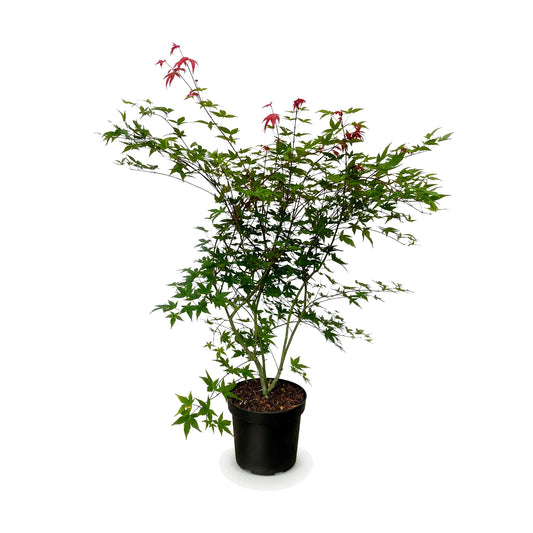
Japanese Maple 'Sangokaku' (Acer palmatum) - with fiery foliage - 26 cm pot - Height 90 cm
Regular price 89,95 €Regular price89,95 €71,96 €Livraison offerte -


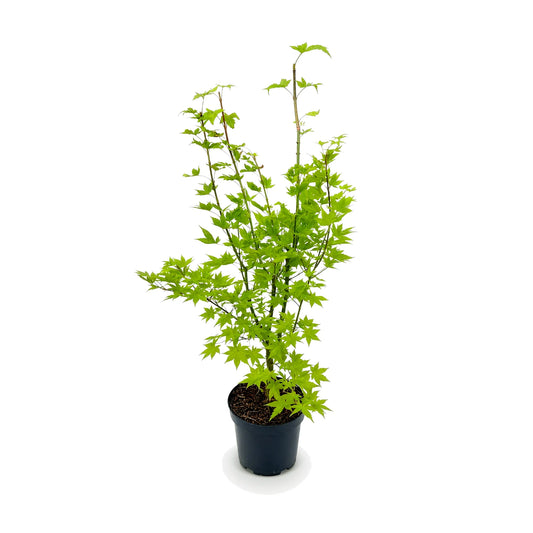
Japanese Maple 'Trompenburg' (Acer palmatum) - with fiery foliage - 19 cm Pot - Height 70 cm
Regular price From 64,95 €Regular price64,95 €From 51,96 €Livraison offerte -


'Royal Purple' Smoke Tree (Cotinus coggygria) - purple-foliaged shrub - 12 cm pot - Height 35 cm
Regular price From 39,95 €Regular price39,95 €From 31,96 €Livraison offerte -


'Golden Spirit' smoke tree (Cotinus coggygria) - golden-foliaged shrub - 12 cm pot - Height 35 cm
Regular price From 39,95 €Regular price59,95 €Sale price From 39,95 €39,95 €From 31,96 €Livraison offerte Sale -

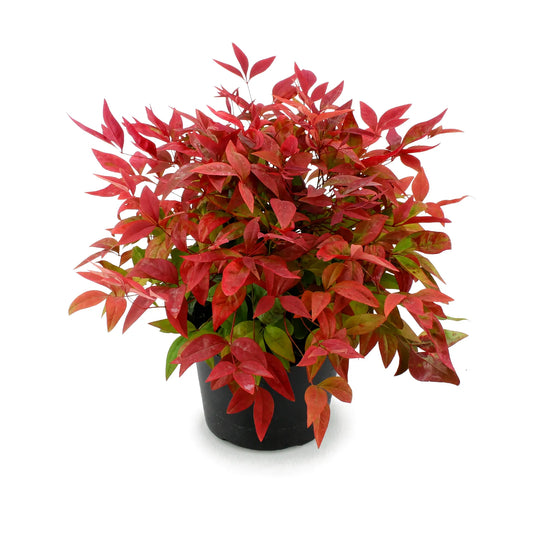
Sacred bamboo 'Blush Pink' (Nandina domestica) - evergreen shrub with colourful foliage - 17 cm pot - Height 40 cm
Regular price From 44,95 €Regular price44,95 €From 35,96 €Livraison offerte -

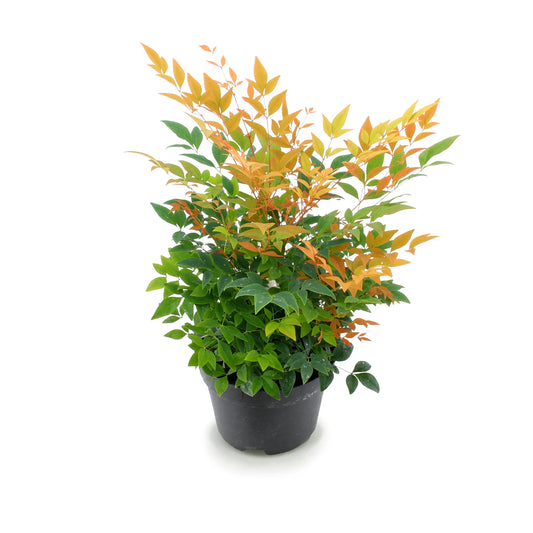
Sacred bamboo 'Gulf Stream' (Nandina domestica) - evergreen shrub with colourful foliage - 17 cm pot - Height 45 cm
Regular price From 44,95 €Regular price44,95 €From 35,96 €Livraison offerte


✂️ Care: retain moisture and bring out the color
These shrubs need little attention, but two things make all the difference to their color: keeping the soil moist and pruning appropriately. A permanent layer of mulch around the base retains the moisture Japanese maples and smoke bushes need. Hard pruning in spring gives the smoke bush larger, more colorful foliage. Nandina, meanwhile, only needs its oldest stems removed at the base.
💧 Watering: Water regularly for the first two years and during dry summers, especially in pots
🍂 Mulching: Apply a thick, permanent layer to keep the roots cool (essential for Japanese maples)
✂️ Smoke bush pruning: Cut back hard in spring for larger, more colorful foliage
✂️ Nandina pruning: Remove only the oldest stems at the base
🔹 Japanese maple: No shaping needed; shelter it from scorching sun and dry winds
🍂 The color calendar, season by season
The cycle of these shrubs builds toward one high point: autumn. In spring, fresh growth appears, often already colored. In summer, their foliage develops in green or purple. Autumn sets it ablaze, and winter reveals their silhouette, along with nandina’s lasting red color. Here are the key tasks throughout the year.
📅 Seasonal care calendar
| Season | Key task |
|---|---|
| 🌸 Spring | Budbreak often brings color (red new growth on nandina, tender leaves on Japanese maple); plant if desired; mulch. |
| ☀️ Summer | Foliage is fully developed, green or purple (Cotinus 'Royal Purple'); keep the soil moist, especially in pots. |
| 🍂 Autumn | Peak display: a blaze of yellow, orange, red and purple; also the best season for planting. |
| ❄️ Winter | The Japanese maple and smoke bush reveal their striking silhouettes; nandina keeps its red foliage all winter. |
🌱 How can you propagate your autumn-color shrub?
Each species has its own method. Smoke bush is fairly easy to propagate from cuttings in summer, or by layering. Nandina can be divided in spring or propagated from semi-ripe cuttings. Japanese maple is more challenging: nurseries graft colored varieties, and seedlings do not reliably reproduce the parent variety.
For a reliable, quick result, it’s better to start with a good-sized, established plant than to try growing a Japanese maple from seed.
🐛 Common problems: diseases, pests and mistakes
Most disappointments stem from a poor choice of location or inappropriate pruning. Here are the most common problems and how to fix them.
| Symptom | Likely cause | Solution |
|---|---|---|
| Dull autumn colors | 💧 Too much shade, or an autumn that is too mild | Give the plant more sun; cool, bright nights intensify red tones |
| Japanese maple leaves scorched in summer | ☀️ Scorching sun and dry wind on delicate foliage | Plant in sheltered partial shade, mulch and keep the soil moist |
| Nandina stays green | ⚠️ Too much shade | Give it more sun to bring out the red foliage |
| Smoke bush has little color and sparse foliage | ✂️ Not pruned | Cut it back hard in spring: the new foliage will be larger and brighter |
-

Acer palmatum and Japanese maples with fiery foliage, perfect for pots or...
-

Our flowering outdoor shrubs: buddleias, dogwoods, deutzias, hibiscus, mock oranges and more...


🌸 Our varieties of flame-colored shrubs
Our three star shrubs for autumn foliage, each linked to its own guide to help you learn more and choose the right variety.
| Variety | What makes it special |
|---|---|
| Japanese maple (Acer palmatum) | Japanese-inspired elegance, from dwarf plants for pots to large specimens; yellow to purplish red |
| Smoke bush | Big impact: purple foliage in summer, followed by fiery orange-red in autumn |
| Nandina (heavenly bamboo) | Compact and semi-evergreen, it keeps its fiery red foliage for much of the winter |
🎨 Where to plant and what to pair it with
The finest autumn displays play with contrasts: pair the delicate foliage of our complete guide to Japanese maples with the smoke bush’s flamboyant mass of foliage and the colorful upright form of heavenly bamboo (Nandina), then add airy ornamental grasses for movement.
To find the right Japanese maple variety, consult our comparison of Japanese maples. To complete the display, explore other ornamental shrubs. Beyond our range, winged euonymus, serviceberry and sweetgum also offer stunning colors and are best suited to larger gardens.
🔑 Why do leaves turn red in autumn?
This is the secret behind the whole display, and it’s something other guides don’t explain. In summer, leaves are green thanks to chlorophyll, which captures light. In autumn, as the days shorten and nights grow cooler, the tree stops producing chlorophyll. As it breaks down, it reveals the yellow and orange pigments (carotenoids) already present in the leaf.
Red and purple pigments, on the other hand, are produced at this time: these are anthocyanins, synthesized from sugars trapped in the leaf. That’s why red tones are more vivid when autumn days are sunny, nights are cool and the sap is acidic.
The same Japanese maple will therefore turn a more intense red in a sunny spot, in acidic soil and during a fine autumn than it will in shade during a mild, overcast autumn.
🔑 Japanese maple or smoke bush: which should you choose?
This is the most common choice to weigh up, and it all depends on the space you have and your personal taste. The Japanese maple is all about elegance: fine, deeply cut foliage, a graceful silhouette and a refined palette from yellow to purplish red. It thrives in sheltered partial shade and suits pots and small gardens, but grows slowly and is sensitive to scorching sun.
The smoke bush, by contrast, makes a bold statement: according to the Missouri Botanical Garden, it grows into a vigorous shrub 3 to 4.5 m tall in full sun, with a cloud of foliage that changes from purple to orange-red. Hard pruning makes its foliage even more spectacular.
In short: choose Japanese maple for delicate foliage and small, partially shaded spaces; choose smoke bush for big impact in full sun.
⚠️ Are these shrubs toxic?
One point to consider in a family garden: nandina’s red berries are toxic. They contain cyanogenic compounds that can be dangerous if eaten by children, pets or some birds. Choose modern compact varieties that produce few or no berries, and keep any fruit out of reach. Japanese maple and smoke bush, on the other hand, are not listed as toxic.
In any case, the foliage poses no danger on contact alone: take care only with nandina berries.
✅ Our expert tips for success
Focus on the approach rather than memorizing a list: start with the space you have and the amount of sunlight, choose a sunny spot and moist, acidic soil for vivid colors, then pick the shrub that appeals to you—the delicate Japanese maple, the bold smoke bush or the nandina’s winter color.
Plant in autumn, mulch around the base, and you’ll treat yourself to one of the garden’s most beautiful displays every year.
My autumn trio is almost always the same: a Japanese maple for its elegance, in partial shade and cool conditions; a cotinus in full sun for a real visual impact; and a nandina to take over throughout winter when the other two are bare. The mistake I see most often is planting a maple in the blazing sun, where it scorches as early as July. Give it afternoon shade and a good layer of mulch: that’s when it puts on its best display of colour.

Laura Bruneau
Jardinière et autrice