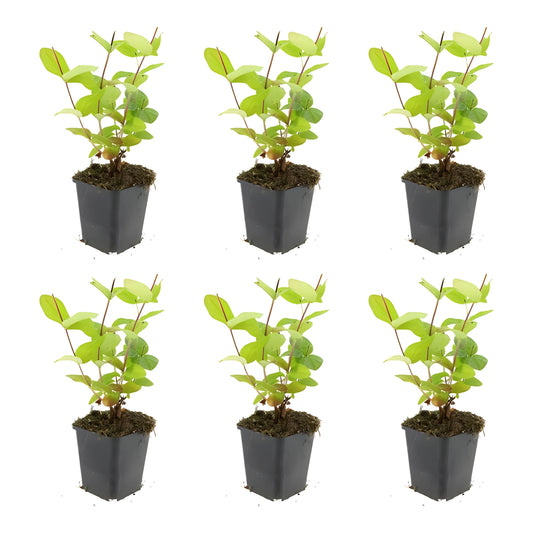
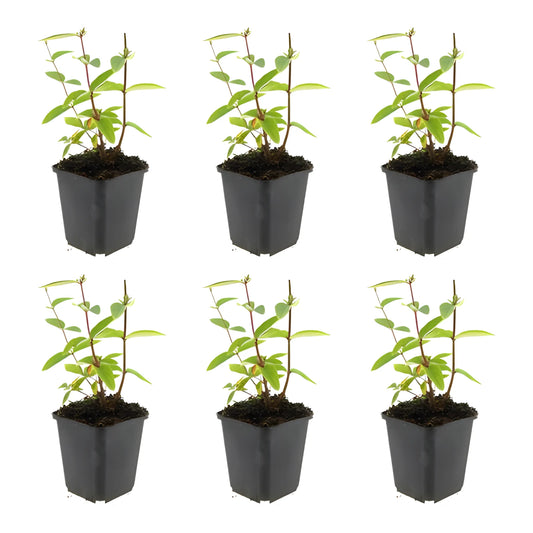
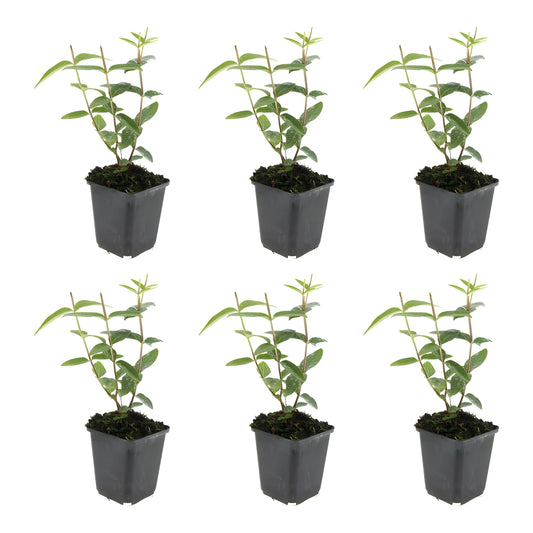
Forsythia (Forsythia × intermedia): planting, pruning and care

To grow forsythia successfully, plant it in the sun in any soil that does not remain waterlogged, water it for the first few years, then prune it each spring just after flowering—never in autumn. This single rule explains why most forsythias stop flowering: their flowers grow on the previous year’s shoots.
The forsythia sold at garden centres is almost always Forsythia × intermedia, a cultivated hybrid that opens the season for flowering shrubs with its bare branches covered in gold.
Here are the guidelines, verified with the RHS, Kew Gardens and North Carolina State University, for planting, pruning and propagating it, and growing it as a flowering hedge.
🌿 Why forsythia heralds spring in the garden
Forsythia flowers when almost nothing else does. According to the RHS Forsythia × intermedia profile, its bright yellow flowers, 2.5 to 3.5 cm across, appear from early to mid-spring, before the leaves, creating the effect of branches covered entirely in gold.
The RHS describes it as very hardy, undemanding about soil and generally trouble-free. It works equally well in a border, informal hedge, on a bank or in a coastal garden, and its flowering branches can be cut for a vase.
| Benefit | What it means for you |
|---|---|
| Very early flowering | Branches covered in yellow flowers from late winter or early spring |
| Undemanding | All soil types except waterlogged soils, from chalky to acidic, according to the RHS |
| Fast-growing | A flowering hedge or screen that establishes quickly (fast growth according to NC State) |
| Easy to propagate | Cuttings and layers root without any special equipment |
🔎 Forsythia at a glance
According to Plants of the World Online (POWO) from the Royal Botanic Gardens, Kew, the accepted name is Forsythia × intermedia Zabel, published in 1885: it is an artificial hybrid with the formula F. suspensa × F. viridissima.
According to North Carolina State University Extension (NC State Extension), it belongs to the olive family (Oleaceae), like lilac and olive, and forms a fast-growing deciduous shrub about 2.4 to 3 m (8 to 10 feet) tall.
Its unscented, bell-shaped flowers, with four lobes and about 2.5 cm across, grow singly or in groups of 2 to 6 on the previous year’s wood. The genus comprises 11 accepted species native to China, Japan and southeastern Europe, notes NC State Extension’s Forsythia genus profile.
| Feature | Verified details |
|---|---|
| 🏷️ Botanical name | Forsythia × intermedia Zabel (F. suspensa × F. viridissima) |
| 🧬 Family | Oleaceae, the family of lilac and olive |
| 🌳 Type | Deciduous, bushy, fast-growing shrub |
| 🌍 Origin | Cultivated hybrid; parents native to East Asia (genus: China, Japan, southeastern Europe) |
| ❄️ Hardiness | H5 according to the RHS: -10 to -15 °C; USDA zones 5a to 8b (NC State) |
| 🍃 Foliage | Deciduous, opposite, lance-shaped leaves about 7.5 to 12.5 cm long, medium to dark green |
| 🌸 Flowering | Early to mid-spring, before the leaves; yellow flowers 2.5 to 3.5 cm across (RHS) |
| 📏 Mature size | About 2 m tall and wide (RHS); 1.5 to 2.5 m for 'Goldrausch' and 'Lynwood Variety' |
📋 Quick growing guide
Essential growing information at a glance.
| Factor | Guideline |
|---|---|
| Position | Preferably full sun; partial shade is tolerated, but flowering will be reduced |
| Soil | All types (chalk, clay, loam, sand) except waterlogged; pH acidic to alkaline |
| Hardiness | H5 (RHS): -10 to -15 °C; USDA zones 5a to 8b (NC State) |
| Watering | Regularly for the first few years; thereafter, water thoroughly once or twice a week during dry spells |
| Planting | Spring or autumn for container-grown plants; bare-root plants from November to February |
| Pruning | Just after flowering: cut back faded shoots and remove up to one-fifth of the old stems |
| Flowering | Yellow, early to mid-spring, on the previous year’s wood |
| Care | Very easy: 5 cm mulch, little or no fertiliser |
| Toxicity | Non-toxic to cats, dogs and horses according to NC State Extension |
📍 Where and when to plant forsythia
Plant your forsythia in full sun, somewhere with room for it to spread.
According to the RHS guide to growing forsythia (Royal Horticultural Society), it grows in most soils except those that remain waterlogged, and tolerates light shade at the expense of fewer flowers; allow about 2 m in height and width if you do not prune it annually.
NC State Extension recommends full sun (6 hours or more) or partial shade (2 to 6 hours). As for timing, container-grown forsythia is best planted in spring or autumn, although the RHS says it can be planted year-round as long as the soil is not frozen, waterlogged or too dry; plant bare-root specimens from November to February in mild weather.
☀️ Ideal: Full sun, ordinary well-drained soil, in a border, informal hedge or on a bank
⛅ Acceptable: Light partial shade: the shrub grows well but flowers less
🚫 Avoid: Waterlogged soil in winter, dense shade, or a spot too small for a spread of 2 m
🪴 Planting forsythia in a border, hedge or pot
Planting is straightforward because forsythia has no particular soil preferences.
For a hedge, the RHS recommends spacing plants 45 to 60 cm apart for a dense, even hedge, or up to 90 cm apart if you are happy to wait for them to meet or prefer an informal hedge; it recommends 'Lynwood Variety' or 'Spectabilis' for their vigorous, upright habit.
Water regularly for the first few years, especially during dry springs and summers. In a pot, choose a large container with drainage holes and a compact variety, as the water supply is limited: check the root ball more often than you would in the ground.
| Step | What to do |
|---|---|
| 1. Choose a spot | Sun or light partial shade, soil that does not remain waterlogged, and room for a spread of about 2 m |
| 2. Prepare the soil | Loosen the soil; for a hedge, mark out a line with 45 to 60 cm between plants (90 cm for an informal hedge) |
| 3. Set the root ball | Rehydrate the root ball, position it at the same depth as in the container, backfill and firm lightly |
| 4. Water | Water thoroughly at planting, then regularly during dry weather for the first few years |
| 5. Mulch | Apply 5 cm of organic mulch, leaving a clear space around the stems |
columns: 4
columns_mobile: 2
-
Forsythia 'Goldrausch' (Forsythia) - flowering shrub - 17 cm pot - Height 45 cm
Regular price 39,95 €Regular price39,95 €31,96 €Livraison offerte -

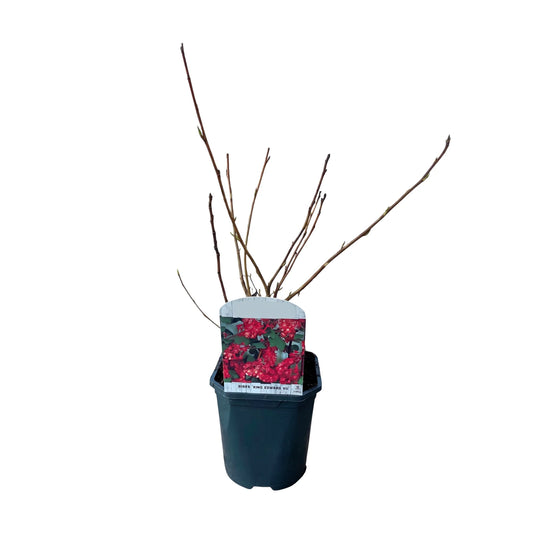
Flowering Currant 'King Edward' (Ribes sanguineum) - flowering shrub - 17 cm pot - Height 45 cm
Regular price 44,95 €Regular price44,95 €35,96 €Livraison offerte -

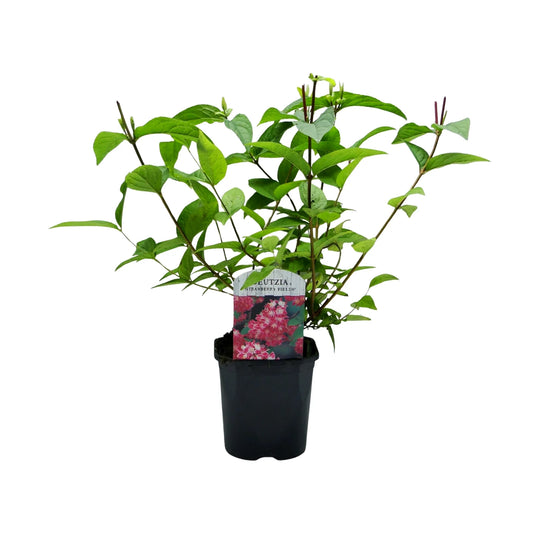
Deutzia 'Strawberry Fields' (Deutzia) - flowering shrub - 17 cm pot - Height 45 cm
Regular price 39,95 €Regular price39,95 €31,96 €Livraison offerte -
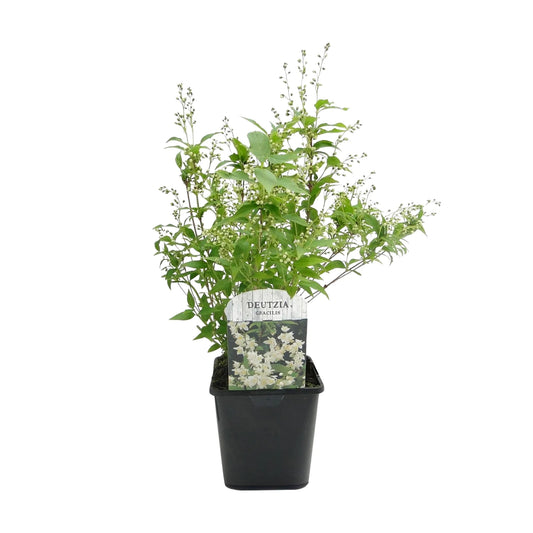
Deutzia 'Gracilis' (Deutzia) - flowering shrub - 17 cm pot - Height 45 cm
Regular price 39,95 €Regular price39,95 €31,96 €Livraison offerte -
'Snowbelle' Mock Orange (Philadelphus) – Fragrant Shrub – 17 cm Pot – 45 cm Tall
Regular price 39,95 €Regular price39,95 €31,96 €Livraison offerte -


Dwarf Meyer Lilac 'Palibin' (Syringa meyeri) - fragrant shrub - 19 cm pot - Height 90 cm
Regular price 69,95 €Regular price69,95 €55,96 €Livraison offerte -

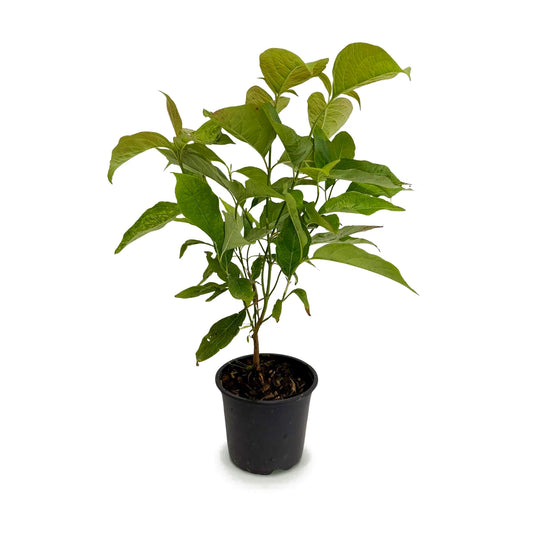
Male dogwood (Cornus mas) - winter-flowering yellow shrub - 12 cm pot - Height 35 cm
Regular price From 34,95 €Regular price34,95 €From 27,96 €Livraison offerte




✂️ Forsythia care and pruning after flowering
Prune forsythia just after flowering, in mid-spring: this is the rule set out in the RHS guide.
Cut back the flowered shoots to vigorous, upward- and outward-facing shoots lower down; remove up to one-fifth of the oldest stems at the base to encourage new growth, and thin out the centre. Avoid pruning late in the year, as this reduces flowering the following year.
An old, overgrown specimen can be cut back hard during dormancy, from autumn to early spring, but it will not flower the following spring; the RHS suggests spreading this renovation over two years. Otherwise, the shrub needs little fertiliser.
✂️ Annual pruning: Just after flowering: cut back faded shoots and cut up to 1/5 of the oldest stems down to ground level
✂️ Hedge pruning: Make the same cuts each year after flowering to maintain its shape, renewing old stems
🔹 Renovation: Cut back hard during dormancy; there will be no flowers the following spring. Can be done over two years
💧 Watering: For the first few years, then water thoroughly once or twice a week during dry spells rather than little and often
🍂 Feeding and mulch: Little or no fertiliser; replenish the 5 cm mulch without letting it touch the base of the stems
🍂 Forsythia through the seasons
Forsythia’s calendar works in reverse compared with that of many shrubs. Its flowers open in early spring on shoots formed the previous summer: North Carolina State University Extension (NC State Extension) notes that they grow on the previous year’s wood.
That is why you prune in spring, just after flowering, giving the shrub all summer to produce the shoots that will flower the following year. In autumn, the foliage remains green to yellowish-green, sometimes turning purplish, according to NC State.
In winter, this H5-rated shrub withstands -10 to -15 °C according to the RHS hardiness rating scale, while NC State notes that temperatures below about -20 °C (-5 °F) can damage the flower buds.
📅 Seasonal care calendar
| Season | Key task |
|---|---|
| 🌸 Spring | Flowering, then prune just afterwards; take softwood cuttings in late spring; plant container-grown specimens |
| ☀️ Summer | Water young plants in dry weather; take semi-ripe cuttings from mid-summer to early autumn |
| 🍂 Autumn | Ideal time to plant; layering; take hardwood cuttings from mid-autumn; no maintenance pruning |
| ❄️ Winter | Plant bare-root specimens in mild weather; hard renovation pruning is possible; cut branches for a vase |
🌱 Propagating forsythia from cuttings and layers
Forsythia is one of the easiest shrubs to propagate.
The RHS describes three types of cuttings: softwood cuttings from late spring to early summer, taken from young, non-flowering shoots, which root in 2 to 4 weeks; semi-ripe cuttings from mid-summer to early autumn, which should be overwintered in a cold frame; and hardwood cuttings from mid-autumn to late winter, which root more slowly and should be left in place until the following autumn.
Bottom heat speeds up rooting. Layering is even simpler: bend a low, flexible stem down to the ground in spring or autumn, keep it moist and sever it once well rooted, after 6 months or more. Seed-grown plants, however, may not come true to type.
🐛 Common problems: causes and solutions
Forsythia is robust and rarely affected by disease, according to the RHS; the most common complaint is a lack of flowers, almost always caused by pruning. A shrub pruned in summer or autumn loses the shoots bearing its flower buds. The RHS also notes that birds sometimes eat the flower buds and that some varieties are susceptible to honey fungus and forsythia gall.
NC State also lists leaf spots, crown gall, twig blight and, among pests, spider mites and aphids.
| Symptom | Likely cause | Solution |
|---|---|---|
| Few or no flowers | 💧 Pruning in summer or autumn, too much shade, or flower buds damaged by frost below about -20 °C (NC State) | Prune only just after flowering; plant in the sun |
| Buds missing in late winter | 💧 Birds eating the flower buds (RHS) | Protect a young specimen with lightweight netting; accept some losses on a large shrub |
| Wilted or curled leaves | 💧 Lack of water, especially during the first few years (RHS) | Water thoroughly once or twice a week during dry spells |
| Knobbly growths on the stems | ⚠️ Forsythia gall or crown gall (RHS, NC State) | Cut off and dispose of affected shoots; disinfect the tool |
| Flattened, widened stems | ⚠️ Fasciation, a harmless growth abnormality (RHS) | Cut off the deformed stem if it is bothersome; the plant remains healthy |
| Dieback, fungus at the base | 🍄 Honey fungus, a root fungus (RHS) | Dig up the affected plant with its roots and do not replant in the same spot |
-

Our flowering outdoor shrubs: buddleias, dogwoods, deutzias, hibiscus, mock oranges and more...


🌸 Our forsythia varieties
Here are varieties and related species whose characteristics are documented by the RHS or NC State Extension, to help you choose according to available space and intended use.
| Variety | What makes it special |
|---|---|
| 'Goldrausch' | Large, bright yellow flowers that bloom slightly later, 1.5 to 2.5 m tall; suitable for hedges and bouquets according to the RHS |
| 'Lynwood Variety' | Large, bright yellow flowers, vigorous upright habit, 1.5 to 2.5 m tall; awarded by the RHS and recommended for hedges |
| 'Spectabilis' | Vigorous, upright growth; recommended by the RHS along with 'Lynwood Variety' for a flowering hedge |
| 'Mindor' (Show Off) | Compact form, about 0.9 to 1.8 m according to NC State, the most practical choice for a small garden or a large pot |
| Forsythia suspensa | Weeping forsythia, one of the hybrid’s two parents, with long, arching branches (NC State) |
| Abeliophyllum distichum | The “white forsythia,” a related genus from Korea with slightly fragrant white flowers, pink in 'Roseum', about 0.9 to 1.5 m tall |
🎨 Forsythia in a flowering hedge: combinations and border companions
In an informal hedge, forsythia benefits from being mixed with shrubs that take over the show later: our guide to creating a privacy hedge explains how to alternate flowering deciduous shrubs with evergreens, while our guide to hedge planting distances covers the rules for planting near property boundaries.
Lilac, from the same Oleaceae family, extends the flowering season and, like mock orange and deutzia, is also pruned after flowering. At its base, forsythia’s yellow pairs well with the blue of grape hyacinths or with daffodils.
Explore our forsythias and other flowering shrubs, as well as our outdoor plants.
⚠️ Is forsythia toxic to cats, dogs, and children?
No, forsythia is not considered toxic to animals. NC State Extension states on both its Forsythia × intermedia fact sheet and its genus fact sheet that it is non-toxic to cats, dogs, and horses; the genus fact sheet even notes that the flowers are edible.
Meanwhile, the ASPCA (American Society for the Prevention of Cruelty to Animals) lists “Golden Bells,” another name for forsythia, which belongs to the Oleaceae family, as non-toxic to dogs, cats, and horses.
As a precaution, teach children not to put garden plants in their mouths, and do not use forsythia for health purposes without medical advice.
✅ Our expert tips for success
Success with forsythia comes down to one rule and three steps: give it sun and soil that does not stay waterlogged, water it during its first few years, and prune it just after flowering, never in fall. If it stops flowering, first consider when it was pruned, then whether it gets enough light.
For a flowering hedge, plant every 45 to 60 cm and choose vigorous varieties such as 'Lynwood Variety', 'Spectabilis', or 'Goldrausch'. For more information, our guide to when to prune a hedge and our selection of shrubs with fall color complement this guide.
Forsythia is often the first shrub I recommend to a beginner: it forgives almost anything, except pruning at the wrong time. When someone writes to tell me their forsythia has stopped flowering, I always ask when it was pruned. I like mixing it into an informal hedge with shrubs that flower later. And every late winter, I cut a few branches to bring indoors for a vase.

Laura Bruneau
Jardinière et autrice