Mexican Orange Blossom (Choisya ternata): planting, pruning and hedging

To grow Mexican orange blossom successfully, plant it in full sun or partial shade, in a spot sheltered from cold winds and in well-drained soil, then prune it lightly in April or just after flowering. Mexican orange blossom, Choisya ternata, is not an orange tree at all: it is an evergreen shrub in the Rutaceae family, a relative of citrus trees, with white flowers reminiscent of orange blossom.
Fragrant, undemanding and dense all year round, it is one of the most versatile flowering shrubs and works well in an informal hedge, as explained in our guide to creating a privacy hedge.
This guide covers the light requirements, planting, pruning, true hardiness of Choisya, varieties and common problems, with information verified against Kew, the RHS and American universities.
🌿 Why plant Mexican orange blossom
Mexican orange blossom combines the benefits of an evergreen shrub and a flowering shrub. According to the RHS Choisya page, Choisya shrubs are easy to grow and provide year-round interest thanks to their textured foliage and fragrant white flowers, borne in clusters in late spring.
Their leaves release an aromatic oil when crushed, and their English name, “Mexican orange blossom,” comes from their relationship to citrus trees.
According to North Carolina State University Extension (NC State Extension), Choisya ternata is drought-, pollution- and rabbit-tolerant, attracts butterflies and bees, and is suitable for hedges, screens, borders or containers.
| Benefit | What it means for you |
|---|---|
| Evergreen and glossy | Glossy, dark green foliage all year round, with no bare patches in winter |
| Double fragrance | White flowers with an orange-blossom scent and aromatic leaves when crushed |
| Low maintenance | Light pruning is enough; once established, it needs only rain except in very dry summers |
| Hedge or pot | Flowering informal hedge with vigorous forms, patio container with compact forms |
🔎 Mexican orange blossom at a glance
According to Plants of the World Online (POWO) from the Royal Botanic Gardens, Kew, Choisya ternata Kunth is the accepted name for the species, published in 1823; it is a shrub of the subtropical biome, in the Rutaceae family, native to central, gulf, northeastern and southwestern Mexico. POWO records it as introduced in Great Britain and Madeira.
According to the POWO profile for the genus Choisya, the genus comprises 7 species, ranging from the southern United States to Mexico.
According to the RHS (Royal Horticultural Society), the shrub reaches 1.5 to 2.5 m tall and wide over 10 to 20 years; NC State Extension gives a height and spread of 4 to 8 feet, or about 1.2 to 2.4 m, and describes its leaves as opposite, trifoliate, glossy and aromatic.
| Feature | Verified details |
|---|---|
| 🏷️ Botanical name | Choisya ternata Kunth (1823) |
| 🧬 Family | Rutaceae, like citrus trees |
| 🌳 Type | Evergreen shrub with a rounded, bushy habit |
| 🌍 Origin | Mexico (central, gulf, northeastern, southwestern), according to Kew |
| ❄️ Hardiness | RHS H4: -10 to -5 °C; USDA zones 7b to 10b (NC State) |
| 🍃 Foliage | Evergreen, glossy dark green, three leaflets, aromatic |
| 🌸 Flowering | Late spring, fragrant white flowers in clusters; sometimes a second flush in late summer |
| 📏 Mature size | 1.5 to 2.5 m tall and wide over 10 to 20 years (RHS) |
📋 Quick growing guide
The essential growing information, at a glance.
| Factor | Guideline |
|---|---|
| Light | Full sun or partial shade, sheltered south-, west- or east-facing aspect |
| Soil | Well-drained: chalk, clay, loam or sand; acidic to alkaline pH |
| Hardiness | H4 according to the RHS (-10 to -5 °C), sheltered from cold winds |
| Watering | Regularly in the first year, then only in hot, dry summers |
| Planting | In spring or autumn, when the soil is warm and moist |
| Pruning | In April after frosts, or after flowering; prune back by up to one third |
| Flowering | Fragrant white flowers in spring; a second flush is possible in late summer |
| Care | Easy: annual mulch, light pruning, little fertilizer |
| Toxicity | No data from ASPCA or NC State; do not eat |
📍 Where and when to plant Mexican orange blossom
Plant Mexican orange blossom in full sun or partial shade: the RHS Choisya ternata profile recommends both conditions, in a south-, west- or east-facing position, but always sheltered.
The RHS growing guide explains that most Choisya are hardy but prefer a warm spot out of cold winds, and that Choisya × dewitteana hybrids such as 'Aztec Pearl' do well beside a sunny, sheltered wall. Plant it near a path or doorway to enjoy its fragrance.
Regarding hardiness, the RHS hardiness scale defines H4 as tolerance of -10 to -5 °C, hardy in most of the UK apart from inland valleys, high altitudes and central or northern regions; NC State Extension rates it down to USDA zone 7b, or about -15 to -12 °C.
As for timing, the RHS Choisya growing guide recommends planting in spring or autumn, when the soil is warm and moist.
☀️ Ideal: Full sun or light partial shade, sheltered from wind, well-drained soil, near a path to enjoy the fragrance
🪴 In a pot: Compact form such as White Dazzler, in a large, well-drained container; shelter in winter to protect the roots from cold
🚫 Avoid: Cold, windy corridors, waterlogged hollows, heavy soil that has not been improved
🪴 Planting Mexican orange blossom in the ground, in a hedge or in a pot
Mexican orange blossom tolerates most soils as long as they are well drained: the RHS lists chalk, clay, loam and sand, with acidic, neutral or alkaline pH, and recommends adding compost or well-rotted manure to heavy soil.
Good drainage really matters: Oregon State University notes that it is susceptible to root and crown rot if water becomes stagnant.
For an informal hedge, the RHS hedge planting guide recommends spacing plants 30 to 60 cm apart in a row, depending on their vigor and the desired hedge size.
For container growing, the RHS recommends two-thirds peat-free John Innes No. 3 loam-based potting compost and one-third peat-free multipurpose compost.
| Step | What to do |
|---|---|
| 1. Choose the time | Spring or autumn, when the soil is warm and moist, outside of frosts and heatwaves |
| 2. Prepare the soil | Loosen and improve heavy soil with compost or well-rotted manure |
| 3. Set the root ball | At the same depth as in the container; for a hedge, space plants 30 to 60 cm apart |
| 4. Water and mulch | Water thoroughly, then apply a thick mulch, keeping it clear of the base of the stems |
| 5. Care for it in the first year | Water regularly until fully established |
columns: 4
columns_mobile: 2
-
Viburnum (Viburnum) – Fragrant flowering shrub – 19 cm pot – Height: 90 cm
Regular price 69,95 €Regular price69,95 €55,96 €Livraison offerte -

 Livraison offerte Sold out
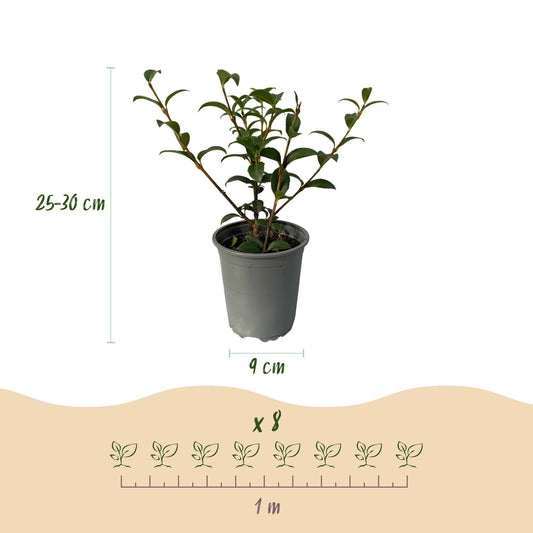
Burkwood Osmanthus (Osmanthus × burkwoodii), evergreen hedging plant, 9 cm pot, Height 25-30 cm - Pack of 8
Regular price 59,95 €Regular price59,95 €47,96 €Livraison offerte Sold out -

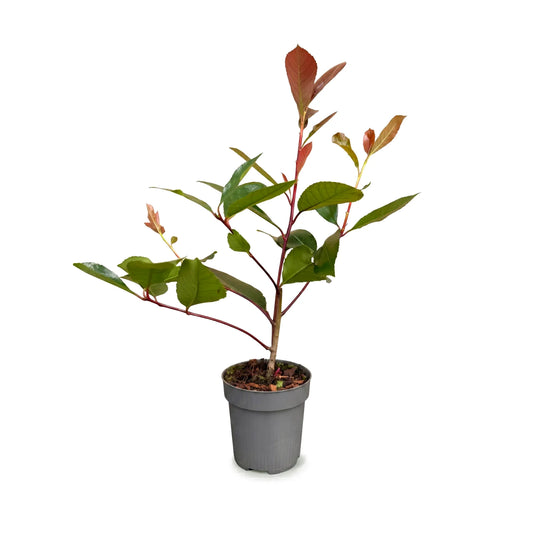
Photinia 'Red Robin' (Photinia × fraseri) – evergreen hedge shrub – 9 cm pot – 25 cm tall
Regular price From 64,95 €Regular price64,95 €From 51,96 €Livraison offerte -
'Snowbelle' Mock Orange (Philadelphus) – Fragrant Shrub – 17 cm Pot – 45 cm Tall
Regular price 39,95 €Regular price39,95 €31,96 €Livraison offerte -

 Livraison offerte Sold out
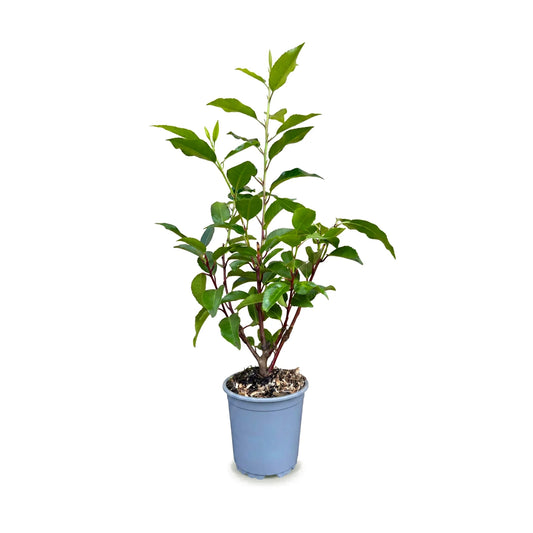
Portuguese Laurel Angustifolia (Prunus lusitanica), evergreen hedging plant, 9 cm pot, Height 25-35 cm
Regular price From 59,95 €Regular price59,95 €From 47,96 €Livraison offerte Sold out -

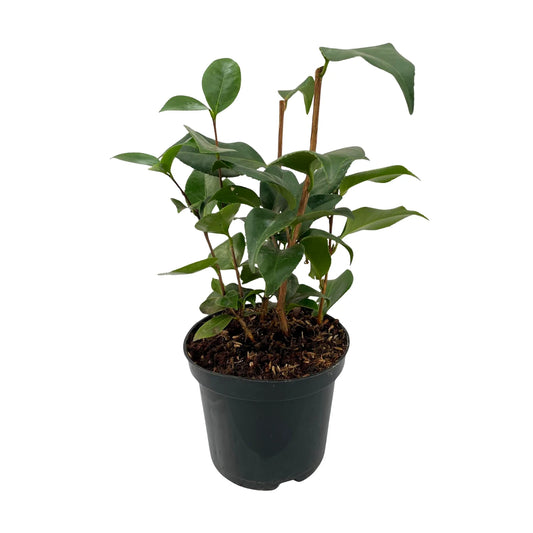
Camellia 'Tricolor' (Camellia japonica) - evergreen flowering shrub - 15 cm pot - Height 30 cm
Regular price From 39,95 €Regular price39,95 €From 31,96 €Livraison offerte


✂️ Caring for Mexican orange blossom: watering, mulching and fertilizer
Mexican orange blossom requires little maintenance. According to the RHS, water a young plant regularly during its first year; thereafter, plants in the ground need water only during hot, dry summers. In a pot, water regularly without allowing the compost to become waterlogged, especially in winter.
The RHS recommends a thick mulch each spring and no fertilizer in fertile soil; in poor soil, apply a complete fertilizer in spring, and if flowering is poor, use a high-potash fertilizer such as potassium sulfate. Once established, NC State Extension describes it as drought-tolerant.
💧 Watering while establishing: Regularly during the first year
💧 Watering established plants: Only in hot, dry summers; in pots, water regularly without waterlogging the compost
🍂 Mulching: Apply a thick layer each spring, keeping it away from the base of the stems
🌱 Fertilizer: None in fertile soil; complete fertilizer in poor soil; potash if there are few flowers
🧣 Winter: Shelter pots from the cold (porch, sheltered wall); plant in the ground in a sheltered spot
🍂 Pruning Mexican orange blossom: when and how
Prune Mexican orange blossom in mid-spring, in April, once all risk of frost has passed: this is the timing recommended by the RHS. If your plant is flowering at that time, wait until it has finished flowering to avoid losing the blooms.
An established Choisya needs little pruning: cut back leggy shoots by no more than one third, and, if you wish, remove spent flowers just above a healthy bud. For an overgrown plant, the RHS allows hard pruning in spring, as Choisya generally regrows well. Also cut back dead shoots in spring after a severe winter.
For an informal hedge, our guide “when to trim a hedge” reminds you to check for nests before pruning.
📅 Seasonal care calendar
| Season | Key task |
|---|---|
| 🌸 Spring | Prune in April or after flowering, mulch, plant, enjoy late-spring blooms |
| ☀️ Summer | Water in hot, dry weather, check for spider mites, possible repeat flowering in late summer |
| 🍂 Autumn | Plant in warm, moist soil, take semi-ripe cuttings through mid-autumn |
| ❄️ Winter | Shelter pots from cold, never let the compost become waterlogged, do not prune |
🌱 Propagating Mexican orange blossom from cuttings
Taking cuttings is the most reliable way to propagate a variety. The RHS recommends semi-ripe cuttings, taken from late summer to mid-autumn, from the current year's shoots with firm bases and still-soft tips.
Remove the lower leaves, plant the cuttings in a light, free-draining mix, and keep them in a bright spot out of direct sunlight and protected from frost over winter. NC State Extension also mentions sowing seeds, but plants grown from a cultivar's seeds may not come true to type.
🐛 Common problems: causes and solutions
Mexican orange blossom is robust: NC State Extension reports no serious insect or disease problems, provided the soil is well drained to prevent root and crown rot.
The RHS does, however, list spider mites, snails, scale insects, verticillium wilt and honey fungus. Shoots that dry out in spring are most often a sign of frost damage. Finally, golden-yellow leaves at the tips of shoots are normal on golden-leaved varieties, but concerning if they are dull, wilted or dropping, the RHS warns.
| Symptom | Likely cause | Solution |
|---|---|---|
| Dull yellow, wilted leaves that fall | 🍄 Too much water, root rot or a weakened plant | Check drainage, water less often, and make sure pots do not sit in water |
| Dry shoots after winter | ❄️ Frost damage, cold wind | Cut back to healthy wood in spring, shelter the pot |
| Stippled leaves, fine webbing | 🕷️ Spider mites, especially in dry weather | Shower the foliage, encourage beneficial insects |
| Nibbled young shoots | 🐌 Snails | Hand-pick in the evening, protect young plants |
| Green shrub with few flowers | 💧 Too much shade or soil low in potash | Give it more light, apply a high-potash fertilizer in spring |
| Waxy or brown clusters on the stems | 🐛 Scale insects | Brush them off, cut back badly affected shoots |
-

Our flowering outdoor shrubs: buddleias, dogwoods, deutzias, hibiscus, mock oranges and more...
-

Outdoor plants that keep their foliage all year round: evergreen privacy hedges,...


🌸 Mexican orange blossom varieties
We do not currently sell Mexican orange blossom. Here are the forms described by the RHS and American universities to help you choose based on foliage, size and intended use; according to the NC State Extension profile for 'Aztec Pearl', the × dewitteana hybrids resulted from a cross between C. ternata and C. dumosa var. arizonica (listed by POWO under C. arizonica), bred in 1982 by Peter Moore for Hillier Nurseries.
| Variety | Its main feature |
|---|---|
| Choisya ternata (type) | Glossy dark green leaves with three leaflets, 1.5 to 2.5 m, H4, awarded the RHS Award of Garden Merit (AGM): ideal for an informal hedge |
| Sundance ('Lich') | Bright yellow evergreen foliage, sun or partial shade, 1.5 to 2.5 m, H4, AGM; slower-growing according to Oregon State University |
| 'Aztec Pearl' | × dewitteana hybrid with fine leaflets (3 to 5), pink-tinged buds, flowers in late spring and again in autumn, full sun, H4, AGM |
| White Dazzler ('Londaz') | Compact, dome-shaped hybrid with very fine leaves, 0.5 to 1 m according to its RHS profile (around 1.5 m according to the growing guide), H4, AGM: the choice for pots |
| 'Aztec Gold' | × dewitteana hybrid with yellow young leaves that turn green, 1 to 1.5 m, flowering in late spring and from late summer into autumn, H4 |
| Goldfingers ('Limo') | Choisya × dewitteana hybrid mentioned by the RHS alongside 'Aztec Pearl': plant against a sunny, sheltered wall |
🎨 What to plant with Mexican orange blossom
The RHS suggests pairing Choisya with early-flowering perennials and spring bulbs: plant tulips and daffodils at their feet; these bloom at the same time, as do the late tulips and daffodils mentioned by the RHS.
In a flowering informal hedge, alternate it with mock orange (Philadelphus), which is also fragrant in late spring, evergreen viburnum or Burkwood osmanthus for a succession of blooms; discover more ideas for unusual evergreen hedges and check hedge planting distances.
In partial shade, skimmia extends the seasonal interest into winter. In a container, the compact form fits in among our plants for balconies and patios.
Also browse our flowering shrubs to pair with Choisya, our evergreen shrubs, our hedges and screening plants and our outdoor plants.
⚠️ Is Mexican orange blossom toxic?
We found no authoritative toxicity data for Choisya ternata: the ASPCA (American Society for the Prevention of Cruelty to Animals) has no profile for it, and the NC State Extension page has no section on its toxicity.
This does not mean the plant is edible: its leaves contain aromatic oil, according to the RHS, and its fruits are simply dry, brown to coppery capsules that form in autumn according to NC State, and have nothing to do with oranges. As a precaution, keep it out of reach of young children and pets that chew on plants, and contact your veterinarian if they ingest an unusual amount.
✅ Our expert tips for success
Growing Mexican orange blossom successfully comes down to four rules: choose a sheltered spot protected from cold winds, in sun or partial shade; plant in well-drained soil; water regularly during the first year and then only in dry summer weather; and prune lightly in April or after flowering. For a pot, choose a compact form such as White Dazzler; for an informal hedge, choose the species or Sundance.
In regions with harsh winters, remember that it is rated H4 and consult our guide to protecting plants from frost.
Mexican orange blossom is one of the shrubs I most often recommend planting by an entrance: brush past a leaf and the garden smells of citrus. It stays beautiful all year without asking for much, as long as you don't plant it in a cold, windy spot or in soil that stays waterlogged. I prune it very lightly, just after flowering, to keep its naturally rounded shape. For a patio container, I'd choose a compact form.

Laura Bruneau
Jardinière et autrice