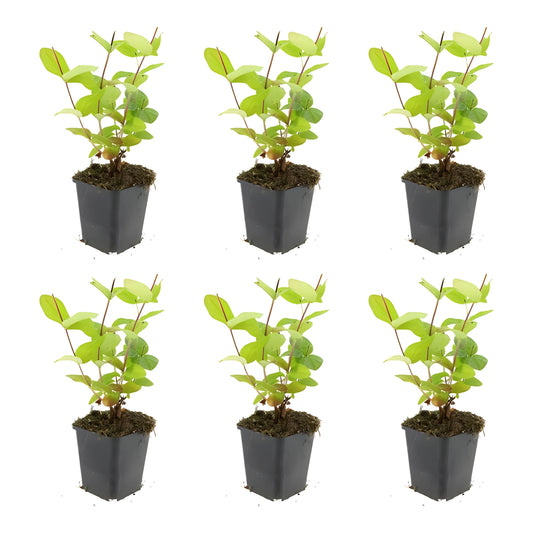
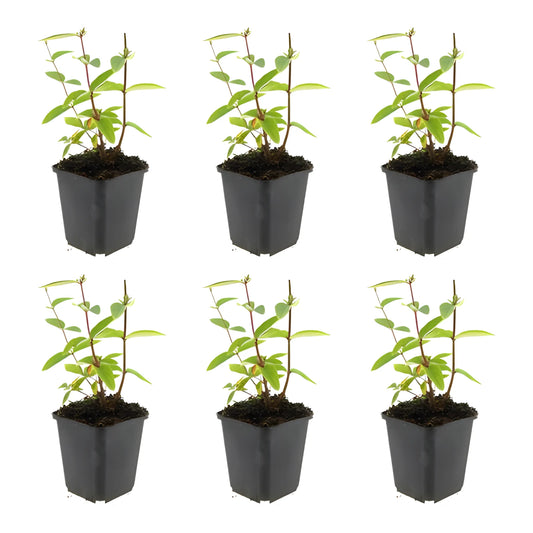
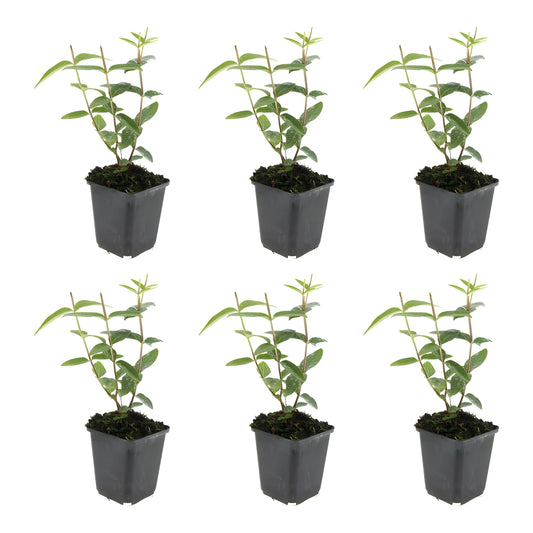
Mock orange (Philadelphus): planting, pruning and care

To grow a mock orange successfully, plant it in sun or partial shade in well-drained soil, water it during its first year, then prune it in summer just after flowering—never in winter.
Mock orange, also known as poet’s jasmine, is a shrub in the genus Philadelphus, family Hydrangeaceae. It is nothing like a true jasmine, but its sweet fragrance, reminiscent of orange blossom, makes it one of the most fragrant flowering shrubs in June.
Here are the recommendations, verified with the RHS, Kew Gardens, the SNHF and North Carolina State University, for planting and pruning it, choosing the right variety and growing it as a flowering hedge.
🌿 Why mock orange fills the garden with fragrance in early summer
Mock orange flowers after the lilac has finished blooming and as the roses are getting started. According to the RHS Philadelphus guide, its generally white, cup-shaped flowers—which may be double or marked with a purple spot at the center—are richly scented and open in one great flush in early summer.
NC State Extension even recommends planting it near a patio so you can enjoy its fragrance, especially in the evening. The RHS says it tolerates most soils, in sun or partial shade, and is generally disease-free. Its common names all reflect its fragrance: poet’s jasmine and false jasmine in French, and mock orange in English.
The French name seringat echoes “syringa,” the Anglo-Saxon name for some Philadelphus species: Utah State University calls P. lewisii “Western Syringa.” Don’t confuse it with the genus Syringa, which includes lilacs, or with true jasmines (Jasminum, family Oleaceae).
| Benefit | What it means for you |
|---|---|
| Powerful fragrance | Sweetly scented white flowers perfume the garden and patio in June |
| Very hardy | Rated H6 by the RHS: it withstands -20 to -15°C and is suitable throughout France |
| Undemanding | Chalk, clay, loam or sand; acidic to alkaline pH; sun or partial shade |
| A size for every garden | Varieties range from 0.5 m for a pot to 4 m for a tall hedge |
🔎 Mock orange at a glance
According to Plants of the World Online (POWO) from the Royal Botanic Gardens, Kew, Philadelphus L. is a genus of 44 accepted species, native to Central Europe, temperate Asia, and North and Central America, and classified in the family Hydrangeaceae.
Garden mock orange, Philadelphus coronarius L., is native to northeastern Turkey and the Caucasus, according to the POWO entry for Philadelphus coronarius; it is widely cultivated and has been introduced across Europe, including France.
According to North Carolina State University Extension (NC State Extension), its highly fragrant, four-petaled white flowers, about 2.5 to 4 cm (1 to 1.5 inches) across, appear in clusters of 5 to 7 in May and June.
Common varieties are mainly garden selections: the RHS, for example, classifies 'Belle Étoile' as the hybrid P. × lemoinei.
| Feature | Verified details |
|---|---|
| 🏷️ Botanical name | Philadelphus L.; the main garden species: Philadelphus coronarius L. (1753) |
| 🧬 Family | Hydrangeaceae, the family of hydrangeas and deutzias |
| 🌳 Type | Deciduous, bushy shrub with upright or arching stems |
| 🌍 Origin | Genus: Central Europe, temperate Asia, North and Central America; P. coronarius: northeastern Turkey and the Caucasus (POWO) |
| ❄️ Hardiness | H6 according to the RHS: -20 to -15°C; USDA zones 4a to 8b for P. coronarius (NC State) |
| 🍃 Foliage | Deciduous, opposite oval leaves about 4 to 10 cm long, medium to dark green; golden in 'Aureus' |
| 🌸 Flowering | Early summer (May to early July according to the SNHF), with very fragrant, single or double white flowers |
| 📏 Mature size | 1.5 to 2.5 m for P. coronarius (RHS); 0.5 to 4 m depending on the variety |
📋 Quick growing guide
Essential growing information at a glance.
| Factor | Guideline |
|---|---|
| Position | Sun or partial shade; roots in shade and top in sun; shelter 'Aureus' from full sun |
| Soil | Any type (chalk, clay, loam, sand), as long as it is well drained; acidic to alkaline pH; avoid waterlogged soil |
| Hardiness | H6 (RHS): -20 to -15°C; USDA zones 4a to 8b for P. coronarius (NC State) |
| Watering | Water thoroughly at planting and throughout the first year; thereafter, only during prolonged drought in free-draining soil |
| Planting | Container-grown plants are best planted in autumn or spring; October to March according to the SNHF |
| Pruning | In summer, just after flowering: cut back faded stems and remove about 1 in 5 stems at the base |
| Flowering | Fragrant white flowers in early summer, on the previous year’s growth |
| Care | Very easy: mulch, apply fertilizer in spring if needed, and tolerate aphids |
| Toxicity | No ASPCA listing or NC State data: neither toxicity nor safety has been established |
📍 Where and when to plant mock orange
Plant your mock orange in sun or partial shade, in fertile, well-drained soil.
According to the RHS guide to growing mock orange (Royal Horticultural Society), it tolerates both positions, but the RHS Philadelphus guide specifies that it dislikes very heavy, permanently waterlogged soil, deep shade, and poor, dry soil.
The SNHF sums up the ideal conditions as roots in shade and top in sun, for example against a low wall. As for timing, container-grown mock orange can be planted year-round when the ground is not frozen, preferably in autumn or spring according to the RHS, and from October to March according to the SNHF.
☀️ Ideal: Sun or light partial shade, fertile, well-drained soil, roots shaded by a low wall or perennials
⛅ Acceptable: Deeper partial shade: the shrub grows well but flowers less; partial shade is recommended for 'Aureus'
🚫 Avoid: Deep shade, permanently waterlogged soil, very poor, dry soil, and a spot too small for its mature spread
🪴 Planting mock orange in a border, hedge or pot
Planting is straightforward, as mock orange is not fussy about soil. According to the RHS, dig a hole twice as wide as the root ball, mix compost or well-rotted manure into the backfill, plant at the same depth as in the pot, water thoroughly and mulch.
Bare-root plants should be planted in winter, while dormant, provided the soil is neither frozen nor waterlogged. For a hedge, the RHS hedge planting guide recommends spacing plants 30 to 60 cm apart in a single row, depending on their vigor. For container growing, the RHS recommends choosing dwarf varieties and using a large pot.
| Step | What to do |
|---|---|
| 1. Choose a spot | Sun or partial shade, soil that does not stay waterlogged, and enough room for the variety’s mature spread |
| 2. Prepare the hole | Make it twice as wide as the root ball; mix the excavated soil with compost or well-rotted manure |
| 3. Position the root ball | Rehydrate the root ball, set it at the same depth as in its container, backfill and firm gently |
| 4. Water | Water thoroughly at planting, then regularly during dry weather in the first year |
| 5. Mulch | Apply organic mulch to retain moisture and suppress weeds, keeping it away from the stems |
columns: 4
columns_mobile: 2
-
'Snowbelle' Mock Orange (Philadelphus) – Fragrant Shrub – 17 cm Pot – 45 cm Tall
Regular price 39,95 €Regular price39,95 €31,96 €Livraison offerte -

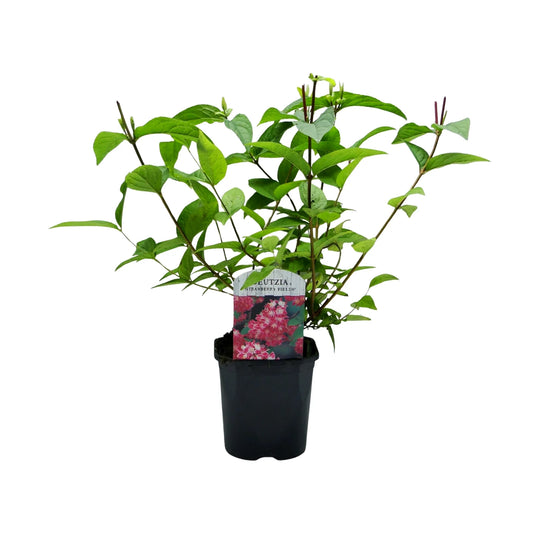
Deutzia 'Strawberry Fields' (Deutzia) - flowering shrub - 17 cm pot - Height 45 cm
Regular price 39,95 €Regular price39,95 €31,96 €Livraison offerte -
Deutzia 'Gracilis' (Deutzia) - flowering shrub - 17 cm pot - Height 45 cm
Regular price 39,95 €Regular price39,95 €31,96 €Livraison offerte -


Common lilac 'Mme Lemoine' (Syringa vulgaris) - scented shrub - 17 cm pot - Height 45 cm
Regular price 49,95 €Regular price49,95 €39,96 €Livraison offerte -


Dwarf Meyer Lilac 'Palibin' (Syringa meyeri) - fragrant shrub - 19 cm pot - Height 90 cm
Regular price 69,95 €Regular price69,95 €55,96 €Livraison offerte -
Viburnum (Viburnum) – Fragrant flowering shrub – 19 cm pot – Height: 90 cm
Regular price 69,95 €Regular price69,95 €55,96 €Livraison offerte -
Forsythia 'Goldrausch' (Forsythia) - flowering shrub - 17 cm pot - Height 45 cm
Regular price 39,95 €Regular price39,95 €31,96 €Livraison offerte




✂️ Caring for and pruning mock orange after flowering
Prune mock orange in summer, just after flowering. This is the RHS’s rule: it places mock orange in pruning group 2, for early-flowering shrubs. Pruning later removes the growth that will carry the next flush of flowers.
For an established plant, cut back faded stems to strong young shoots and remove about one in five older stems at ground level each year. The RHS notes that this is not essential every year, but helps renew the flowering wood. On a young plant, simply remove dead, damaged or crossing growth.
According to the SNHF guide, cut faded branches back to just below the first branching point.
✂️ Annual pruning: Just after flowering: cut faded stems back to a young shoot and remove about 1 in 5 older stems at the base
🔹 Young plants: Remove only dead, diseased, damaged or crossing growth, after flowering
🔹 Golden varieties: Prune 'Aureus' like other varieties, just after flowering; plant it in partial shade to protect its golden foliage (RHS)
💧 Watering: During the first year; thereafter, only during prolonged drought in very free-draining soil (RHS)
🍂 Fertilizer and mulch: Apply a balanced fertilizer in spring if needed; renew the mulch each year
🍂 Mock orange through the seasons
The mock orange calendar revolves around its flowering. The flowers open in early summer—in May and June for P. coronarius according to NC State, and through early July according to the SNHF. Prune immediately afterward, giving the shrub the rest of the summer to produce the stems that will flower the following year.
Green or black aphids sometimes appear in early summer; the RHS says they generally do not need treatment. In winter, varieties rated H6 can withstand -20 to -15°C according to the RHS hardiness scale.
📅 Seasonal care calendar
| Season | Key task |
|---|---|
| 🌸 Spring | Plant container-grown specimens; fertilize if needed; mulch; watch for aphids toward the end of the season |
| ☀️ Summer | Enjoy the fragrant flowers, then prune just after flowering; take softwood cuttings in early summer |
| 🍂 Autumn | Ideal time to plant container-grown specimens; no maintenance pruning; water young plants if autumn is dry |
| ❄️ Winter | Plant bare-root specimens when the ground is not frozen; plant is dormant; do not prune or you may remove next year’s flowers |
🌱 Propagating mock orange from cuttings
Mock orange is easy to propagate from cuttings. The RHS recommends taking softwood cuttings in early summer: they generally root without difficulty, but will not be ready to plant in the garden until the following year, and it takes at least 2 to 3 years for them to flower. The RHS variety profiles also mention hardwood cuttings.
The SNHF also describes taking semi-ripe cuttings from non-flowering shoots and transplanting them the following autumn. Hybrid varieties, however, do not come true from seed.
🐛 Common problems: causes and solutions
Mock orange is robust: the RHS says it is generally disease-free, and poor flowering is the most common complaint, usually linked to pruning or shade. A shrub pruned in winter or spring loses the stems carrying its flower buds. The RHS variety profiles note susceptibility to aphids, powdery mildew and, rarely, honey fungus.
NC State Extension also lists scale insects, leaf miners, nematodes, leaf spots, canker and rust.
| Symptom | Likely cause | Solution |
|---|---|---|
| Few or no flowers | ✂️ Pruned in winter or spring, deep shade, poor, dry soil (RHS) | Prune only just after flowering; plant in sun or light partial shade |
| Sticky shoots covered in insects | 🐛 Green or black aphids in early summer (RHS) | Tolerate them: the RHS generally does not recommend treatment; encourage ladybirds |
| White coating on leaves | 🍄 Powdery mildew, a fungal disease (RHS profiles, NC State) | Improve airflow by pruning and avoid wetting the foliage |
| Scorched golden leaves | ☀️ Full sun on a golden variety such as 'Aureus' (RHS) | Move it or provide partial shade |
| Spots or pustules on leaves | 🍄 Leaf spot or rust (NC State) | Remove affected leaves and improve airflow through the center when pruning |
| Dieback, fungus at the base | ⚠️ Honey fungus, rarely (RHS profiles) | Remove the affected plant and its roots; do not replant in the same spot |
-

Our flowering outdoor shrubs: buddleias, dogwoods, deutzias, hibiscus, mock oranges and more...


🌸 Our mock orange varieties
Here are varieties and species whose characteristics are documented by the RHS, the SNHF or NC State Extension, to help you choose according to available space, fragrance and intended use.
| Variety | What makes it special |
|---|---|
| 'Snowbelle' | 6 cm, double, cup-shaped white flowers, strongly scented; upright growth to 1 to 1.5 m, H6: ideal for a low hedge or border (RHS) |
| 'Belle Étoile' | Single flowers, 5 cm across, tinged purple at the center, very fragrant; 1 to 1.5 m tall, awarded the RHS Award of Garden Merit (AGM) |
| 'Virginal' | Richly scented white double flowers; vigorous, upright habit, 2.5 to 4 m tall: suited to a tall hedge (RHS) |
| Philadelphus coronarius | The garden mock orange: very fragrant creamy-white flowers, 1.5 to 2.5 m tall, H6 (RHS) |
| 'Manteau d'Hermine' | Dwarf form with double flowers, 0.5 to 1 m tall according to the RHS, for the front of a border or a large container |
| 'Aureus' | Golden-yellow foliage in spring, fragrant flowers; plant in partial shade to prevent leaf scorch (RHS) |
🎨 Mock orange in a flowering hedge: combinations and border companions
In an informal hedge, mock orange benefits from being mixed with other shrubs: our guide to creating a privacy hedge explains how to alternate flowering deciduous and evergreen plants, and our guide to hedge planting distances covers neighbor-related regulations.
Forsythia and lilac bloom before it and, like deutzia, from the same Hydrangeaceae family, are also pruned after flowering.
The RHS recommends planting it at the back of a border behind roses: our guides to fragrant roses and fragrant perennials build on the idea.
Discover our Philadelphus and other flowering shrubs, our hedges and privacy screens, and our outdoor flowering plants.
⚠️ Is mock orange toxic to cats, dogs, and children?
None of the veterinary sources consulted address mock orange. The ASPCA (American Society for the Prevention of Cruelty to Animals) does not publish a profile for Philadelphus, and the Philadelphus coronarius profile from NC State Extension provides no toxicity information: we therefore cannot say whether it is toxic or safe.
As a precaution, prevent pets from chewing the leaves or flowers, teach children not to put garden plants in their mouths, and contact a veterinarian or poison control center if symptoms occur after ingestion.
✅ Our expert tips for success
Growing mock orange successfully comes down to one rule and three steps: sun or light partial shade, soil that does not stay waterlogged, water during the first year, and prune in summer just after flowering, never in winter. If it flowers poorly, first consider when it was pruned, then the amount of shade.
Choose the variety to suit your available space, from 'Manteau d'Hermine' in a container to 'Virginal' in a tall hedge. Don't be misled by the name “poet's jasmine”: for true jasmines, read our guide jasmine: types, planting and pruning, and for the other “false jasmine,” see our star jasmine profile.
Mock orange is the shrub I recommend to anyone who wants a garden that smells lovely in June without making life complicated. When someone writes to me saying it has stopped flowering, I first ask when it was pruned. I like to plant it near somewhere to sit in the evening, because that's when you notice its fragrance. And I cut a few flowering stems for a vase, which takes care of part of the pruning.

Laura Bruneau
Jardinière et autrice