North-facing exposure: which plants should you choose?

A north-facing exposure offers soft, indirect light with no direct sun: perfect for understory plants that shy away from scorching rays. The rule comes down to one sentence: choose plants that tolerate low light, water sparingly, and accept slow growth. Discover our easy-care plants in our dedicated collection.
Don’t confuse this with a truly dark room, far from any window: a north-facing exposure is still bright, simply without direct sunlight. To add greenery to a truly shady corner, see our guide Houseplants for dark rooms.
This guide explains what a north-facing exposure really offers, which plants thrive in it, how to care for them in this filtered light, and how to avoid common mistakes.
🌿 What is a north-facing exposure for plants?
A north-facing window gets consistent but soft, indirect light, with no direct sunlight at any time. The light remains stable throughout the day, making it ideal for plants that don’t like full sun. However, light levels drop quickly farther into the room: 2 metres from the glass, a plant often receives only 10 to 15% of the light available right behind the window.
According to the University of Minnesota Extension, nearly all plants that grow well in low light are understory plants in the wild: they live beneath the canopy of taller trees, which shelter them from the sun. They therefore need little or no direct light, grow slowly, and require little water.
This reality changes the way you garden on a north-facing side: patience is essential, because it will take time for the space to become lush, but the plants you choose will also be much more forgiving if you forget about them. It’s also worth bearing in mind that northern light varies considerably with the seasons: pleasant and sufficient in spring and summer, it becomes very weak in winter, when the sun stays low. A plant that thrived in the warmer months may therefore slow down considerably in December: this is normal, and often all you need to do is cut back on watering even further until the warmer weather returns.
👀 How can you tell if an exposure really faces north?
The rule of thumb is simple: a north-facing window never gets direct sunlight during the day, unlike south-, east- or west-facing windows. The light is consistent but filtered, even weaker in winter, and the air is 2 to 3 °C cooler than near a sunny window.
To check, see whether a direct ray of sunlight ever enters the room: if it never does, the exposure does indeed face north. You can also use a compass or an app. Keep in mind that a nearby building, balcony, or tree can make an already low-light window even darker.
| Orientation | Light |
|---|---|
| North | Soft, indirect, no direct sunlight |
| East | Gentle morning sun |
| West | Warmer afternoon sun |
| South | Bright, direct light during the day |
People often tell me, “I can’t grow anything on the north side,” but that’s not true. In fact, it’s the most restful exposure for many understory plants, which suffer in direct sunlight. My advice: accept that they’ll grow slowly and water them less. After years of growing them, my most beautiful pothos and ferns are on the north side. The secret is to choose the right plants rather than trying to force the wrong ones.
💡 The best plants for a north-facing exposure
The stars of north-facing exposures are hardy, low-light plants: pothos, snake plants, ZZ plants, philodendrons, cast iron plants, peace lilies, and ferns. They’re reliable choices, even for beginners.
Pothos and climbing philodendrons tolerate shade and irregular watering very well. Snake plants (mother-in-law’s tongue) and ZZ plants, with their fleshy leaves, tolerate very low light and long stretches without watering. Peace lilies bloom even in moderate light, and green-leaved Aglaonema also do well. The North Carolina State Extension also lists the parlor palm (Chamaedorea elegans) as well suited to low-light indoor conditions, with its elegant, arching fronds.
columns: 4
columns_mobile: 2
-

 Livraison offerte
Zamioculcas - ZZ Plant - Set of 2 Plants - 17cm Pot - Height 65-75cm
Regular price From 84,95 €Regular price84,95 €From 67,96 €Livraison offerte -

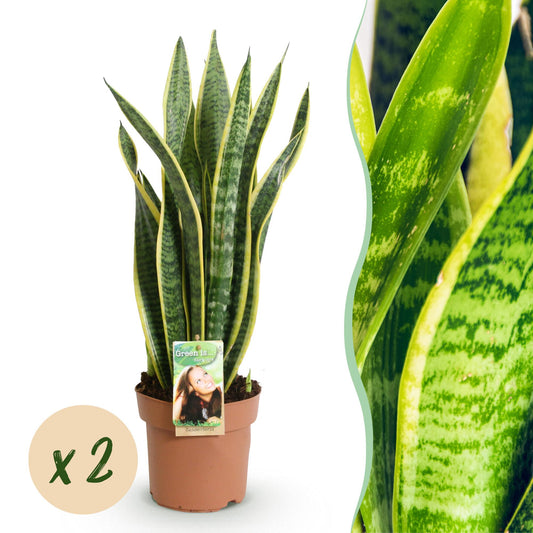
Sansevieria Laurentii - Mother-in-law's tongue - Set of 2 Plants - 17cm Pot - Height 60-70cm
Regular price From 84,95 €Regular price84,95 €From 67,96 €Livraison offerte -
Pothos Trio | Epipremnum Manjula - Epipremnum Neon - Epipremnum Marble Queen
Regular price 19,95 €Regular price23,85 €Sale price 19,95 €19,95 €15,96 €Sale -

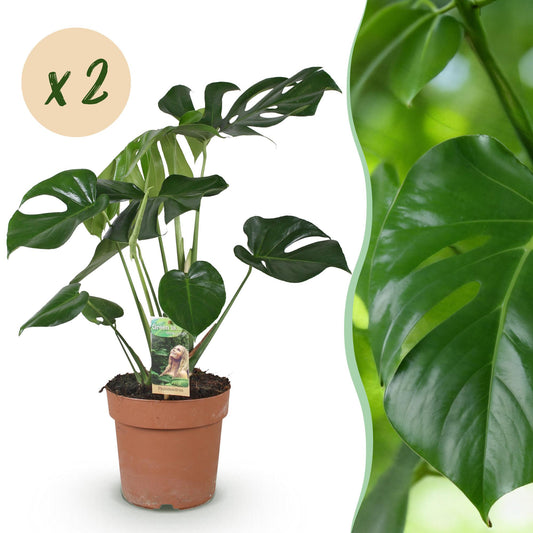
Monstera Deliciosa - Swiss Cheese Plant - Set of 2 Plants - 17cm Pot - Height 50-55cm
Regular price From 69,95 €Regular price69,95 €From 55,96 €Livraison offerte


| Plant | Why it works on the north side |
|---|---|
| Pothos | Hardy climber, very easy to grow |
| Snake plant | Tolerates very low light and missed waterings |
| ZZ plant (Zamioculcas) | Waxy leaves, almost impossible to kill |
| Peace lily | Flowers in moderate light |
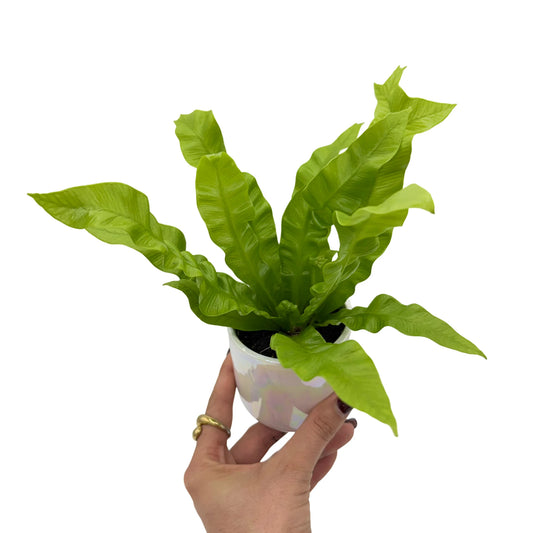
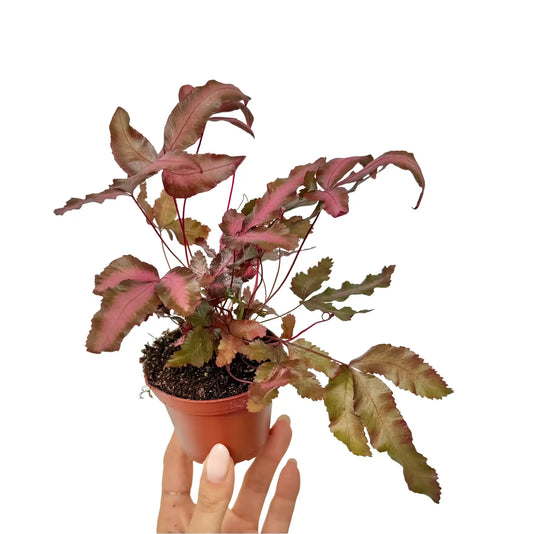
| Ferns, cast iron plant | Classic understory plants |
| North-facing plant (variety) | Water needs |
|---|---|
| Snake plant, ZZ plant | Low: let the soil dry out thoroughly |
| Pothos, philodendron | Moderate, tolerates missed waterings |
| Peace lily | Regular, likes to stay moist |
| Ferns | Regular, appreciates humidity |
☀️ Caring for plants in a north-facing exposure
In low light, everything slows down: the plant grows less, uses less water, and doesn’t need much fertilizer. The most common mistake is continuing to water as if the plant were in bright light.
So reduce watering, letting the soil dry out more between waterings (often 2 to 3 days longer than in a south-facing exposure), since soil that stays wet in low light encourages rot. Cut back on fertilizing (about once every 2 months is enough) and regularly dust the leaves, keeping the windows clean too, which can restore up to 20% of the available light. Also turn the pot a quarter turn with each watering to encourage even growth.
🔆 Do you need supplemental lighting on the north side?
In the darkest spots, or in the middle of winter, supplemental lighting can make a difference. It lets you grow a wider range of plants and support those showing signs of weakness.
A full-spectrum LED grow light can make up for insufficient natural light and prevent legginess. Use it for 10 to 12 hours a day, positioned 20 to 40 cm from the foliage, alongside the northern light. This is especially useful for keeping variegated plants looking their best or getting through winter, when the days are shorter. However, it isn’t essential for a simple grouping of low-light-tolerant plants.
| Situation | Supplemental lighting |
|---|---|
| Tolerant plants (pothos, ZZ) | Optional |
| Variegated plants | Recommended to preserve variegation |
| Winter, short days | Helpful as a supplement |
| Very dark corner | Almost essential |
📍 Where should you place plants in a north-facing room?
In a north-facing room, not all spots are equal: the farther you get from the window, the faster light levels drop. Positioning your plants well makes all the difference.
Reserve the windowsill and spots right next to the window for the most light-hungry of the tolerant plants, and keep the more distant corners for the hardiest ones, such as ZZ plants or snake plants. Move a leggy plant closer to the glass; a plant that’s doing well can stay farther back. This way, each plant is placed in the spot that suits it best. Since growth is slow on the north side, repotting every 2 to 3 years is usually enough.
📋 Quick reference guide (for experienced gardeners)
Key pointers for getting a north-facing exposure right, at a glance.
| Factor | Guideline |
|---|---|
| Light | Soft, indirect, no direct sunlight |
| Ideal plants | Pothos, snake plants, ZZ plants, ferns |
| Botanical origin | Understory plants |
| Growth | Slow: patience required |
| Watering | Reduced; let the soil dry out more |
| Fertilizer | Light feeding; growth is slower |
| Key care | Dust the leaves |
| Avoid | Full-sun plants, overwatering |
⚠️ Which plants should you avoid on the north side?
Not all plants are suitable: those that need full sun will decline in a north-facing exposure. Putting them there is a recipe for legginess.
Cacti, succulents, citrus trees, and plants that need lots of light to flower will struggle on the north side: stems will stretch (etiolation), leaves will drop, and flowers won’t appear. Highly variegated plants often lose their variegation too, as they produce more green chlorophyll to capture the little light available. These species are better suited to a brighter window or supplemental grow lighting.
| Plant to avoid | Response to low light |
|---|---|
| Cacti, succulents | Etiolation, weakness |
| Citrus trees | No flowers or fruit |
| Highly variegated plants | Loss of variegation |
| Light-hungry flowering plants | No flowering |


🩺 Diagnosis: Is my plant suffering from lack of light?
A few signs can reveal that a plant isn’t getting enough light on the north side. Here’s how to interpret them.
| Symptom | Likely cause and solution |
|---|---|
| Long, spindly stems | Etiolation: move closer to the window or add a grow light |
| Variegation disappearing | Too little light: plant produces more green |
| Yellowing leaves | Often overwatering in low light |
| No growth | Normal in winter; otherwise, provide more light |
For a successful north-facing corner, our range of easy-care plants and our Aglaonema are perfectly suited to filtered light.
💚 Create a lush north-facing corner with Plant and Stories
A north-facing exposure isn’t a drawback; it’s an opportunity for understory plants: soft light, gentle growth, and minimal care. Choose the right species and water sparingly, and you’ll create a soothing, long-lasting green corner. Far from being a limitation, a north-facing exposure is an opportunity to discover a whole family of shade-loving plants, many of them among the easiest to care for.
To create your shady space, explore our easy-care plants and houseplants, carefully selected in France. With the right guidance, even the darkest window can become a small, calming green haven—as long as you choose the right species.