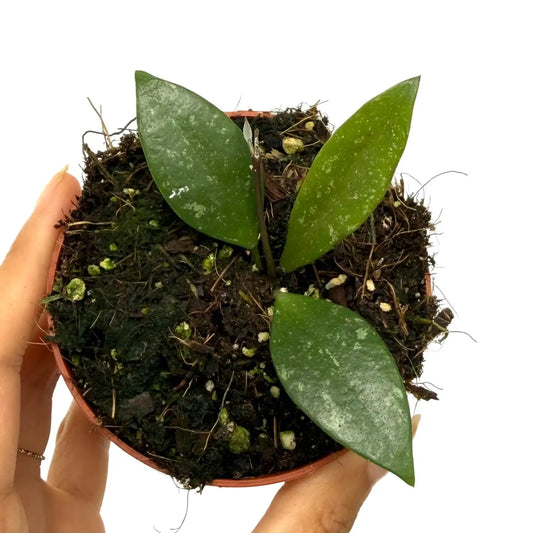
Hoya australis ‘Lisa’: Caring for This Easy-to-Grow Variegated Hoya

With its cream-and-pink variegation and robust, vigorous growth, Hoya australis 'Lisa' is one of the easiest wax plants to care for. Its thick, glossy leaves forgive missed waterings, and its clusters of white flowers with red centers give off a sweet fragrance. It's an excellent Hoya for beginners. Here's how to grow it, backed by sourced botanical information.
Why choose Hoya australis Lisa?
Hoya australis 'Lisa' combines beauty and resilience: luminous variegation, vigorous growth, and succulent leaves that store water. The result is a decorative plant that’s beginner-friendly and flowers generously as soon as it gets enough light.
| Benefit | What it means day to day |
|---|---|
| Decorative | Central cream variegation with pinkish tones on new growth. |
| Very forgiving | Thick, succulent leaves: it forgives missed waterings. |
| Vigorous | A robust vine that readily climbs a support. |
| Pet-safe | Hoya plants are non-toxic to cats and dogs (ASPCA). |
Hoya australis Lisa: botanical profile
According to Kew POWO (Plants of the World Online), the species Hoya australis R.Br. ex J.Traill is a succulent epiphytic vine in the Apocynaceae family, found from Southeast Asia to Australia and the Pacific Islands. 'Lisa' is its variegated cultivar, with central cream-yellow variegation that is especially bright and sought after.
| Feature | Verified details |
|---|---|
| Botanical name | Hoya australis 'Lisa' (Apocynaceae) |
| Species origin | Australia, Southeast Asia, Pacific Islands |
| Type | Variegated cultivar of Hoya australis, climbing epiphyte |
| Growth habit | Vigorous vine reaching 2.5 to 4 m on a support |
| Leaf | Thick, fleshy, glossy, with central cream variegation |
| Growth | Vigorous: reaches mature size in 2 to 5 years |
📋 Quick care guide
Essential growing guidelines at a glance.
| Parameter | Guideline |
|---|---|
| Light | Bright, indirect; variegation needs plenty of light |
| Ideal temperature | 18 to 24 °C during active growth |
| Minimum temperature | Do not let it drop below 10 °C |
| Watering | Water thoroughly during growth, then let dry; keep just moist in winter |
| Humidity | Moderate to high |
| Potting mix | Free-draining and airy, such as an orchid mix |
| pH | Tolerant: acidic, neutral, or alkaline |
| Repotting | In spring, into a pot only slightly larger than the root ball |
| Flowering | Late summer to fall, with fragrant flower clusters |
| Toxicity | Non-toxic to cats and dogs (Hoya genus, ASPCA) |
What light and location should you provide?
Like all variegated plants, Hoya australis 'Lisa' needs plenty of light to retain its cream-colored areas: in shade, it turns green and becomes leggy. The RHS (Royal Horticultural Society) profile notes that good light is necessary for flowering. Give it bright, indirect light with a little gentle sunshine, avoiding harsh afternoon sun through a window.
Watering and humidity: finding the right rhythm
Thanks to its thick, succulent leaves, Hoya australis 'Lisa' tolerates missed waterings very well: it's an ideal plant for beginners, as its main risk is overwatering, which is easy to avoid. Water thoroughly during the growing season, then let the mix dry out, and keep it just barely moist in winter.
| Situation | What to do |
|---|---|
| Spring–summer | Water thoroughly, then let the surface of the potting mix dry out |
| Fall–winter | Cut back: let it dry out for longer between waterings |
| Beginner-friendly feature | Water-storing leaves: it forgives missed waterings |
| Mistake to avoid | Overwatering: the main cause of failure, so avoid it |
columns: 4
columns_mobile: 2
-
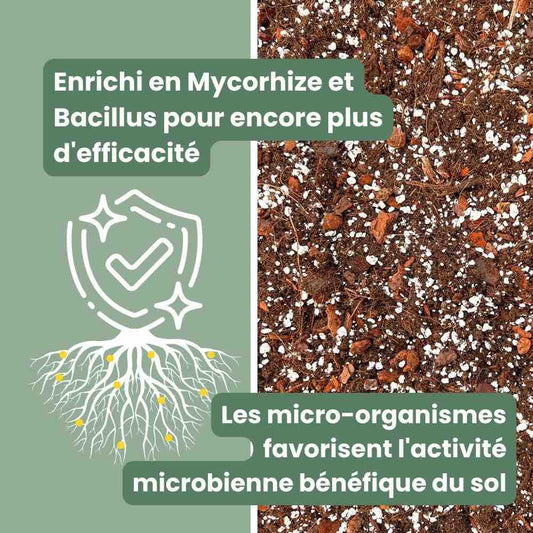
Hoya Premium Potting Soil - Enriched with Mycorrhizae and Bacillus - Made in France
Regular price 11,99 €Regular price11,99 €Sale price 11,99 €11,99 €9,60 € -

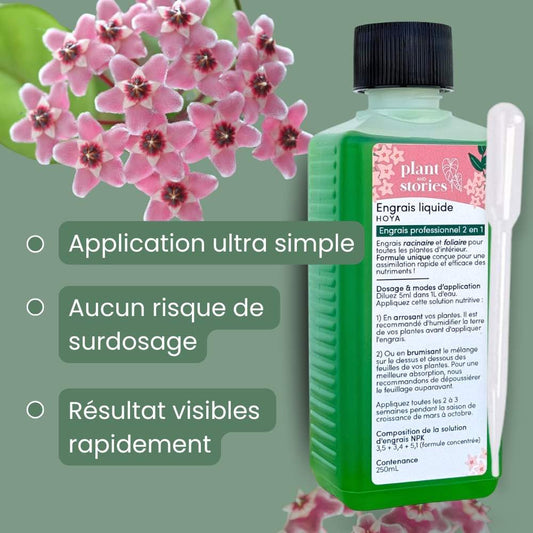
Hoya Fertilizer - 250ml Liquid Fertilizer - Root and Foliar Fertilizer + Free Graduated Pipette!
Regular price 18,00 €Regular price20,00 €Sale price 18,00 €18,00 €14,40 €Sale -
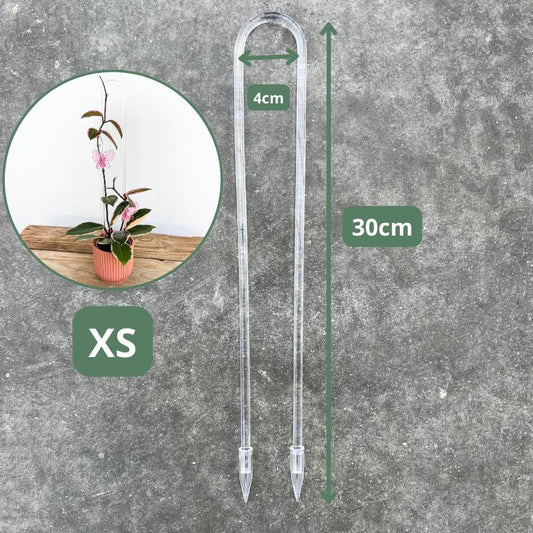
Hoya Plant Support - Arch Support for Hoya - Transparent Acrylic Plant Support - Support for Climbing Plants
Regular price From 3,95 €Regular price3,95 €Sale price From 3,95 €3,95 €From 3,16 € -
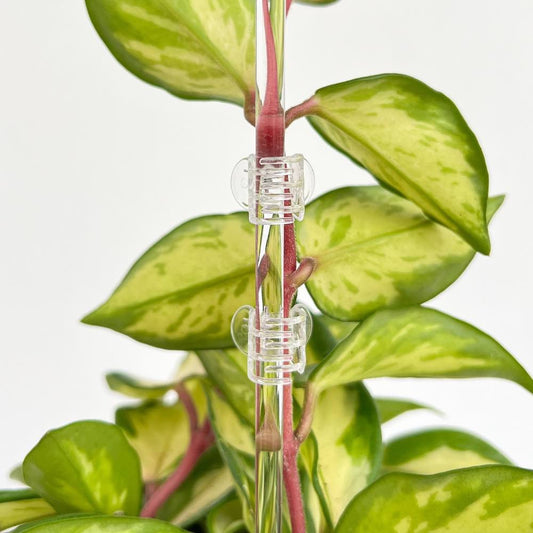
Transparent plant clips - Transparent plant support clips - Support clips - Plant support clips
Regular price From 4,00 €Regular price4,00 €Sale price From 4,00 €4,00 €From 3,20 €




Potting mix, repotting, and fertilizing
A vigorous epiphyte, Hoya australis 'Lisa' needs a light, airy, free-draining potting mix and a support to climb. It is not fussy about pH and only needs occasional repotting in spring. Regular feeding during the growing season supports its fast growth and beautiful variegation.
| Parameter | Recommendation |
|---|---|
| Ideal mix | Bark, perlite, and potting soil: airy and free-draining |
| Support | Trellis or stake: the vine climbs and looks its best |
| Repotting | In spring, into a pot only slightly larger than the root ball |
| Fertilizer | Regularly during active growth, diluted to half strength |
| Dormancy | Feed less often or stop fertilizing in winter |
How to take cuttings and propagate Hoya australis Lisa
Hardy Hoya australis 'Lisa' is easy to propagate from cuttings; make sure the cutting retains some variegation for attractive foliage. The method is simple: in spring or summer, take a piece of stem with at least 2 nodes (the small bumps from which leaves and roots emerge) and one or two leaves. Let the cut end dry for 2 to 3 hours, then place the cutting in water, damp sphagnum moss, or a very free-draining potting mix, at 20–25 °C in indirect light: roots will appear in 3 to 6 weeks. An essential point for all wax plants: a leaf on its own, without a node, will never produce a new plant, because the node contains the meristem. Once the roots reach 2 to 3 cm, carefully pot the young cutting in a free-draining mix and keep it in gentle light, without overwatering, while it establishes and produces its first new leaves. Find every step, including methods in water and potting mix, in our complete guide to propagating Hoya.
Flowering: colors, fragrance, and triggers
From late summer to fall, Hoya australis 'Lisa' produces clusters of fleshy, star-shaped flowers, cream-colored with red centers, with a pronounced sweet fragrance and plenty of nectar. Information on the Hoya genus from the Missouri Botanical Garden is a reminder that good light is essential for flowering, and that you should never cut off the spurs, which bloom again year after year.
📅 Seasonal care calendar
| Season | Key task |
|---|---|
| 🌸 Spring | Growth resumes: increase light and resume thorough watering and fertilizing. |
| ☀️ Summer | Peak growth: bright light for variegation, regular watering, and training on a support. |
| 🍂 Fall | Flowering: fragrant clusters; do not cut off the spurs. |
| ❄️ Winter | A drier rest, away from cold (> 10 °C): water less often. |
Common mistakes and how to fix them
Very forgiving, Hoya australis 'Lisa' most often struggles when it gets too much attention. Here are the typical symptoms and how to address them.
| Symptom | Likely cause | Solution |
|---|---|---|
| Yellow, soft leaves | Overwatering, waterlogged roots | Let the mix dry out thoroughly and check the drainage |
| Fading variegation | Insufficient light | Move it closer to a bright light source |
| Leggy growth | Not enough light | Increase light and turn the pot |
| No flowers | Too little light or cut-off spurs | Give it more light; don't cut off the spurs |


Keeping Hoya australis Lisa healthy: pests and prevention
The thick, glossy leaves of Hoya australis 'Lisa' are easy to clean, making it a good opportunity to check for mealybugs. The main pest is scale, either mealybugs or armored scale, especially when the air is dry. Inspect the undersides of leaves and the stem joints: at the first sign of white, cottony clusters, isolate the plant and dab the affected areas with a cotton ball soaked in 70% alcohol, once a week for 3 weeks. Adequate humidity also discourages spider mites, which are common in hot, dry air. Also remember to quarantine any new plant for a few days before placing it near your other Hoyas, to avoid introducing pests to your collection. The best defense is prevention: a plant that gets good light, is watered correctly, and is not overfertilized will be much more resilient. Don't let water sit in the saucer, as this can lead to root disease.
Is Hoya australis Lisa toxic to pets?
Hoya australis 'Lisa' belongs to the Hoya genus, which the ASPCA lists as non-toxic to cats and dogs (under “Wax Plant”). The entire genus is considered safe: a sturdy, decorative plant you can enjoy with peace of mind, even in a home with curious pets.
Where to place it and how to show it off
Hoya australis 'Lisa' readily grows along a trellis, where its cream variegation catches the light. Grouped with other Hoyas, it brightens a plant wall or well-lit shelf. Group several wax plants with contrasting foliage together: they benefit from the more humid microclimate and create a striking display worthy of a collection. Repot only every 2 to 3 years and gently clean the leaves from time to time: in the right spot, this plant needs very little attention throughout the year. To expand your collection and find varieties that suit your style, explore our full Hoya collection.
Our expert tips for growing it successfully
Hoya australis 'Lisa' is the foolproof wax plant: beautiful, vigorous, and forgiving. Give it plenty of light, a support, and measured watering, and it will stay splendid and flower for years to come.
This is the Hoya I recommend to people who “kill every plant they own.” Its thick leaves store water, it forgives missed waterings, and the only thing to watch is the light if you want to preserve its variegation. Just resist the urge to water it too much: with this plant, less really is more.

Laura Bruneau
Jardinière et autrice