Monstera: A Complete Guide and Comparison to Help You Choose Your Tropical Icon

What if your monstera’s wild beauty depended not on your “green thumb,” but on a simple ecosystem choice made as soon as it arrives in your home?
It’s frustrating to see a leaf turn yellow for no apparent reason or growth stall when you’re dreaming of those spectacular fenestrations. We understand that deep desire to transform your home into a true plant sanctuary, but we also know that confusion over varieties and specific substrate needs can quickly become a major challenge.
This comprehensive guide gives you the keys to growing and showcasing your plant by comparing the most iconic varieties and the most advanced care methods. You’ll learn how to master repotting, choose the ideal support, and understand why substrate choice makes all the difference between a plant that merely survives and a radiant tropical icon.
Key Takeaways
- Learn how to identify the ideal variety for your light conditions and encourage spectacular fenestrations.
- Discover why using a specific Aroid mix prevents root suffocation and stimulates your monstera’s growth.
- Understand how crucial an appropriate support is for encouraging your plant to climb and produce increasingly impressive leaves.
- Master essential care practices, from the finger-joint rule for watering to regular leaf cleaning.
- Identify the qualities of a well-acclimated plant to ensure it settles comfortably into your home.
Understanding the Monstera family: which variety should you choose for your home?
Imagine a jungle coming to life in your living room. The Monstera family captivates with its split leaves, a fascinating biological phenomenon called fenestration. These natural openings allow light to reach the plant’s lower leaves while helping it withstand tropical winds in its native habitat. This architectural look makes it an essential icon among our houseplants.
To grow one successfully, placement is crucial. Bright, indirect light is ideal for helping your monstera thrive. Too little light will produce solid leaves without holes, while direct sun can irreparably scorch the leaf blade. You should also plan for its size. In three years, a young plant can triple in volume. Allow enough space around it so its shape can develop freely.
Monstera Deliciosa vs. Monstera Adansonii
The Deliciosa is the undisputed queen of large spaces. Its leaves can grow to an impressive size, making it a stunning focal point for a bright corner of a room. If you have less space, consider the Monstera Adansonii, often called the Monkey Mask.
The Adansonii is more dynamic and versatile. Its smaller leaves and flexible vines are perfect for shelves or hanging planters. While the Deliciosa has a sturdy structure and grows slowly, the Adansonii offers a lighter, faster-growing cascade of greenery, ideal for creating an instant urban jungle effect.
Rare, colorful varieties: the world of variegation
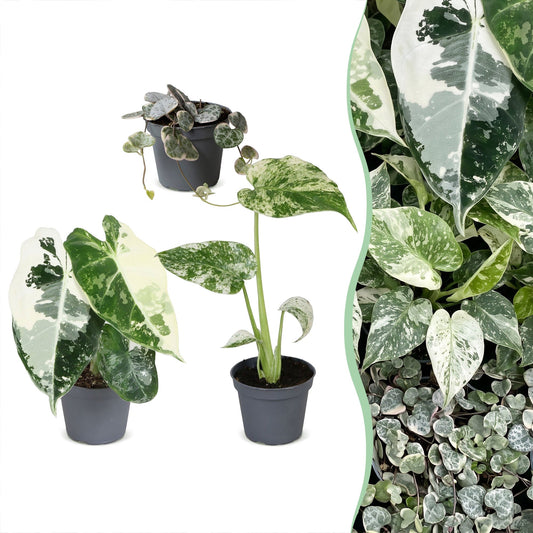
Entering the world of variegation means discovering exceptional specimens such as Monstera Variegata and Thai Constellation. These botanical gems feature white or cream patches resulting from natural genetic mutations or those stabilized through tissue culture. These colors make every new leaf a unique visual surprise.
These beauties do, however, require extra care. The white areas contain no chlorophyll and therefore don’t contribute to photosynthesis. The plant grows more slowly and is more sensitive to changes in its care routine. If you’re starting a collection of colorful plants, choose well-rooted, acclimated specimens, as they’re more delicate than their green relatives.
Regular potting mix vs. Aroid mix: the secret to explosive growth
Choosing a substrate is about far more than just providing a growing medium; it’s the very foundation of your monstera’s health. In its natural habitat, this plant climbs trees and its roots breathe freely. Standard all-purpose potting mix often acts like a dense sponge that compacts over time as you water. This compaction eliminates essential air pockets, causing root suffocation that often shows up as yellow leaves or completely stalled growth.
A specialized “Aroid” mix changes everything by recreating the conditions of a tropical forest floor. Combining chunky pine bark, perlite, and activated charcoal creates an airy, well-draining structure. This type of substrate can reduce watering frequency by 20 to 30% because it manages moisture far more efficiently. To learn more about the fundamentals of plant care and health, remember that soil quality is your first key to success.
Biostimulant innovation: mycorrhizae and Bacillus
Adding beneficial microorganisms transforms an inert growing medium into a thriving ecosystem. Mycorrhizae are symbiotic fungi that associate with roots, tripling their ability to absorb water and minerals. It’s a natural boost that helps your plant weather the seasons more easily.
In addition, Bacillus acts as a biological shield against soil pathogens, especially Pythium. Using Monstera potting mix enriched with biostimulants and made in France gives you complete traceability. This preventive approach is the secret collectors use to grow vigorous specimens without overusing chemical fertilizers.
Switching to hydroponics with mineral PON substrate
If you’re worried about watering mistakes or fungus gnat infestations, mineral hydroponic PON is a modern, clean alternative. This blend of pumice, lava rock, and zeolite ensures constant oxygenation around the roots. It’s a durable solution that can be reused indefinitely after a simple rinse, eliminating the rot problems associated with conventional potting mix.
To successfully switch to a mineral substrate, simply clean your monstera’s roots meticulously to remove every trace of soil. Once settled into its new medium, the plant develops sturdier, adapted water roots. If you’re unsure which method is best for your home, feel free to ask us for personalized advice tailored to your needs.
columns: 4
columns_mobile: 2
-

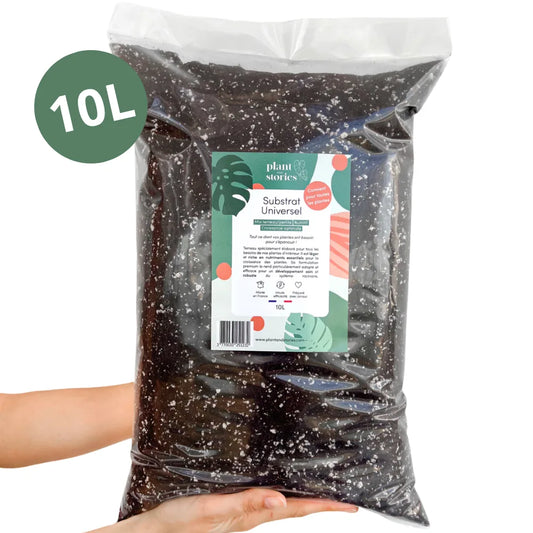
Universal Substrate enriched with Mycorrhizae and Bacillus - Premium Quality - Universal potting mix
Regular price From 9,50 €Regular price23,75 €Sale price From 9,50 €Sale -
Live sphagnum moss - Sphagnum moss for plants - Sphagnum moss - Live sphagnum moss for plants
Regular price 9,50 €Regular price8,50 €Sale price 9,50 € -
Set of Transparent Araceae Pots - Transparent Growing Pots for Plants
Regular price From 8,97 €Regular price9,75 €Sale price From 8,97 €Sale -
Fertilizer for All Indoor Plants - 250ml Liquid Fertilizer - Root and Foliar Fertilizer + Free Graduated Pipette!
Regular price 18,00 €Regular price20,00 €Sale price 18,00 €Sale



Moss poles and supports: guide your Monstera upward
In its natural habitat, your monstera is a tireless climber that uses tree trunks to reach for the light. Giving it a support isn’t just an aesthetic flourish; it’s a biological necessity. When the plant senses vertical support, it releases growth hormones that signal it can invest energy in larger leaves and more complex fenestrations.
Without an anchor point, the plant eventually crawls along the ground, producing thinner stems and leaves that shrink over time. To install your moss pole or support successfully, it’s essential to understand that aerial roots act as both moisture sensors and stabilizers. Guiding these roots toward a moist support can accelerate your plant’s maturity by several months.
The right material depends on your growth goals and personal taste:
- Coconut fiber pole: A classic, sturdy option, ideal for large Deliciosa specimens.
- Sphagnum moss pole: A collector favorite for maintaining consistent moisture around the nodes.
- Acrylic support: A modern option that prioritizes transparency so it doesn’t hide the beauty of the foliage.
When securing the plant, use soft ties or hook-and-loop tape. Never tighten a tie around a node, as that’s where new shoots and roots emerge. Instead, secure the internode—the section of stem between two leaves—so the plant can breathe and grow freely.
The clear pole: a stylish ally for collectors
Fillable acrylic poles have become a must-have for showing off rare varieties. Their complete transparency highlights your monstera’s shape while creating a localized humid environment. Fill one with sphagnum moss to provide an airy growing medium that roots can penetrate vigorously.
This method has a major advantage: modularity. You can stack extensions as your plant climbs, avoiding the stress of repotting simply to replace its support. It’s the ideal tool for anyone looking to maximize root development without sacrificing their home’s aesthetic. You’ll find a suitable selection in our collection of specialized moss poles and supports.
Growing in a hanging planter: letting the Adansonii trail
If you have a Monstera Adansonii, growing it in a hanging planter creates a spectacular cascading effect, perfect for dressing up a high shelf. However, keep in mind that this trailing plant will eventually produce increasingly smaller leaves. This is a natural response: without upward support, the plant conserves energy.
To maintain dense foliage and prevent bare-looking stems, don’t hesitate to pinch back the tips regularly. This encourages the plant to branch out from the base. If you notice new leaves becoming tiny, it may be time to give it a small moss pole to get its vertical growth back on track.

Care and health: preventing common problems
Watering is often where many plant lovers run into trouble. The finger-joint rule is your best ally: push your finger about two centimeters into the substrate. If the soil is dry, water thoroughly until water runs out of the drainage holes. Always empty the saucer after ten minutes to keep the roots from sitting in water, which can cause fatal yellowing.
Clean leaves breathe better and capture energy more efficiently. Dust quickly builds up on the broad leaf blade of a monstera, creating a physical barrier that slows photosynthesis. Once a month, wipe each leaf with a soft, damp cloth. This simple step restores your plant’s shine and lets you inspect the undersides of the leaves for any unwanted visitors.
Ambient humidity is the second pillar of tropical well-being, especially in winter when our heating dries out the air. Indoor humidity often drops below 30%, while monsteras thrive above 60%. Rather than misting the leaves, which can encourage disease, place your pot on a bed of damp clay pebbles. Natural evaporation will create a beneficial microclimate without saturating the air in your living room.
Learning to read the signs of stress lets you act before it’s too late. Brown, crispy edges often indicate air that’s too dry or a temporary lack of water. Leaves curling in on themselves signal intense thirst or a reaction to excessive heat. If you see widespread yellowing of the lower leaves, check immediately to make sure the substrate hasn’t stayed waterlogged for too long.
Fertilizing and nutrients: feeding without burning
Fertilizing should be gradual and considered. If you’ve just repotted with our Monstera potting mix enriched with biostimulants, wait at least 4 to 6 weeks before adding anything else. The substrate already contains the nutrients needed for a vigorous start. After that, use a liquid fertilizer with a pipette for precise dosing, following the seasons: feed every other watering in spring and cut back almost entirely in winter.
Light and grow lights: making up for a lack of sunlight
Light is the essential fuel for producing those famous splits. A plant stretching out with long, bare stems is desperately seeking light. If your room lacks natural light, a full-spectrum grow light can save your plant’s shape. Place it about 50 cm above the top of the plant to simulate optimal sunlight without risking leaf burn. If you’re unsure about your specimen’s health, contact our experts for a personalized diagnosis.
The Plant & Stories experience: from choosing to thriving
Bringing home a new plant is the start of a creative, personal adventure. At Plant & Stories, we carefully select botanical treasures that have already acclimated in France. This ensures your monstera won’t suffer the sudden temperature or humidity shock often experienced by plants imported directly from overseas commercial greenhouses. As passionate curators, our role is to offer only vigorous specimens ready to thrive long-term in your home.
The journey to your living room is a critical step that we carefully manage. We use custom, eco-friendly thermal packaging to protect every leaf from drafts and temperature fluctuations. For your peace of mind, every specimen comes with a 30-day health guarantee. You can also join our passionate community to get personalized advice and share your successes with fellow urban gardening enthusiasts.
When your package arrives, patience is your best ally. Don’t repot your plant on the first day. Let it rest in its original pot for a week, away from direct sunlight; this break gives it time to adjust to the humidity levels in your home. This acclimation period, often overlooked in standard guides, is what ensures a smooth transition and prevents unnecessary root stress.
Why our Monstera potting mix makes a difference
Our exclusive recipe isn’t just a simple mix of inert soil. It’s enriched with protective microorganisms and made locally to ensure the freshness of a truly living substrate. Manufacturing it in France allows us to control every component, from pine bark to perlite, to ensure optimal aeration for the root system.
This specialized growing medium drastically reduces the risk of transplant shock. By immediately stimulating your monstera’s root development, it encourages quick recovery and healthier growth. It’s the assurance of giving your tropical icon a rich, balanced ecosystem from its very first days in its new home.
Your search for greenery starts here
Ready to transform your space into a unique plant sanctuary? Explore our selection of houseplants today to find the specimen that’s right for you. Every plant promises discovery, calm, and personal growth every day.
Give it the best possible start by optimizing its setup with our enriched Monstera potting mix. Don’t forget to guide its vertical growth and showcase its natural form with our professional-quality moss poles and supports. Your botanical adventure is just beginning, and we’re honored to guide you every step of the way.


Ready to watch your tropical icon thrive?
Growing your monstera successfully is no longer a secret. You now have everything you need to choose the ideal variety for your space, opt for a living substrate that respects root physiology, and provide the vertical support it needs to climb. These precise steps transform a simple green plant into an architectural centerpiece that radiates health every day.
Our community trusts us, with a customer rating of 9.9/10, thanks to the outstanding quality of our living substrates, made in France. To ensure your new companions thrive, we offer secure delivery within 24 to 72 hours. Each parcel is prepared with the care such a journey deserves, so your plant sanctuary can come to life without delay.
Create your urban jungle with our Monsteras and premium substrates and enjoy the expertise of our passionate team at every stage of your project. Your journey toward a greener, more peaceful home begins today. We can't wait to see your own little piece of jungle grow and flourish.

Laura Bruneau
Jardinière & autrice