

Chinese money plant: care and secrets of the Pilea

It is nicknamed the Chinese money plant for its coin-shaped leaves, and the friendship plant because it is given away, cutting after cutting. Behind this popular name lies Pilea peperomioides, a plant from southwestern China that was long rare before becoming an indoor star. Easy and generous, it deserves to have its legends disentangled from its real needs. Here are its secrets, based on verified botanical sources.
columns: 4
columns_mobile: 2


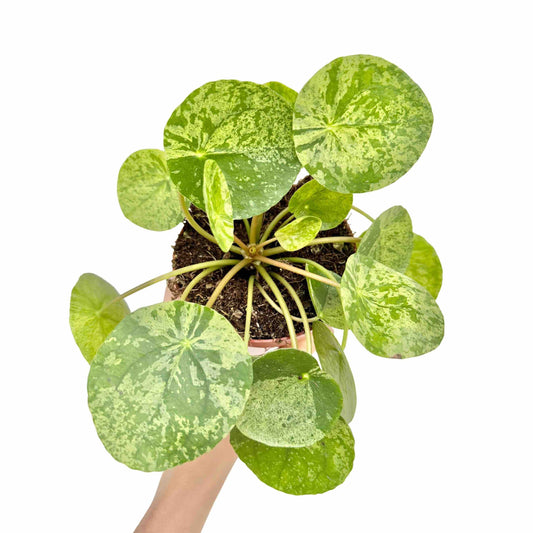

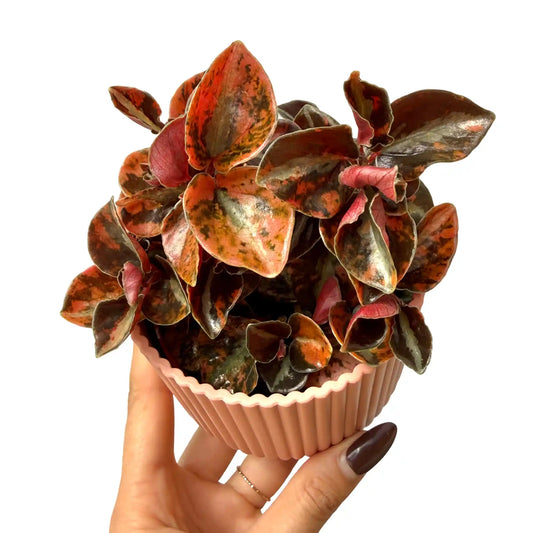


🌿 Why is the Chinese money plant so popular?
The Chinese money plant is Pilea peperomioides, a member of the Urticaceae family (the nettle family, without the sting) native to Sichuan and Yunnan in China. Described by science in 1912, it first traveled from one enthusiast to another before conquering shops.
Its success is due to three things: a graphic and round silhouette that cannot be mistaken for anything else, astonishing ease of care, and this unique generosity that drives the plant to constantly produce young offshoots. Plenty of good reasons to adopt it.
| Asset | What it means for you |
|---|---|
| Good-luck symbol | Its coin-shaped leaves make it a meaningful gift |
| Friendship plant | It is shared through its offshoots, from home to home |
| Easy to care for | Unfussy, it forgives hesitant beginnings |
| Always elegant | A round and graphic rosette, never bulky |
🔎 The Chinese money plant's ID card
A word on its identity, because nicknames can be misleading. The Chinese money plant is botanically Pilea peperomioides, of the genus Pilea, family Urticaceae, as documented by Kew (Plants of the World Online). It is neither a Peperomia (despite its species name), nor the "pachira" sometimes called a jade tree or money tree.
Its origin is indeed Chinese, and it is a non-hardy indoor plant that should be kept warm.
| Criterion | Verified detail |
|---|---|
| 🏷️ Botanical name | Pilea peperomioides Diels |
| 🏷️ Nicknames | Chinese money plant, friendship plant, missionary plant |
| 🧬 Family | Urticaceae (Urticaceae) |
| 🌍 Origin | Southwest China (Sichuan, Yunnan) |
| 🍃 Foliage | Round, fleshy, up to 10 cm, central petiole (peltate) |
| 📏 Indoor size | 0.1 to 0.5 m; slow growth |
| 🔎 Propagation | Spontaneous offshoots, easy to repot |
| ⚠️ Toxicity | Reputed to be non-toxic; Pilea neighbors classified as non-toxic (ASPCA) |
📋 Quick care sheet
Essential care guidelines, all at a glance.
| Parameter | Guideline |
|---|---|
| Light | Bright but indirect; never harsh direct sun |
| Watering | When the top few centimeters are dry; reduced in winter |
| Substrate | Peat-free, well-draining potting mix |
| Humidity | Average; tolerates dry air |
| Temperature | Above 10 °C; ideal 18 to 24 °C |
| Repotting | Every 2 years, in spring |
| Fertilizer | Balanced, every 1 to 2 months, from April to September |
| Babies | Offshoots to repot in spring |
| Difficulty | Very easy |
📍 Where to place the Chinese money plant?
Like all Pilea, the Chinese money plant loves brightness without burning sun. In bright indirect light, its rosette remains round and dense; too much shade, and it will stretch and become sparse. An east or west window, or a spot away from a south-facing window, offers the best compromise.
☀️ Light: Bright and indirect, near an east or west window, without harsh direct sun.
🔄 Rotation: A quarter turn per week for a symmetrical rosette.
🌡️ Heat: 18 to 24 °C, never below 10 °C, away from cold drafts.
🪴 Repotting and substrate for the Chinese money plant
The Chinese money plant is happy with a peat-free, well-draining potting mix, renewed every 2 years in spring.
Choose a pot just slightly larger, only 2 to 3 cm more, to prevent water from stagnating around the roots. The Royal Horticultural Society (RHS) advises checking the roots every spring and only repotting when they are root-bound.
| Step | The right move |
|---|---|
| 1. Choose the pot | One size up, 2 to 3 cm larger, with drainage holes |
| 2. Prepare the substrate | Peat-free, well-draining potting mix, lightened with perlite |
| 3. Remove and separate | Collect well-formed offshoots along the way |
| 4. Repot | Crown at the right level, without burying the base |
| 5. Finish | Water moderately, indirect light, fertilizer after 4 weeks |
columns: 4
columns_mobile: 2
-
-
-
-
Beginner surprise plant box + Free 250ml dropper - Starter pack - Mystery indoor plants
Regular price From 39,95 €Regular price44,95 €Sale price From 39,95 €Sale

✂️ Daily care for the Chinese money plant
The Chinese money plant requires little, provided you avoid overwatering. Regular light and measured watering are enough to keep it round and vigorous.
💧 Watering: Wait until the top few centimeters are dry, water, empty the saucer. Space out in winter.
☀️ Light: Maintain bright indirect light for a dense and perfectly round rosette.
🔹 Rotation: Turn the pot every week so it does not lean toward the window.
🌱 Fertilizer: A diluted balanced fertilizer, every 1 to 2 months, from April to September.
🔹 Offshoots: Regularly repot the babies to aerate the base and multiply the plant.
🍂 The Chinese money plant through the seasons
From spring to autumn, the Chinese money plant produces its new leaves and offshoots: regular watering, fertilizer every 1 to 2 months, repotting the babies. In winter, growth slows down; space out watering, suspend fertilizer, and move the plant closer to the light to compensate for the short days. It tolerates the dry air of heating well, which simplifies its overwintering.
📅 Care calendar by season
| Season | Key move |
|---|---|
| 🌸 Spring | Resume watering and fertilizing; repot offshoots. |
| ☀️ Summer | Active growth: water as soon as the surface is dry, fertilize, rotate. |
| 🍂 Autumn | Space out watering; last fertilizer in September. |
| ❄️ Winter | Rest: spaced watering, no fertilizer, maximum light, >10 °C. |
🌱 How to get babies to give away?
That is the whole charm of the friendship plant: it produces its own offshoots, small plantlets that emerge at the base or along the stem. In spring, gently detach a well-developed offshoot, with a little root, and pot it in well-draining potting mix; or let it root in clear water first, in bright indirect light.
In a few weeks, you have a little good-luck charm ready to be given away. This is how this Chinese plant conquered Europe, from home to home.
🐛 Common problems: causes and solutions
The Chinese money plant says everything through its leaves and petioles. Here are the most common issues and their solutions.
| Symptom | Probable cause | Solution |
|---|---|---|
| Yellowing leaves | 💧 Excess water and insufficient drainage | Let the surface dry, empty the saucer, well-draining potting mix |
| Curling leaves | ⚠️ Irregular watering or heat stress | Regularize watering, stabilize at 18-24 °C, indirect light |
| Bare stem, stretched petioles | ☀️ Lack of light (etiolation) | Move closer to a bright window, turn the pot every week |
| Pale leaves | 🌱 Low light or deficiency | Improve light, resume fertilizer from April to September |
| Sudden leaf drop | ❄️ Cold draft or shock (below 10 °C) | Move away from cold windows, stabilize the temperature |
| White cottony clusters | 🐛 Mealybugs | Clean with alcohol-soaked cotton, isolate and treat |


🌿 Our selection to go further
To prolong the pleasure, here are our Pilea and resources around the Chinese money plant; each name links to its sheet or the plant in the shop.
| Our selection | Why choose it |
|---|---|
| Pilea care (complete guide) | Our detailed guide to get everything right, from light to propagation |
| Pilea peperomioides | The Chinese money plant to adopt, in the shop |
| Pilea 'Sugar' | A variation with textured silver foliage |
| Peperomia Prostrata | A small round one from another genus, not to be confused |
🎨 Decorating with the Chinese money plant
Round and graphic, the Chinese money plant is enough on its own on a desk, a shelf, or a veiled windowsill. It also makes lovely trios with other easy small plants with contrasting foliage.
To understand everything about its culture, refer to our Pilea care guide, and to integrate it into a plant decor, our urban jungle guide gives ideas for combinations.
⚠️ Is the Chinese money plant toxic?
Reassuring for households with animals: the Pilea listed by the ASPCA (such as Pilea nummulariifolia and Pilea cadierei) are classified as non-toxic for dogs, cats, and horses, as indicated by the ASPCA. The organization does not publish a dedicated sheet for Pilea peperomioides, but no particular toxicity is associated with it.
As a precaution, prevent an animal from chewing the foliage and keep young offshoots out of reach of very young children.
✅ Our expert advice to succeed
In summary, the Chinese money plant is a little indoor joy: bright indirect light to stay round, watering when the surface is dry, ordinary heat above 10 °C, and the immense pleasure of multiplying its babies to give away. Watch out for excess water, turn the pot every week, and let the magic work. With these verified guidelines, your green good-luck charm will prosper and be shared for a long time.
I received my first Chinese money plant from a friend, in the form of a small offshoot in a glass of water. That is all its poetry: it is passed on. Give it light and watering without excess, repot its babies, and you will enter this long chain of plant friendship that has been traveling since China.

Laura Bruneau
Jardinière & autrice


