

Gynura aurantiaca (velvet plant): care, flowering and propagation by cuttings

To care for a Gynura, place it in bright, filtered light, water when the surface of the potting mix has dried slightly, keep it above 15°C, and pinch its stems and flower buds to keep it bushy and richly purple.
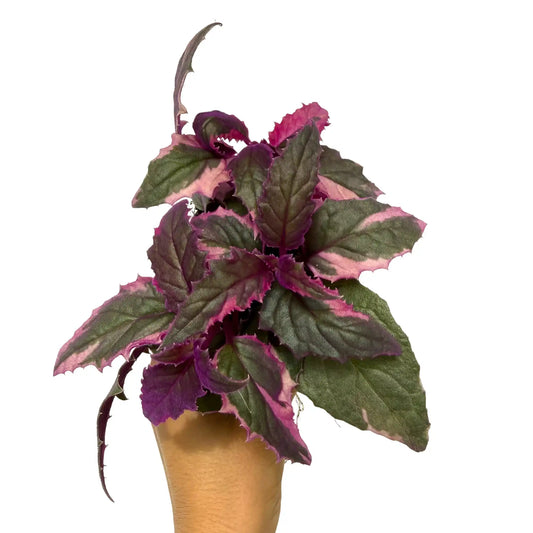
Gynura aurantiaca, known as the velvet plant or orange gynura and sold under the name Purple Passion, owes all its charm to the purple hairs covering its leaves.
Rewritten using information from the RHS, NC State Extension, the University of Florida, and the ASPCA, this guide also answers the most frequently asked questions about the scent of its flowers, loss of color, propagation, and toxicity.
🌿 Why Gynura is called the velvet plant
Touch a Gynura leaf and you'll understand its nickname: according to the RHS (Royal Horticultural Society), its dark green leaves and stems are covered with bright purple hairs, especially on the undersides.
The plant itself is therefore green; it is this purple fuzz, with reddish-purple undertones according to NC State Extension, that makes it appear purple or red depending on the light. It is indeed a green plant with velvet leaves, the one people look for under the names velvet-leaf plant or red velvet plant.
In English, the RHS calls it the velvet plant or purple velvet plant, hence our common name, velvet plant. Its flexible growth habit, sometimes trailing and sometimes climbing, makes it a lovely hanging plant.
| Benefit | What it means for you |
|---|---|
| Purple velvet foliage | A texture and color few houseplants can offer |
| Trailing or climbing growth habit | In a hanging pot, on a shelf, or trained on a small support |
| Very easy to propagate | A few pinched-off stems are enough to renew or propagate the plant |
| Non-toxic to pets | Classified as non-toxic to dogs and cats by the ASPCA |
🔎 Gynura at a glance
The accepted name is Gynura aurantiaca (Blume) DC., according to the Atlas of Florida Plants at the University of South Florida: the species was first described by Blume as Cacalia aurantiaca in 1827. The specific epithet aurantiaca means orange-colored in Latin, referring to the flowers, hence the French name gynure orange.
The genus belongs to the Asteraceae, the daisy family; the University of Florida's Purple Passion growing guide (UF IFAS) attributes around fifty species from humid tropical regions to it. NC State Extension (North Carolina State University's outreach service) places its native range from Sumatra to Java, while the UF IFAS invasive risk assessment describes it as native to Java and not naturalized elsewhere.
| Characteristic | Verified details |
|---|---|
| 🏷️ Botanical name | Gynura aurantiaca (Blume) DC.; cultivars 'Purple Passion' and variegated 'Purple Passion' |
| 🧬 Family | Asteraceae (Asteraceae) |
| 🌳 Type | Tropical herbaceous perennial with flexible, trailing or twining stems |
| 🌍 Origin | Indonesia: Sumatra to Java (NC State); Java according to UF IFAS |
| 🍃 Foliage | Green, toothed leaves covered with purple hairs, up to about 20 cm long |
| 🌸 Flowers | Orange-yellow flower heads with an unpleasant smell, mainly in fall and winter |
| 📏 Size | 10 to 50 cm tall, spreading 50 cm to 1 m, according to the RHS |
| ⚠️ Toxicity | Non-toxic to dogs and cats (ASPCA) |
📋 Quick care guide
Essential growing pointers, all in one place.
| Parameter | Guideline |
|---|---|
| Light | Bright and filtered, east- or west-facing; no afternoon sun |
| Watering | When the surface has dried slightly; less in winter |
| Potting mix | Well-draining potting mix with bark and perlite |
| Humidity | About 40 to 60% (UF IFAS): pebble tray or grouped plants |
| Temperature | About 18 to 27°C; minimum 10 to 15°C (RHS H1B) |
| Repotting | In spring, when the roots fill the pot |
| Fertilizer | Light feeding in spring and summer, preferably high in potassium |
| Pruning | Pinch the tips and flower buds |
| Toxicity | Non-toxic to dogs and cats (ASPCA) |
| Difficulty | Easy, as long as it gets enough light and isn't overwatered |
📍 Where to place a Gynura: light and purple color
Place your Gynura near an east- or west-facing window, or behind a sheer curtain: the RHS recommends bright, filtered light and a sheltered east- or west-facing spot. NC State Extension notes that bright, indirect light produces the best color, with protection from afternoon sun, and that insufficient light makes the leaves appear green rather than purple.
This is the most important factor in growing the plant. The RHS rates it H1B: it can spend the summer outdoors in a sheltered spot as long as nighttime temperatures stay above about 10 to 15°C.
☀️ Ideal: Near an east- or west-facing window, or a south-facing window with a sheer curtain
🌥️ Acceptable: A bright room without direct sun: slower growth and less intense purple coloring
🚫 Avoid: A dark corner (leaves turn green), scorching afternoon sun, or a radiator
🪴 Repotting Gynura: which potting mix and when
Repot your Gynura in spring, when the roots fill the pot, into a pot with drainage holes that's only slightly larger. The RHS recommends a peat-free, loam-based potting mix in bright, filtered light; NC State Extension mainly emphasizes good drainage.
For propagation, the University of Florida's guide uses a mix of 50% peat, 25% bark, and 25% perlite, with a pH of 5.5 to 6.0. At home, general-purpose houseplant potting mix lightened with a little perlite works well. The roots are fine and delicate according to UF IFAS, so handle the root ball gently.
| Step | What to do |
|---|---|
| 1. Choose the right time | In spring, as the plant starts growing again and the roots fill the pot |
| 2. Prepare the pot | A pot with drainage holes, only slightly larger, or a hanging pot with a drainage hole |
| 3. Prepare the mix | Houseplant potting mix amended with perlite and a little bark |
| 4. Set in the root ball | Without breaking the fine roots, at the same depth as before |
| 5. Water and drain | Water thoroughly, empty the saucer, and return the plant to filtered light |
columns: 4
columns_mobile: 2
-
-

 Sold out
-

 Sold out
-
-
-
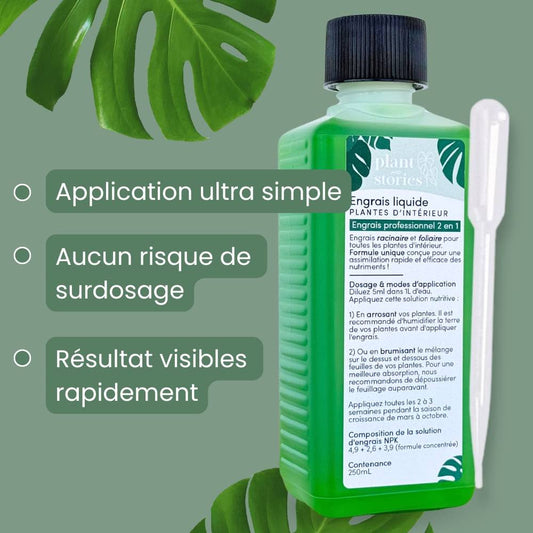
Fertilizer for All Indoor Plants - 250ml Liquid Fertilizer - Root and Foliar Fertilizer + Free Graduated Pipette!
Regular price 18,00 €Regular price20,00 €Sale price 18,00 €Sale



✂️ Caring for Gynura (velvet plant): watering, fertilizer, and pinching
Caring for Gynura Purple Passion comes down to three things: measured watering, light fertilizing, and regular pinching. The University of Florida's guide advises letting the surface of the potting mix dry slightly before watering; NC State Extension recommends keeping the mix moist, watering less often in winter, and warns that excess water causes root rot. Check with your finger rather than sticking to a schedule.
UF IFAS notes that too much light, water, or fertilizer, or daytime temperatures above about 27°C, will make the plant leggy.
For humidity, the same guide recommends 40 to 60% relative humidity: place the pot on a tray of moist pebbles, making sure the pot's base isn't sitting in water, or group your plants together. Don't mist the fuzzy leaves (see our article on misting and how to increase humidity without misting).
💧 Watering: When the surface of the potting mix has dried slightly; never leave water in the saucer
🌱 Fertilizer: A diluted liquid fertilizer for houseplants in spring and summer; UF IFAS favors a formula high in potassium
🔹 Pinching: Pinch back the tips of overly long stems to keep the plant compact
💧 Humidity: A tray of moist pebbles or grouped plants, away from heating
🔹 Foliage: Dust with a dry brush: the hairs trap water and dust
🍂 Gynura aurantiaca flowers: scent, pinching, and seasons
Gynura flowers in fall according to NC State Extension and mainly in winter according to the RHS; in Florida, the University of Florida sees it flower in spring and early summer. Its small orange-yellow flower heads don't smell pleasant: the RHS describes a strong odor, NC State Extension an unpleasant smell and messy flowers that are often removed, and the University of Florida calls the scent downright offensive.
Traditionally, UF IFAS explains, the buds and leggy shoots are pinched off. Pinching off the buds as soon as they appear also keeps the plant compact. In winter, water less often and keep Gynura above about 16°C: UF IFAS notes that growth slows at 16°C and cold damage is possible below about 13°C.
📅 Seasonal care calendar
| Season | Key task |
|---|---|
| 🌸 Spring | Repot if needed, pinch stems, take cuttings, resume light fertilizing |
| ☀️ Summer | Water as soon as the surface dries, provide filtered light, and move outdoors to a sheltered spot if nights stay above 15°C |
| 🍂 Fall | Bring indoors before nights get chilly and pinch off the first flower buds |
| ❄️ Winter | As much light as possible, above 16°C, water less often, no fertilizer |
🌱 Gynura cuttings: an easy way to propagate
NC State Extension recommends stem cuttings, and the University of Florida's guide explains that they root year-round given enough warmth and humidity.
Take a 7.5- to 15-cm stem tip with two to six nodes, as described by University of Illinois Extension; remove any leaves that would be buried, along with any flower buds. Insert it into a light, moist mix, cover with a clear plastic bag, and place in bright light out of direct sun.
In commercial production, UF IFAS gets roots in 1 to 2 weeks with the growing medium kept at a minimum of about 24°C; rooting hormone is optional. Illinois Extension advises repotting when the roots reach about 2.5 cm. The RHS, meanwhile, recommends softwood cuttings in late spring or semi-ripe cuttings in summer, with bottom heat.
To choose between the two methods, read our guide to propagating in water or potting mix.
🐛 Gynura problems: green leaves, bare stems, and rot
Most Gynura problems are caused by light or watering. NC State Extension links green leaves to insufficient light and root rot to overwatering; UF IFAS also notes leggy stems (heat, too much fertilizer or water) and cold damage.
As for pests, NC State Extension lists aphids, whiteflies, mealybugs, and spider mites, while the RHS lists aphids and glasshouse red spider mites. For mealybugs, isolate the plant and treat it promptly.
| Symptom | Likely cause | Solution |
|---|---|---|
| New leaves are green, purple color is dull | ☀️ Not enough light | Move closer to an east- or west-facing window, behind a sheer curtain |
| Long, bare stems | 💧 Heat, too much fertilizer or water, or an old plant | Pinch back, cut back in spring, and propagate the tips |
| Soft stems, drooping leaves, waterlogged potting mix | 🍄 Root rot from overwatering | Let the mix dry, empty the saucer, and repot in a well-draining mix |
| Dark spots or damaged leaves in winter | ❄️ Cold damage, possible below about 13°C | Move away from cold windows and drafts |
| Unpleasant smell in the room | ⚠️ Fall and winter flowering | Pinch off flower buds as soon as they appear |
| Fine webbing, cottony clusters, tiny insects | 🐛 Spider mites, mealybugs, aphids, whiteflies | Rinse the foliage with lukewarm water, isolate the plant, and treat with insecticidal soap |


🌸 Our Gynura varieties and their purple-foliage companions
The Purple Passion sold at garden centers is indeed a Gynura aurantiaca: NC State Extension lists 'Purple Passion' and 'Variegated Purple Passion' as cultivars of the species, and the ASPCA includes Purple Passion Vine among its common names. The other plants in the table share its care needs and purple palette; you can find their detailed profiles in our Tradescantia guide and our profile of Hypoestes, the polka dot plant. Find Gynura and all our houseplants in our collection.
| Variety | What makes it special |
|---|---|
| Gynura aurantiaca 'Purple Passion' | The most common cultivar, with trailing or climbing stems and leaves covered in purple hairs |
| Gynura aurantiaca 'Purple Passion' Variegata | The variegated Gynura: dark green leaves variegated with pink and covered in purple hairs, according to NC State; available in an 8 cm pot |
| Tradescantia 'Nanouk' | A trailing Tradescantia with pink, green, and cream foliage, perfect for a coordinating hanging planter |
| Tradescantia 'Unicorn' | Another fast-growing trailing Tradescantia, adding a different mix of colors |
| Tradescantia pallida 'Purple Heart' | A purple heart plant with intensely violet foliage, the closest match to Gynura in color |
| Hypoestes phyllostachya 'Super Pink' | A small pink polka dot plant, adding a bright accent at the base of a purple hanging plant |
🎨 Which plants to pair with your Gynura
Gynura pairs well with plants that, like it, enjoy bright, filtered light and well-draining potting mix.
Pair its purple tones with the multicolored foliage of Coleus, or add it to your trailing houseplants alongside Callisia repens for a cascading display on a shelf.
For ideas on bringing color to an entire room, see our guide to houseplants with colorful foliage.
⚠️ Is Gynura toxic to cats and dogs?
No: the ASPCA (American Society for the Prevention of Cruelty to Animals) classifies Purple Velvet Plant, Gynura aurantiaca (spelled Gynura aurantica in its listing), as non-toxic to dogs and cats; NC State Extension also lists it as non-toxic to cats and dogs.
The University of Florida's assessment also reports that the Rocky Mountain Poison and Drug Center considers it non-toxic. Non-toxic doesn't mean edible: don't eat it, and keep your pets from nibbling on it, if only to protect the plant.
For a pet-safe home, see our list of non-toxic plants for cats and our non-toxic plants for dogs.
✅ Our expert tips for success
A few simple rules will keep your Gynura thriving: give it bright, filtered light with no afternoon sun, water when the surface of the potting mix has dried out a little, keep it at around 18 to 27 °C, and regularly pinch back the stems and flower buds. If the plant becomes leggy, take cuttings from the tips in spring to grow a fresh, bushy plant.
And if its leaves turn green, move it closer to the light before trying anything else.
Gynura is one of those plants you want to touch before you even look at it: I can't think of a better introduction to the world of foliage plants for a child. I've learned that it won't forgive a dark corner: it quickly loses its purple color. I pinch off its buds without a second thought, since its flowers don't smell very nice. And I always keep a cutting ready as a replacement for a plant that's become too leggy.

Laura Bruneau
Jardinière & autrice


