

Hoya: The Complete Guide to the Porcelain Flower

Hoya, or wax plant, is a climbing plant with thick, waxy leaves, famous for its clusters of star-shaped flowers with a sweet fragrance. To get it to bloom, the rule comes down to three things: bright light, careful watering, and patience. Discover our varieties in our Hoya collection. The genus Hoya, documented by the Missouri Botanical Garden, comprises epiphytic plants with waxy leaves that are easy to care for and non-toxic to pets; with plenty of light and a little patience, they produce spectacular clusters of fragrant flowers.
This guide explains what defines the genus, how to get the light, water, and potting mix right, how to encourage flowering, which varieties to choose as a beginner, and how to set up a suitable support.
What is Hoya, the wax plant?
Hoya is a climbing plant native to East Asia and Australia, belonging to the Apocynaceae family (the same family as milkweed, which monarch butterflies feed on). The genus includes more than 2,000 species, but Hoya carnosa is by far the most widely grown indoors.
Its semi-succulent leaves store water, making it a plant that can tolerate missed waterings. Its flowers, grouped in spherical clusters, have an almost unreal, waxy appearance that has earned it the nickname “wax plant.” Hoya carnosa has also received the prestigious Award of Garden Merit from the Royal Horticultural Society.
One important point: the flowers appear on short stems called “spurs,” which bloom again year after year. Never cut them off, or you will remove future blooms. Each cluster can contain 10 to 30 small, star-shaped flowers with red centers, often giving off a stronger fragrance at night.
The genus is named in honor of Thomas Hoy, an 18th-century British gardener. Indoors, Hoya carnosa stays compact (60 to 120 cm), but its climbing stems can spread much farther when trained on a support.
What light and temperature does a Hoya need?
Hoya needs bright but indirect light: this is the most important condition for flowering. According to the Royal Horticultural Society’s Hoya guide, the plant thrives between 16 and 24 °C, with a slightly cooler period in winter, and consistent light is essential for flowering.
Too little light, and the leaves turn brown while the plant becomes stunted and fails to flower. Too much direct afternoon sun, and the waxy foliage gets scorched. An east- or west-facing window, perhaps with a sheer curtain in summer, offers the right balance. Avoid drafts and placing it near radiators or air conditioners.
| Factor | Guide |
|---|---|
| Light | Bright and indirect, essential for flowering |
| Temperature | 16 to 24 °C, slightly cooler in winter |
| Humidity | Moderate, around 50% |
| Drafts | Avoid at all costs |
Watering and potting mix: respect its epiphytic nature
Let the potting mix dry out between waterings: Hoya is an epiphytic plant with water-storing leaves, and is far more sensitive to excess water than to too little. In winter, when the plant is semi-dormant, cut back significantly on watering.
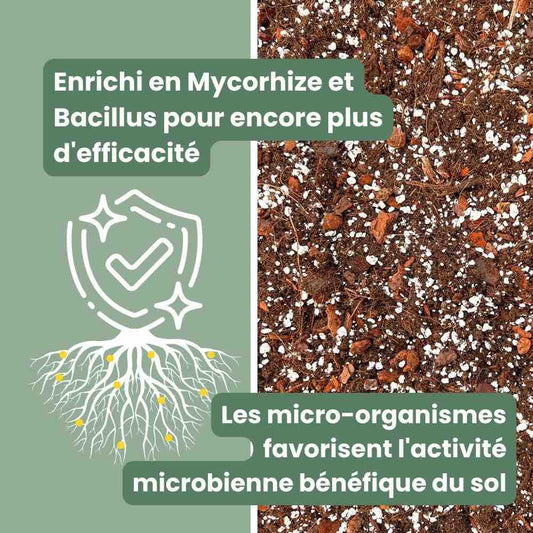
The potting mix must drain very well: a blend based on bark, perlite, and coconut chips recreates its airy natural environment. Compact all-purpose potting soil holds too much water and causes root rot. You can start with a specialist Hoya potting mix that’s already formulated for the job.
Watering frequency varies with the seasons: more often in spring and summer, when the plant is growing and flowering, and much less in fall and winter, its semi-dormant period.
| Season | Watering |
|---|---|
| Spring | Regularly, as soon as the surface of the potting mix dries |
| Summer | More frequently, but never let it become waterlogged |
| Fall | Water much less often |
| Winter | Minimal; the plant is semi-dormant |
| Ingredient | Purpose |
|---|---|
| Pine bark | Aeration, epiphytic structure |
| Perlite | Fast drainage |
| Coconut chips | Light moisture retention |
| Biostimulants | Rooting and vigor |
The one thing that makes all the difference with Hoya is watering less. Most of the Hoyas that decline in my customers’ homes have been overwatered, never underwatered. I always let the potting mix dry out thoroughly, and I never cut off the flower stems, even when they look bare: that’s where the flowers come back. After years of growing Hoyas, this is the lesson I repeat most often.
How do you get your Hoya to flower?
Flowering is triggered by light, patience, and a little water stress: Hoya often blooms better when it’s slightly pot-bound and not overwatered. You also need to be prepared to wait, since a young plant generally won’t flower until it’s 2 or 3 years old.
A diluted fertilizer high in phosphorus or potassium, applied every 4 weeks in spring and summer, supports the development of flower clusters. Stop feeding in winter. Don’t move a Hoya while buds are forming, and don’t repot one that is budding: the stress could cause it to drop its flowers. Once a cluster has faded, leave it in place on its spur: the same flower stem will bloom again the following season, often more abundantly as the plant matures.
columns: 4
columns_mobile: 2
-
Hoya Premium Potting Soil - Enriched with Mycorrhizae and Bacillus - Made in France
Regular price 11,99 €Regular price11,99 €Sale price 11,99 € -


Hoya Fertilizer - 250ml Liquid Fertilizer - Root and Foliar Fertilizer + Free Graduated Pipette!
Regular price 18,00 €Regular price20,00 €Sale price 18,00 €Sale -
Hoya Plant Support - Arch Support for Hoya - Transparent Acrylic Plant Support - Support for Climbing Plants
Regular price From 3,95 €Regular price3,95 €Sale price From 3,95 € -
Transparent plant clips - Transparent plant support clips - Support clips - Plant support clips
Regular price From 4,00 €Regular price4,00 €Sale price From 4,00 €



Which Hoya variety should beginners choose?
For a first Hoya, carnosa and its cultivars are the safest choice: they’re hardy, flower readily, and are easy to find. Other species are beautiful, but are often more demanding or less generous with their blooms.
| Variety | Feature | Best for |
|---|---|---|
| Hoya carnosa | Classic, floriferous, hardy | Ideal for beginners |
| Carnosa 'Variegata' | Leaves edged in cream | Beginners who can provide a little more light |
| Carnosa 'Krimson Queen' | Pink and cream variegation | Fans of colorful foliage |
| Hoya pubicalyx, linearis… | Varied growth habits and foliage | Experienced collectors |
📋 Quick fact sheet (for experienced gardeners)
Hoya care essentials at a glance.
| Factor | Guide |
|---|---|
| Family | Apocynaceae (milkweed family) |
| Origin | East Asia, Australia |
| Species in the genus | More than 2,000 |
| Light | Bright and indirect |
| Temperature | 16 to 24 °C |
| Humidity | Around 50% |
| Watering | Let the potting mix dry between waterings |
| Potting mix | Very well-draining (bark, perlite) |
| Flowering | On spurs, from 2–3 years old |
| Repotting | Rarely: it likes to be pot-bound |
Supports and repotting: shape your Hoya
Hoya rarely needs repotting: it flowers better when slightly pot-bound, so only move it to a larger pot when the roots are really starting to spill out. When repotting is necessary, choose a pot just one size up, with drainage holes, in early spring—never while the plant is budding.
Its climbing stems can be trained around a hoop, up a trellis, or onto a suitable plant support, or allowed to trail from a hanging planter. You can also support healthy growth and flowering with our specialist fertilizers and plant care products.


Caring for your Hoya through the seasons
Hoya care follows the seasons: encourage growth in spring and summer, then let the plant rest in winter.
📅 Seasonal care calendar
| Season | Key task |
|---|---|
| 🌸 Spring | Growth resumes: provide light, water, and fertilizer every 2 weeks |
| ☀️ Summer | Peak flowering: bright light, 40 to 60% humidity, don’t move the buds |
| 🍂 Fall | Reduce watering and fertilizing; never cut off the flower stalks |
| ❄️ Winter | Rest in cool (10 to 15 °C) and dry conditions to prepare for flowering |
Troubleshooting: yellow leaves, dropped buds
Most Hoya problems are caused by watering, light, or moving the plant at the wrong time. Here’s how to read the signs.
| Symptom | Likely cause and solution |
|---|---|
| Yellowing, falling leaves | Overwatering: let the potting mix dry and check drainage |
| Browning leaves | Insufficient light: move closer to a window |
| Buds dropping | Plant moved or repotted while budding |
| No flowers | Not enough light or the plant is too young |
A well-settled Hoya can live for many years and bloom every season: patience really pays off with this plant. It’s also one of the few houseplants that grows more beautiful with age, as its spurs multiply and its flower clusters become more abundant year after year.
Grow a thriving wax plant with Plant and Stories
A happy Hoya depends on four essentials: bright indirect light, careful watering, well-draining potting mix, and patience. Stick to these, never cut off the spurs, and you’ll enjoy fragrant, waxy flower clusters year after year.
To create the right setup, explore our Hoya collection and specialist potting mixes, hand-packaged in France. With a bright spot, careful watering, and its flower stalks left intact, your wax plant will settle in for the long term and bloom again every year. It’s a generous, non-toxic plant, ideal for beginners and seasoned collectors alike; give it time to mature and enjoy the first fragrant flower clusters in its second year.

Laura Bruneau
Jardinière & autrice


