

Indoor succulents: names and how to choose based on your light conditions

The best indoor succulent is the one that suits the light in your room: Echeveria, Aloe vera, jade plant (Crassula ovata) and desert cacti for a sunny windowsill; Haworthia and forest cacti (Schlumbergera, Rhipsalis) for an east- or west-facing window; and trailing Sedum morganianum or string of pearls for a hanging planter.
This guide gives you the names and descriptions of around twenty genera of indoor cacti and succulents, including 10 compared in detail with sourced information on light, winter care, size and toxicity. Plants with a care guide link to it, and you can find our varieties in the cacti and succulents collection.
🌟 Why bring a succulent into your home
An indoor succulent stores water in its leaves or fleshy stems: it can forgive a missed watering and thrives in the dry air of a heated home. The RHS (Royal Horticultural Society) notes that succulents thrive in heated homes, where the air is dry.
According to University of Minnesota Extension, many tolerate indoor humidity levels of 10 to 30%. In return, almost all need plenty of light and are vulnerable to overwatering.
| Benefit | What this means |
|---|---|
| Tolerates dry air | They can handle indoor humidity levels of 10 to 30% (University of Minnesota) |
| Forgives a missed watering | Water stored in the leaves and stems makes up for infrequent watering |
| Compact size | A Haworthia rosette is often 2.5 to 7.5 cm in diameter (University of Wisconsin) |
| Wide variety | Nearly 200 Echeveria species (NC State) and nearly 2,000 cactus species (University of Minnesota) |
📊 Indoor succulents: names and comparison
Indoor succulents fall into three categories: full-sun plants, moderate-light plants and trailing plants for hanging planters. The information comes from the RHS, NC State, and the universities of Minnesota and Wisconsin. On the RHS hardiness scale, H2 means the plant tolerates cold but not freezing temperatures, with a minimum of 1 to 5°C.
| Succulent | Light | Temperature and winter care | Mature size | Best for, special feature |
|---|---|---|---|---|
| Echeveria | Full sun, 6 or more hours of direct sunlight; colors are brighter in the sun (NC State Extension) | Not truly hardy: bring indoors for winter (NC State) | 2.5 to 30 cm tall (NC State) | Beginners and windowsills; nearly 200 species |
| Haworthia | East- or west-facing window with a few hours of direct sunlight; more tolerant of lower light than many succulents (University of Wisconsin Extension) | Ideal at 24 to 32°C; can tolerate around 5°C if kept dry (Wisconsin) | Rosettes 2.5 to 7.5 cm in diameter (Wisconsin) | Bright office, small space; Haworthia fasciata is Non-Toxic (ASPCA (American Society for the Prevention of Cruelty to Animals)) |
| Crassula ovata (jade plant) | Full sun, south- or west-facing exposure (RHS) | H2, 1 to 5°C; water very sparingly during winter dormancy (RHS) | 1.5 to 2.5 m maximum, in 5 to 10 years (RHS) | Long-lasting living room plant; toxic to dogs and cats (ASPCA) |
| Aloe vera (aloe) | Plenty of sun, like most succulents (RHS) | Dormant from November to early March; keep cool and almost dry (RHS) | Rosette of thick, fleshy leaves | Sunny kitchen; the gel has traditionally been used to soothe mild sunburn (RHS) |
| Sedum morganianum (burro’s tail) | Bright light to full sun (Wisconsin) | Cool winter temperatures, around 10 to 20°C, encourage flowering (Wisconsin) | Trailing stems up to 1.2 m long (Wisconsin) | Hanging planter; leaves fall off at the slightest bump; Non-Toxic (ASPCA) |
| Curio rowleyanus (string of pearls) | Full sun or partial shade, south- or west-facing exposure (RHS) | H2; 21 to 27°C in summer, 13 to 16°C in winter (RHS) | 10 cm tall, 0.1 to 0.5 m spread (RHS) | Hanging planter; toxic to dogs and cats (ASPCA) |
| Lithops (living stones) | 4 to 5 hours of direct morning sun, partial shade in the afternoon (Wisconsin) | Never expose to frost; can tolerate intense heat if air circulates (Wisconsin) | 1.3 to 2.5 cm tall, 2.5 to 7.5 cm wide (Wisconsin) | For patient growers: watering timed to its growth cycle; non-toxic (Wisconsin) |
| Euphorbia trigona (African milk tree) | Bright indirect light indoors (NC State) | Prefers 18 to 29°C; bring indoors before temperatures fall to around 7°C (NC State) | 1.8 to 3.7 m in the ground in warm climates (NC State) | Large living room plant; toxic, irritating sap—gloves recommended (NC State) |
| Forest cacti: Schlumbergera, Rhipsalis, Epiphyllum | Partial shade, an east- or west-facing window, or a south-facing window behind a sheer curtain (the RHS guide to indoor cacti and succulents) | Schlumbergera: water regularly in winter, rest in summer (RHS) | Flat or cylindrical stems, often trailing | The cacti that tolerate the least light; Christmas cactus is Non-Toxic (ASPCA) |
| Desert cacti: Mammillaria, Gymnocalycium, Rebutia, Lobivia | Bright, sunny window (University of Minnesota) | Cool nights encourage flowering; 8–10°C nights during dormancy (RHS) | Small, globular cacti, perfect for a bowl | Recommended genera for flowering indoors (University of Minnesota) |
📋 Quick reference
General guidelines for indoor succulents, based on RHS and University of Minnesota recommendations.
| Topic | Rule of thumb |
|---|---|
| Light | The brightest windowsill for most; east or west-facing windows for forest cacti (RHS) |
| Supplemental light | Place grow lights 15–30 cm above plants for 14 to 16 hours a day (University of Minnesota) |
| Watering | Water thoroughly as soon as the potting mix is completely dry, then let it drain; never leave standing water (RHS) |
| Winter dormancy | From November to early March, with nights at 8–10°C; water just enough to keep the plant from shriveling (RHS) |
| Potting mix | Cactus potting mix, or potting mix with up to 30% gravel by volume (RHS) |
| Pot | With drainage holes and only slightly larger than the plant: excess damp soil causes rot (RHS) |
| Fertilizer | High in potash, once a month from April to September (RHS) |
| Repotting | In spring, when the roots fill the pot (RHS) |
| Water | Ideally use lukewarm rainwater: limescale leaves white deposits on the leaves (RHS) |
| Heating | Tolerated, provided the plant is not placed right next to a radiator (RHS) |
How to choose an indoor succulent in 6 steps
To choose an indoor succulent, start with the actual light in the room, then consider the space and whether you have pets, and only then think about appearance. The RHS notes that most cacti and succulents do not do well in low light, away from windows.
| Step | What to do |
|---|---|
| 1. Check the window | Note its orientation and hours of direct sunlight, in summer and winter |
| 2. Choose a category | Full sun: Echeveria, aloe, Crassula, desert cacti; moderate light: Haworthia, forest cacti |
| 3. Measure the space | Rosette for a windowsill, trailing plant for a hanging planter, jade plant or euphorbia for a living room corner |
| 4. Check for pets | Check the exact species in the ASPCA database if a cat or dog shares the room |
| 5. Plan the pot and potting mix | Pot with drainage holes, mineral and free-draining potting mix, and an emptied saucer after watering |
| 6. Introduce it gradually | Gradually acclimate the plant to direct sunlight to prevent sunburn (University of Wisconsin) |
columns: 4
columns_mobile: 2
-

 Livraison offerte
Mini Succulent Mix - 8 cm Pot - Height: 5–10 cm - Terracotta Pots
Regular price From 39,95 €Regular price -


Set of 18 Mini Succulents with Terracotta Pots - Surprise Mix - 8cm Pot - Height 5-10cm
Regular price 69,95 €Regular price -
Mini Cactus & Succulent Mix - 8cm Pot - Height: 5-10 cm - terracotta pots
Regular price From 44,95 €Regular price -

 Livraison offerte
Aloe Vera - 10 cm Pot - Height: 35–40 cm
Regular price From 39,95 €Regular price -

 Livraison offerte
Euphorbia abyssinica (Euphorbia eritrea) - 17cm pot - Height 60cm
Regular price From 59,95 €Regular price -
-
-

 Livraison offerte
Mini cactus set - Assorted cactus pack - 5.5 cm pot - Height: 5–10 cm
Regular price From 34,95 €Regular price





🧭 Which succulent is right for each room?
The right succulent depends mainly on the room and its window: a south-facing windowsill can accommodate almost any succulent, while a partially shaded room suits very few. Let’s be honest: no succulent will thrive far from a window without supplemental lighting.
| Your situation | Suitable succulents |
|---|---|
| Sunny south-facing windowsill | Echeveria, aloe, jade plant, desert cacti (Mammillaria, Rebutia); use a sheer curtain for forest cacti (RHS) |
| East- or west-facing window | Haworthia, Lithops (morning sun), Schlumbergera, Rhipsalis and fishbone cactus (Epiphyllum anguliger) |
| Partially shaded room | Few options: Haworthia and forest cacti; more tolerant choices include Sansevieria, a fleshy-leaved succulent now classified as Dracaena, and Zamioculcas, an aroid with a fleshy rhizome |
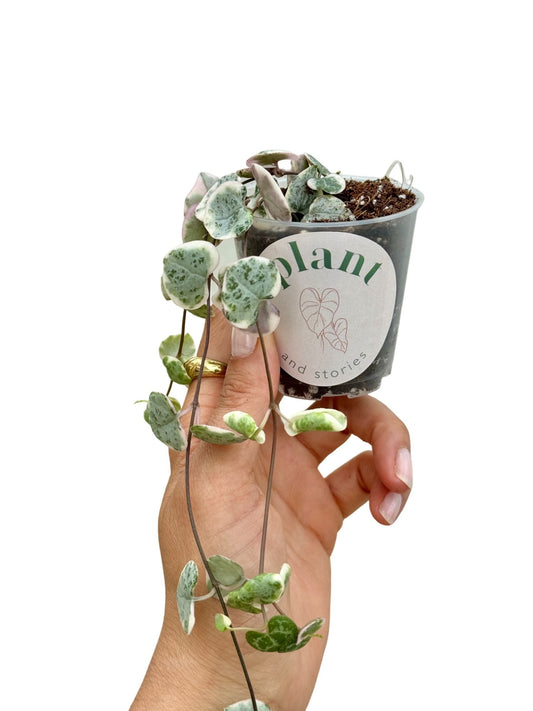
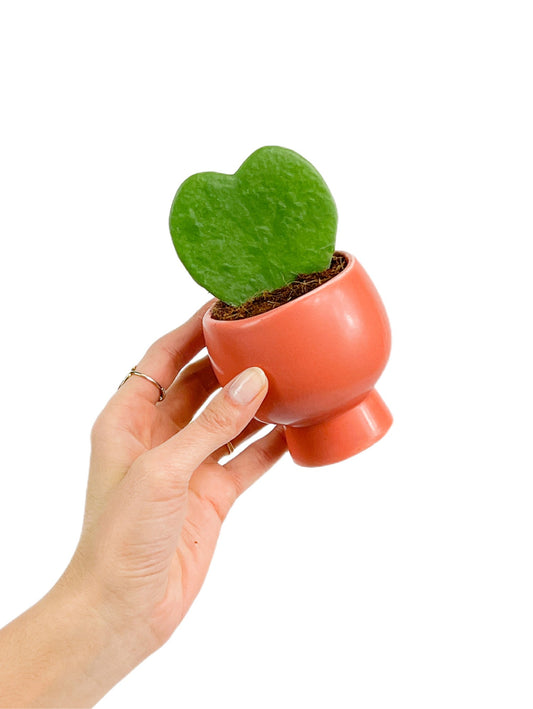
| Hanging planter | Sedum morganianum, string of pearls, Ceropegia woodii, trailing Senecio, Rhipsalis and Hoya kerrii, best known for its fleshy heart-shaped leaves: browse our hanging plants |
| Large living room plant | Jade plant and columnar euphorbias, near a bright window |
| Desk far from a window | A grow light for 14 to 16 hours a day, positioned 15–30 cm from the plants (University of Minnesota) |
| Cat or dog | Haworthia fasciata, Echeveria elegans, Sedum morganianum, Christmas cactus: Non-Toxic according to the ASPCA |
| Looking for flowers | Mammillaria and other small cacti, Kalanchoe blossfeldiana, Christmas cactus |
📐 Succulent families and their new names
Houseplants in the succulent group belong to several botanical families, and many now have a new name. Cacti (Cactaceae, nearly 2,000 species according to the University of Minnesota) are succulents among many others, as our Cacti and succulents: care guide explains.
The Crassulaceae family includes jade plants, Echeveria and Sedum; the Asphodelaceae family includes aloe and Haworthia, according to the University of Wisconsin. The same source mentions Gasteria, a genus related to Haworthia with red to orange flowers, comprising around 15 species. Euphorbia trigona is not a cactus: NC State simply describes it as cactus-like.
The snake plant, a succulent with fleshy leaves, is now classified as Dracaena trifasciata by POWO (Plants of the World Online, Kew). The string of pearls plant, long known as Senecio rowleyanus, has become Curio rowleyanus according to POWO. Finally, the ZZ plant, often grouped with succulents, is an aroid with a fleshy rhizome.
📐 The easiest indoor succulents
The easiest succulents to grow indoors are Echeveria, Haworthia, jade plants and Sedum morganianum, provided they get plenty of light and are never left waterlogged. NC State describes Echeveria as a plant that thrives with little care on a sunny windowsill. Lithops are considered relatively easy to grow indoors by the University of Wisconsin, which notes that overwatering is the main cause of early death.
To see cacti flower at home, the University of Minnesota recommends Mammillaria, Gymnocalycium, Lobivia and Rebutia, with good light, dry soil and cool nights. Find more ideas among our easy-care plants.
📐 Succulents and pets: which are toxic?
Several indoor succulents are toxic to cats and dogs, while others are not: always check the exact species. In its article on succulents, the ASPCA lists jade plants (Crassula ovata), snake plants (Sansevieria trifasciata), string of pearls plants (Senecio rowleyanus) and pencil cactus (Euphorbia tirucalli) as toxic.
On its species information pages, the ASPCA states “Toxic to Dogs, Toxic to Cats, Toxic to Horses” for Crassula argentea, a synonym of Crassula ovata according to the RHS, with vomiting, depression and incoordination listed as clinical signs (“Vomiting, depression, incoordination”).
For aloe (listed as Medicine Plant), it states “Toxic to Dogs, Toxic to Cats,” with vomiting and red-colored urine (“Vomiting, change in urine color (red)”). By contrast, it lists Haworthia fasciata, Echeveria elegans, Sedum morganianum and Christmas cactus (Schlumbergera bridgesii) as “Non-Toxic to Dogs, Non-Toxic to Cats, Non-Toxic to Horses.” However, the ASPCA lists Kalanchoe as “Toxic to Dogs, Toxic to Cats” (vomiting, diarrhea): keep it out of pets’ reach.
For more information, see our lists of non-toxic plants for cats and non-toxic plants for dogs, as well as our pet-safe plants.
📐 Can indoor succulents go outside?
Yes, most indoor succulents enjoy spending the summer outdoors, then come back inside before the cold sets in. The RHS recommends putting them outside after the last frosts. The University of Minnesota advises starting in a sheltered spot in partial shade, then gradually moving them into the sun, while avoiding the scorching sun from 11 a.m. to 3 p.m.
Bring Sedum morganianum indoors before nighttime temperatures drop below around 4°C (University of Wisconsin), and Euphorbia trigona before they fall below around 7°C (NC State). Some hardy succulents, such as houseleeks and sedums, generally spend the winter outdoors according to the RHS, while Echeveria and Aeonium need protection from frost.
For the garden, see our guides to sedums, houseleeks (Sempervivum) and Delosperma.
🗓️ The indoor succulent care calendar
An indoor succulent grows from spring through late summer, then rests from November to early March in a cool, almost dry spot. The University of Minnesota recommends increasing watering in spring as the light returns. For your entire collection, also read our guide to houseplants in winter.
📅 Seasonal care calendar
| Season | Key task |
|---|---|
| 🌸 Spring | Repot if the roots fill the pot, gradually resume watering, apply a potassium-rich fertilizer from April (RHS) |
| ☀️ Summer | Water thoroughly once the soil is completely dry, move outdoors into partial shade before gradually introducing full sun, and protect from the sun between 11 a.m. and 3 p.m. |
| 🍂 Fall | Bring indoors before cold nights, reduce watering; resume watering Lithops in late summer (Wisconsin) |
| ❄️ Winter | Rest from November to early March, nights at 8–10°C, almost no water; flowering Christmas cactus watered regularly (RHS) |
🐛 Mistakes to avoid with an indoor succulent
The most common mistakes with indoor succulents are insufficient light and overwatering, often in combination. Here’s how to avoid them.
| Mistake | Why it’s a problem | Solution |
|---|---|---|
| Watering a little, often | Repeated light watering leads to distorted growth (University of Minnesota) | Water thoroughly, then let the soil dry out completely |
| Leaving water in the saucer | Succulents rot if left sitting in water (RHS) | Empty the saucer a few minutes after watering |
| Placing the plant far from a window | Insufficient light causes weak, distorted growth (RHS) | A bright windowsill, or a grow light for 14 to 16 hours a day |
| Choosing a pot that’s too large | Excess damp soil causes rot (RHS) | A pot just slightly larger than the plant, always with drainage holes |
| Moving straight into full sun | Leaves get scorched (Universities of Wisconsin and Minnesota) | Acclimate gradually, starting in partial shade |
| Watering a Lithops while it’s renewing | Overwatering is the leading cause of early death (Wisconsin) | Wait until the old pair of leaves is dry and wrinkled |


🌿 Our indoor succulents and their care guides
Each succulent below has a complete care guide; when we stock it, the link takes you directly to the plant.
| Our selection | Why choose it |
|---|---|
| Aloe vera (Aloe) | The succulent for a sunny kitchen: our Aloe vera in a 10 cm pot |
| Jade plant (Crassula ovata) | A living-room plant that can live for a very long time and can also be shaped as an indoor bonsai |
| Euphorbia trigona (African milk tree) | A cactus-like columnar silhouette; along the same lines, our Euphorbia abyssinica in a 17 cm pot or in a 19 cm pot, a related species |
| String of hearts (Ceropegia woodii) | A cascade of little hearts: our variegated Ceropegia woodii |
| Senecio macroglossus and herreianus and Rhipsalis (mistletoe cactus) | Trailing plants for hanging baskets, with Rhipsalis more tolerant of moderate light |
| Kalanchoe | A flowering succulent, with our method for getting it to bloom again |
| Sansevieria (Dracaena trifasciata) | For a less-bright spot, with our Sansevieria and ZZ plants |
| cacti and succulents | To start a collection: our mini succulent mix in terracotta pots, our mini cactus and succulent mix, the set of 18 mini succulents with terracotta pots or the set of 30 mini succulents |
| Mixed cacti | For a bowl of little cacti: our mini cactus mix or our mini cactus set |
🔑 Indoor succulent care in brief
Good indoor succulent care comes down to three rules: as much light as possible, thorough but infrequent watering when needed, and a very well-draining mix in a pot with drainage holes. For the soil mix, the University of Minnesota suggests equal parts potting soil and coarse sand.
Drainage comes from both the hole in the pot and the soil mix: see our solutions for pots without drainage holes and how to choose between terracotta and plastic pots.
For detailed advice on watering, repotting, pests and propagation, follow our cacti and succulent care guide, and find the right mix among our potting mixes for houseplants.
✅ Our tips for growing indoor succulents successfully
To grow your indoor succulent successfully, choose one to suit your window: Echeveria, aloe, jade plants or cacti for full sun; Haworthia or forest cacti for east- or west-facing windows; trailing plants in hanging baskets near the glass. Water thoroughly, then let the soil dry out, and give it a cool, dry winter. Find all our varieties in the cacti and succulents collection.
I almost always recommend starting with a Haworthia or an Echeveria: they’re forgiving plants that teach you when to water. My main consideration is still the window, much more than the plant’s style: I’d rather have a simple succulent in a bright spot than a rare one that’s languishing in the back of a room. And I find that a summer in the garden, after proper acclimation, can transform a tired-looking succulent.

Laura Bruneau
Jardinière & autrice


