Aroid Potting Mix with Mycorrhizae: The Collectors’ Secret to Lush Plants

What if the secret to a Monstera with giant leaves lay not in the fertilizer you pour on it, but in an invisible partnership hidden beneath the surface? You may already have invested in a rare plant, only to watch it stagnate for months or, worse, succumb to dreaded root rot because of store-bought potting mix that is too dense and suffocating. This is a frustrating experience shared by many plant lovers, but it doesn’t have to be inevitable for your indoor jungle.
Discover how to radically transform your plants’ growth with a aroid potting mix with mycorrhizae. This biological technology creates a living ecosystem where symbiotic fungi act as a natural extension of the roots. Read on to learn how to grow larger, more fenestrated leaves while improving your plants’ resilience. Together, we’ll explore the secrets of this premium growing medium, compliant with the NF U 44-551 standard, which protects your collection against disease while giving it the lush vigor you dream of.
Key Takeaways
- Understand why conventional potting mixes suffocate your Monsteras and how to prevent root rot with optimal aeration.
- Discover how an aroid potting mix with mycorrhizae dramatically increases your plants’ nutrient-absorbing surface area for explosive growth.
- Learn how to encourage larger, more fenestrated leaves by nourishing the underground ecosystem of your Araceae.
- Master the precise steps for repotting to ensure immediate symbiosis between beneficial microorganisms and the roots of your rare plants.
- Discover the benefits of a living growing medium that limits disease and preserves the long-term health of your collection.
Why is your Monstera stagnating? The limitations of conventional potting mix
The Monstera Deliciosa is a jungle athlete, a powerful vine capable of climbing dozens of meters. In its natural habitat, its roots aren’t buried in heavy, compact soil. They creep over tree bark, wind through airy humus and absorb moisture from the air. This is the great paradox of Araceae: we try to grow epiphytic plants, accustomed to total freedom, in pots filled with all-purpose potting mix that is often too dense.
This confinement in an unsuitable growing medium is the leading cause of death among collector plants. Without oxygen, the roots suffocate. Water stagnates, the tissue softens and rot sets in. To prevent this, using an aroid potting mix with mycorrhizae becomes a biological necessity. Unlike sterile store-bought blends, this type of living growing medium recreates the complexity of forest humus. In nature, these plants rely on complex symbiotic relationships, particularly with arbuscular mycorrhiza, to explore the soil far beyond their own roots and maximize their genetic potential.
The ideal structure for an Aroid mix
For a Philodendron or Monstera to thrive, its growing medium needs to be “chunky.” This means it should contain pieces of bark, coconut fiber or perlite to create air pockets. Oxygen is the invisible fuel for root development. Good drainage alone isn’t enough; there must also be targeted water retention that doesn’t drown the tissue. All-purpose mixes, which are often too rich in fine peat, eventually compact over time. They form an impenetrable block that prevents roots from branching out and drawing on the resources they need to grow.
From foliage to roots: the vital connection
What happens underground is directly connected to your plant’s appearance. If your Monstera refuses to produce fenestrations (those famous splits in the leaves), it’s often because its root system is too weak to support substantial foliage. The plant then goes into survival mode. It produces small, solid leaves, often marked by dry tips or yellow spots.
Many collectors try to compensate for this lack of vigor with a heavy dose of fertilizer. This is a common mistake. Feeding a plant with stunted or suffocated roots is pointless, if not dangerous. Without an aroid potting mix with mycorrhizae to transform and transport these nutrients, the fertilizer builds up and burns delicate tissue. To see giant, split leaves emerge, you first need to build a strong, living foundation.
Mycorrhizae: the invisible ally for roots that grow many times over
The secret of rare-plant collectors doesn’t always lie in the most expensive fertilizer, but often in the unseen. A fascinating collaboration takes place beneath the surface of your pot. The term mycorrhiza refers to the symbiotic association between beneficial fungi and plant roots. By using an aroid potting mix with mycorrhizae, you’re not simply providing a growing medium. You’re introducing a true biological life-support system that transforms the way your Monstera interacts with its environment.
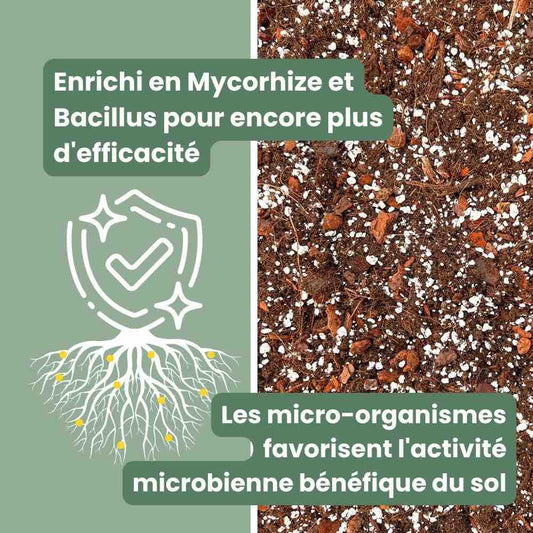
It’s a mutually beneficial exchange, a millennia-old friendship. Through photosynthesis, the plant produces sugars that it shares with the fungus. In return, the fungus sends out hyphae—extremely fine, microscopic filaments. These filaments explore areas of the growing medium that are completely inaccessible to ordinary roots, even the most vigorous ones. They act as a natural extension of the root system, multiplying the absorption surface area tenfold, or even a hundredfold. According to studies on the benefits of mycorrhizal fungi, this partnership enables plants to absorb water and minerals with remarkable efficiency, protecting them from water stress and nutrient deficiencies.
The specific role of mycorrhizae in Araceae
Araceae, such as Philodendrons and Alocasias, need plenty of phosphorus and nitrogen to develop their lush foliage. In a pot, these nutrients can quickly become difficult to access. Mycorrhizal fungi dissolve minerals trapped in the soil and deliver them directly to the plant. This help is crucial during acclimatization. After an online purchase or a stressful journey, a plant in an aroid potting mix with mycorrhizae recovers much more quickly. It establishes itself with newfound confidence because its fungal partner ensures its essential needs are met.
Bacillus and mycorrhizae: a dynamic duo
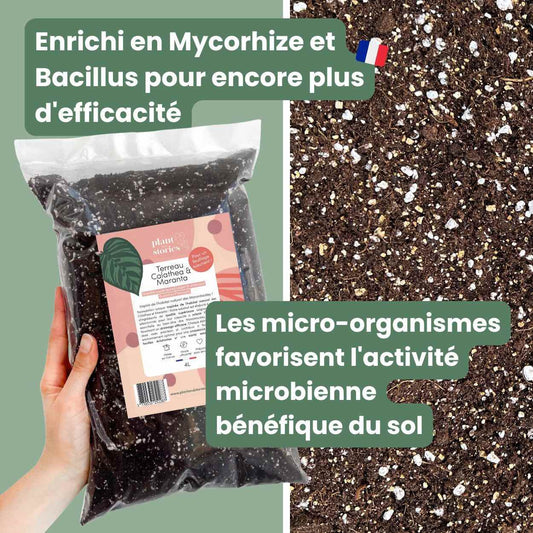
For complete protection, the action of fungi can be complemented by beneficial bacteria such as Bacillus. While mycorrhizae take care of nutrition, Bacillus acts as a bodyguard for the rhizosphere. It stimulates the plant’s natural immunity and secretes substances that inhibit the growth of pathogens responsible for rot. This duo creates living, protective soil. It drastically reduces the risk of damping-off and root diseases that terrify owners of exceptional plants. To give your plants this biological shield, choose our enriched Monstera Soil, designed to maximize this natural symbiosis.
The effectiveness of this living network also depends on the structure of your growing medium. Oxygen is essential for these microorganisms to survive. This is where the synergy comes into play: the exceptional drainage of an aroid mix lets fungi breathe and colonize the space, while mycorrhizae structure the soil by binding its particles together. It’s a virtuous cycle that ensures lasting plant health.
columns: 4
columns_mobile: 2
-

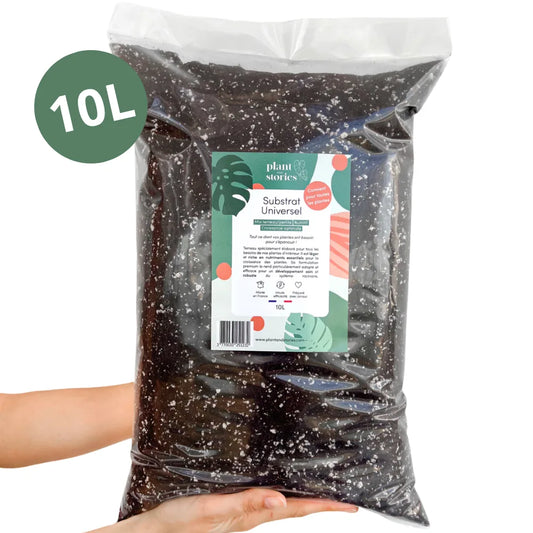
Universal Substrate enriched with Mycorrhizae and Bacillus - Premium Quality - Universal potting mix
Regular price From 9,50 €Regular price8,50 €Sale price From 9,50 € -
Live sphagnum moss - Sphagnum moss for plants - Sphagnum moss - Live sphagnum moss for plants
Regular price 9,50 €Regular price8,50 €Sale price 9,50 € -
Set of Transparent Araceae Pots - Transparent Growing Pots for Plants
Regular price From 8,97 €Regular price9,75 €Sale price From 8,97 €Sale -
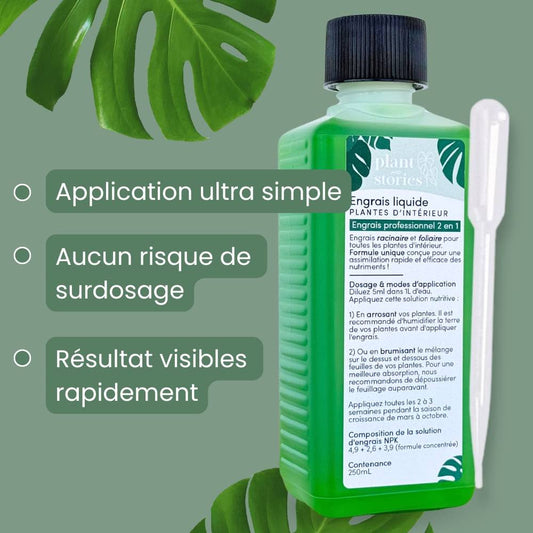
Fertilizer for All Indoor Plants - 250ml Liquid Fertilizer - Root and Foliar Fertilizer + Free Graduated Pipette!
Regular price 18,00 €Regular price20,00 €Sale price 18,00 €Sale


Living Aroid potting mix vs. inert growing medium: a comparison
Choosing a growing medium for a collector plant is a strategic decision. Many plant lovers still wonder whether it’s really necessary to invest in an aroid potting mix with mycorrhizae rather than make a conventional homemade blend. The difference isn’t visible at first glance, but it becomes obvious after just a few months. An inert growing medium is simply a physical support. A living growing medium is a growth engine.
Over a six-month period, the results speak for themselves. Research has shown that plants with 60% mycorrhizal root colonization need around 25% less water while producing 30% more dry matter. For your Monstera, this means thicker stems and leaves that won’t turn yellow if you occasionally forget to water. You’ll also need to repot less often. Living soil retains a healthy structure for longer, whereas conventional potting mix eventually becomes depleted and compacted by repeated watering.
Another major advantage is reduced reliance on chemical inputs. A study conducted in Poland proved that inoculation with mycorrhizae can reduce the use of mineral fertilizers by 50 to 75% without compromising quality. That’s a valuable benefit for your home environment and for the health of your roots, which are less exposed to mineral salt burn.
The true cost of your potting mix
The price of a premium bag can put some buyers off. Yet it’s a genuine safeguard for your rare plants. If you buy a collector Philodendron for €80, putting it in €3 bargain potting mix is a financial risk. The cost of replacing a plant or treating it with fungicide far exceeds the initial investment in an aroid potting mix with mycorrhizae. What’s more, a vigorous plant produces higher-quality cuttings, adding value to your collection if you decide to share or sell your specimens.
What to look for in a quality Aroid mix
Not all blends are equal. An excellent growing medium should be “chunky” and meet specific criteria:
- Airy structure: A generous base of pine bark and perlite to prevent compaction.
- Certified inoculation: Beware of products with unclear microorganism sourcing. A University of Kansas study found that 88% of the commercial products tested failed to produce the fungi they promised.
- Sustainable commitment: Choose peat-free blends that use coconut fiber to protect natural peatlands.
Ease of use is the final compelling reason. Making your own blend with high-quality inoculants is complex and costly. An expert, ready-to-use mix guarantees the perfect balance from day one.

How to use it: maximizing the effects of mycorrhizae when repotting
Repotting isn’t just a technical chore. It’s a ritual of renewal, a special moment when you give your plant new territory to explore. For the magic to happen, handle it gently. Start by carefully cleaning the root system. You don’t need to aggressively bare the roots; simply remove the depleted old growing medium, which could prevent direct contact with your new living mix.
Success with an aroid potting mix with mycorrhizae comes down to one golden rule: physical proximity. For symbiosis to take hold, the fungal spores must come into direct contact with living roots. When placing the plant in its pot, make sure the root system is well surrounded by the inoculated growing medium. This contact triggers the biological signal and allows the hyphae to begin their protective colonization. Once the plant is in place, the first watering acts like a switch. Use room-temperature water to activate microbial life without causing temperature shock.
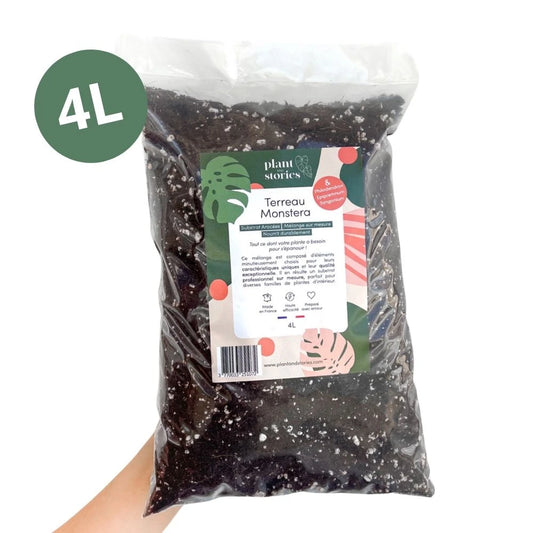
After repotting, place your plant in a bright spot, away from direct sunlight. Keep the ambient humidity stable. Your plant will devote all its energy to weaving this invisible connection underground. To help it through this transition, you can use our Monstera Soil - Enriched with Mycorrhizae and Bacillus, formulated to ensure quick, vigorous recovery.
Preserving life in your potting mix bag
A living growing medium is organic matter that breathes. Once you’ve opened the bag, the challenge is to keep the microorganisms dormant without weakening them. Heat is your main enemy. Research indicates that temperature fluctuations, particularly against the sides of pots or in bags left in the sun, can inhibit fungal activity. Store your mix in a cool, dry, dark place. Close the bag carefully to retain a little residual moisture. Ideally, use your growing medium within six months of opening to ensure the highest concentration of active spores.
Long-term care for your growing medium
Maintaining this ecosystem requires changing some habits. Synthetic chemical fertilizers, which are rich in mineral salts, are often too harsh for the fungi’s delicate filaments. They can disrupt the symbiosis. Opt for organic soil amendments or natural liquid fertilizers. Remember that once the roots are successfully colonized, you can reduce your fertilizer applications by 50 to 75% while getting better results. You’ll know your ecosystem is thriving when you see new, firm white roots—a sign of a flourishing underground partnership.
Plant & Stories Monstera Potting Mix: the best for your rare plants
At Plant & Stories, we believe every new leaf is a small victory, a moment of pure joy in your everyday life. We designed our signature blend to help make those moments happen. Our Monstera Soil - Enriched with Mycorrhizae and Bacillus isn’t just an ordinary mass-market product. It’s a living formula, created by plant lovers for collectors who refuse to let their botanical treasures stagnate in an inert growing medium. By choosing this aroid potting mix with mycorrhizae, you give your plants the premium environment they deserve.
This blend is especially recommended for the crown jewels of your collection, such as Monstera Variegata. Although stunning, these plants are often more delicate because they lack chlorophyll in their white areas. The symbiosis created by mycorrhizae provides vital stability. It allows the plant to compensate for reduced photosynthesis with greatly enhanced root efficiency. Our commitment goes beyond simply selling a product; we’ve tested and validated this formula to ensure that every bag contains the concentration of microorganisms needed to transform your growing experience.
A perfect synergy with our accessories
The well-being of an Araceae depends on a balance between soil, air and light. To maximize the benefits of our growing medium, we’ve selected tools that work in harmony with it. A Monstera that develops strong roots in living soil will naturally want to climb. Our clear plant supports provide the essential vertical structure that encourages increasingly large leaves.
For Parisian homes or apartments with limited natural light, our grow lights ensure the root-fungus symbiosis receives the light energy it needs to function. And because we know repotting can get messy, our faux-leather repotting mat lets you handle your aroid potting mix with mycorrhizae neatly and precisely, turning plant care into a truly relaxing, creative moment.
Order your tropical oasis
We pay particular attention to shipping. Every order is prepared to preserve the quality of the growing medium throughout its journey to your home, anywhere in France. Joining the Plant & Stories community also means sharing your successes and questions with fellow plant lovers on our social media, where we share tips from our mentors every day. You’re not just buying potting mix; you’re investing in the success of your urban jungle.
Give your plants the best with our enriched Monstera Potting Mix and see the difference with the next growth spurt.


Give your urban jungle a fresh start
Caring for rare plants is a pursuit of beauty and patience. You now know that the key to lush growth lies in the invisible balance of your growing medium. By leaving inert mixes behind for a aroid potting mix with mycorrhizae, you give your Monsteras and Philodendrons the biological allies they need to reach their full genetic potential. This living soil does more than nourish; it protects and strengthens every root, encouraging the growth of ever more majestic, fenestrated leaves.
Ready to transform your home into a true tropical sanctuary? Our exclusive formula, enriched with Bacillus and mycorrhizae, is already endorsed by our community of passionate collectors. We guarantee fast, secure shipping throughout France, so your cherished plants can receive this exceptional care without delay. Now is the perfect time to begin this new chapter in your plant-growing journey and watch your plants thrive like never before.
Discover Our Monstera Potting Mix Enriched with Mycorrhizae

Laura Bruneau
Jardinière & autrice