Climbing ivy (Hedera): planting, pruning and care

English ivy (Hedera) is the quintessential evergreen: virtually indestructible, it clothes a wall, fence or tree trunk in green foliage all year round, thrives where almost nothing else will grow (in shade, facing north, in poor soil) and provides immense benefits to biodiversity. Long disliked, it is in fact one of the garden’s most useful climbers, as long as you plant it in the right place.
🌿 Why plant English ivy?
Few plants are as adaptable as ivy. It grows in deep shade as well as in sun, clings to bare walls on its own with its rootlets, stays green in the depths of winter and is content with the most unpromising soils.
But its most underrated asset is its ecological value: its very late autumn flowers feed bees before winter, and its black berries are a feast for birds at the end of the cold season. The RHS (Royal Horticultural Society) ranks it among the most reliable climbers for covering a shady wall.
| Benefit | What it brings to the garden |
|---|---|
| Evergreen and virtually indestructible | green foliage all year round; withstands -20 °C and almost anything else |
| King of the shade | grows where nothing else will take hold, facing north or beneath trees |
| Clings on its own | rootlets let it climb a bare wall without support |
| A biodiversity champion | late flowers for bees, berries for birds, shelter for small wildlife |
🔎 Ivy at a glance
The genus Hedera includes several species, chiefly common ivy (Hedera helix) and its countless cultivars, often variegated. There is also Irish ivy (Hedera hibernica), a vigorous ground cover, and Persian ivy (Hedera colchica, also known as Colchic ivy), with very large leaves. All are woody evergreen climbers that cling by means of rootlets.
| Feature | Verified details |
|---|---|
| 🏷️ Botanical name | Hedera helix, hibernica and colchica |
| 🧬 Family | Araliaceae |
| 🌳 Type | woody evergreen climber |
| 🧗 How it clings | rootlets (adventitious roots): clings to bare walls on its own |
| 🌍 Native range | Europe, North Africa and western Asia |
| 🍃 Foliage | evergreen, green all year round; often variegated in cultivars |
📋 Quick care guide
The essential facts about English ivy, at a glance.
| Feature | At a glance |
|---|---|
| Position | any aspect, from full sun to deep shade; ideal for north-facing walls |
| Soil | any type, even poor, dry or chalky; highly tolerant |
| Hardiness | very hardy: -20 °C for common ivy; -12 to -15 °C for Persian ivy and variegated cultivars |
| Height | 10 to 20 m as a climber, or a dense ground cover |
| How it clings | rootlets: climbs a sound wall on its own |
| Growth | slow for the first 2 to 3 years, then fast (up to 1 to 2 m per year) |
| Flowering | unobtrusive but highly attractive to pollinators, in autumn (September–October) |
| Fruit | black berries in late winter, valuable food for birds (toxic to humans) |
| Pruning | once or twice a year to keep it in check; tolerates hard pruning |
| Toxicity | berries are toxic if eaten; sap can sometimes irritate the skin |
📍 Where and when to plant ivy: position, soil and support
Ivy thrives in absolutely any aspect, making it the answer to impossible planting spots: a north-facing wall, a dark corner, the base of a tree. Variegated cultivars prefer a little light to retain their colours, while green varieties thrive in the deepest shade. Soil is hardly a concern.
☀️ Position: any aspect; shade and north-facing spots hold no fear for it
🌱 Soil: any type, even poor, dry or chalky
🧱 Support: a sound wall is enough: it clings on its own with its rootlets
🪴 How to plant ivy, step by step
Plant preferably in autumn, so it can root before summer, or in spring. Ivy almost always takes well, whether planted in the ground or in a pot. For ground cover, space plants 50 cm to 1 m apart for quick coverage.
| Step | What to do |
|---|---|
| Choose a location | a wall, fence, tree trunk or shady spot to cover |
| Prepare the soil | dig a wide hole; ivy is happy in almost any soil |
| Position the plant | 30 to 40 cm from the support, with the root ball level with the soil and stems facing the wall |
| Guide the first growth | tie the young stems to the support; the rootlets will soon take over |
| Water | water generously during the first year while it establishes |
columns: 4
columns_mobile: 2
-


Ivy 'Glacier' (Hedera helix) - evergreen climber - 11 cm pot - Height 40 cm - Pack of 2
Regular price 39,95 €Regular price -

 Livraison offerte Sold out
English Ivy (Hedera helix) - evergreen climber - 11 cm pot - Height 40 cm - Pack of 2
Regular price 39,95 €Regular price -

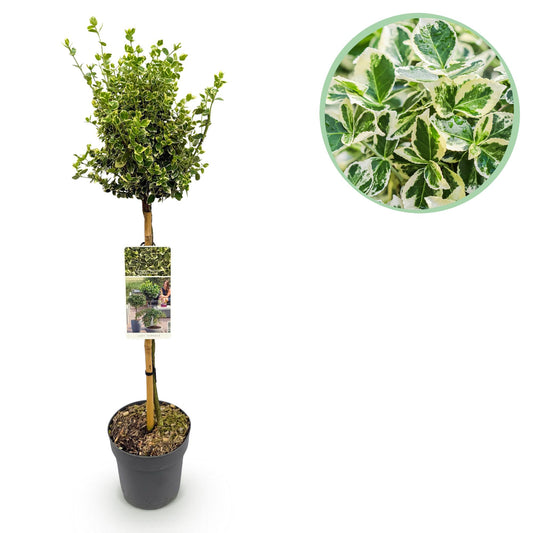
'Emerald Gaiety' Creeping Spindle (Euonymus fortunei) - spindle with decorative foliage - 19 cm pot - Height 90 cm
Regular price 69,95 €Regular price -

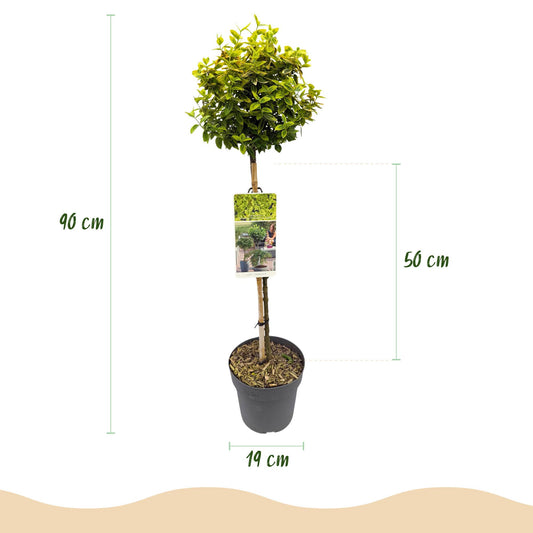
'Emerald 'n' Gold' Euonymus (Euonymus fortunei) - ornamental-foliage euonymus - 19 cm pot - Height 90 cm
Regular price 69,95 €Regular price -

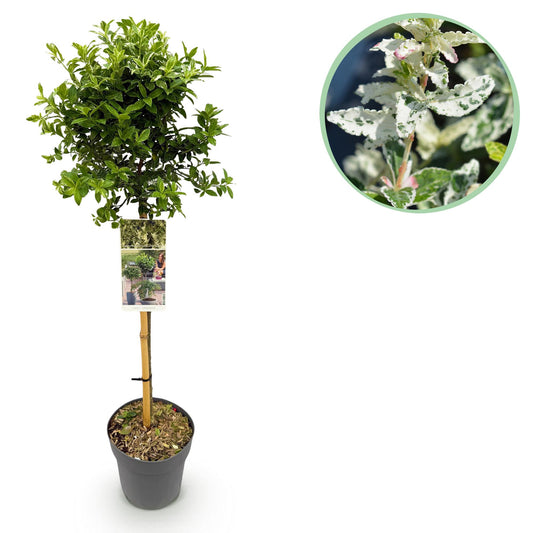
'Harlequin' Creeping Spindle (Euonymus fortunei) - spindle with decorative foliage - 19 cm pot - Height 90 cm
Regular price 69,95 €Regular price -

 Livraison offerte
Henry’s honeysuckle (Lonicera henryi) – evergreen climber
Regular price From 54,95 €Regular price -

 Livraison offerte
Irish Ivy (Hedera hibernica) - evergreen groundcover and climber
Regular price From 39,95 €Regular price


✂️ Ivy care and pruning
Once established, ivy needs almost no care beyond keeping it in check. The key is regular pruning to stop it growing where it shouldn’t.
💧 Watering: keep up with watering during the first year; after that, it is completely self-sufficient in the ground
✂️ Pruning: once or twice a year, in late winter and summer, to keep it in check; it tolerates hard pruning
👀 Keep an eye on it: stop it reaching gutters, roof tiles and windows
🪴 In a pot: water regularly, feed in spring and repot every 2 to 3 years
🍂 Ivy through the seasons
Ivy stays green and attractive all year round, but it has its highlights. Its understated flowers appear in autumn, when almost nothing else is in bloom, delighting bees and late-flying butterflies, including a wild bee that specialises in ivy, the ivy bee (Colletes hederae), active in September–October.
Worth noting: only mature ivy, with its bushy growth and unlobed leaves, flowers and sets fruit; young climbing ivy, which still has lobed leaves, will not flower for several years. The black berries ripen from late winter to early spring and feed birds during the toughest time of year. The rest of the time, ivy provides dense, uninterrupted foliage.
📅 Seasonal care calendar
| Season | Key task |
|---|---|
| 🌸 Spring | New growth begins; trim to shape; can be planted |
| ☀️ Summer | Peak growth; prune to keep it in check; water during the first year and in pots |
| 🍂 Autumn | Late flowers rich in nectar; ideal time to plant; foliage stays on |
| ❄️ Winter | Evergreen foliage remains; black berries for birds; hard pruning in late winter |
🌱 How do you propagate ivy?
Ivy is one of the easiest plants to propagate. A simple 15 to 20 cm stem cutting, taken from spring to autumn and planted in moist soil, will almost always root. Layering is even easier: a trailing stem in contact with the soil will often root on its own.
🧱 Does ivy damage walls or smother trees?
This is the big question, and the answer calls for some nuance. Ivy clings using fine rootlets that lodge in tiny irregularities in the surface, secreting an adhesive substance. On a sound, well-maintained wall with solid mortar joints, this attachment remains superficial and does not damage the masonry; it can even protect the wall from the weather.
However, on cracked render, crumbling old mortar or beneath loose roof tiles, the rootlets work their way into existing flaws and worsen damage that is already there. So reserve ivy for sound surfaces and keep an eye on it.
As for trees, ivy is not a parasite: it has its own roots in the soil and does not take sap or nutrients from the tree’s tissues; it simply uses the tree for support. On a mature, vigorous tree, it is harmless and even beneficial to wildlife.
It is best to avoid letting it take over a young tree or one that is already weakened, as it could compete with it for light and water, add weight and make it more exposed to the wind.
🐛 Common problems: vigorous growth, walls and pests
Ivy is exceptionally tough; its few problems are usually due to its vigorous growth or the way it has been established.
| Symptom | Likely cause | Solution |
|---|---|---|
| Becomes too invasive | ⚠️ natural vigour once established | prune once or twice a year and keep it in check from the outset; to remove it from a wall, cut the stem at the base, leave the rootlets to dry for a few weeks, then brush them off |
| Rootlets leave marks on a fragile wall | ⚠️ cracked render or crumbling mortar | reserve ivy for sound walls; do not tear the stems off abruptly |
| Variegated leaves turn green | ☀️ not enough light | give variegated cultivars a brighter position |
| Cottony clumps or webbing on the foliage | 🐛 scale insects or spider mites in dry conditions | hose the foliage down, treat with soft soap and improve ventilation |
-

Clematis, wisteria, passionflowers, climbing roses and star jasmine to adorn walls, pergolas...
-

Nectar-producing plants & pollinators
Provide food for bees, bumblebees, and butterflies: our selection of outdoor nectar-rich...


🌸 Our ivy varieties
Choose based on foliage colour and vigour: here are some reliable favourites.
| Variety | Its main appeal |
|---|---|
| Hedera helix | green common ivy, the hardiest and most coverage-friendly, king of the shade |
| Hedera helix 'Goldheart' (Oro di Bogliasco) | green leaves with a golden-yellow centre, bringing light to a dark wall |
| Hedera helix 'Glacier' | foliage variegated grey-green and creamy white, elegant and compact |
| Hedera helix 'Green Ripple' | finely cut, puckered leaves for a striking graphic effect |
| Hedera hibernica | Irish ivy, vigorous and ideal as ground cover over a large area |
| Hedera colchica | Persian ivy (or Colchic ivy), with very large leaves for a spectacular effect; slightly less hardy |
🎨 Where to grow it, in the ground or in a pot
Ivy covers all kinds of places: a large north-facing wall, a wire fence, a tree trunk or a shady bank where it spreads as a carpet. It also grows very well in pots or hanging baskets, where its stems trail gracefully over a balcony, even one with little light, making it one of the few evergreens genuinely suited to dark corners.
To pair it with a flowering climber, plant a climbing honeysuckle a little way away, and explore all the options in our climbing plants collection.
⚠️ Ivy and toxicity: what you need to know
Ivy’s black berries are toxic to humans if eaten (they contain saponins), although birds can consume them without any problem. The effects are mainly digestive, and serious poisoning is rare because the very bitter taste puts people off eating them, but they should still be kept out of reach of young children and pets.
The more common risk is actually contact dermatitis: the sap contains falcarinol, which can irritate the skin or trigger a reaction during pruning, so it is a good idea to wear gloves. On the plus side, for people with pollen allergies, ivy is insect-pollinated and its pollen is unlikely to cause respiratory allergies.
The Missouri Botanical Garden confirms that it is toxic if eaten.
✅ Our expert tips for success
Ivy is much more than a plant for shady corners: it is an indestructible wall cover, a refuge for biodiversity and one of the few evergreens that truly thrives facing north. Give it a sound support, prune it once or twice a year to keep it in its place, and it will clothe your garden for decades with hardly any care.
To compare it with other climbers, consult our climbing plants guide.
Ivy has a largely undeserved bad reputation. No, it does not destroy a sound wall; no, it does not strangle a vigorous tree. On the contrary, it is one of the gardener’s best allies for greening a north-facing façade and feeding wildlife when everything else is dormant. My only rule: reserve it for walls in good condition, prune it without hesitation, and let it flower in autumn for the bees. It is a native plant and one of the most valuable for biodiversity.

Laura Bruneau
Jardinière & autrice