

Mediterranean Spurge (Euphorbia characias): Planting and Care

To successfully grow a garden euphorbia, plant it in spring in very well-drained soil, in full sun for Mediterranean species, water sparingly once established, and cut flowering stems back to the base, always wearing gloves because of the latex.
The best-known species, Euphorbia characias, is an evergreen perennial native to the Mediterranean basin, a mainstay of the dry garden and our guide to Mediterranean plants. The genus Euphorbia includes more than 2,000 species; this guide covers hardy euphorbias grown outdoors in the ground.
For indoor, cactus-like euphorbias, see our guide to Euphorbia trigona, the African milk tree.
Here, we detail how to choose a species for your needs, the actual hardiness of each, pruning, propagation, and latex safety, with information verified against sources from Kew, the RHS, NC State Extension, and Anses.
🌿 Why plant a euphorbia in your garden
Euphorbias offer an architectural shape year-round and very early, vivid blooms; according to the RHS, E. characias flowers from early spring.
What we take to be flowers are actually bracts: NC State Extension explains that each euphorbia “flower” is a cyathium, a small, petal-free structure surrounded by colorful bracts and nectar glands.
Once established, E. characias is drought-resistant, and NC State Extension describes it as deer-resistant and attractive to pollinators. Finally, the diversity of the genus means there is a euphorbia for almost every situation, from a sun-baked bank to dry shade beneath trees.
| Benefit | What it means for your garden |
|---|---|
| Very early flowering | Yellow-green flower heads from early spring to early summer, just as the flower bed is waking up |
| Drought resistance | Once established, E. characias needs almost no watering in well-drained soil |
| Decorative foliage | Evergreen blue-green foliage on characias and myrsinites; red foliage in autumn on E. epithymoides |
| A species for every situation | Dry sun, a moist border, dry shade, or a rock garden: the genus covers all these uses |
🔎 Garden euphorbia at a glance
According to Plants of the World Online (POWO) from the Royal Botanic Gardens, Kew, Euphorbia characias L., published by Linnaeus in 1753, is the accepted name for the species; it is a subshrub in the spurge family (Euphorbiaceae), from the temperate biome.
Its native range includes Spain, Portugal, France, Corsica, Sardinia, Italy, Sicily, the Balearic Islands, Albania, Greece, Crete, Turkey, Morocco, and Libya; POWO lists it as introduced in Germany, Great Britain, and New Zealand.
Kew recognizes two subspecies, characias and subsp. wulfenii, found from southern France to western Turkey.
According to the RHS (Royal Horticultural Society), it is an evergreen perennial with biennial stems, growing 1 to 1.5 m tall and wide when mature, which takes 2 to 5 years; NC State Extension describes it as growing 2 to 3 feet (about 0.6 to 0.9 m) tall.
| Feature | Verified details |
|---|---|
| 🏷️ Botanical name | Euphorbia characias L. (1753); subsp. characias and subsp. wulfenii |
| 🧬 Family | Euphorbiaceae, like castor bean |
| 🌳 Type | Evergreen perennial or subshrub with biennial stems |
| 🌍 Origin | Mediterranean basin, including France and Corsica, according to Kew |
| ❄️ Hardiness | RHS H4: -10 to -5°C (14 to 23°F); other species range from H4 to H6 |
| 🍃 Foliage | Evergreen, blue-green, with narrow leaves up to 15 cm long |
| 🌸 Flowering | Early spring to early summer, with yellow-green bracts |
| 📏 Mature size | 1 to 1.5 m in all directions according to the RHS, reached in 2 to 5 years |
📋 Quick growing guide
Essential growing information at a glance.
| Growing requirement | Guideline |
|---|---|
| Exposure | Full sun for characias and myrsinites; partial shade to shade for robbiae |
| Soil | Well-drained: chalky, loamy, or sandy; acidic to alkaline pH; never waterlogged |
| Hardiness | Characias H4 (-10 to -5°C / 14 to 23°F); myrsinites H5; epithymoides and robbiae H6 (RHS) |
| Watering | At planting and while establishing, then sparingly: a drought-resistant plant |
| Planting | In spring, when the soil is warming and moist, ideal for rooting |
| Pruning | Cut spent stems back to the base in summer or autumn |
| Flowering | Yellow-green bracts from early spring to early summer |
| Care | Easy in well-drained soil; challenging in heavy, wet soil |
| Toxicity | Latex irritates skin and eyes and is harmful if swallowed: wear gloves and goggles |
📍 Where and when to plant a euphorbia
The right location depends on the species: the RHS euphorbia growing guide groups euphorbias by growing conditions. E. characias and its subspecies wulfenii need full sun, and the RHS recommends a sheltered south- or west-facing position for wulfenii; E. myrsinites thrives only in full sun, in a rock garden or a pot.
E. epithymoides tolerates sun or partial shade, while the RHS recommends E. amygdaloides var. robbiae for dry shade. When it comes to hardiness, don't treat all species alike: according to the RHS hardiness scale, H4 corresponds to -10 to -5°C (14 to 23°F), H5 to -15 to -10°C (5 to 14°F), and H6 to -20 to -15°C (-4 to 5°F).
As for timing, the RHS recommends planting in spring, when moist soil and warmer temperatures encourage the plants to establish, especially euphorbias with blue or silver foliage.
☀️ Ideal: Characias, wulfenii, and myrsinites: south-facing, rocky or sandy soil, a dry border, or a bank
🌳 Dry shade: E. amygdaloides var. robbiae beneath trees, where few perennials thrive
🚫 Avoid: Waterlogged clay soil in winter, damp hollows, or a sunless spot at the bottom of the garden for characias
🪴 Planting a euphorbia in the ground or in a pot
Mediterranean euphorbias do well in poor soil: NC State Extension says it tolerates acidic, neutral, or alkaline pH and is suited to rocky or shallow soils, provided drainage is good.
In heavy soil, improve the drainage substantially with gravel or choose a more tolerant species such as E. epithymoides, which the RHS accepts in well-drained clay soil. For pots, the RHS recommends E. myrsinites and a mix of 3 parts peat-free soil-based potting compost (such as John Innes No. 3) to 1 part grit.
| Step | What to do |
|---|---|
| 1. Choose the right time | In spring, when the soil has warmed but is still moist, never waterlogged |
| 2. Prepare the soil | Loosen a wide area and mix in gravel if the soil is heavy |
| 3. Set the root ball in place | At the same level as in the container, without burying the crown, and wear gloves |
| 4. Backfill and mulch | Use the original soil, then add a mineral mulch (gravel) to keep the crown dry |
| 5. Water | Water thoroughly at planting, then only while the plant is establishing during dry weather |
columns: 4
columns_mobile: 2
-

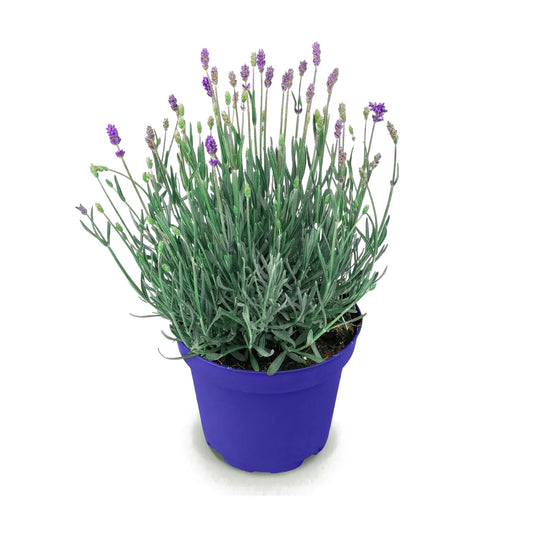
Lavender 'Hidcote' (Lavandula angustifolia) - fragrant honey-producing perennial - 12 cm pot - Height 25 cm
Regular price From 34,95 €Regular price34,95 €From 27,96 €Livraison offerte -

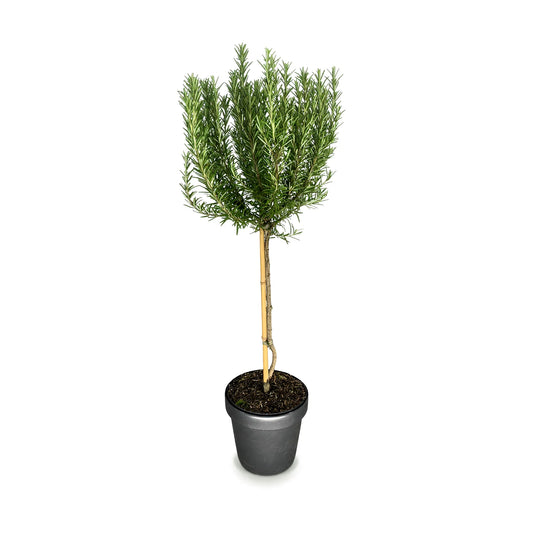
Rosemary (Rosmarinus officinalis), Mediterranean perennial, purple flowers, 19 cm pot, Height 90 cm
Regular price 69,95 €Regular price69,95 €55,96 €Livraison offerte -

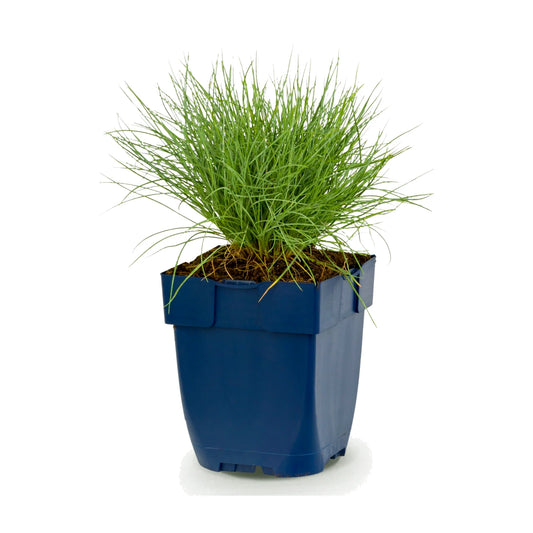
Blue fescue (Festuca glauca) - grass with blue-tinted foliage - 11 cm pot - Height 25 cm
Regular price From 39,95 €Regular price39,95 €From 31,96 €Livraison offerte -

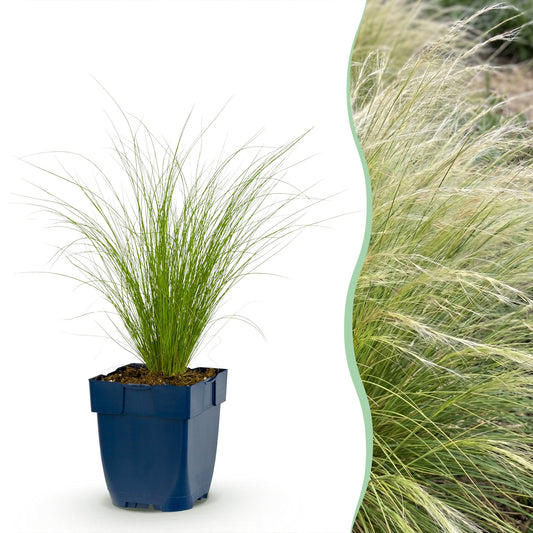 Livraison offerte Sold out
Angel's hair 'Ponytails' (Stipa tenuissima) - ornamental grass - 11 cm pot - Height 25 cm
Regular price From 39,95 €Regular price39,95 €From 31,96 €Livraison offerte Sold out -
‘Red Carpet’ Thyme (Thymus) – aromatic perennial – 11 cm pot – height 25 cm
Regular price From 39,95 €Regular price39,95 €From 31,96 €Livraison offerte -

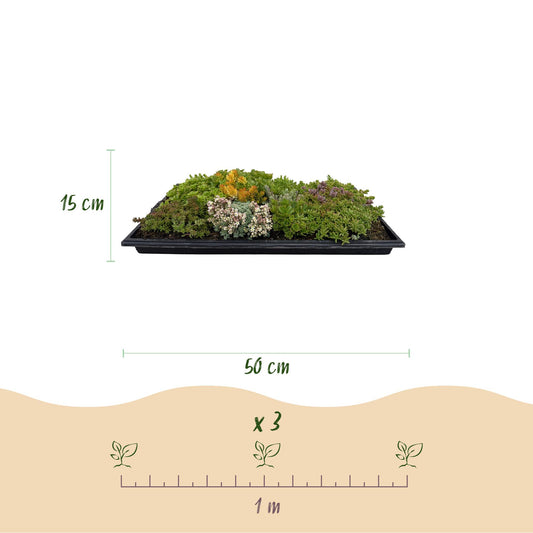
Sedum Mat (10 species) – Perennial succulent ground cover – Pack of 2 – Height: 20 cm
Regular price 69,95 €Regular price69,95 €55,96 €Livraison offerte -

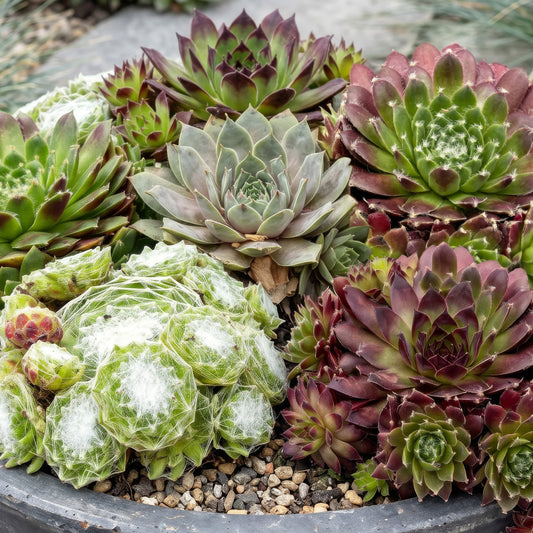
Cobweb Houseleek ‘Big Sam’ (Sempervivum) – evergreen succulent ground cover – 7 cm pot – height 10–12 cm
Regular price From 44,95 €Regular price44,95 €From 35,96 €Livraison offerte -

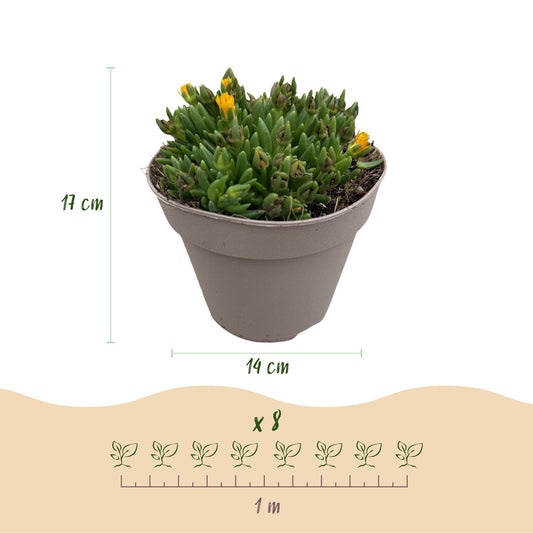
Perennial ice plant (Delosperma) – flowering ground cover – 14 cm pot – height 17 cm
Regular price From 49,95 €Regular price49,95 €From 39,96 €Livraison offerte


✂️ Euphorbia care: watering, soil, and pruning
Once established, Mediterranean euphorbias need very little care: the RHS lists E. characias among drought-resistant plants, and NC State Extension describes it as low-maintenance. Water only during the first season, or in prolonged dry spells; in a pot, wait until the mix has dried on the surface.
None of the authoritative sources consulted recommends fertilizer: overly rich soil offers no benefit to these plants of poor soils. The key task is cutting back spent stems, as detailed below, always wearing gloves and goggles.
💧 Watering while establishing: During the first season only, in dry weather, without waterlogging the soil
💧 Watering established plants: Unnecessary for characias in the ground; in pots, water when the mix has dried out
🌱 Fertilizer: Not needed; poor, well-drained soil is preferable
✂️ Pruning: Cut stems that have flowered back to the base in summer or autumn
🔹 Self-seeding: Remove seedlings while young if they are in the wrong place, or allow the clump to renew itself
🍂 Pruning euphorbias: when and how to cut back the stems
Each stem of E. characias lives for two years: it grows foliage in the first year, flowers in the second, then turns yellow and dries out. The profiles for Euphorbia characias, E. epithymoides (syn.
E. polychroma) and E. amygdaloides var. robbiae all recommend cutting flowering stems to ground level in late summer or autumn.
For wulfenii, the RHS guide specifies selectively removing fading flowering stems at the base, while leaving the dome of young, non-flowering stems that will bear the following year's flowers. The NC State Extension profile for wulfenii recommends cutting stems back to the base after flowering to encourage new growth.
E. myrsinites, on the other hand, needs no pruning according to the RHS. Wear gloves, long sleeves, and goggles: every cut releases a generous flow of latex.
📅 Seasonal care calendar
| Season | Key task |
|---|---|
| 🌸 Spring | Planting; flowering of characias, wulfenii, and myrsinites; dividing herbaceous perennials |
| ☀️ Summer | End of flowering; cut spent stems back to the base; water young plants only |
| 🍂 Autumn | Final cuts of faded stems; red foliage on E. epithymoides; remove seedlings in the wrong places |
| ❄️ Winter | Evergreen foliage on characias and myrsinites; watch for excess moisture around the base |
🌱 Propagating euphorbias from cuttings and by division
Three methods work. Division is suitable for perennial species: the RHS recommends dividing characias and epithymoides in early spring, and robbiae in spring.
For cuttings, use short shoots from the base in spring or early summer; the RHS recommends dipping the cut ends in charcoal or warm water to stop the latex from flowing, while NC State Extension advises letting the cuttings dry for a few days before planting to prevent rot.
Finally, species can be grown from seed, but cultivars do not come true from seed, the RHS notes.
🐛 Common problems: causes and solutions
Garden euphorbias are robust, but the RHS euphorbia growing guide lists several problems: root rot in wet soil, powdery mildew, aphids that distort shoots, and rust diseases.
Some species spread by rhizomes and can become invasive: the RHS says robbiae can become troublesome if not contained, and NC State Extension reports that E. myrsinites is considered a noxious weed in the western United States. Finally, stems that turn yellow after flowering are usually a normal part of the life cycle of characias.
| Symptom | Likely cause | Solution |
|---|---|---|
| Stems turn yellow and dry out after flowering | ⚠️ The normal end of life for characias' biennial stems | Cut these stems back to the base, wearing gloves |
| Soft crown, plant collapsing | 🍄 Root rot in wet or heavy soil | Replant in very well-drained soil, on a mound or in a rock garden |
| White coating on the leaves | 🍄 Powdery mildew | Remove affected parts and improve airflow around the clump |
| Sticky, distorted shoots | 🐛 Aphids | Spray with water, encourage beneficial insects, and remove heavily affected shoots |
| Orange or brown pustules on the undersides of leaves | 🍄 Rust | Remove affected leaves and avoid wetting the foliage |
| Euphorbia taking over the flower bed | ⚠️ Rhizomes (robbiae) or self-seeding (characias, myrsinites) | Remove offshoots and seedlings, and cut stems before they set seed |
-

Cover the ground with ease: our outdoor ground cover plants blanket slopes,...


🌸 Garden Euphorbia Varieties
We do not currently offer euphorbias in our store. Here are the garden euphorbias documented by the RHS and NC State Extension, grouped by use; commercial names without an authoritative profile are not described here.
| Variety | Its strengths |
|---|---|
| Euphorbia characias | Sun and dry soil: evergreen perennial, 1–1.5 m tall, with yellow-green bracts in spring, H4 (-10 to -5 °C) |
| E. characias subsp. wulfenii | Sun, sheltered south- or west-facing spot: subshrub, 1–1.5 m tall, with large rounded yellow-green flower heads, H4 |
| E. epithymoides (syn. E. polychroma) | Sunny or partially shaded border: deciduous mound about 45 cm tall; tolerates well-drained clay; H6 (-20 to -15 °C) |
| E. amygdaloides var. robbiae | Dry shade: evergreen ground cover, 50 cm tall, spreads 1–1.5 m by rhizomes, H6, AGM award |
| E. myrsinites | Rock garden and containers: trailing, glaucous blue stems, 35 cm long, 10 cm tall; H5 (-15 to -10 °C), AGM award |
| 'Jimmy Platt' | A selection of wulfenii recommended by the RHS for sandy, very well-drained, sunny sites |
🎨 What to Plant with Euphorbia
In full sun, Euphorbia characias provides structure in a Mediterranean border: its yellow-green flower heads appear in spring before lavender blooms and complement rosemary, while grasses such as feather grass or fescue soften the overall effect.
In a rock garden or dry border, E. myrsinites pairs well with sedum and delosperma, which share its need for good drainage.
In dry shade, pair E. amygdaloides var. robbiae with shade-loving perennials and carex, or use it among ground-covering perennials.
Find more ideas among our Mediterranean plants to pair with Euphorbia, in our Ground Covers and Perennial Borders collections, or among our outdoor plants.
⚠️ Is Euphorbia Toxic to People and Animals?
Yes, and this is the main point to be aware of.
For people, Anses (the French Agency for Food, Environmental and Occupational Health & Safety) states that the plant contains toxic sap that irritates the eyes, skin and mouth. Skin contact may cause redness, a burning sensation and blisters 8 to 12 hours later; eye exposure may cause swollen eyelids, severe pain, redness and potentially more serious damage; ingestion may cause a burning sensation, excessive salivation or throat swelling.
According to the July 2025 Vigil'Anses bulletin, which analyzes poison control center cases from 2012 to 2021, euphorbias were the second-leading cause of plant poisoning, accounting for 4.2% of cases of moderate to high severity. The RHS summarizes the risks as skin and eye irritation and harm if ingested.
According to Anses, rinse exposed areas thoroughly with water and wash clothing; wear gloves, protective clothing and goggles when pruning or handling the plant.
For animals, the ASPCA (American Society for the Prevention of Cruelty to Animals) has no profile for these garden euphorbias; its Pencil Cactus profile concerns a different species, E. tirucalli, classified as toxic to dogs, cats and horses because of its irritating sap (mouth and stomach irritation, sometimes vomiting)—a toxicity the ASPCA considers generally overstated.
NC State Extension rates E. characias as low in toxicity, but notes that its sap can cause mild to severe contact dermatitis and temporary to permanent corneal damage, and advises keeping the plant away from animals and children.
✅ Our Expert Tips for Success
Growing garden euphorbia successfully comes down to four rules: choose the right species for the right spot, use soil that never stays waterlogged, water very little once established, and cut flowering stems back to the base. Check hardiness species by species, from H4 for characias to H6 for epithymoides and robbiae.
Above all, always wear gloves and goggles when handling it, and plant it away from areas where young children play or walk. To plan the rest of your planting, continue with our dry garden guide.
For me, Euphorbia characias is the plant that kicks off the season in a dry garden: its lime-green flower heads brighten borders when almost nothing else is growing. I always plant it in stony soil, and I've learned never to prune it without gloves and goggles, because even a drop of sap in the eye can be disastrous. I let a few self-sown seedlings replace older plants, and pull out the others while they are still small. In dry shade, Euphorbia robbiae has been a lifesaver where nothing else would grow.

Laura Bruneau
Jardinière et autrice


