When should you fertilize your houseplants?

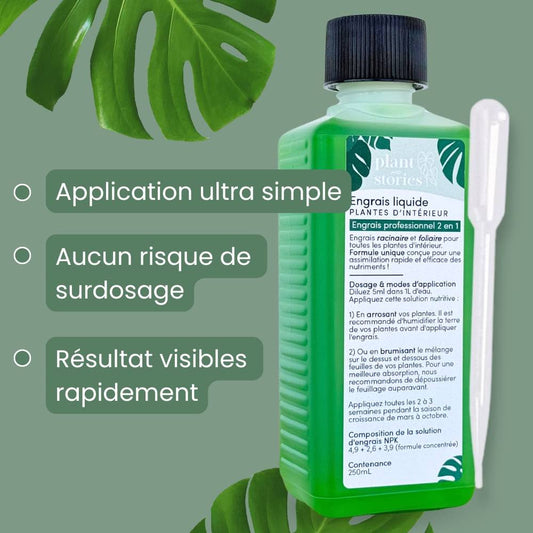
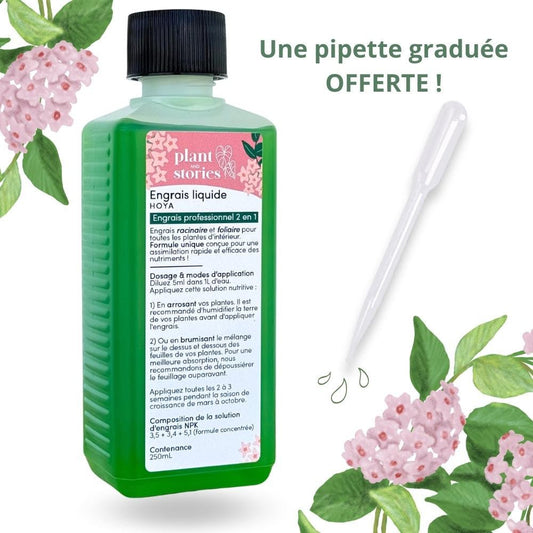
Fertilize houseplants only when they are actively growing—that is, from spring to late summer—and stop in autumn and winter. The rule fits in one sentence: feed your plants during the growing season, at a reduced dose, and let them rest in winter. Find what they need in our range of fertilizers and plant care products.
This guide explains when to fertilize, how often and at what dose, how to recognize what your plant needs and avoid over-fertilizing, which is more dangerous than underfeeding.
When should you fertilize your plants?
The golden rule is to fertilize only when a plant is actively growing. Plants use added nutrients only when they are producing new leaves and roots.
According to University of New Hampshire Extension, you should put the fertilizer away from October until spring, because most houseplants go through a dormant period in winter, when growth slows due to a lack of light. March is a good time to start fertilizing again. In practice, the fertilizing season therefore runs from early spring to late summer.
Feeding a dormant plant does not help it: nutrients build up in the potting mix as salts, which eventually damage the roots. It is best to respect this natural cycle, which follows the light and the seasons.
How often should you fertilize?
How often you fertilize depends mainly on the type of fertilizer you use, and varies considerably from one product to another. There is no universal schedule.
As Iowa State University Extension notes, application frequency depends on the product and ranges from once every two weeks to once every three to four months: read and follow the label instructions carefully. Liquid fertilizer is often applied every two to four weeks during the growing season, while slow-release fertilizer is applied only a few times a year. The rule is to follow the directions.
| Type of fertilizer | Typical frequency |
|---|---|
| Liquid | Every 2 to 4 weeks during the growing season |
| Slow-release (granules) | A few times a year |
| Fertilizer spikes | As directed, often every 1–2 months |
| Winter | None, with a few exceptions |
The question I hear most often is, “Am I not fertilizing enough?” Almost never—the opposite is what causes problems. Too much fertilizer burns the roots and leaves a white crust of salts on the potting mix. My rule: I start in March at half strength, feed through spring and summer, and stop altogether in autumn. A plant allowed to rest in winter comes back much more vigorous in spring. Less is often better.
| Season | Fertilizing |
|---|---|
| Spring | Resume around March, at half strength |
| Summer | Peak season, on a regular schedule |
| Autumn | Reduce, then stop |
| Winter | Rest period, no fertilizer |
How much fertilizer should you use?
The key is moderation: it is better to use too little than too much. Houseplants grow more slowly than garden plants, for which recommended amounts are often calculated, and a plant can live a long time with slightly too little fertilizer, but never with far too much.
Iowa State University Extension recommends diluting general-purpose fertilizers to half or a quarter of the stated dose, because houseplants grow more slowly. For a fertilizer formulated specifically for houseplants, follow the concentration on the label. At the start of the season, many gardeners even begin with half-strength applications until the plant is well and truly growing again.
columns: 4
columns_mobile: 2
-
Pon - Hydroponic mineral substrate for plants - Hydroponic plant cultivation
Regular price From 6,50 €Regular price6,50 €Sale price From 6,50 € -
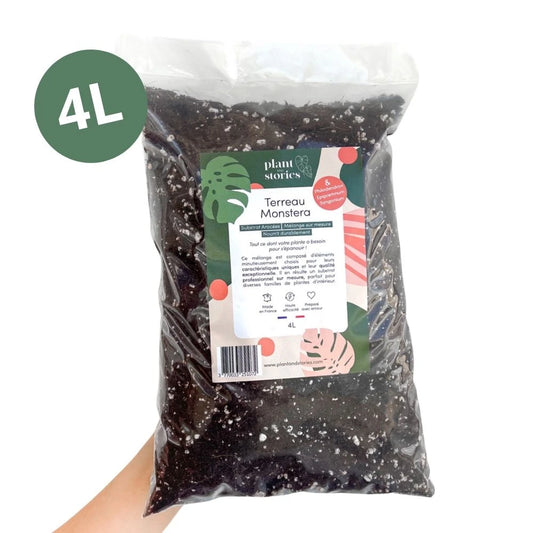
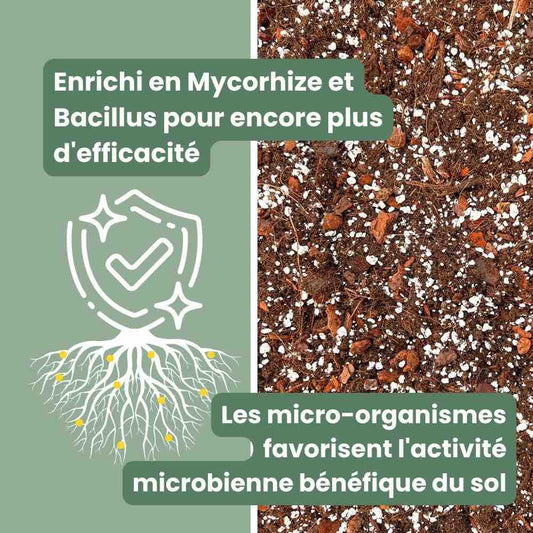
Monstera Soil - Enriched with Mycorrhiza and Bacillus - Araceae Substrate
Regular price From 9,50 €Regular price23,75 €Sale price From 9,50 €Sale -
Hoya Premium Potting Soil - Enriched with Mycorrhizae and Bacillus - Made in France
Regular price 11,99 €Regular price11,99 €Sale price 11,99 € -
Duo - Universal Substrate 10L + Universal Liquid Fertilizer 250ml + free graduated pipette
Regular price 32,00 €Regular price37,00 €Sale price 32,00 €Sale





How can you tell if a plant needs fertilizer?
A plant that needs fertilizer will show signs, but these can sometimes be confused with other problems. It is important to interpret them with care.
Signs of nutrient deficiency include slow growth during the growing season, pale or small leaves, yellowing of the oldest leaves, and stretched stems. Conversely, a plant that is dormant in winter or has just been repotted into fresh, pre-fertilized potting mix does not need fertilizer. Fresh potting mix from the store generally contains enough nutrients for the first few weeks. Keep in mind, too, that these deficiency symptoms are very similar to those caused by insufficient light or watering problems: before adding fertilizer, it is best to check that the plant is getting enough light and that the potting mix is properly moist, because feeding a plant that is actually suffering from something else will only add further stress to its roots.
| Sign | What it may mean |
|---|---|
| Pale leaves, slow growth in summer | Possible need for fertilizer |
| Older leaves turning yellow | Possible deficiency |
| Plant dormant in winter | No fertilizer needed |
| Recently repotted | Wait before fertilizing |
Which type of fertilizer should you choose?
Houseplant fertilizers come in several forms, each with its own advantages. The choice depends mainly on your routine and the ease of use you are looking for.
Liquid fertilizer, diluted in watering water, is the most common and easiest to measure precisely, making it ideal for adjusting throughout the season. Slow-release fertilizer, in granules or spikes, releases nutrients gradually over several weeks or months: convenient, but less precise. Some people prefer gentler organic fertilizers, while others choose more concentrated mineral formulas. For most foliage plants, a balanced fertilizer works very well.
| Fertilizer form | Main advantage |
|---|---|
| Liquid | Precise dosing, easy to control |
| Slow-release | Convenient, fewer applications |
| Organic | Gentle, improves the soil |
| Mineral | Concentrated, fast-acting |
Special cases
Not all plants follow exactly the same schedule: some species are exceptions to the winter dormancy rule. It is useful to know which ones.
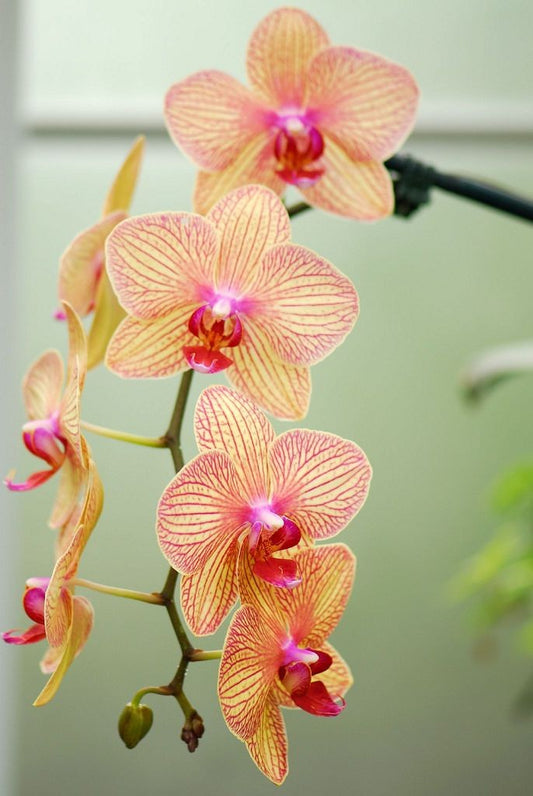
Plants that flower in winter, such as some orchids or Christmas cacti, grow out of season and can be given a light feeding while flowering. Succulents and cacti, adapted to nutrient-poor environments, need only one or two light feedings a year. Conversely, very fast-growing plants appreciate slightly more regular feeding during the growing season. When in doubt, observe the plant and adjust accordingly.
📋 Quick reference guide (for experienced gardeners)
Key guidelines for fertilizing your plants, at a glance.
| Parameter | Guideline |
|---|---|
| Season | Spring to late summer |
| Start | Around March, at half strength |
| Stop | Autumn and winter |
| Liquid fertilizer frequency | Every 2 to 4 weeks |
| Dose | Half to a quarter strength for a general-purpose fertilizer |
| Main risk | Over-fertilizing (salt buildup, burned roots) |
| Dry potting mix | Never fertilize when it is dry |
| Recently repotted | Wait a few weeks |
How to recognize over-fertilizing
Over-fertilizing is more common and more damaging than underfeeding. It can be identified by a few characteristic signs that you should know how to spot.
A white or yellowish crust of salts on the surface of the potting mix or around the rim of the pot is the clearest sign. Other signs include brown, dried-out leaf tips, wilted foliage despite proper watering, and weak, leggy growth. If you have over-fertilized, you can flush the potting mix thoroughly with clean water to wash out the salts, then stop fertilizing for a while.
| Sign of excess | What to do |
|---|---|
| White crust of salts | Flush the potting mix with clean water |
| Brown leaf tips | Stop fertilizing |
| Weak, leggy growth | Reduce the dose |
| Wilted foliage, soil is fine | Check for over-fertilizing |


Diagnosis: good fertilizing habits
To sum up, here are the habits that will help you avoid the most common mistakes.
| Good habit | Why |
|---|---|
| Fertilize only during the growing season | The plant actually uses the nutrients |
| Dilute the fertilizer | Avoid burning the roots |
| Water before feeding | Distribute the fertilizer gently |
| Observe the plant | Adjust to its actual needs |
To feed your plants at the right time, explore our range of fertilizers and plant care products and our enriched potting mixes, carefully selected in France.
Healthy, well-fed plants with Plant and Stories
Good fertilizing is above all a matter of timing and moderation: feed during the growing season, at a reduced dose, and let the plant rest in winter. Keep in mind that too much does more harm than too little, and you will give your plants healthy, steady growth.
To learn more, explore our houseplants and plant care products, carefully selected in France. By aligning your feeding schedule with the changing seasons, you can support your plants exactly when they need it, without ever exhausting them.

Laura Bruneau
Jardinière & autrice