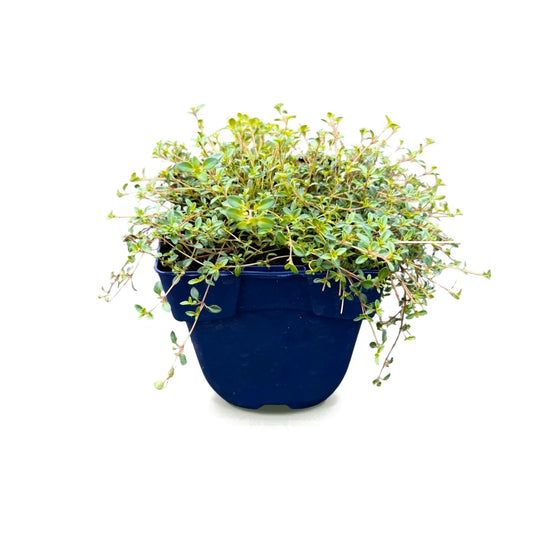
Delosperma (hardy ice plant): planting, care, hardiness

To grow Delosperma successfully, plant it in full sun in poor, very well-drained soil (rock garden, stone wall, slope, green roof or pot with drainage holes). Water only while it establishes, do not prune it, and protect it above all from winter damp.
Sold as perennial purslane or ice plant, this succulent ground cover forms a 10 cm-high mat covered in pink, purple, yellow, orange or white flowers. Note: its cold hardiness varies greatly from one species to another, so we list it here species by species.
It naturally complements our guide to ground-cover perennials for a low-maintenance flower bed. This guide draws on the RHS, Kew botanists, NC State Extension and the University of Arkansas, then covers planting, overwintering, propagation by cuttings and varieties.
🌿 Why plant perennial purslane
Perennial purslane transforms the driest, hottest spots in the garden into a carpet of flowers.
According to the RHS (Royal Horticultural Society), Delosperma cooperi forms an evergreen mat of fleshy, cylindrical leaves no more than 5 cm long and bears bright purplish-pink flowers up to 5 cm across from mid- to late summer.
According to North Carolina State University Extension (NC State Extension), its drought tolerance is very high and its salt tolerance moderate; the University of Florida reports no serious pest or disease problems. It therefore fills the crevices in stone walls, rock gardens and paving edges where few perennials thrive.
| Benefit | What it means for you |
|---|---|
| Spectacular flowering | Bright daisy-like flowers cover the foliage from spring to fall, depending on the species |
| Drought and heat tolerance | A succulent that stores water in its leaves and needs very little |
| Evergreen ground cover | A 10 cm-high mat that spreads 50 cm to 1 m and helps suppress weeds |
| No pruning | No pruning needed according to the RHS; easy to propagate by cuttings to fill gaps |
🔎 Delosperma at a glance
According to Plants of the World Online (POWO) from the Royal Botanic Gardens, Kew, the genus Delosperma N.E.Br., described in 1925, belongs to the Aizoaceae family and includes 171 accepted species, native to an area extending from Eritrea to South Africa and as far as the western Indian Ocean and the Arabian Peninsula.
The two species most commonly grown for their hardiness, Delosperma cooperi (Hook.f.) L.Bolus and Delosperma nubigenum (Schltr.) L.Bolus, are both native to the region from the Free State to Lesotho. According to POWO (Kew), D. cooperi has become naturalised in Austria, Great Britain, Italy and Spain. As their cold hardiness ratings differ, the table distinguishes between them.
| Criteria | Verified details |
|---|---|
| 🏷️ Botanical name | Delosperma N.E.Br.; main hardy species: D. cooperi and D. nubigenum |
| 🧬 Family | Aizoaceae, the ice plant family |
| 🌳 Type | Evergreen, mat-forming succulent perennial, described by POWO as a succulent subshrub |
| 🌍 Origin | Genus: from Eritrea to South Africa; D. cooperi and D. nubigenum: from the Free State to Lesotho (POWO) |
| ❄️ Hardiness | D. cooperi: RHS H4, -10 to -5°C; D. nubigenum: RHS H5, -15 to -10°C |
| 🍃 Foliage | Fleshy, cylindrical, light green leaves on D. cooperi; bronze foliage in winter on D. nubigenum (RHS) |
| 🌸 Flowering | D. cooperi: purplish-pink, mid- to late summer; D. nubigenum: lemon yellow, late spring (RHS) |
| 📏 Mature size | Up to 10 cm tall and 50 cm to 1 m wide, reached in 2 to 5 years (RHS) |
📋 Quick growing guide
The key growing details, at a glance.
| Factor | Guideline |
|---|---|
| Position | Full sun, at least 6 hours a day; south-facing aspect (RHS, NC State) |
| Soil | Sandy or stony, shallow, very well drained; acidic, neutral or alkaline pH (RHS) |
| Hardiness | D. cooperi H4 (-10 to -5°C); D. nubigenum H5 (-15 to -10°C); dry soil in winter is essential |
| Watering | At planting and while establishing; thereafter, only during prolonged summer drought |
| Planting | In spring, once severe frosts have passed, to allow it to establish before winter |
| Pruning | No pruning needed (RHS); remove damaged stems in spring |
| Flowering | Late spring (D. nubigenum); summer to fall (D. cooperi and its hybrids) |
| Care | Very easy in well-drained soil; difficult in heavy, wet soil |
| Toxicity | No reliable data for the genus; do not eat it (see below) |
📍 Where and when to plant Delosperma
Plant Delosperma in the sunniest spot in the garden, in soil where water never collects. The RHS recommends full sun, a south-facing aspect and well-drained soil for both species; D. nubigenum tolerates an exposed site, while D. cooperi prefers a sheltered one.
NC State Extension advises avoiding heavy or poorly drained soil and recommends sandy soil and shallow, stony soil: exactly what you find in a rock garden, on top of a stone wall or between paving stones. Plant in spring so the plant can root throughout the growing season.
☀️ Ideal: Rock garden, dry-stone wall, slope, paving edge, extensive green roof
🪴 Possible: Planter or pot with drainage holes, in full sun and sheltered from winter rain
🚫 Avoid: Shade, heavy clay soil, damp areas at the bottom of a slope, flower beds watered every day
🪴 Planting perennial purslane: rock garden, wall, roof or planter
It all comes down to drainage. In the ground, improve heavy soil with coarse sand and gravel, but avoid rich compost: the University of Arkansas Extension recommends very poor, fast-draining soil to help plants get through the winter.
Space plants according to their expected spread—50 cm to 1 m over 2 to 5 years according to the RHS—and plant them closer together if you want a carpet to form quickly. For an extensive green roof, a publication from NC State Extension on extensive green roofs lists D. nubigenum among the recommended species.
In a planter, use a very mineral-rich growing medium and a container with plenty of drainage holes.
| Step | What to do |
|---|---|
| 1. Choose the spot | Full sun, south-facing aspect, soil that never stays waterlogged |
| 2. Prepare the soil | Loosen it; add coarse sand and gravel to heavy soil; do not add manure |
| 3. Set the root ball | At soil level or slightly raised, without burying the crown |
| 4. Add mineral mulch | Gravel or crushed stone around the crown; never damp bark mulch |
| 5. Water | Water thoroughly at planting, then whenever the soil has dried out while the plant establishes |
columns: 4
columns_mobile: 2
-

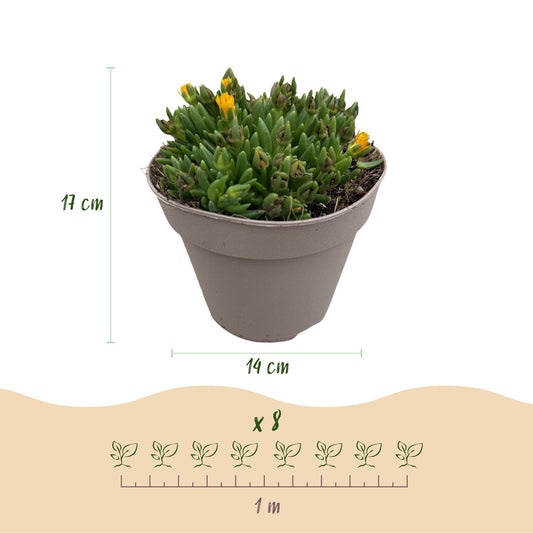
Perennial ice plant (Delosperma) – flowering ground cover – 14 cm pot – height 17 cm
Regular price From 49,95 €Regular price49,95 €From 39,96 €Livraison offerte -


Perennial ice plant (Delosperma) – flowering ground cover in a mix of colours – 7 cm pot – height 10–12 cm
Regular price From 44,95 €Regular price44,95 €From 35,96 €Livraison offerte -

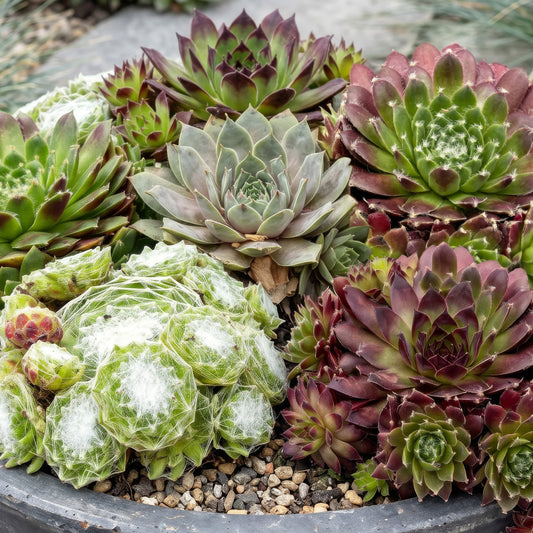
Cobweb Houseleek ‘Big Sam’ (Sempervivum) – evergreen succulent ground cover – 7 cm pot – height 10–12 cm
Regular price From 44,95 €Regular price44,95 €From 35,96 €Livraison offerte -

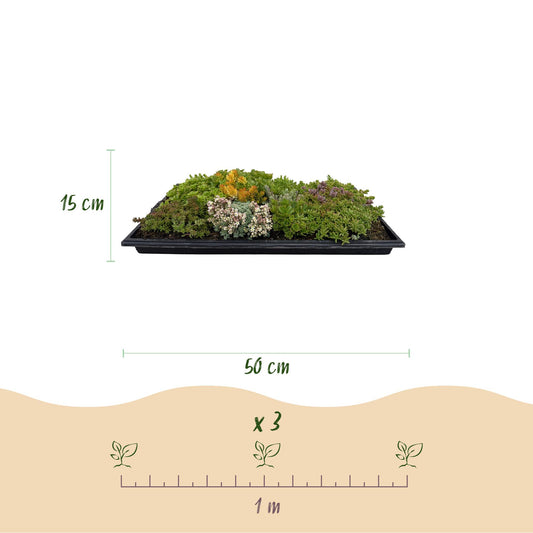
Sedum Mat (10 species) – Perennial succulent ground cover – Pack of 2 – Height: 20 cm
Regular price 69,95 €Regular price69,95 €55,96 €Livraison offerte -
‘Red Carpet’ Thyme (Thymus) – aromatic perennial – 11 cm pot – height 25 cm
Regular price From 39,95 €Regular price39,95 €From 31,96 €Livraison offerte -

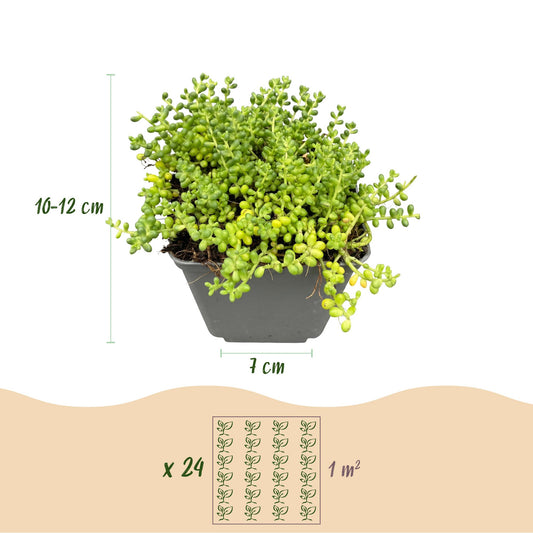
Rock Garden Plant Mix – Creeping Perennial Ground Cover – 7 cm Pot – Height: 10–12 cm
Regular price From 44,95 €Regular price44,95 €From 35,96 €Livraison offerte -

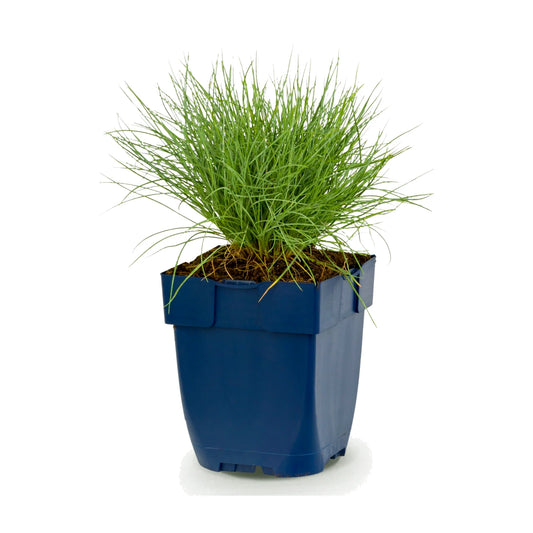
Blue fescue (Festuca glauca) - grass with blue-tinted foliage - 11 cm pot - Height 25 cm
Regular price From 39,95 €Regular price39,95 €From 31,96 €Livraison offerte


✂️ Caring for Delosperma: watering, fertiliser and winter
Caring for perennial purslane is mostly about not doing too much. Once established, it is very drought-tolerant according to NC State Extension. The University of Arkansas Extension adds that in midsummer it may need more water than you might expect from such an undemanding plant; water at the base during prolonged heatwaves, especially in pots.
No fertiliser is needed in the ground, and the RHS does not recommend pruning. The RHS reports only aphids and mealybugs as potential problems under cover.
💧 Watering: While establishing, then only during prolonged drought; in pots, when the growing medium is dry deep down
🌱 Fertiliser: Not needed; rich soil leads to soft stems and fewer flowers
✂️ Pruning: None; remove stems blackened by winter in spring
🔹 Weeding: Hand-weed during the first year, before the mat closes over
🧣 Winter: Keep soil dry and avoid organic mulch; raise pots off the ground and shelter them from rain
🍂 Is Delosperma frost-hardy? Species-by-species hardiness and overwintering
The answer depends on the species, and this is where most guides get them mixed up.
According to the RHS entry for Delosperma cooperi, D. cooperi is rated H4, or -10 to -5°C according to the RHS hardiness rating scale; the RHS recommends growing it outdoors in mild regions and in a cold greenhouse elsewhere.
According to the RHS entry for Delosperma nubigenum, D. nubigenum is rated H5, or -15 to -10°C: it is the hardier of the two.
The University of Arkansas mentions temperatures as low as -20°F for D. cooperi, or about -29°C, but notes that it does not do well in wet winters; NC State notes that it may not recover well after a wet winter.
📅 Seasonal care calendar
| Season | Key task |
|---|---|
| 🌸 Spring | Planting, propagation by cuttings, removing damaged stems; D. nubigenum flowers late in the season |
| ☀️ Summer | D. cooperi and hybrids flower; water pots and young plants during heatwaves |
| 🍂 Fall | Flowering ends; keep backup cuttings under cover; stop watering |
| ❄️ Winter | Dormant; keep soil dry; D. nubigenum foliage turns bronze; raise pots off the ground and shelter from rain |
🌱 Propagating perennial purslane from cuttings and seed
Propagation by cuttings is the easiest method and the only one that faithfully reproduces a hybrid. For D. nubigenum, the RHS recommends snapping off short stem pieces, which root easily. For D. cooperi, it lists sowing seed and taking softwood cuttings in spring or summer; NC State also mentions seed and stem cuttings.
Leave the cut end to dry in the shade for a few hours, insert it into a barely moist sandy mix, then wait until it has taken before watering more. Protected Plant Breeders’ Rights (PBR) varieties must not be propagated for sale.
🐛 Common problems: causes and solutions
Delosperma causes few problems as long as its roots stay dry. Almost all failures are due to too much water, not enough sun or a species planted too far north for its hardiness rating. Here is how to read the signs.
| Symptom | Likely cause | Solution |
|---|---|---|
| Mat blackened and mushy after winter | 🍄 Rot caused by winter damp | Remove dead parts, take new cuttings from healthy stems and improve drainage |
| Plant fails to regrow in spring | ❄️ Temperatures below the species’ hardiness limit or a wet winter | Choose D. nubigenum (H5) in cold regions and keep cuttings under cover |
| Few or no flowers | 💧 Shade, soil that is too rich or too much water | Move it into full sun; stop fertilising and watering |
| Flowers remain closed | ⚠️ Late in the day or overcast weather | Normal: they open in the warmth of the day (University of Arkansas) |
| Bare stems in the centre | ⚠️ Mat is old or overcrowded | Take cuttings from stem pieces and fill gaps in spring |
| White, cottony clusters | 🐛 Mealybugs, especially under cover (RHS) | Remove with cotton wool dipped in alcohol, improve ventilation and reduce humidity |
-

Cover the ground with ease: our outdoor ground cover plants blanket slopes,...


🌸 Our Delosperma varieties
Perennial purslane sold by garden centres is often a hybrid of D. cooperi or D. nubigenum. Here are the best-documented forms, including the two we offer.
| Variety | What makes it special |
|---|---|
| Perennial purslane in a 14 cm pot | Flowering ground cover supplied in a 14 cm pot; species unspecified: see the product listing for flower colours |
| Mixed perennial purslane, 7 cm pot | Mixed colours in a 7 cm pot, ideal for quickly covering a rock garden or slope |
| Delosperma nubigenum | Lemon-yellow flowers in late spring, bronze foliage in winter, H5 according to the RHS: the safer choice in cold regions |
| Orange Wonder (Wheels of Wonder series) | D. cooperi hybrid, with orange flowers and yellow centres up to 5 cm across from summer to fall, H4 according to the RHS |
| 'Jewel of Desert Garnet' | Jewel of Desert Series, D. cooperi: orange-red petals with a purple base and white eye, H4 according to the RHS |
| Ocean Sunset Series | Classified under D. nubigenum by the RHS (Orange Glow, Orange Vibe, Violet); no hardiness rating published |
🎨 Which plants to pair with Delosperma
Pair Delosperma with plants that share its love of sun and dry conditions. In a rock garden or dry garden, it carpets the base of lavender, rosemary or perennial sage.
In a Mediterranean-style border, its colorful carpets accentuate meadow grasses and gaura. On a low wall, Mexican fleabane flowers in the same crevices.
Discover our Delosperma and other ground covers, our perennials for borders, our outdoor flowering plants and all our outdoor plants.
⚠️ Is perennial purslane edible or toxic?
Perennial purslane is not the kind of purslane that is eaten. Common purslane is Portulaca oleracea: NC State Extension describes it as an annual plant in the Portulacaceae family, with edible stems, leaves and flowers, but containing soluble oxalates that are toxic to dogs, cats and horses if they consume large quantities.
Moss rose, Portulaca grandiflora, is also an annual. Delosperma belongs to a different family, and we found no source saying it is edible: do not eat it.
As for toxicity, the ASPCA's “ice plant” listing refers to a Lampranthus, not a Delosperma; the RHS and NC State provide no information. Keep it out of pets' reach as a precaution. Finally, the University of Florida describes it only as a fast-spreading plant, without calling it invasive; we could not find its status in France.
✅ Our expert tips for success
Success with Delosperma comes down to four things: full sun, poor, very well-drained soil, no pruning and a dry winter. Choose the species to suit your climate: D. nubigenum, rated H5 (-15 to -10 °C), for colder regions; D. cooperi and its hybrids, rated H4 (-10 to -5 °C), for milder regions or in a sheltered pot.
Keep a few cuttings in reserve and the carpet will regrow in one season. In return, it flowers in rock gardens, on low walls and on roofs where nothing else will grow.
Perennial purslane is the plant I tuck in everywhere the sun beats down and nothing else grows. I love seeing its flowers open all at once as the heat rises, then close again in the evening. I hardly ever water it and never give it any fertilizer. Every autumn, I keep a few cuttings under cover: it's my little insurance policy against an overly rainy winter.

Laura Bruneau
Jardinière et autrice