Persicaria amplexicaulis (red bistort): planting and care

To grow Persicaria amplexicaulis successfully, plant it in spring or autumn, in sun or partial shade, in moist, rich soil that never dries out, giving it plenty of room, then cut it back after flowering: it will bloom every year from summer until the first frosts.
This perennial, known as mountain fleece or red bistort, forms a clump about 1–1.5 m tall, topped with slender red, pink or white flower spikes. It is one of the reliable choices in our easy guide to creating a perennial border, as it takes over when early-summer blooms begin to fade.
Be careful with the word knotweed: it also refers to Japanese knotweed, an invasive non-native species, and to a climbing vine, black bindweed. Based on information from the RHS, Kew, NC State Extension and the Missouri Botanical Garden, this guide will help you plant and care for it, choose the right variety and distinguish it from plants with similar names.
🌿 Why plant mountain fleece in your garden?
Plant mountain fleece for months of colour in a moist border, with very little maintenance. According to the RHS (Royal Horticultural Society) profile for Persicaria amplexicaulis, it is a robust, clump-forming, semi-evergreen perennial that reaches about 1.2 m, with pointed oval leaves up to 25 cm long.
Its small, bell-shaped flowers, ranging from bright red to purple or white, appear successively from midsummer to early autumn. According to the Missouri Botanical Garden, the 'Firetail' cultivar has an exceptionally long flowering period, from early summer into autumn and sometimes until the first frosts.
The plant requires little maintenance and, according to the same source, has no serious pest or disease problems.
| Benefit | What this means for you |
|---|---|
| Very long flowering period | Colourful spikes from summer into autumn, sometimes until the first frosts |
| Hardiness H7 | Withstands winters colder than -20 °C according to the RHS: no protection needed in France |
| A plant for pollinators | Nectar for bees and butterflies, according to NC State Extension |
| Low maintenance | Cutting back after flowering and dividing from time to time are all it needs |
🔎 Mountain fleece at a glance
Persicaria amplexicaulis remains the name used by gardeners and the RHS, but Plants of the World Online (POWO), the database of the Royal Botanic Gardens, Kew now accepts Bistorta amplexicaulis (D.Don) Greene, published in 1904; Persicaria amplexicaulis and Polygonum amplexicaule are listed as synonyms.
According to POWO, the species is native to Afghanistan, Pakistan, Nepal, the western and eastern Himalayas, and central and southeastern China. The same database records it as introduced in Great Britain, Ireland, Germany, Denmark, Sweden and Czechia-Slovakia.
According to NC State Extension, which also lists it as Bistorta amplexicaulis, the name bistort means “twice twisted,” referring to the S-shaped root, while amplexicaulis describes the leaves that clasp the stem. This feature makes the plant easy to recognise at a glance.
More broadly, the RHS describes the genus Persicaria as a group of annuals, herbaceous or evergreen perennials and subshrubs with small white or pink flowers on long-lasting spikes.
| Feature | Verified details |
|---|---|
| 🏷️ Botanical name | Persicaria amplexicaulis (D.Don) Ronse Decr.; accepted name Bistorta amplexicaulis (D.Don) Greene according to POWO |
| 🧬 Family | Polygonaceae |
| 🌳 Type | Clump-forming, semi-evergreen herbaceous perennial (RHS) |
| 🌍 Native range | Himalayas, Afghanistan, Pakistan, Nepal and China (POWO) |
| ❄️ Hardiness | H7 according to the RHS, meaning colder than -20 °C; USDA zones 4a to 7b (NC State) |
| 🍃 Foliage | Pointed oval leaves up to 25 cm long, clasping the stem (RHS, NC State) |
| 🌸 Flowering | Dense spikes of bright red, pink or white flowers from midsummer to early autumn (RHS) |
| 📏 Mature size | 1–1.5 m tall and wide within 2 to 5 years (RHS) |
📋 Quick growing guide
Essential growing information at a glance.
| Factor | Guidelines |
|---|---|
| Position | Sun or partial shade, any aspect, exposed or sheltered site (RHS) |
| Soil | Moist to wet, clay or loam, acid to alkaline; tolerates occasional waterlogging (RHS) |
| Hardiness | H7: colder than -20 °C (RHS); USDA zones 4 to 7 (Missouri Botanical Garden) |
| Watering | Regularly during the first year; thereafter during dry spells, especially in full sun |
| Planting | Spring or autumn, avoiding frost and drought |
| Pruning | Cut back the stems after flowering (RHS) |
| Flowering | Midsummer to early autumn, sometimes until the first frosts |
| Care | Easy; divide in spring or autumn when the clump spreads |
| Toxicity | Contact may irritate the skin; sap may cause mild digestive upset (RHS) |
📍 Where and when to plant Persicaria amplexicaulis
Plant mountain fleece in sun or partial shade, in soil that stays moist in summer: in a border, at the bottom of a damp slope, by a pond or at the foot of a well-watered hedge. The RHS grows it in all aspects, in exposed and sheltered sites, in moist but drained clay or loam, and even in poorly drained soil.
The Missouri Botanical Garden notes that flowering is better in full sun, but light shade is preferable in drier soils and during hot, humid weather. Plant pot-grown specimens in spring or autumn, when the soil is not waterlogged, avoiding periods of frost and drought.
🌤️ Ideal: Sun or light partial shade, moist, rich soil: border, pond edge or damp meadow
☀️ Acceptable: Dry full sun in southern France, provided you water and mulch, or light shade with somewhat fewer flowers
🚫 Avoid: Dry, stony soil in full sun, a small space where the clump cannot spread, or a very windy site
🪴 How to plant mountain fleece in a border
Focus on preparing the soil: mountain fleece likes humus-rich soil that stays moist. NC State Extension grows it in clay or loam with a pH of 6.0 to 8.0, in well-drained or occasionally wet soil, and recommends protecting it from strong winds that can flatten the stems.
Space plants according to the mature spread given by the RHS, 0.5 to 1.5 m depending on the variety: they will grow together within two to five years. In dry ground, make a watering basin and apply a generous mulch to retain moisture.
| Step | What to do |
|---|---|
| 1. Prepare the soil | Remove weeds, loosen the soil to a spade’s depth and incorporate well-rotted compost |
| 2. Rehydrate the root ball | Immerse the pot in a bucket of water until the bubbles stop |
| 3. Plant at the right depth | Set the root ball level with the soil, no deeper than it was in the pot, then firm it in |
| 4. Water thoroughly | Water at the base to eliminate air pockets, even if the soil seems moist |
| 5. Mulch | Spread leaf mould, compost or woodchip mulch to keep the soil moist in summer |
columns: 4
columns_mobile: 2
-


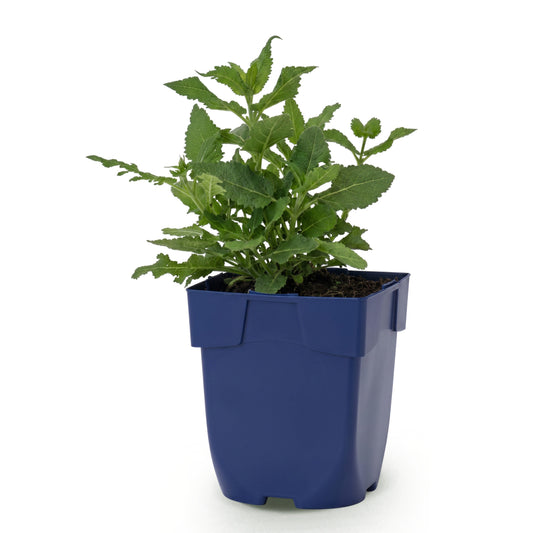
Mountain fleeceflower (Persicaria amplexicaulis) – shade perennial – 11 cm pot – 25 cm tall
Regular price From 39,95 €Regular price39,95 €From 31,96 €Livraison offerte -


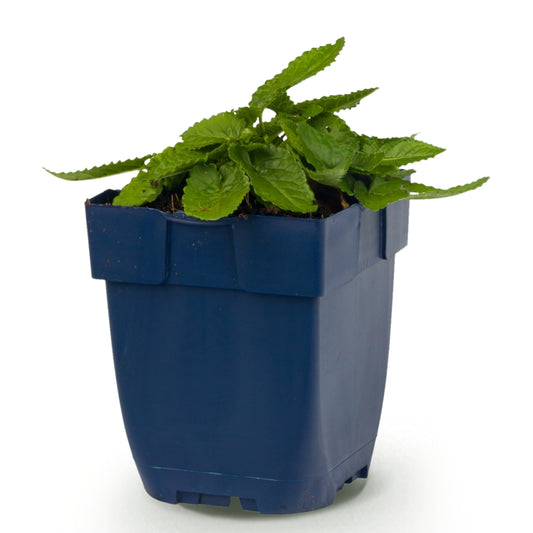
‘Alba’ Fleeceflower (Persicaria amplexicaulis) – shade perennial – 11 cm pot – height 25 cm
Regular price From 39,95 €Regular price39,95 €From 31,96 €Livraison offerte -


‘Rosea’ Knotweed (Persicaria amplexicaulis) – shade-loving perennial – 11 cm pot – 25 cm tall
Regular price From 39,95 €Regular price39,95 €From 31,96 €Livraison offerte -


Knotweed mix, 3 colours (Persicaria amplexicaulis) – red, pink and white – 11 cm pot – height 15–25 cm
Regular price From 64,95 €Regular price64,95 €From 51,96 €Livraison offerte -
Aster 'Wood's Pink' (Aster) - vivace mellifère - Pot 11 cm - Height 25 cm
Regular price From 39,95 €Regular price39,95 €From 31,96 €Livraison offerte -


Ornamental sage 'Schneehügel' (Salvia nemorosa) – nectar-rich perennial – 11 cm pot – height 25 cm
Regular price From 39,95 €Regular price39,95 €From 31,96 €Livraison offerte -


‘Goldsturm’ Black-Eyed Susan (Rudbeckia fulgida) – nectar-rich perennial – 11 cm pot – height 25 cm
Regular price From 39,95 €Regular price39,95 €From 31,96 €Livraison offerte -


Persicaria amplexicaulis 'Blackfield' - compact perennial with deep blood-red spikes
Regular price From 59,95 €Regular price59,95 €From 47,96 €Livraison offerte


✂️ Caring for Persicaria: watering, pruning and dividing
Caring for mountain fleece involves three simple tasks: water it during the first year, cut it back after flowering and divide it when the clump gets too large. NC State Extension classifies it as a low-maintenance plant that tolerates wet and waterlogged soil. Once established, it only needs water during dry spells, especially in sunny positions: lack of water, rather than cold, is what damages it.
The RHS recommends cutting back the stems after flowering; a spring compost mulch is enough to feed it.
💧 Watering: Water regularly during the first year, then during drought, especially in sunny positions
🍂 Mulching: Apply organic mulch in spring to keep the soil moist and feed the plant
✂️ Pruning: Cut faded stems back to the base after flowering or in late winter
🍴 Division: In spring or autumn, when the clump spreads too far or becomes bare in the centre (RHS)
👀 Keep an eye out: Slugs and snails on young shoots, aphids in summer (NC State)
🍂 Mountain fleece in bloom: from summer to the first frosts
Mountain fleece is one of the longest-flowering perennials in the garden. The RHS places its flowering period from midsummer to early autumn, the Missouri Botanical Garden gives June to October for 'Firetail', and NC State Extension notes that it sometimes lasts until the first frosts.
The tiny flowers are packed into dense, bottlebrush-shaped spikes: about 1 to 10 cm long according to NC State, and up to about 15 cm for 'Firetail' according to the Missouri Botanical Garden. In winter, the stems dry and the plant almost disappears, before regrowing from the base in spring.
📅 Seasonal care calendar
| Season | Key task |
|---|---|
| 🌸 Spring | Planting, dividing old clumps, mulching and checking young shoots for slugs |
| ☀️ Summer | Flowering begins, water during dry spells and check for aphids |
| 🍂 Autumn | Flowers continue until the first frosts; plant and divide; cut back faded stems |
| ❄️ Winter | The crown is dormant; cut back dry stems in late winter before growth resumes |
🌱 Dividing and propagating mountain fleece
Division is the easiest and most reliable way to propagate mountain fleece true to type. The RHS recommends dividing in spring or autumn, or sowing seed in spring. Lift the clump with a garden fork, split it with a spade or knife into sections, each with buds and roots, then replant immediately and water.
The species can be grown from seed, but cultivars such as 'Alba' and 'Rosea' will only come true to type when propagated by division. NC State Extension also notes that the plant may self-seed: remove unwanted seedlings in spring.
🐛 Common problems: causes and solutions
Mountain fleece is a healthy plant: the RHS says it is generally free of pests and diseases, and the Missouri Botanical Garden reports no serious problems. NC State Extension does mention a few visitors, and most issues are caused by soil that is too dry or an unsuitable position.
| Symptom | Likely cause | Solution |
|---|---|---|
| Young shoots nibbled in spring | 🐌 Slugs and snails (NC State) | Collect them in the evening, use traps and spread coarse mulch around the crown |
| Colonies on stems and flower spikes | 🐛 Aphids (NC State) | Spray with water, let ladybirds do their work and remove badly affected shoots |
| Wilted leaves, brown edges in summer | ☀️ Soil too dry in a sunny position | Water deeply, mulch or move to cool partial shade |
| Stems falling over | 💧 Strong winds or too much shade | Plant in a sheltered spot (NC State) or near a sturdy perennial for support |
| Few flowers | 💧 Dense shade or lack of water | Give it more sun (flowering is better, according to the Missouri Botanical Garden) and keep the soil moist |
| Clump bare in the centre | ⚠️ Old crown | Divide in spring or autumn and replant the vigorous sections |
-

Nectar-producing plants & pollinators
Provide food for bees, bumblebees, and butterflies: our selection of outdoor nectar-rich...


🌸 Our Persicaria amplexicaulis varieties
Here are the best-documented Persicaria amplexicaulis varieties, all rated H7 by the RHS (colder than -20 °C); heights and colours are according to the RHS unless otherwise stated. We offer the species, 'Alba' and 'Rosea' in 11 cm pots.
| Variety | What makes it special |
|---|---|
| Persicaria amplexicaulis in an 11 cm pot | The species: bright red to purple spikes from midsummer to early autumn, forming a clump about 1.2 m tall |
| Persicaria amplexicaulis 'Alba' in an 11 cm pot | White spikes from midsummer to early autumn, about 1.6 m tall; RHS Award of Garden Merit (AGM), ideal for a white garden |
| Persicaria amplexicaulis 'Rosea' in an 11 cm pot | Soft pink spikes in summer and autumn, 1–1.5 m tall and 0.5–1 m wide |
| 'Firetail' | Dense, vivid red flower spikes up to 10 cm long; clump about 1.2 m tall; flowers from June to October, according to the Missouri Botanical Garden |
| 'Taurus' | Bright rosy-red spikes up to 10 cm long, from summer to early fall; 1 to 1.5 m tall |
| 'Inverleith' | Compact form with short reddish-pink spikes; about 50 cm tall, according to NC State Extension |
🎨 What to plant with persicaria
Pair persicaria with perennials that like the same moist soil and flower late in the season. The Missouri Botanical Garden highlights the contrast between its red spikes and purple-flowered salvias, catmint, or Russian sage: try it with perennial sage (Salvia nemorosa), catmint, or Russian sage.
In late summer, it looks lovely alongside Japanese anemone, perennial aster, rudbeckia, and ornamental grasses.
The RHS distinguishes 'Alba', the white form, awards it its Award of Garden Merit, and lists it among its Plants for Pollinators: it is a natural fit for a white garden.
For a border that feeds insects into fall, browse our nectar-rich perennials for bees and butterflies.
Put together your planting with our Persicaria and other border perennials, our nectar-rich plants, and our outdoor flowering plants, or browse all our outdoor plants.
⚠️ Is persicaria toxic or invasive?
On toxicity, the RHS is the only authoritative source we found that addresses the species: contact with any part of the plant may irritate the skin, and the sap may cause mild digestive upset if ingested. It advises wearing gloves when handling the plant.
We found no entry for this persicaria in the ASPCA (American Society for the Prevention of Cruelty to Animals) database, and NC State Extension has no toxicity section: keep an eye on pets that chew the leaves and, if symptoms occur, call your veterinarian or a poison control center.
As for its invasive potential, NC State Extension says the plant spreads slowly in the garden, making a good ground cover, and is not invasive, but should be planted where it has room. POWO nevertheless lists it as introduced in six European countries (Great Britain, Ireland, Germany, Denmark, Sweden, and Czechia-Slovakia), without further details.
It is nothing like Japanese knotweed (Reynoutria japonica): the Invasive Alien Species Resource Center ranks it among the world's 100 most impactful invasive alien species. It can form dense stands of a single species up to 4 m tall, with stems growing up to 10 cm per day.
According to the identification sheet published by the same center (ONEMA and the IBMA working group), it is native to East Asia and was introduced to Europe in 1825 as an ornamental and fodder plant. It spreads mainly through rhizome fragments and stem cuttings; its stems are hollow, and its leaves, 10 to 20 cm long, have a truncate base.
Persicaria amplexicaulis, by contrast, has dense spikes and leaves that clasp the stem. Aubert's knotweed, sold under the names Fallopia aubertii or Fallopia baldschuanica, is something else again: POWO accepts Fallopia baldschuanica (formerly Polygonum baldschuanicum) and describes it as a vine, so look for it among climbing plants.
Finally, the common name “persicary knotweed” often refers to the species Linnaeus called Polygonum persicaria, now Persicaria maculosa, an annual according to POWO, and not a border perennial at all.
✅ Our expert tips for success
Growing Persicaria amplexicaulis successfully comes down to a few rules: rich, moist soil; sun or light partial shade; room for the clump to spread; watering in the first year; and cutting back the stems after flowering. Hardy to H7 according to the RHS, it is unfazed by winter; summer drought is what you need to watch for.
Choose the species for its red spikes, 'Alba' for a white border, or 'Rosea' for softer tones, and divide the clumps in spring or fall to plant elsewhere. And remember, it has nothing in common with Japanese knotweed.
Persicaria is the perennial I recommend when someone asks me for late-summer color in a cool spot in the garden. I always plant it with room around it, because the clump quickly grows large and its spikes make the biggest impact when planted in a group. I love pairing it with grasses and asters: bees forage there right through fall. And when someone says, “Knotweed? Never in a million years!” I show them its stem-clasping leaves: it is nothing like Japanese knotweed.

Laura Bruneau
Jardinière et autrice