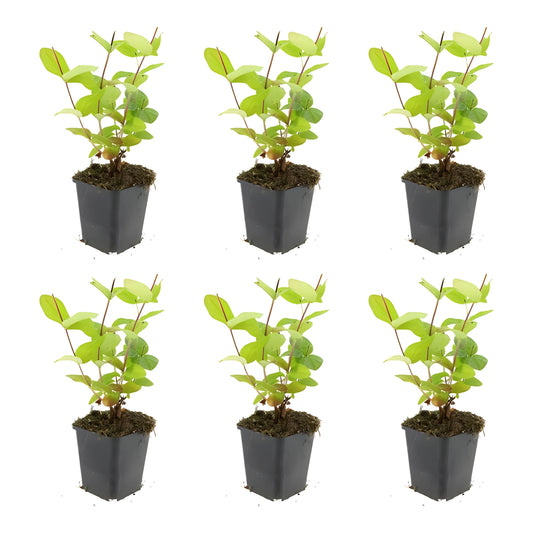
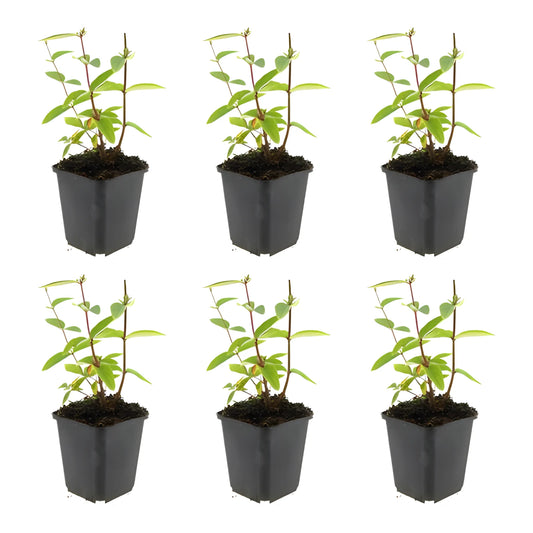
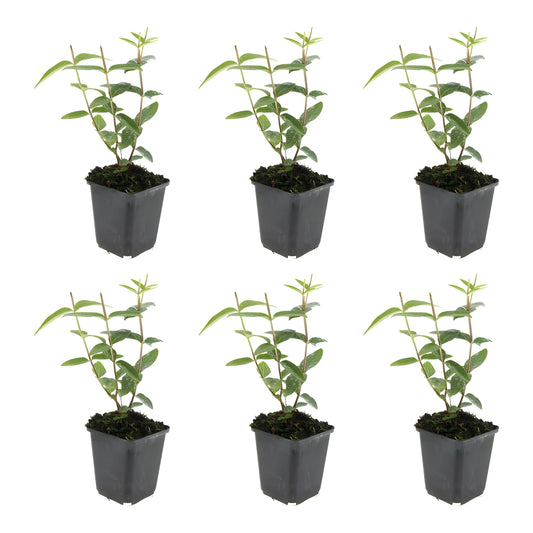
Viburnum: varieties, planting, pruning and berries

To grow a viburnum successfully, first choose the species to suit its purpose, plant it in sun or partial shade in soil that does not stay waterlogged, water it for the first two years, then prune according to its group: after flowering for laurustinus and winter viburnum, and very little for the others.
The name viburnum covers the entire genus Viburnum, including shrubs as varied as evergreen laurustinus, deciduous snowball viburnum and winter viburnum, which flowers on bare wood. It is one of the cornerstones of our guide to flowering shrubs.
Here, species by species, are the facts verified with the RHS, Kew Gardens and North Carolina State University.
🌿 Why plant a viburnum in your garden
There is a viburnum for almost every season and situation.
Laurustinus flowers from late winter to spring and keeps its leaves, winter viburnum perfumes the garden on bare wood from autumn to spring, and guelder rose produces white flower clusters in late spring, followed by red fruits that often persist into winter, according to the RHS Viburnum opulus profile.
According to the RHS (Royal Horticultural Society) viburnum growing guide, 25 viburnum species and cultivars have received the Award of Garden Merit, the RHS quality mark, and most need almost no fertiliser.
| Benefit | What it means for you |
|---|---|
| Winter flowering | Laurustinus and winter viburnum flower when the garden is almost empty |
| Evergreen flowering hedge | Laurustinus forms a dense hedge 1.5 to 1.8 m tall, according to the RHS |
| Decorative berries | Red, blue or black fruits in autumn, enjoyed by birds |
| Undemanding | All soil types, little or no fertiliser, and an annual mulch is enough |
🔎 Viburnum at a glance
According to Plants of the World Online (POWO) from the Royal Botanic Gardens, Kew, the genus Viburnum L. comprises 205 accepted species, distributed across the temperate and subtropical regions of the Northern Hemisphere, extending to the Andes and tropical Asia. It belongs to the family Viburnaceae.
Several species grow naturally in France, including the two most widely planted: POWO lists the range of Viburnum tinus as Mediterranean, while POWO lists the range of Viburnum opulus as extending from Europe to Siberia.
According to North Carolina State University Extension (NC State Extension), V. tinus grows to about 1.8 to 3.7 m (6 to 12 feet) and bears fragrant flowers.
| Feature | Verified detail |
|---|---|
| 🏷️ Botanical name | Viburnum L. (genus); key species: V. tinus, V. opulus, V. × bodnantense, V. davidii |
| 🧬 Family | Viburnaceae |
| 🌳 Type | Deciduous shrubs (guelder rose, winter viburnum) or evergreens (laurustinus, V. davidii) |
| 🌍 Origin | Northern Hemisphere; Mediterranean V. tinus, V. opulus from Europe to Siberia, V. davidii from China (POWO) |
| ❄️ Hardiness | V. tinus H4 (-10 to -5 °C); V. davidii H5 (-15 to -10 °C); V. opulus and V. × bodnantense H6 (-20 to -15 °C) (RHS) |
| 🍃 Foliage | Deciduous and turning red in autumn on guelder rose; evergreen, dark green and glossy on laurustinus |
| 🌸 Flowering | White or pink, from autumn to spring or in late spring, depending on the species |
| 📏 Mature size | From 1 to 1.5 m (V. davidii) to 4 to 8 m tall (V. opulus), according to the RHS |
📋 Quick growing guide
The essential growing information, all at a glance.
| Factor | Guideline |
|---|---|
| Position | Preferably full sun; partial shade for V. davidii and V. × bodnantense; laurustinus tolerates shade |
| Soil | Chalk, clay, loam or sand, moist but well-drained; acidic to alkaline pH (RHS, laurustinus) |
| Hardiness | Laurustinus H4 (-10 to -5 °C); V. davidii H5 (-15 to -10 °C); guelder rose and winter viburnum H6 (-20 to -15 °C) |
| Watering | Regularly for the first 1 to 2 years, especially during dry spells; thereafter little or none |
| Planting | Deciduous: autumn to early spring; evergreens: early spring or autumn |
| Pruning | After flowering (laurustinus, winter viburnum); little or none for V. plicatum; rejuvenation pruning is possible (guelder rose, V. davidii) |
| Flowering | Autumn to spring (V. × bodnantense), late winter to spring (V. tinus), late spring (V. opulus) |
| Care | Easy: apply a 5 cm layer of organic mulch annually, with little or no fertiliser |
| Toxicity | Berries should not be eaten (RHS); laxative or purgative, depending on the species (Lille Poison Control Centre) |
📍 Where and when to plant a viburnum
Plant your viburnum in an open, sunny spot: this is the position preferred by most species, according to the RHS. For a partially shaded spot, the RHS lists V. davidii, V. rhytidophyllum and V. × bodnantense among those that tolerate shade; the RHS Viburnum tinus profile even says that laurustinus tolerates both full sun and full shade, in humus-rich soil and sheltered from the wind.
As for timing, plant deciduous viburnums from autumn to early spring, as long as the soil is neither waterlogged nor frozen; plant evergreens such as laurustinus preferably in early spring or autumn.
☀️ Ideal: Sun or light partial shade, moist, well-drained soil; shelter laurustinus from cold winds
⛅ Acceptable: Partial shade, or even shade for laurustinus and V. davidii; flowering may be slightly less abundant
🚫 Avoid: Waterlogged soil in winter, and planting laurustinus in regions where temperatures fall below -10 °C
🪴 Planting viburnum in a border, hedge or pot
Planting is straightforward, as viburnums adapt to most soils. For an evergreen flowering hedge, the RHS guide recommends laurustinus, particularly 'Eve Price', which forms a dense hedge 1.5 to 1.8 m tall.
For pots, the RHS recommends smaller fragrant viburnums; standard-form laurustinus can also be grown in a large pot with drainage holes. Water young plants as needed during the first year or two, especially in dry weather, then apply a 5 cm layer of organic mulch each year.
| Step | What to do |
|---|---|
| 1. Choose the species | Laurustinus for an evergreen hedge, guelder rose or snowball viburnum for a border, winter viburnum near a path |
| 2. Prepare the soil | Loosen the soil over a wide area; no particular soil type is required, provided it does not stay waterlogged |
| 3. Position the rootball | Rehydrate the rootball, position it at the same depth as in the container, backfill and firm gently |
| 4. Water | Water thoroughly at planting, then as needed for 1 to 2 years, especially during dry spells |
| 5. Mulch | Apply a 5 cm layer of compost or organic matter, keeping it away from the base of the stems |
columns: 4
columns_mobile: 2
-
Viburnum (Viburnum) – Fragrant flowering shrub – 19 cm pot – Height: 90 cm
Regular price 69,95 €Regular price69,95 €55,96 €Livraison offerte -


Cherry laurel 'Etna®' (Prunus laurocerasus) - evergreen hedging shrub - 19 cm pot - Height 90 cm
Regular price 69,95 €Regular price69,95 €55,96 €Livraison offerte -

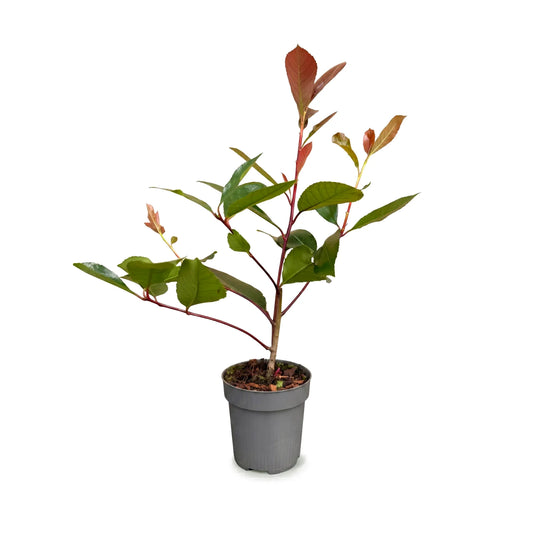
Photinia 'Red Robin' (Photinia × fraseri) – evergreen hedge shrub – 9 cm pot – 25 cm tall
Regular price From 64,95 €Regular price64,95 €From 51,96 €Livraison offerte -

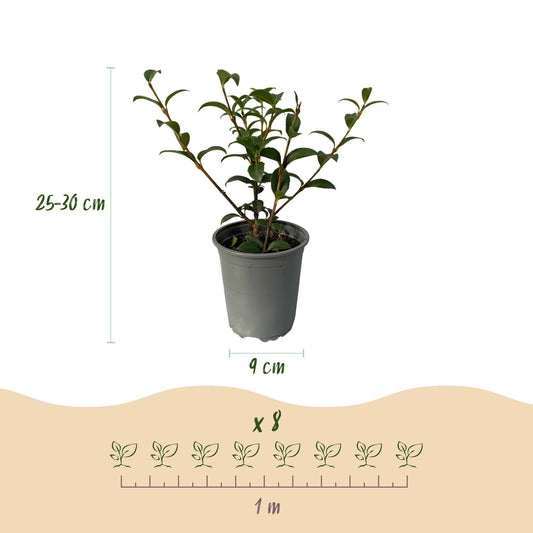 Livraison offerte Sold out
Burkwood Osmanthus (Osmanthus × burkwoodii), evergreen hedging plant, 9 cm pot, Height 25-30 cm - Pack of 8
Regular price 59,95 €Regular price59,95 €47,96 €Livraison offerte Sold out -

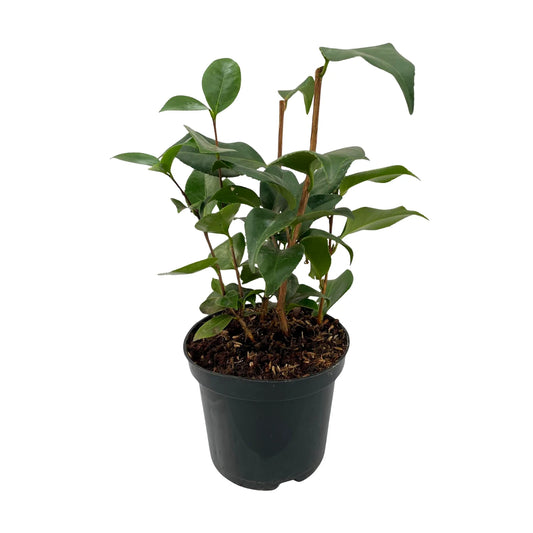
Camellia 'Tricolor' (Camellia japonica) - evergreen flowering shrub - 15 cm pot - Height 30 cm
Regular price From 39,95 €Regular price39,95 €From 31,96 €Livraison offerte -
'Snowbelle' Mock Orange (Philadelphus) – Fragrant Shrub – 17 cm Pot – 45 cm Tall
Regular price 39,95 €Regular price39,95 €31,96 €Livraison offerte -

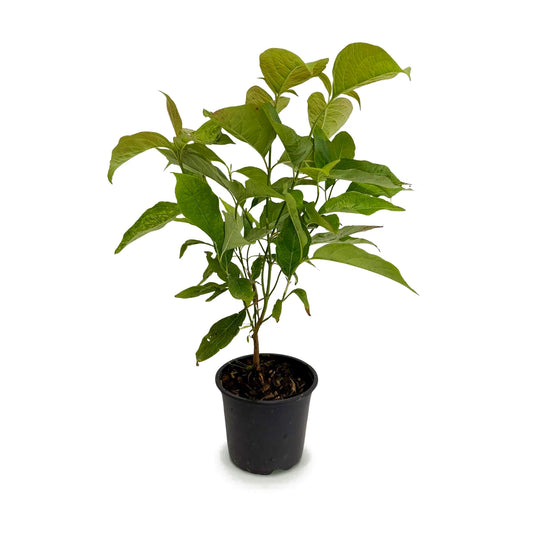
Male dogwood (Cornus mas) - winter-flowering yellow shrub - 12 cm pot - Height 35 cm
Regular price From 34,95 €Regular price34,95 €From 27,96 €Livraison offerte


✂️ Caring for and pruning viburnum by species
Pruning depends on the viburnum group, and this is where most mistakes happen. According to the RHS, V. × bodnantense and V. farreri should be pruned every year after flowering, removing up to a third of the old wood at the base; V. tinus and V. rhytidophyllum should also be pruned after flowering to control their height and shape. V. opulus, V. × burkwoodii and V. davidii need almost no pruning but tolerate hard pruning to rejuvenate them. V. plicatum, V. carlesii and V. × juddii need little or no pruning. For the rest, the RHS says viburnums need little or no fertiliser.
🔹 Laurustinus (V. tinus): Lightly prune every year after flowering to maintain its height and shape; do the same for a hedge
🧣 Winter viburnum (V. × bodnantense): After flowering, remove up to 1/3 of the old wood at the base
🔹 Guelder rose and snowball viburnum (V. opulus): Little or no pruning; an old plant can be hard-pruned to rejuvenate it
💧 Watering: As needed during the first year or two; an established plant manages in most soils
🍂 Fertiliser and mulch: Little or no fertiliser; apply a 5 cm layer of organic mulch every year
🍂 Viburnum through the seasons
With a few well-chosen species, there is a viburnum in flower almost all year round.
According to the RHS Viburnum × bodnantense profile, winter viburnum flowers on bare wood over a long period, from autumn to spring; laurustinus takes over from late winter to spring, followed by guelder rose, which flowers in late spring and early summer.
Fruits appear in autumn: the RHS notes that you often need to plant at least two plants of the same species to achieve good cross-pollination and attractive clusters of berries. In winter, check hardiness on the RHS hardiness rating scale: frost can turn V. × bodnantense flowers brown.
📅 Seasonal care calendar
| Season | Key task |
|---|---|
| 🌸 Spring | Laurustinus flowering; prune after flowering; plant evergreens; take softwood cuttings from deciduous species late in the season |
| ☀️ Summer | Guelder rose flowers in early summer; water young plants; take semi-ripe cuttings from midsummer |
| 🍂 Autumn | Berries; ideal time to plant; winter viburnum starts flowering; take semi-ripe cuttings into autumn |
| ❄️ Winter | Winter viburnum and laurustinus in flower; take hardwood cuttings from deciduous species; plant deciduous species when the ground is not frozen |
🌱 Propagating viburnum from cuttings
Viburnums propagate well from cuttings, at the right time for each group. According to the RHS, V. tinus, V. davidii, V. rhytidophyllum, V. × burkwoodii and V. opulus can be propagated from semi-ripe cuttings from midsummer to autumn. Deciduous and fragrant species can be propagated from softwood cuttings from late spring to midsummer.
Deciduous species also take well from hardwood cuttings 10 to 15 cm long and the thickness of a pencil, taken from late autumn through winter. Seeds, however, do not produce plants true to type.
🐛 Common problems: causes and solutions
Viburnums are hardy shrubs, but a few pests return every year.
The best known is the viburnum leaf beetle, Pyrrhalta viburni: the RHS profile of the viburnum leaf beetle describes cream-yellow larvae with black spots, up to 8 mm long, active from late April to June, followed by adults 4.5 to 6 mm long from late July to September, on V. tinus, V. opulus and V. lantana.
The RHS also reports aphids on guelder rose, whiteflies and scale insects on laurustinus, honey fungus and leaf spots.
| Symptom | Likely cause | Solution |
|---|---|---|
| Leaves riddled with holes, with only the larger veins remaining | ⚠️ Viburnum leaf beetle (Pyrrhalta viburni), larvae active from April to June (RHS) | Remove larvae by hand, encourage birds and ground beetles, use beneficial nematodes |
| Young leaves curled and distorted in spring | 🐛 Viburnum aphids, especially on V. opulus and V. carlesii (RHS) | Let beneficial insects do their work; cut off badly affected shoots |
| Sticky leaves, black coating | 🐛 Whiteflies or scale insects on laurustinus (RHS) | Check the undersides of leaves and encourage natural predators |
| Leaf spots | 🍄 Fungal leaf spots (RHS) | Collect affected leaves and open up the shrub by pruning |
| Flowers turn brown in midwinter | ❄️ Frost damage to V. × bodnantense flowers (RHS) | Plant in a spot sheltered from cold winds; later buds will take over |
| Dieback, fungus at the base | 🍄 Honey fungus, a root fungus (RHS) | Dig up the affected plant with its roots and do not replant in the same spot |
-

Our flowering outdoor shrubs: buddleias, dogwoods, deutzias, hibiscus, mock oranges and more...
-

Outdoor plants that keep their foliage all year round: evergreen privacy hedges,...


🌸 Our viburnum varieties
Here are the most sought-after species and varieties, grouped by use, with characteristics documented by the RHS.
| Variety | What makes it special |
|---|---|
| Standard-form laurustinus (Viburnum tinus) | Evergreen, white flowers with pink buds from late winter to spring, metallic blue berries that turn black; H4, 2.5 to 4 m when grown freely |
| Viburnum tinus 'Eve Price' | Compact Laurustinus, 1.5 to 2.5 m, dark pink buds, RHS Award of Garden Merit winner and recommended for a flowering hedge 1.5 to 1.8 m tall |
| Viburnum opulus 'Roseum' | The snowball bush: large balls of sterile white flowers up to 6 cm across, so no berries; foliage turns red, H6, 2.5 to 4 m |
| Viburnum opulus (guelder rose) | Native species with white flower clusters and translucent red fruits that persist through winter; H6, grows up to 4 to 8 m tall |
| Viburnum × bodnantense 'Dawn' | Winter viburnum: highly fragrant dark pink flowers on bare branches from autumn to spring; H6, 1.5 to 2.5 m, RHS Award of Garden Merit winner |
| Viburnum davidii | Small evergreen, 1 to 1.5 m, with three-veined leaves and blue-black berries on female plants; H5, ideal ground cover |
🎨 Viburnum in a hedge or border: planting combinations and companions
Laurustinus is one of the best choices for an evergreen flowering hedge: our guide to creating a privacy hedge explains how to alternate it with deciduous shrubs, and our selection of unusual evergreen hedges suggests osmanthus or oleaster as companions.
In a border, snowball viburnum pairs well with mock orange and forsythia, which are also pruned after flowering. In partial shade, Laurustinus and V. davidii make good companions for camellia and skimmia.
Explore our Viburnum and other flowering shrubs, our evergreen shrubs, our hedges and privacy screens, and all our outdoor plants.
⚠️ Is viburnum toxic to children, dogs and cats?
Viburnum berries are not edible, and their toxicity varies by species. The RHS states that the fruits of V. tinus, V. opulus, V. davidii and V. × bodnantense are ornamental and should not be eaten, including by animals, and recommends wearing gloves when handling them.
According to the Poison Control Centre at Lille University Hospital, viburnums are mildly toxic: guelder rose fruits are edible when cooked but not very palatable, while unripe fruits are laxative. In cases of poisoning, likely following ingestion of large quantities, reported symptoms include skin irritation, digestive problems such as diarrhoea, dilated pupils and cardiac hyperexcitability. Laurustinus fruits are purgative, and unripe V. lantana fruits are strongly laxative.
Note that NC State Extension describes guelder rose fruits as suitable for making jam; we recommend caution. The ASPCA (American Society for the Prevention of Cruelty to Animals) does not publish a viburnum fact sheet. If ingested, call a poison control centre or your veterinarian.
✅ Our expert tips for success
Choosing the right species is the first step to success: Laurustinus for an evergreen hedge that flowers in winter, snowball viburnum for a late-spring border, winter viburnum for fragrance, and V. davidii as ground cover in partial shade. Plant in full sun or partial shade, water for the first two years, mulch, and prune only after flowering for species that need it.
Check the species' hardiness before buying, as Laurustinus is more sensitive to cold than guelder rose. For further guidance, read our guide to when to trim a hedge and our comparison of shrubs with autumn colour.
Viburnum is the shrub I most often recommend when someone asks me for a hedge that flowers in winter: Laurustinus stays green and fills with pink buds just when everything else is dormant. I always point out that “viburnum” doesn’t mean just one plant, and that a snowball bush shouldn’t be pruned like Laurustinus. In the garden, I like to plant a winter viburnum near a path for its fragrance. And I warn families: these pretty berries are for looking at, not tasting.

Laura Bruneau
Jardinière et autrice