Callisia repens (turtle vine): care, propagation and toxicity

To care for a Callisia repens, place it in bright, filtered light, plant it in a well-draining potting mix, water generously while it is growing without leaving the soil waterlogged, and keep it above 10°C (50°F) all year round. This small trailing plant in the Callisia genus, sometimes misspelled “calissia” in garden centers, is sold in France as the turtle vine (plante tortue in French).
It forms a cushion of tiny, fleshy leaves, green on top and often purple underneath, that quickly spills over the pot. It is a close relative of inch plant: see our Tradescantia profile and our guide to indoor trailing plants.
This guide draws on Kew, the RHS (Royal Horticultural Society), and NC State Extension (North Carolina State University), including on a question about toxicity that is too often addressed inaccurately.
🌿 Why choose a Callisia repens?
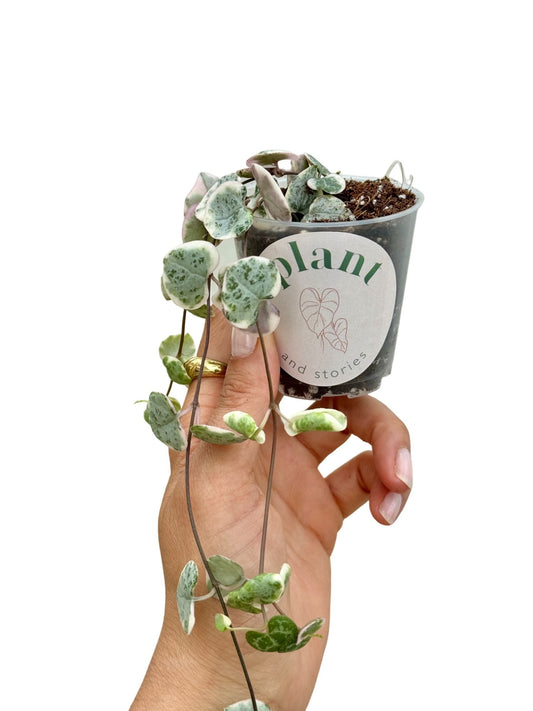
Callisia repens is one of the fastest trailing plants for creating a full look: NC State Extension describes it as a fast-growing, low-maintenance plant whose stems root on their own at the nodes. Its leaves, up to 4 cm long, grow alternately and close together along the stems, forming a striking carpet.
It can be grown in a hanging planter, a bowl, or on the edge of a shelf, while cultivars variegated in pink or cream add a splash of color. And every cutting becomes a new plant: ideal for filling out a pot or sharing.
| Benefit | What it means for you |
|---|---|
| Fast growth | A dense cushion that quickly spills over the pot and cascades down |
| Quick propagation | The stems root at the nodes: simply laying a stem on the soil is often enough |
| Two-tone foliage | Green leaves on top, often purple underneath, plus cultivars variegated in pink or cream |
| Compact size | Just 10–15 cm tall, perfect for a high shelf or hanging planter |
🔎 Callisia repens at a glance
According to Kew (Plants of the World Online, Callisia repens), Callisia repens (Jacq.) L. is an accepted name in the Commelinaceae family, published in 1762.
Its native range extends from southeastern Texas to tropical America, taking in Mexico, Central America, and the Caribbean; the species has been introduced to Florida, Louisiana, California, Bangladesh, and southeastern China. POWO lists Tradescantia callisia and Tradescantia repens among its synonyms, which explains its resemblance to inch plant.
The RHS Callisia repens profile describes it as a tender evergreen perennial with a mat-forming, trailing habit, growing 10–50 cm tall and spreading 50 cm to 1 m.
| Feature | Verified details |
|---|---|
| 🏷️ Botanical name | Callisia repens (Jacq.) L., accepted name according to POWO; formerly Tradescantia callisia, Tradescantia repens |
| 🧬 Family | Commelinaceae, the family that includes Tradescantia |
| 🌳 Type | Evergreen, creeping and trailing perennial, with slightly fleshy stems and leaves |
| 🌍 Origin | From southeastern Texas to tropical America (Mexico, Central America, the Caribbean, and South America) |
| 🍃 Foliage | Oval leaves up to 4 cm long, green and often purple underneath, with ciliate margins (NC State) |
| 🌸 Flowers | Tiny white flowers with three petals, appearing in late spring and early summer; inconspicuous |
| 📏 Size | 10–15 cm tall, spreading 60 cm to 1.2 m according to NC State |
| ⚠️ Toxicity | Toxic to pets and children according to NC State (calcium oxalates, moderate severity) |
📋 Quick care facts
Essential growing guidance, gathered at a glance.
| Requirement | Guideline |
|---|---|
| Light | Bright and filtered; east- or west-facing window; avoid harsh, direct sun |
| Watering | Water generously during growth in well-draining soil; keep just moist in winter |
| Potting mix | Lightened, well-draining potting mix (RHS: 2 parts potting mix, 1 part fine grit) |
| Humidity | Normal indoor air is sufficient; no misting needed |
| Temperature | RHS H1B: minimum 10–15°C (50–59°F); comfortable at around 16–27°C (61–81°F) |
| Repotting | In spring, when the cushion outgrows its pot; use a pot with drainage holes |
| Fertilizer | Apply liquid fertilizer once a month during the growing season (RHS) |
| Toxicity | Toxic according to NC State: keep out of reach of cats, dogs, and children |
| Difficulty | Very easy, as long as you don't waterlog the roots |
📍 Where to place a Callisia repens and when to bring it home
Place Callisia repens near a very bright window, protected from harsh sun. The RHS recommends bright, filtered light and a sheltered east- or west-facing position.
According to NC State Extension, it prefers bright, indirect light and tolerates 2–6 hours of direct sun, but two extremes quickly take their toll: too much shade makes the stems leggy, while intense sun scorches the leaves. The same source places its comfort range at 60–80°F, or around 16–27°C.
📍 Ideal spot: A hanging planter or high shelf in front of an east- or west-facing window, or set back a little from a south-facing window with a sheer curtain in summer.
🕰️ Best time: Spring, when the plant resumes growing; this is also the season the RHS recommends for root cuttings.
🌤️ Outdoors in summer: On a sheltered, partially shaded balcony, only when night temperatures stay above 10–15°C (50–59°F); bring it indoors at the first sign of cooler weather.
🪴 How to repot a Callisia repens, step by step
The RHS recommends a mix of two parts peat-free John Innes No. 2 potting mix and one part fine grit: the key is to use a rich but very free-draining mix. NC State Extension likewise recommends sandy, well-drained soil, or potting mix lightened with perlite, and notes that excess water causes root rot.
A pot with drainage holes, only slightly larger than the root ball, helps prevent the soil from staying wet for too long.
| Step | What to do |
|---|---|
| 1. Choose a pot | Choose a pot or hanging planter with drainage holes, only slightly larger than the root ball. |
| 2. Prepare the potting mix | Lighten indoor potting mix with perlite or fine grit for quick drainage. |
| 3. Remove the plant | Ease out the root ball without pulling on the delicate stems, and remove any black, mushy roots. |
| 4. Position the plant | Set it at the same level as before and arrange the stems over the edge so they can trail down. |
| 5. Water | Water thoroughly once, allow it to drain, then empty the saucer or outer pot. |
columns: 4
columns_mobile: 2
-

 Livraison offerte
Callisia repens - Turtle plant - 12cm pot - Height 14cm
Regular price 34,95 €Regular price -

 Livraison offerte
Callisia repens - Turtle plant - 12cm pot - Height 17-20cm
Regular price From 39,95 €Regular price -

 Livraison offerte
Cyperus - Callisia - Chlorophytum - 12 cm Pot - Height 20 cm
Regular price From 44,95 €Regular price -
Chlorophytum - Maranta - Callisia - Nephrolepis - 12 cm pot - Height 25 cm
Regular price From 54,95 €Regular price -
-
-
-

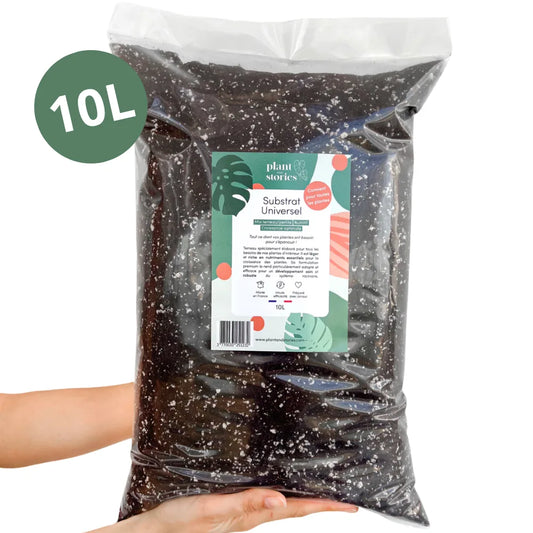
Universal Substrate enriched with Mycorrhizae and Bacillus - Premium Quality - Universal potting mix
Regular price From 9,50 €Regular price8,50 €Sale price From 9,50 €



✂️ Everyday Callisia repens care
Callisia repens care comes down to light, water without overdoing it, and a little pruning. The RHS recommends watering generously during the growing season and applying liquid fertilizer once a month; its profile for the cultivar Callisia 'Turtle' also recommends keeping the potting mix just moist in winter.
The RHS also says that no pruning is necessary and that the plant is generally free of pests and diseases; NC State Extension does, however, list spider mites, aphids, and mealybugs.
💧 Watering: Check with your finger: once the surface has dried, water thoroughly, then empty any water left in the saucer.
🌱 Fertilizer: Once a month from spring to late summer, use a liquid fertilizer for foliage plants (RHS).
✂️ Pruning: Optional; trim excessively long or bare stems to keep the cushion compact.
🔹 Rejuvenation: If the center becomes bare, plant fresh cuttings back into the same pot to fill it out.
👀 Check for pests: Look on the undersides of leaves and around the nodes for fine webbing (spider mites), aphids, or cottony clusters (mealybugs).
🍂 Callisia repens through the seasons
From spring to late summer, Callisia repens grows quickly: water once the surface of the potting mix has dried, rather than following a fixed schedule, since watering frequency depends on light, pot size, and room temperature. In fall, space out watering and stop fertilizing.
In winter, the RHS recommends keeping the potting mix just moist, and its H1B hardiness rating means the plant must not be exposed to temperatures below 10–15°C (50–59°F); it can only stay outdoors in winter where temperatures do not fall below 10°C (50°F).
The Arizona State University plant library notes that a cold snap below 40°F (around 4°C) can damage it, even if it recovers once the weather warms up.
📅 Seasonal care calendar
| Season | Key task |
|---|---|
| 🌸 Spring | Repot if needed, take stem and root cuttings, resume fertilizing |
| ☀️ Summer | Water generously in well-draining mix, fertilize monthly, move outdoors to a sheltered spot if conditions allow |
| 🍂 Fall | Bring indoors before nights turn cool, water less often, stop fertilizing |
| ❄️ Winter | Keep the mix just moist, place in a bright room above 10–15°C (50–59°F), away from drafts |
🌱 How to propagate Callisia repens
Propagating Callisia repens is almost effortless: NC State Extension recommends stem cuttings and notes that stems root easily at the nodes. Cut a stem a few centimeters below a node, remove the lower leaves, and insert it into light potting mix kept just moist, or let it root in a glass of water.
The RHS also mentions dividing rooted clumps and taking root cuttings, by cutting 6–7 cm from the tip of a root in spring. Its tip for a dense effect: plant several cuttings together in an 8 cm pot. To choose between water and soil, read propagating in water or potting mix.
🐛 Common problems: causes and solutions
A Callisia repens that becomes leggy, turns yellow, or rots is almost always signaling a problem with light or watering. Here are the most common symptoms, their causes according to NC State Extension and the RHS, and how to address them.
| Symptom | Likely cause | Solution |
|---|---|---|
| Long, bare stems with widely spaced leaves | 💧 Too much shade (NC State) | Move the plant closer to a bright window, trim the bare stems, and replant them as cuttings |
| Soft leaves, black stems at the base | 🍄 Overwatering, root rot | Let the mix dry, remove the plant from its pot, cut away rotten parts, and propagate healthy stems; see our root rot guide |
| Dry patches, scorched leaves | ☀️ Excessively strong direct sun (NC State) | Move the plant farther away or add a sheer curtain during the hottest hours |
| Pink or cream coloring fades | ☀️ Not enough light for a variegated cultivar | Provide more bright, filtered light |
| Fine webbing, speckled leaves | 🕷️ Spider mites (listed by NC State and Arizona State University) | Rinse the foliage under running water, as recommended by Arizona State University, and isolate the plant |
| Cottony clusters around the nodes | 🐛 Mealybugs | Remove them with a cotton swab dipped in alcohol and check the plant weekly |


🌸 Our Callisia varieties
Here are the forms of Callisia repens described by NC State Extension and the RHS, along with our selections. Cultivar descriptions are from NC State.
| Variety | What makes it special |
|---|---|
| Callisia repens, turtle vine | Our Callisia repens with green and purple foliage, ready to trail from a hanging planter; also available in an individual pot |
| Callisia repens 'Pink Lady' | Green, pink, or cream variegation with burgundy undersides |
| Callisia repens 'Pink Panther' | Green and pink leaves striped with white, with reddish-purple undersides |
| Callisia repens 'Bianca' | Glossy green leaves striped with white that turn pink |
| Callisia repens 'Gold' | Yellow-green leaves with bronze undersides |
| Callisia 'Turtle' | Cultivar listed by the RHS (name unresolved), with pointed leaves up to 4 cm long and purple undersides |
🎨 What plants pair well with Callisia repens?
Callisia repens shares its needs with other members of the Commelinaceae family: the wandering Jew or Tradescantia and Tradescantia 'Nanouk' make a colorful hanging display alongside it. To create a cascading plant corner, our guide to trailing plants compares species according to the available light.
We also offer it in plant arrangements, as part of a trio with a Cyperus and a Chlorophytum or a quartet with Chlorophytum, Maranta, and Nephrolepis. You can also explore our Callisia and other hanging plants.
⚠️ Is Callisia repens toxic to cats, dogs, and tortoises?
Yes, according to the most precise university source we found. NC State Extension classifies Callisia repens as toxic to pets and children if ingested, with moderate severity. The toxic compound cited is calcium oxalate, found in the flowers, leaves, sap, and stems.
Symptoms listed include nausea, vomiting, diarrhea, loss of appetite, throat swelling, and difficulty breathing or swallowing; the sap can also irritate the skin. Arizona State University also mentions calcium oxalates in the foliage, which it describes as irritating.
We couldn't find an ASPCA (American Society for the Prevention of Cruelty to Animals) profile for this species, so we don't describe it as non-toxic, despite the many sites that claim it is without citing a source. It is also sold as forage for tortoises and reptiles: NC State notes that rabbits enjoy its foliage, but that doesn't prove it is safe.
Ask a veterinarian who specializes in exotic pets before feeding it to them. If you have a cat, hang it out of reach or choose from our non-toxic plants for cats.
✅ Our expert tips for success
Growing a healthy Callisia repens comes down to four things: bright, filtered light, well-draining soil, moderate watering, and temperatures of at least 50°F. If anything goes wrong, first check the length of the stems (light), then how firm the leaves are (watering). Take plenty of cuttings to keep it dense, and keep it out of pets' reach, since NC State classifies it as toxic.
Outside cultivation, bear in mind that it escapes gardens easily in warm climates: NC State lists it as invasive in South Africa, China, and Cuba, while the Florida plant atlas classifies it as non-native in Florida, where the UF IFAS (University of Florida) assessment rates its cousin Callisia fragrans as “Caution” in central and southern Florida and advises preventing it from escaping cultivation.
Callisia repens is the plant I give to people who think they can't grow anything: it quickly spills over the edge of its pot, and every broken stem takes root again. When the center starts to thin out, my favorite trick is to stick the cut stems straight back into the same pot. Mine grows up high, out of reach of curious four-legged friends, and that suits it just fine: it trails better that way.

Laura Bruneau
Jardinière & autrice