

Hydroponics for Beginners: Getting Started with Semi-Hydroponics

Hydroponics means growing plants without soil, with the roots nourished by water enriched with nutrients. For beginners at home, the easiest approach is passive semi-hydroponics using clay pebbles (LECA): no pump, just a reservoir of water and nutrients that the roots draw from themselves. The rule can be summed up in one sentence: start with a single hardy plant, in clay pebbles, with a suitable fertilizer. Find everything you need in our range of grow pots.
This guide explains what hydroponics is, how semi-hydro works for beginners, what equipment you need, which plants to choose, and how to avoid common pitfalls.
What is hydroponics?
Hydroponics is a growing technique that replaces soil with a water-based nutrient solution. The roots draw the elements the plant needs directly from this enriched water, without a soil-based growing medium.
According to University of Nevada Reno Extension, hydroponic growing requires six elements: light, air, water, nutrients, warmth, and space. There are two types of systems: “water culture” systems, where the roots sit in the solution alone, and “substrate” systems, where an inert material (clay pebbles, perlite, or pumice) supports the roots.
For anyone at home who wants to get started without complicated equipment, the second type—and more specifically passive semi-hydroponics—is the most accessible option. It offers a gentle transition to growing without soil, without having to invest in pumps, timers, or sophisticated lighting, as required by more advanced hydroponic setups designed for vegetables.
| Benefit of semi-hydro | Details |
|---|---|
| Fewer pests | No more fungus gnats in potting soil |
| Visible roots | Easy to monitor their health |
| Less overwatering | The plant draws water at its own pace |
| Reusable pots | Washable, durable pebbles |
Passive semi-hydroponics: ideal for beginners
Passive semi-hydroponics is the ideal entry point: no pump, no electricity, no timer. The plant grows in an inert medium set above a reservoir of nutrient-rich water, which it draws up through capillary action.
In practice, you place the plant in a slotted grow pot filled with clay pebbles, then set it inside a container that holds a reservoir of nutrient-enriched water at the bottom. The pebbles wick water and nutrients up to the roots as the plant needs them. This self-regulating system greatly reduces the risk of overwatering.
| System component | Purpose |
|---|---|
| Clay pebbles (LECA) | Inert support, capillary action |
| Slotted grow pot | Holds the roots and growing medium |
| Reservoir container | Holds the nutrient solution at the bottom |
| Nutrient solution | Feeds the plant (inert growing medium) |
Semi-hydro is what I recommend to anyone who “kills” their plants by overwatering them. The roots never sit in water; they reach for it, so no more overwatering. My advice for getting started: one pothos, in well-rinsed clay pebbles, with diluted hydroponic fertilizer. Over the years, I've seen beginners take up this method and never go back to soil. But start small.
Equipment for getting started with semi-hydroponics
The basic equipment is simple and inexpensive: clay pebbles, a slotted grow pot, a reservoir container, and hydroponic fertilizer. No electrical equipment is needed.
Expanded clay pebbles (often called LECA) are porous, lightweight, inert terracotta pebbles that can be reused almost indefinitely after rinsing. Rinse them thoroughly before use. The slotted grow pot lets water and roots pass through. The outer container, preferably opaque, holds the water reservoir. Finally, a liquid hydroponic fertilizer provides the nutrients that the inert medium does not.
columns: 4
columns_mobile: 2
-
Pon - Hydroponic mineral substrate for plants - Hydroponic plant cultivation
Regular price From 6,50 €Regular price6,50 €Sale price From 6,50 €6,50 €From 5,20 € -
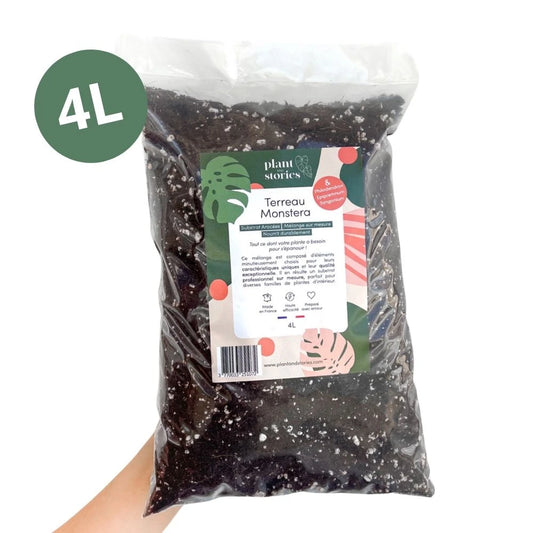
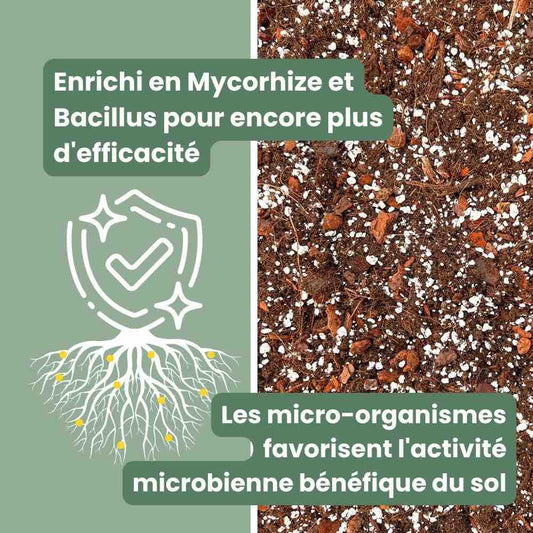
Monstera Soil - Enriched with Mycorrhiza and Bacillus - Araceae Substrate
Regular price From 9,50 €Regular price23,75 €Sale price From 9,50 €9,50 €From 7,60 €Sale -
Hoya Premium Potting Soil - Enriched with Mycorrhizae and Bacillus - Made in France
Regular price 11,99 €Regular price11,99 €Sale price 11,99 €11,99 €9,60 € -
Duo - Universal Substrate 10L + Universal Liquid Fertilizer 250ml + free graduated pipette
Regular price 32,00 €Regular price37,00 €Sale price 32,00 €32,00 €25,60 €Sale





Why add nutrients?
This is the key to hydroponics: because the growing medium is inert, it provides no nutrients. The plant gets all its nourishment from the solution you prepare. Without fertilizer, the plant eventually becomes depleted.
Unlike potting soil, which contains and releases nutrients, clay pebbles store virtually nothing: the plant has no reserves to draw on. So, add a complete hydroponic fertilizer to the water, following the recommended dosage. Beginners often start with a quarter-strength solution while the plant adjusts, then gradually increase the dose. Water quality also matters a great deal, since there is less buffering than in soil. The University of Minnesota Extension also points out that nutrient-rich solutions encourage algae and bacteria to grow, a particular concern in passive systems without aeration.
| In soil | In semi-hydro (inert medium) |
|---|---|
| Potting soil stores nutrients | The growing medium provides none |
| Buffering reserve | Everything comes from the solution |
| Fertilize less often | Add nutrients with each water change |
| Water quality is less critical | Water quality is crucial |
How do you convert a plant from soil to water?
Converting an existing plant takes some care, as it needs to grow new roots adapted to a wet environment. The transition is the most delicate stage.
Remove the plant from its pot, then gently rinse all the soil from its roots with lukewarm water, taking care not to break them. Next, place the plant in rinsed clay pebbles, with a reservoir of plain water to start (no nutrients for the first few weeks). The plant will gradually grow new “water roots” that are better adapted to the environment. Once these new roots are well established, add fertilizer. It is common for a few leaves to turn yellow temporarily during this adjustment period.
| Conversion step | What to do |
|---|---|
| Remove from pot and rinse | Wash all the soil away with lukewarm water |
| Set up | Rinsed pebbles, plain water to start |
| Wait | Give the water roots time to grow |
| Feed | Add fertilizer afterwards |
Everyday care
Once the plant is established, semi-hydro care is simple but regular. It comes down to three tasks: monitor the water level, replace the solution, and rinse the pebbles.
Keep the nutrient solution at the right level, without ever submerging all the roots, which need oxygen. Replace the solution regularly to prevent stagnation, and rinse the pebbles about once a month to remove accumulated salts. This monthly rinse is important: in a passive system, water evaporates but minerals remain, and their concentration increases over time.
📋 Quick reference (experienced gardeners)
A quick overview of the key points for getting started with semi-hydroponics.
| Parameter | Guide |
|---|---|
| Principle | Soil-free growing, roots nourished by water |
| Beginner method | Passive semi-hydro in clay pebbles |
| Equipment | Pebbles, slotted pot, reservoir, fertilizer |
| Electricity | None (passive system) |
| Nutrients | Hydroponic fertilizer required |
| Ideal plants | Pothos, philodendron |
| Key maintenance | Rinse the pebbles, replace the water |
| Pitfalls | Algae, salt buildup |
Which plants should you choose to get started?
For a first attempt, choose hardy, forgiving plants that adapt easily to water. Pothos and philodendron are the undisputed champions for beginners.
These climbing plants tolerate the transition well and quickly grow new roots adapted to a wet environment. Many enthusiasts even recommend starting with a cutting rooted in water rather than converting a mature plant, to minimize shock. Scindapsus and many other aroids are also well suited to this method. Avoid delicate or particularly sensitive plants to begin with.
| Plant | Suitability for semi-hydro |
|---|---|
| Pothos | Excellent, ideal for beginners |
| Philodendron | Excellent, easy to transition |
| Scindapsus, aroids | Very good |
| Cuttings rooted in water | The best place to start |


Troubleshooting: solving common problems
Beginners often run into a few common problems. Here’s how to spot them and fix them.
| Symptom | Likely cause and solution |
|---|---|
| Leaves yellowing after conversion | Transition shock: wait it out, start with cuttings |
| Green water, algae | Reservoir is too transparent: use an opaque container |
| White residue or crust on the pebbles | Salt buildup: rinse and replace the water |
| Brown, soft roots | Not enough oxygen: lower the water level |
To get equipped, our range of grow pots and fertilizers and plant care products will help you get started with hydroponics.
Get started with confidence with Plant and Stories
Hydroponics is nothing to be intimidated by when you take it one step at a time: one hardy plant, clay pebbles, a suitable fertilizer, and a little patience are all you need. You’ll discover healthy roots, fewer pests, and a much simpler watering routine.
To get started, explore our grow pots and easy-care plants, carefully selected in France. By taking it one plant at a time, you’ll soon build a little water garden that’s clean and fascinating to watch.

Laura Bruneau
Jardinière et autrice


