What is Perlite and how do you use it?

Horticultural perlite has become a must-have for gardening enthusiasts and professionals, offering unique benefits in terms of drainage , water retention , and root aeration .
This lightweight and durable soil amendment improves growing conditions for plants.
Discover how perlite can transform your substrates and optimize the vitality of your plants.

Perlite is derived from natural volcanic rock, a material distinguished by its lightness and its ability to improve soil structure.
When used in substrates , it allows for ideal water retention while ensuring optimal drainage.
This dual advantage makes it an indispensable ally in preventing root rot problems while maintaining effective root aeration.
In this article, we will explore the many benefits of perlite , as well as its best practices for use to maximize the health and growth of your plants.
The Benefits of Horticultural Perlite:
- Balanced drainage and water retention: Thanks to its porous structure, perlite retains the necessary amount of water while releasing the excess, preventing stagnation and reducing the risk of root diseases.
- Improved soil aeration: The ideal 2.5/6 mm size ensures optimal root oxygenation, essential for healthy and vigorous growth.
- Lightweight substrate: Unlike other amendments, perlite is lightweight, making it easy to transport and integrate into the substrate without weighing down the pots.
- pH neutrality: Perlite is neutral, which means it can be used without risk of altering the acidity or alkalinity of the soil. It is ideal for a wide variety of plants, both ornamental and vegetable.
- Durability and stability: Unlike organic amendments, perlite does not decompose and retains its structural properties over the long term, providing lasting support for plants.
Perlite: Ideal for all your plants

Versatile , horticultural perlite is suitable for all plants .
It is particularly recommended for plants sensitive to excess moisture such as cacti, succulents, and tropical plants.
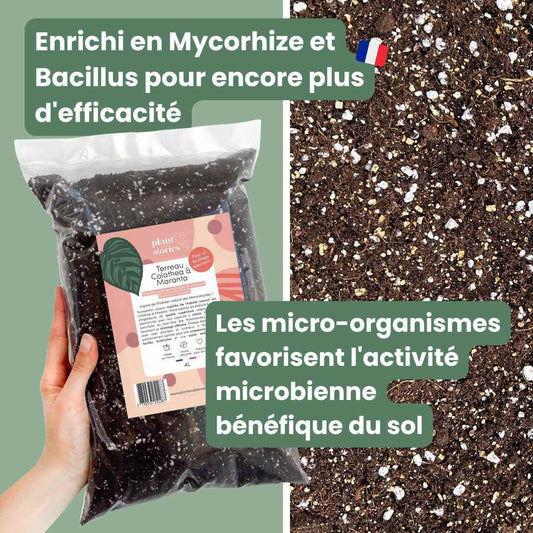
Calathea and Maranta will particularly appreciate a substrate enriched with perlite.
This promotes both drainage and water retention , thus maintaining the ideal humidity for their proper development.
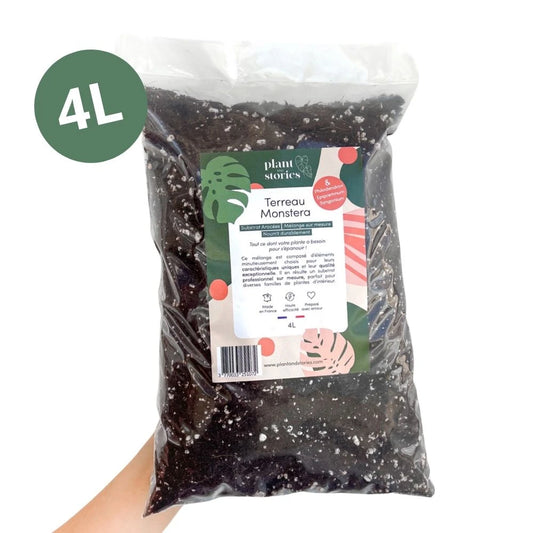
At Plant and Stories , horticultural perlite is indispensable , and all our professional mixes are enriched with perlite.
How to Use Horticultural Perlite?

Perlite is easy to incorporate into the substrate . Depending on the moisture and drainage needs of each plant, it can be added in varying proportions.
This flexibility allows for optimal control of humidity and ventilation levels , which is particularly beneficial for potted plants.
Recommended Dosage
For indoor plants , a mixture of 20% to 30% perlite in the potting soil is usually sufficient to ensure proper drainage and aeration .
However, some plants requiring excellent drainage, such as succulents, can benefit from a higher proportion of perlite.
For sowing , perlite can be combined with vermiculite at a ratio of 50% perlite and 50% vermiculite.
For cuttings , a dosage of approximately 35% to 40% may be advisable to promote optimal oxygenation and good water retention , necessary to stimulate the root system.
FAQ - Answers to Frequently Asked Questions
Why use perlite?
Perlite is an essential soil amendment for those looking to prevent root rot and ensure optimal oxygenation. Its lightness, durability, and stability make it an excellent choice for improving soil structure and promoting balanced water retention.
How much perlite should I use?
The amount depends on the specific needs of each plant. For typical houseplants, a ratio of 20% to 30% perlite is recommended in the potting mix. Plants requiring superior drainage, such as cacti, may need a higher percentage of perlite.
Is perlite suitable for all plants?
Yes, perlite is compatible with all plants. It is particularly beneficial for plants requiring good drainage, such as tropical plants, cacti, and succulents. It is also recommended for seedlings and cuttings.
Does perlite change the pH of the soil?
No, our horticultural perlite is neutral and does not alter the soil pH. This allows it to be used safely for a wide variety of plants, without compromising their natural environment.
Is perlite durable over time?
Absolutely. Perlite is very stable and does not decompose, allowing it to retain its structural properties over the years, thus providing long-term support for plants without the need for frequent renewal.
Conclusion :
Adding perlite to substrates optimizes drainage, oxygenation and water retention , creating a perfect environment for healthy and sustainable plant growth.
At Plant and Stories , we offer premium quality horticultural perlite, ideal for enriching your mixes and ensuring the well-being of all your plants.

Investing in high-quality horticultural perlite provides your plants with a high-quality substrate that improves drainage, ensures optimal aeration, and preserves the moisture needed for healthy growth.
Whether you are a gardening enthusiast or a professional, 2.5/6 mm horticultural perlite is a wise choice to optimize the health and vitality of your plants in the long term.

Laura Bruneau
Jardinière & autrice