Repotting a plant after buying it: when and how?

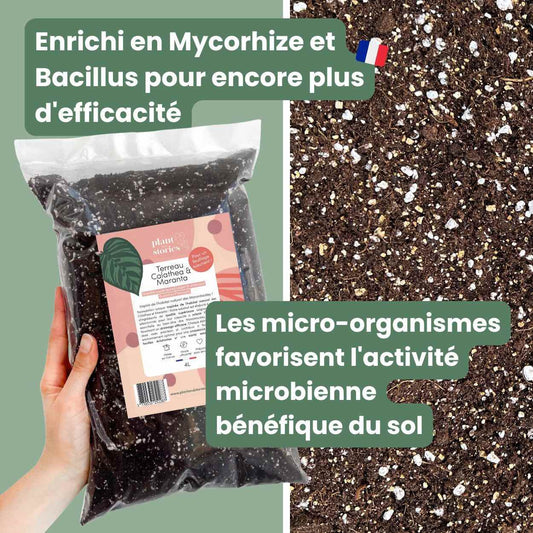
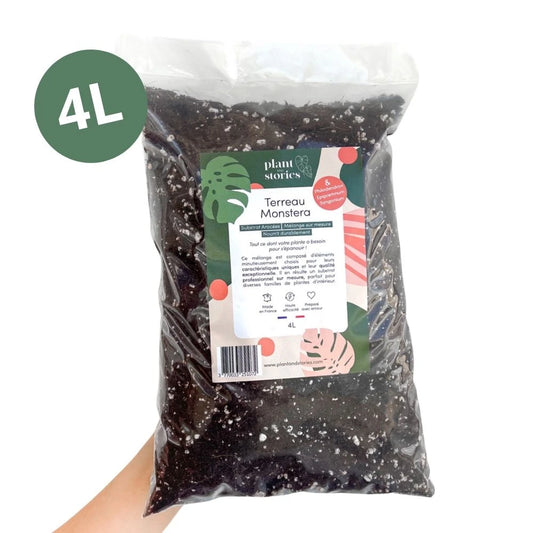
Should you repot a plant right after buying it? Generally, not right away: it's best to let it acclimate for two to four weeks before repotting it, so as not to add two stresses together. The rule can be summed up in one sentence: let your new plant settle in, then repot it calmly, unless there's an emergency. Find everything you need to repot it in our range of potting mixes.
This guide explains when to repot after purchase, the emergency cases that make an exception, how to acclimate your plant, and how to repot it properly when the time comes.
Should you repot immediately after purchase?
In most cases, it's better to wait. A freshly purchased plant has just been through quite a journey, from the greenhouse to the store and then to your home, and needs to adapt to its new environment before any change.
Repotting immediately adds a stress (new potting mix, disturbed roots) to the stress of moving. The plant then has to recover twice. The wise thing to do is to first let it acclimate to the light, humidity, and watering schedule of your home, then repot it once it is well settled.
Most gardeners recommend waiting two to four weeks. This delay gives the plant time to stabilize, and the repotting is then done on a stronger plant, better able to recover and quickly grow new roots in its fresh substrate.
Cases where you need to repot immediately
However, there are exceptions where quick repotting is justified, or even necessary. These are situations where the original pot puts the plant at risk.
If the plant shows root rot, if its pot has no drainage holes and retains water, or if the roots are so tight that they are suffocating (very root-bound plant, potting mix that dries out in a day), it's better to intervene without delay. In these cases, prolonging the stress of a repotting for a little while is better than leaving the plant in conditions that make it suffer. Outside of these emergencies, patience remains the best option, and a healthy plant loses nothing by spending its first few weeks in its original pot.
| Situation | Repot immediately? |
|---|---|
| Root rot | Yes, urgently |
| Pot without a hole drowning the plant | Yes |
| Very tight roots, potting mix that dries out in 1 day | Yes |
| Healthy plant in a suitable pot | No, wait |
The mistake of the enthusiastic beginner is to repot the plant the very same day, in a pretty pot that is twice as large as it needs to be. Result: the plant sulks for weeks. My advice: bring it back, put it in quarantine, observe it, and wait two to three weeks before repotting it. Unless you see a waterlogged pot without a hole or rotten roots: then, act immediately. The rest of the time, patience always wins.
Acclimating your new plant
Before thinking about repotting, the key step is acclimation. This consists of providing the plant with stable conditions and observing it, without multiplying interventions.
| Acclimation step | Why |
|---|---|
| Stable and indirect light | Avoid light shock |
| Watering according to needs | Neither too much nor too little |
| Few interventions | Let the plant settle in |
| Regular observation | Spot a real problem early |
According to the Washington State University Extension manual, you should not do any major repotting until the plant has settled into its new environment, keep it hydrated and away from direct sunlight for a few days, and quarantine any new plant away from the others for a few weeks to spot any potential insects. A good thorough watering at the sink also helps dissolve excess salts accumulated at the grower, a residue left by intensive fertilization in the nursery.
columns: 4
columns_mobile: 2
-
Large Faux Leather Potting Mat - Plant Potting Mat
Regular price 29,95 €Regular price34,95 €Sale price 29,95 €Sale -
-
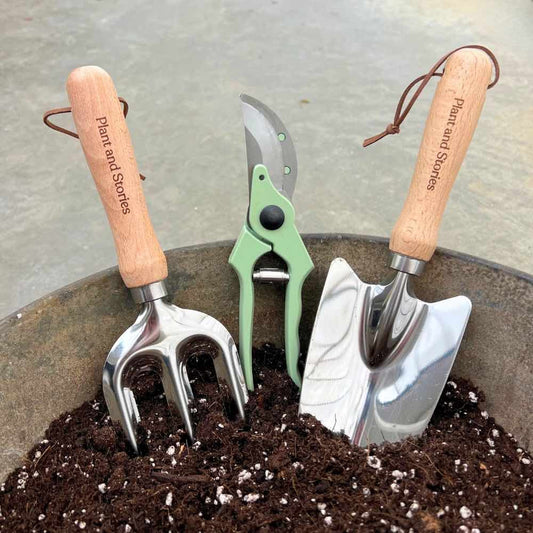
Gardening Tool Kit - Set of 3 Essential Tools - Garden Tool Set
Regular price 15,95 €Regular price29,95 €Sale price 15,95 €Sale -
Plant cleaning gloves - Anti-limescale
Regular price 10,00 €Regular price10,00 €Sale price 10,00 €




Quarantine, a useful reflex
If you already have other plants, quarantine is a valuable reflex. A new plant is the most frequent source of introducing pests into a collection.
Keep the newcomer away from the others for about two weeks, in a bright place, regularly inspecting the undersides of the leaves and the stems. Stowaways like spider mites or mealybugs spread quickly once they come into contact with other plants. This period of isolation allows you to spot and treat any problem before integration.
| Quarantine step | Action |
|---|---|
| Isolate | Away from other plants, ~2 weeks |
| Inspect | Undersides of leaves, stems, potting mix |
| Light | Bright and indirect light |
| Integrate | Once stable and pest-free |
Should you keep the original nursery pot?
Many plants arrive in a flexible plastic nursery pot, with holes, placed inside a decorative cachepot. Good news: this nursery pot is often perfectly functional, and you are not obliged to replace it right away.
This plastic container, with its drainage holes, allows water to drain well and makes watering easier: you can take the plant out of its cachepot to water it at the sink, let it drain, then put it back. As long as the plant is not root-bound, keeping this nursery pot during acclimation is even recommended. The decorative cachepot, on the other hand, should never retain water at the bottom.
| Container | Role |
|---|---|
| Nursery pot with holes | Drains water, holds the roots |
| Decorative cachepot | Aesthetic, empty after watering |
| Watering | Take out, water, drain, put back |
| When to change | When the plant is root-bound |
After repotting: the right steps
Once the plant is repotted, a few precautions help it get back on its feet without trouble. The first few weeks are the most delicate.
Water moderately and place the plant in a bright place but without direct sunlight, until it recovers. Avoid fertilizing right away, because fresh potting mix already contains nutrients and disturbed roots absorb fertilizer poorly. We also limit moving around: a plant that is left alone in a stable location settles in much faster than a plant that is moved constantly.
📋 Quick technical sheet (experienced gardeners)
The guidelines for managing a plant right after purchase, at a glance.
| Parameter | Guideline |
|---|---|
| Repotting after purchase | Wait 2 to 4 weeks |
| Exceptions | Rot, pot without a hole, suffocated roots |
| Quarantine | ~2 weeks if other plants |
| Light | Bright and indirect, without burning sun |
| Watering | According to needs, not systematically |
| Leaf drop | Normal at the beginning |
| New pot | 2 to 4 cm larger, 5 cm maximum |
| Best season | Spring |
How to repot properly when the time comes?
Once the plant is acclimated, repotting is done methodically. The most important point is not to choose a pot that is too large.
According to PlantTalk Colorado (Colorado State University Extension), you choose a pot only one to two inches (2 to 5 cm) larger in diameter than the current one, carefully clean a reused pot to avoid transmitting pathogens, and use a quality potting mix, without garden soil. Place a little substrate at the bottom, install the plant, fill with potting mix, then water. Spring, at the beginning of the growing season, is the best time.
| Repotting step | Action |
|---|---|
| Choose the pot | 2 to 4 cm larger (5 cm maximum), with drainage |
| Prepare | Quality potting mix at the bottom |
| Install | Centered plant, fill with substrate |
| Finish | Water and let drain |
Which transparent pot for which plant?
If you repot in our transparent pots, the rule depends on the nature of the roots: large roots, araceae pot; thin roots, round transparent pot.
The transparent araceae pot is deeper and perforated at the bottom as well as on the sides, for perfect oxygenation of thick roots. The round transparent pot is perforated at the bottom and is suitable for thin roots.
| Root type | Recommended pot | Plants concerned |
|---|---|---|
| Large roots | Araceae pot, from 10 to 21 cm | Monstera, Philodendron, Alocasia, Colocasia, Anthurium, Pothos, Syngonium, Rhaphidophora, Zamioculcas, Strelitzia |
| Thin roots | Round transparent pot, from 6 to 17 cm | Hoya, orchids, Calathea, Spathiphyllum, Peperomia, Pilea, Fittonia, Tradescantia, begonias, young plants and cuttings |
For size, take a pot 2 to 4 cm wider than the current pot, 5 cm at most: a plant in a 6 cm pot thus fits into a 9 cm round pot or a 10 cm araceae pot.
| Current pot | Round transparent pot | Araceae pot |
|---|---|---|
| 6 cm | 9 cm | 10 cm |
| 7 to 8 cm | 9 or 12 cm | 10 or 12 cm |
| 9 to 10 cm | 12 cm | 12 cm |
| 11 to 12 cm | 15 cm | 14 cm |
| 13 to 14 cm | 17 cm | 16 cm |
| 15 to 17 cm | Araceae pot recommended | 18 or 21 cm |


Diagnosis: the mistakes to avoid
A few classic mistakes compromise the establishment of a new plant. Here they are to help you avoid them.
| Mistake | Consequence |
|---|---|
| Repotting on the day of purchase | Double stress, sulking plant |
| Pot much too large | Waterlogged potting mix, risk of rot |
| Skipping quarantine | Pests spread to the collection |
| Moving the plant constantly | Prolonged stress, slowed adaptation |
To repot properly, find our potting mixes and our pots and cachepots, carefully selected in France.
A good start with Plant and Stories
Welcoming a new plant is above all a matter of patience: we let it acclimate, we put it in quarantine if necessary, and we only repot it once it is settled, unless there's an emergency. This gentle start gives it the best chances to flourish sustainably.
To grow your collection, explore our indoor plants and our accessories, carefully selected in France. By giving each newcomer time to find its bearings, you spare yourself a lot of disappointment and see it flourish serenely.

Laura Bruneau
Jardinière & autrice