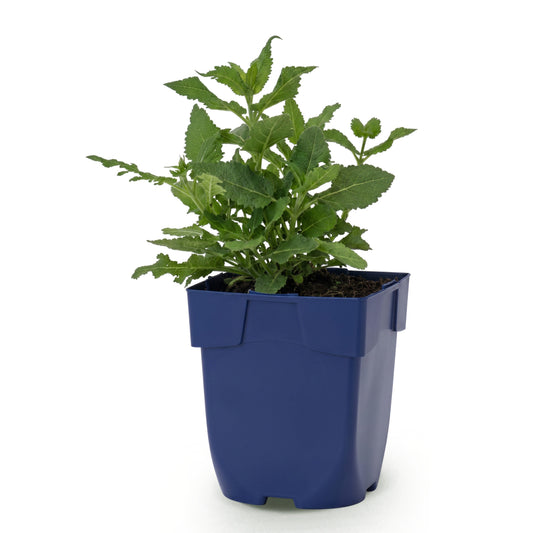
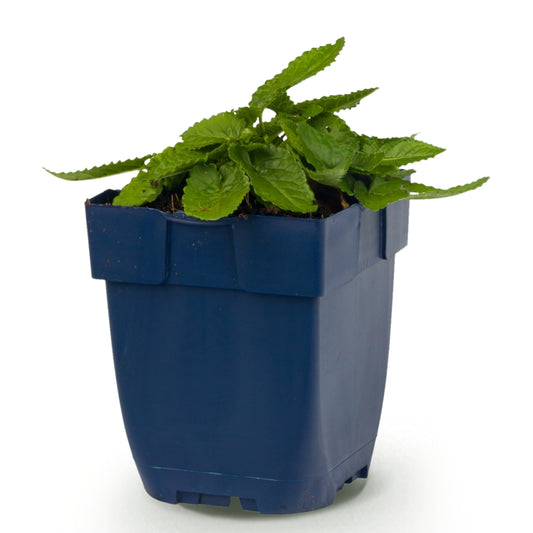
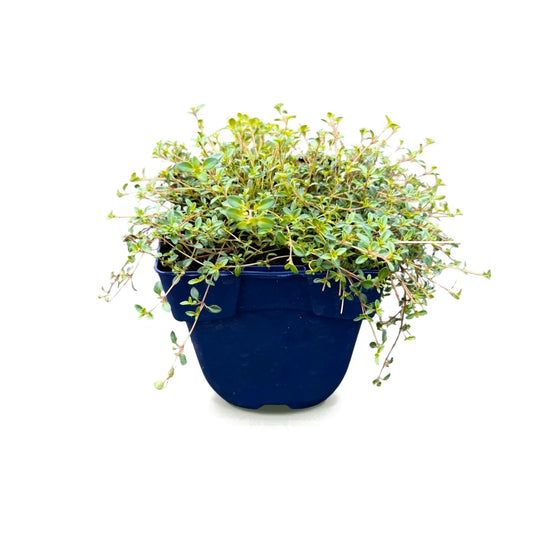
Erigeron karvinskianus (Mexican fleabane): planting, pruning, and care

To grow Erigeron karvinskianus successfully, plant it in full sun in very well-drained soil, even if it is poor or stony; water only while it establishes, then cut it back close to the ground in early spring. This Mexican fleabane, also known as seaside daisy, forms cushions of small white daisies that turn pink, perfectly at home in a wall, rock garden or at the foot of a wall.
Hardy and undemanding, it has just one drawback: it readily self-seeds. This guide brings together information verified with the RHS, Kew botanists and NC State Extension, as well as advice on planting, pruning and sowing, both in the ground and in pots.
🌿 Why plant Mexican fleabane
Mexican fleabane covers places where almost nothing else will grow: cracks in walls, stone steps, gravel borders and sunny spots at the foot of walls.
According to the RHS (Royal Horticultural Society), it forms broad mats of semi-evergreen, narrow, hairy, grey-green leaves, tolerates drought and is suitable for coastal gardens, rock gardens and borders.
Its flower heads, about 1.5 cm across with yellow centres, open white and then turn purplish pink, so each clump bears two colours at once. It has received the Award of Garden Merit, the RHS award for reliable garden plants.
| Benefit | What it means for your garden |
|---|---|
| Very long flowering period | Hundreds of small daisies all summer, without deadheading |
| A plant for difficult spots | Walls, cracks, gravel: it establishes where there is little soil |
| Drought tolerant | Once established, it needs only rainfall when grown in the ground |
| Two colours on the same plant | White flowers turn pink for a natural, informal effect |
🔎 Erigeron karvinskianus at a glance
According to Plants of the World Online (POWO) from the Royal Botanic Gardens, Kew, the accepted name is Erigeron karvinskianus DC., published by de Candolle in 1836; Erigeron mucronatus DC. is a synonym still seen in garden centres. It belongs to the Asteraceae family, like the common daisy and the oxeye daisy.
Its native range stretches from Mexico to Venezuela (Guatemala, Honduras, Costa Rica, Panama, Colombia…), in the subtropical biome, and POWO records it as introduced in more than 50 regions around the world, including France.
According to the RHS (Royal Horticultural Society), the plant reaches 10 to 50 cm in height and spreads 50 cm to 1 m within 2 to 5 years.
| Feature | Verified details |
|---|---|
| 🏷️ Botanical name | Erigeron karvinskianus DC. (syn. Erigeron mucronatus) |
| 🧬 Family | Asteraceae |
| 🌳 Type | Semi-evergreen perennial, forming a cushion or trailing growth |
| 🌍 Origin | Mexico to Venezuela; introduced in France (POWO) |
| ❄️ Hardiness | RHS H5, meaning -10 to -15 °C |
| 🍃 Foliage | Small, narrow, hairy, grey-green leaves |
| 🌸 Flowering | Flower heads about 1.5 cm across, white turning purplish pink, in summer (RHS) |
| 📏 Mature size | 10 to 50 cm tall, spreading 50 cm to 1 m (RHS) |
📋 Quick growing guide
Essential growing information, all at a glance.
| Factor | Guideline |
|---|---|
| Position | Full sun, south-, west- or east-facing, even in a windy spot |
| Soil | Well drained: chalky, sandy, loamy or clay, any pH |
| Hardiness | RHS H5: -10 to -15 °C |
| Watering | When planting and in pots during summer; after that, rainfall is enough in the ground |
| Planting | In spring, once the soil has drained; sow in pots under a cold frame in spring |
| Pruning | In early spring, cut back close to the ground, above the new shoots |
| Flowering | In summer according to the RHS; deadheading is unnecessary |
| Care | Very easy; pull out unwanted seedlings |
| Toxicity | No information from the RHS or NC State Extension |
📍 Where and when to plant Erigeron karvinskianus
Plant Erigeron karvinskianus in a sunny spot where water never pools: the RHS recommends full sun, facing south, west or east, in any well-drained soil, whatever its pH.
For the Erigeron genus, North Carolina State University Extension (NC State Extension), which includes this species, recommends full sun—at least 6 hours of direct sunlight a day—and notes its good tolerance of poor soil, drought and salt.
Spring is the best time to plant, giving the clump time to establish roots before the summer heat.
☀️ Ideal: Cracks in a sunny wall, rock garden, stone steps, gravel border
🌥️ Suitable: A well-drained perennial bed, planter or sunny balcony pot
🚫 Avoid: Shade, heavy soil waterlogged in winter, paving you want to keep tidy
🪴 Planting Mexican fleabane in the ground or in a pot
Success comes down to drainage: the RHS profile for 'Kew Profusion' recommends it for rock gardens, gravel gardens, borders, at the foot of roses and shrubs, and in pots too, in soil ranging from poor to fertile. In the ground, simply loosen the soil and add gravel if it is heavy.
In a pot, choose a container with drainage holes and use compost lightened with sand or gravel. Allow for its mature spread of 50 cm to 1 m according to the RHS when spacing plants.
| Step | What to do |
|---|---|
| 1. Choose a spot | Full sun, soil that never stays waterlogged, a wall or border |
| 2. Prepare the soil | Loosen it and add gravel to heavy soil; use a pot with drainage holes |
| 3. Plant the rootball | Set it level with the soil, without burying it deeper, and firm gently |
| 4. Water | Water thoroughly at planting, then as the soil dries while the plant establishes |
| 5. Let it spread | Avoid thick mulch around the crown: the trailing stems will cover the soil on their own |
columns: 4
columns_mobile: 2
-


Mix of hardy, low-growing rock garden perennials in assorted colors, set of 8 plants, 14 cm pot, 17 cm tall
Regular price 64,95 €Regular price64,95 €51,96 €Livraison offerte -


Perennial ice plant (Delosperma) – flowering ground cover in a mix of colours – 7 cm pot – height 10–12 cm
Regular price From 44,95 €Regular price44,95 €From 35,96 €Livraison offerte -


Isotoma (Isotoma fluviatilis) - flowering groundcover perennial - 11 cm pot - Height 25 cm
Regular price From 64,95 €Regular price64,95 €From 51,96 €Livraison offerte -
‘Red Carpet’ Thyme (Thymus) – aromatic perennial – 11 cm pot – height 25 cm
Regular price From 39,95 €Regular price39,95 €From 31,96 €Livraison offerte -


Buenos Aires verbena ‘Lollipop’ (Verbena bonariensis) – nectar-rich perennial – 11 cm pot – height 25 cm
Regular price From 39,95 €Regular price39,95 €From 31,96 €Livraison offerte -


Karvinski's fleabane (Erigeron karvinskianus) - small daisy of the stone walls blooming from May to the frosts
Regular price From 44,95 €Regular price44,95 €From 35,96 €Livraison offerte -
Blue fescue 'Elijah Blue' (Festuca glauca) - evergreen glacier-blue cushion grass
Regular price From 44,95 €Regular price44,95 €From 35,96 €Livraison offerte -

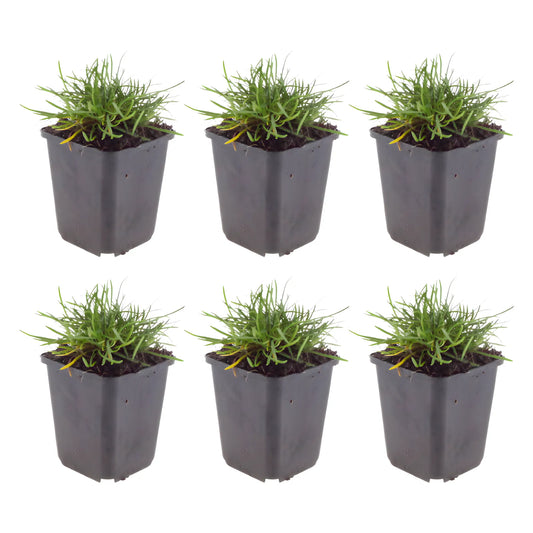
Thrift 'Splendens' (Armeria maritima) - evergreen cushion with bright pink pom-poms
Regular price From 44,95 €Regular price44,95 €From 35,96 €Livraison offerte


✂️ Caring for Erigeron karvinskianus: watering and maintenance
Erigeron karvinskianus needs very little care: the RHS does not require deadheading and describes it as generally free of pests and diseases. When grown in the ground, water while it establishes, then let the rain do the work: the plant is known for its drought resistance.
In a pot, the growing medium dries out quickly in summer: water when it is dry a few centimetres below the surface. Fertiliser is not necessary: according to the RHS, it grows well in soil ranging from poor to fertile.
💧 Watering: In the ground, only while establishing; in pots, when the surface of the compost has dried
🌱 Fertiliser: Unnecessary in the ground; a light application in spring is enough for pots
🔹 Deadheading: Not necessary according to the RHS; however, cutting it back limits self-seeding
🔹 Self-seeding: Pull up young plants where they are unwanted, such as paving joints or lawns
🧣 Winter: No protection needed in well-drained ground; raise pots to prevent standing water
🍂 Pruning Erigeron karvinskianus and seasonal care
To prune Erigeron karvinskianus, cut the whole clump back close to the ground in early spring, just above the new shoots emerging from the base: this is the RHS-recommended approach. This removes the dead winter stems and encourages a dense, floriferous cushion.
Rated H5 by the RHS, meaning it can withstand temperatures down to -10 to -15 °C according to the RHS hardiness ratings scale, the plant can spend winter outdoors in most regions of France, provided the soil remains well drained. In regions with harsher winters or heavy soil, choose a sheltered, perfectly drained spot.
📅 Seasonal care calendar
| Season | Key task |
|---|---|
| 🌸 Spring | Cut back close to the ground in early spring, plant, sow in pots under a cold frame |
| ☀️ Summer | Peak flowering; water pots as needed; pull out unwanted seedlings |
| 🍂 Autumn | Flowering may continue into early autumn; clumps can be divided |
| ❄️ Winter | Dormant; no protection needed in well-drained soil; raise pots to prevent standing water |
🌱 Sowing, division and self-seeding
Mexican fleabane is mainly propagated by seed: the RHS recommends sowing in pots under a cold frame in spring. For the genus, NC State Extension also lists division and cuttings, using a well-established clump.
The easiest option is often to lift the young plants that have self-seeded at the foot of a wall, keeping their rootballs intact, and replant them elsewhere. According to the RHS, 'Kew Profusion' is a selection that produces uniform plants from seed.
🐛 Common problems: causes and solutions
Erigeron karvinskianus causes very few problems: the RHS describes it as generally free of pests and diseases. The rare failures almost always result from soil that stays wet, too little sun or, conversely, too much success, when the plant self-seeds everywhere. Here is how to read the signs.
| Symptom | Likely cause | Solution |
|---|---|---|
| Clump turns black and rots after winter | 💧 Too much water in heavy soil or a pot without drainage | Replant in soil lightened with gravel, raise the pot and water less |
| Long stems, few flowers | ☀️ Not enough sun | Move into full sun, with at least 6 hours of direct sunlight |
| Cushion bare in the centre | ⚠️ An old clump that has not been cut back | Cut back close to the ground in early spring; divide if needed |
| Seedlings everywhere in paving joints | ⚠️ Spontaneous self-seeding, typical of the species | Pull up young plants and cut off flowers near areas you want to keep tidy |
| No regrowth after a harsh winter | 💧 Temperatures below the RHS H5 threshold or waterlogged soil | Wait until late spring: seedlings often appear; otherwise, sow again |
| Pots dry out and flowering stops in summer | 💧 Not enough water in a small volume of soil | Water when the compost is dry and choose a larger pot |
-

Cover the ground with ease: our outdoor ground cover plants blanket slopes,...


🌿 Our picks for further inspiration
We do not currently offer Erigeron karvinskianus. To create a dry, flower-filled garden around it, here are our outdoor guides and collections.
| Our pick | Why choose it |
|---|---|
| Ground-cover perennials | Other flowering carpets to cover the ground with little maintenance |
| Dry gardens | How to create a water-wise garden where Mexican fleabane fits right in |
| ground covers | Our collection of ground covers for slopes, borders and the foot of walls |
| full-sun plants | Our full-sun plants to combine in a rock garden or dry border |
🎨 Companion plants for Mexican fleabane
The RHS suggests planting Erigeron karvinskianus at the foot of roses and shrubs: its light cushions dress the ground beneath them, an idea you can take further with our guide to roses.
In a rock garden or dry garden, pair it with sun-loving plants that have similar water needs: lavender, catmint or prairie grasses such as feather grass and fescue.
For a larger flower bed, explore our perennials for flower beds and our outdoor plants.
⚠️ Is Erigeron karvinskianus toxic or invasive?
As for toxicity, neither the RHS nor NC State Extension reports this species as toxic; we couldn't find an ASPCA entry for it. Lack of information is not proof that it is harmless: as with any plant, prevent children and pets from eating it.
As for its behavior, POWO (Kew) classifies it as introduced in France, and NC State Extension notes that it self-seeds enthusiastically. We were unable to verify any official classification as an invasive alien species in France: avoid planting it near rocks or natural stone walls, and pull out any seedlings that spread beyond the garden.
Not to be confused with Canadian horseweed (Erigeron canadensis), an annual that NC State Extension describes as an aggressive weed in disturbed areas.
✅ Our expert tips for success
Growing Erigeron karvinskianus successfully comes down to four things: full sun, soil that never stays wet, cutting it back close to the ground in early spring, and keeping an eye on its seedlings. Hardy down to -10 to -15°C according to the RHS, it flowers all summer without fertilizer or watering once established. Give it sunny stone walls, rock gardens, steps, and pots, and let it soften the stone.
Karvinski's fleabane is the plant I recommend to anyone who wants to soften a wall or stone staircase without any fuss. What I love is the mix of white and pink flowers on the same clump, which instantly gives a garden an old-fashioned feel. I simply cut it back in spring and pull out any seedlings that venture into the joints. I do keep it away from paving I want to keep immaculate, though.

Laura Bruneau
Jardinière et autrice