Anthurium clarinervium: The Complete Care Guide

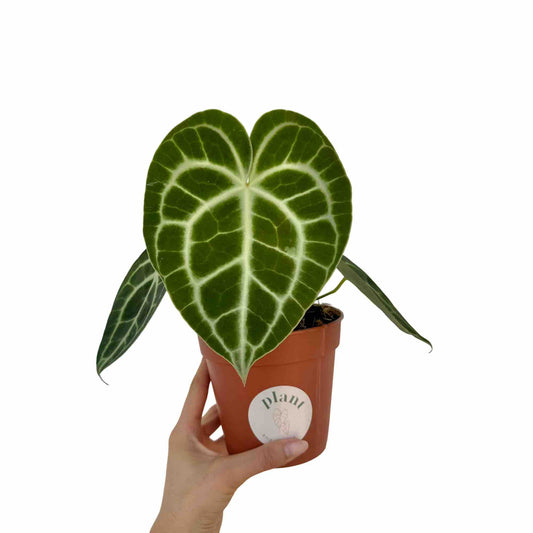
Anthurium clarinervium is that aroid with large, heart-shaped, deep green, velvety leaves veined in creamy white. The rule for growing it successfully can be summed up in one sentence: a very airy potting mix, humidity above 60%, and bright but never direct light. You’ll find these exceptional specimens in our Anthurium collection. A jewel of the Mexican state of Chiapas, Anthurium clarinervium charms with its large velvety leaves veined in silver; once acclimated, it stays decorative all year round and is easier to grow than it looks, as long as you meet its need for high humidity and an airy, living potting mix.
This guide explains where this plant comes from, what living potting mix to provide, how to adjust light, watering, and humidity, and then how to repot and propagate it without stress.
What is Anthurium clarinervium?
Anthurium clarinervium is a plant in the Araceae family, endemic to the state of Chiapas in southern Mexico, where it grows on limestone outcrops. According to Plants of the World Online (Royal Botanic Gardens, Kew), its natural range is limited to Chiapas, in a tropical biome with a pronounced dry season.
In the wild, it clings to limestone rock at elevations of 800 to 1,200 meters and takes in water and plant debris that run down the stone. It is therefore a lithophyte (a plant that grows on rock) rather than a simple epiphyte, which explains its need for a very well-draining potting mix.
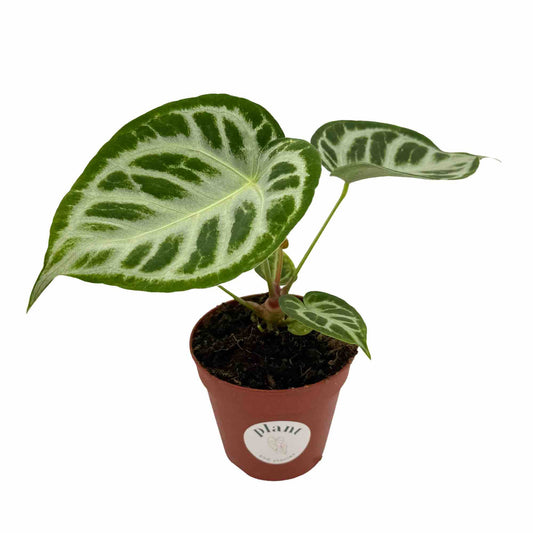
Its thick leaves, almost cardboard-like to the touch, have earned it the nickname “velvet cardboard anthurium.” The white veins are about 1 cm wide and form a reticulate pattern rarely seen in a monocot. The plant has stems 1 to 2 cm thick and, after pollination, produces orange berries containing numerous seeds. It is sometimes confused with Anthurium crystallinum, a close relative with larger leaves and more silvery veins.
How to recognize a healthy Anthurium clarinervium when buying
When buying one, the first thing to do is inspect the undersides of the leaves and the crown: a healthy plant has firm, velvety leaves with no soft spots, and pale, fleshy roots. Since it is a slow-growing and expensive plant, it’s worth checking a few things before you pay.
| What to check | Why it matters |
|---|---|
| Firm, velvety leaves | A limp leaf blade indicates water or root stress |
| Pest-free undersides | Mealybugs and spider mites hide there |
| Pale, firm roots | Brown, soft roots are a sign of rot |
| A new leaf emerging | A sign that the plant is active and well established |
A living, airy potting mix: the key to a healthy plant
The most important thing for growing a clarinervium successfully is the potting mix: it must be “chunky,” meaning coarse and very airy, never a compact standard potting soil. Its epipetric roots need air as much as water.
An aroid-style mix recreates its rocky habitat: orchid bark, perlite or pumice, coconut chips, and a little horticultural charcoal. Many growers aim for proportions of about one-third bark, one-third perlite, and one-third coco. You can make this mix yourself or start with a ready-to-use Anthurium potting mix that’s already been formulated.
| Component | Purpose | Suggested proportion |
|---|---|---|
| Pine/orchid bark | Structure and air pockets | ~1/3 |
| Perlite or pumice | Fast drainage | ~1/3 |
| Coconut chips/fiber | Moderate moisture retention | ~1/3 |
| Horticultural charcoal | Helps keep the mix clean and prevents excess | A handful |
Clarinervium won’t forgive a potting mix that holds onto water. For me, the one thing that changed everything was switching to a truly coarse mix: I’d rather water a plant that can breathe more often than watch its roots rot in heavy soil. I’ve been growing aroids for years, and for this species, an airy potting mix matters more than anything else.
What kind of light does Anthurium clarinervium need?
It needs bright but indirect light, as NC State Extension points out: under the canopy, this plant never receives direct sunlight. An east- or north-facing window is ideal; near a south- or west-facing window, move it back a little or filter the light with a sheer curtain.
Too little light slows growth, makes the leaves smaller, and causes the veins to fade. Too much direct sun scorches the velvety leaf blade. A bright bathroom is often an excellent spot, thanks to the ambient humidity.
columns: 4
columns_mobile: 2
-
Premium Anthurium Potting Mix - Enriched with Mycorrhizae and Bacillus - Made in France
Regular price 11,99 €Regular price11,99 €Sale price 11,99 € -
Live sphagnum moss - Sphagnum moss for plants - Sphagnum moss - Live sphagnum moss for plants
Regular price 9,50 €Regular price -
Set of Transparent Araceae Pots - Transparent Growing Pots for Plants
Regular price From 8,97 €Regular price9,75 €Sale price From 8,97 €Sale -
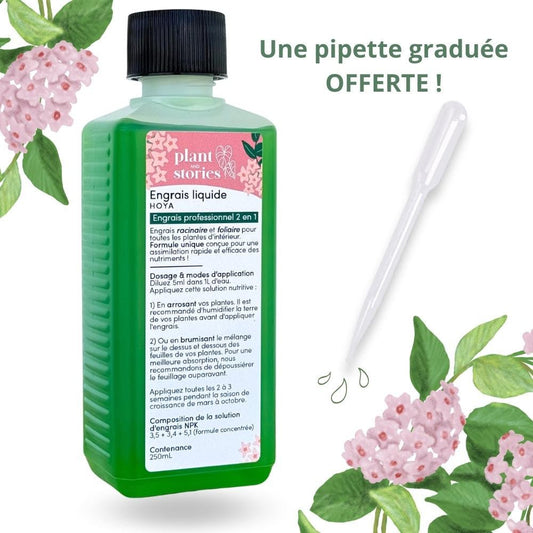
Duo of Fertilizer for All Indoor Plants + Special Hoya Fertilizer + 2 Free Graduated Pipettes!
Regular price 29,99 €Regular price40,00 €Sale price 29,99 €Sale


Watering and fertilizing: finding the right balance
Water as soon as the top 2 to 3 centimeters of the potting mix are dry, then let the excess drain away: never leave it sitting in water. In winter, reduce watering considerably to account for the plant’s natural slowdown.
As for fertilizer, clarinervium is a light feeder. A balanced fertilizer diluted to one-quarter or one-half strength every 4 to 6 weeks in spring and summer is enough. Stop feeding in winter to prevent mineral salts from building up and burning the roots.
| Season | Watering | Fertilizer |
|---|---|---|
| Spring | Regularly, once the top 2–3 cm are dry | Diluted, every 4–6 weeks |
| Summer | Regularly; keep an eye on evaporation | Diluted, every 4–6 weeks |
| Fall | Gradually water less often | Reduce |
| Winter | Minimally; keep the potting mix nearly dry | None |
Humidity and temperature: recreate Chiapas at home
Humidity is the second decisive factor: aim for over 60% relative humidity, ideally around 70–80% for optimal growth. Below 50%, leaf edges turn brown and new leaves struggle to unfurl.
As for temperature, the plant does well between 18 and 27 °C and dislikes temperatures below 15 °C, at which point its growth stops. The Royal Horticultural Society’s Anthurium guide also puts the genus’s ideal temperature range at 16 to 30 °C, with indirect light and high humidity. Keep it away from radiators and cold drafts. Grouping plants together, placing the pot on a tray of damp clay pebbles, or using a humidifier can help maintain the right level.
A simple schedule helps you keep track of its needs throughout the year, as they change significantly between the growing season and winter dormancy.
| Season | Key task |
|---|---|
| Spring | Restart: repot if needed, use diluted fertilizer, water regularly |
| Summer | Growth: maintain high humidity and watch for evaporation |
| Fall | Slow down: space out waterings and reduce fertilizer |
| Winter | Dormancy: keep the potting mix nearly dry, use no fertilizer, and protect from the cold |
📋 Quick reference (for experienced gardeners)
The plant’s essential growing requirements, at a glance.
| Parameter | Guideline |
|---|---|
| Family/genus | Araceae, Anthurium |
| Origin | Chiapas (Mexico), limestone rock, 800–1,200 m |
| Mature leaves | ~20 to 25 cm, heart-shaped and velvety |
| Mature size | ~30 to 60 cm tall and wide |
| Light | Bright indirect light; no direct sun |
| Temperature | 18 to 27 °C; never below 15 °C |
| Humidity | Above 60% (ideally 70–80%) |
| Potting mix | Chunky aroid mix (bark, perlite, coco) |
| Watering | When top 2–3 cm are dry; never soggy |
| Growth | Slow to moderate |
Caring for your clarinervium through the seasons
Anthurium clarinervium care changes throughout the year: more intensive in spring and summer, more restrained in winter.
📅 Seasonal care calendar
| Season | Key task |
|---|---|
| 🌸 Spring | Restart: increase light and watering, resume fertilizer every 2 weeks |
| ☀️ Summer | Heat: maintain 60 to 80% humidity and water as soon as the surface dries |
| 🍂 Fall | Reduce watering and fertilizer; watch for dry air from indoor heating |
| ❄️ Winter | Dormancy: water sparingly, keep at 18 to 22 °C, and keep away from radiators |
Troubleshooting: brown or yellow leaves, or struggling roots
Most clarinervium problems are caused by water or air. Here’s how to read the signs before they get worse.
| Symptom | Likely cause | Solution |
|---|---|---|
| Brown, dry edges | Humidity too low | Raise above 60% |
| Yellow leaves | Overwatering, poor drainage | Let it dry out; use a more airy mix |
| Dull veins, slow growth | Not enough light | Move it closer to indirect light |
| Scorched tips | Direct sun or too much fertilizer | Filter the light and flush the potting mix |
For more on how to repot, our step-by-step repotting guide also applies to aroids such as clarinervium.


Create a sanctuary for your clarinervium with Plant and Stories
Growing Anthurium clarinervium successfully comes down to three things: a living, airy potting mix, consistently high humidity, and gentle light. Provide these conditions, and this slow-growing but faithful plant will reward you with increasingly large velvety leaves, year after year.
To create its ideal environment, explore our rare plants and limited editions as well as our specialized potting mixes, selected and hand-packed in France. In short, give your clarinervium filtered light, a humid environment, and an airy potting mix, and it will reward you with ever larger, more striking leaves. This exceptional plant rewards patience: each new leaf, more velvety and more distinctly veined than the last, marks another step in its successful acclimation to your home.

Laura Bruneau
Jardinière & autrice