Sweetgum (American sweetgum): planting, care, varieties

To grow a sweetgum successfully, plant it in full sun, in acidic to neutral soil that stays moist but drains well, in a spot where its crown can spread more than 8 m wide: after that, it needs very little pruning.
American sweetgum, Liquidambar styraciflua, is a large deciduous tree with star-shaped leaves, often mistaken for a maple, and one of the most spectacular trees and shrubs for autumn color. Its ideal spot is among full-sun plants, as a specimen tree on a lawn.
Here are the growing guidelines verified against the RHS, Kew (POWO), and two US university extension services (NC State and Arkansas), along with drawbacks to know before planting.
🌿 Why plant a sweetgum: the tree of autumn colors
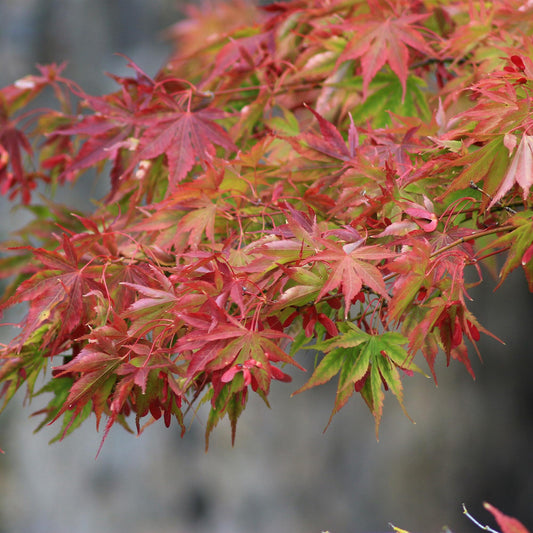
Sweetgum is planted first and foremost for its fall display. According to the RHS (Royal Horticultural Society), its glossy, 5- to 7-lobed leaves turn orange, crimson, and purple, and full sun intensifies these colors. But the tree has other qualities, too.
According to North Carolina State University Extension (NC State Extension), it grows quickly, tolerates heat, drought, and soil compaction once established, and provides birds with seeds in winter. The same source explains that its name comes from the aromatic gum that flows from wounds in the trunk.
| Benefit | What it means for you |
|---|---|
| Spectacular fall colors | Orange, crimson, and purple on the same tree, more vivid in full sun (RHS) |
| Very hardy | H6 according to the RHS, or -20 to -15 °C, with no protection needed in the ground |
| Fast-growing | Classified as fast-growing by NC State, unlike many ornamental trees |
| Few pests | Generally pest-free according to the RHS; only light pruning needed |
🔎 Sweetgum at a glance
According to Plants of the World Online (POWO), the Royal Botanic Gardens, Kew database, the accepted name is Liquidambar styraciflua L., described by Linnaeus in 1753 and classified in the Altingiaceae family; the RHS still places it in the Hamamelidaceae, its former family.
POWO gives its native range as stretching from Pennsylvania and Illinois to Texas and Florida, and then into Mexico, Belize, Guatemala, Honduras, El Salvador, and Nicaragua. The species is listed as introduced in Belgium, Italy, Spain, and New York State.
The genus has 15 accepted species, including L. orientalis (eastern Mediterranean) and L. formosana (China).
Despite its nickname of maple, it is not an Acer: NC State describes sweetgum leaves as alternate, whereas its profile for Acer palmatum describes maple leaves as opposite, and maples produce samaras, not spiky balls.
| Feature | Verified details |
|---|---|
| 🏷️ Botanical name | Liquidambar styraciflua L. (POWO); common names: sweetgum, American sweetgum |
| 🧬 Family | Altingiaceae according to POWO; Hamamelidaceae in the RHS classification |
| 🌳 Type | Large deciduous, monoecious tree (male and female flowers on the same tree, NC State) |
| 🌍 Origin | Eastern United States, Mexico, and Central America as far as Nicaragua (POWO) |
| ❄️ Hardiness | H6 according to the RHS: -20 to -15 °C; USDA zones 5a to 9b according to NC State |
| 🍃 Foliage | Alternate, star-shaped leaves with 5 to 7 lobes, about 8 to 15 cm long, fragrant when crushed (NC State) |
| 🌸 Flowers | Small, greenish-yellow flowers with little ornamental value, in April-May; followed by round, spiky fruits |
| 📏 Mature size | More than 12 m tall and over 8 m wide (RHS); 60 to 100 feet (about 18 to 30 m) according to NC State |
📋 Quick growing guide
The essential growing information, all in one place.
| Factor | Guideline |
|---|---|
| Exposure | Full sun or partial shade; full sun gives the best fall color (RHS) |
| Soil | Clay, loam, or sandy soil; moist but well-drained, with an acidic to neutral pH (RHS) |
| Hardiness | H6, -20 to -15 °C (RHS) |
| Watering | 30 to 50 liters per m² per week in dry weather while establishing (RHS); drought-tolerant afterward (NC State) |
| Planting | October to April according to the RHS; preferably in spring according to NC State (slow root recovery) |
| Pruning | RHS pruning group 1: minimal pruning, removing dead wood and poorly placed branches |
| Foliage | Deciduous; orange, crimson, and purple in fall (RHS) |
| Care | Easy; collect spiky fruits and watch for chlorosis in alkaline soil |
| Toxicity | No toxicity reported by the RHS or NC State; no listing found at the ASPCA |
📍 Where and when to plant sweetgum
Plant sweetgum in full sun as a specimen tree, away from patios, paths, and pools that its fruits could litter. The RHS says it can tolerate partial shade, but fall colors are noticeably better in full sun, and the tree tolerates both exposed and sheltered sites. Soil matters more: the RHS recommends acidic to neutral soil that stays moist but drains well.
As for timing, the RHS tree-planting guide recommends planting from October to April, avoiding frozen or waterlogged soil. However, NC State Extension recommends planting sweetgum in spring because its roots take 3 to 4 months to recover from transplanting.
☀️ Ideal: Full sun, acidic to neutral, deep and moist soil: a large lawn, park, or meadow edge
⛅ Acceptable: Partial shade, or a small garden with a narrow cultivar such as 'Slender Silhouette'
🚫 Avoid: Very alkaline soil, spots beside patios or paths (because of the fruits), or very close to the house
🪴 How to plant sweetgum step by step
Planting follows the RHS general guidelines for ornamental trees. Dig a hole at least 3 times wider than the root ball, but no deeper than the roots, so that the root flare sits level with the soil. Do not add organic matter to the bottom of the hole: the RHS notes that it can hinder establishment.
Stake tall trees, then remove the stake after 2 growing seasons. NC State describes the root system as shallow, so leave plenty of distance from paths and closely mown lawns.
| Step | What to do |
|---|---|
| 1. Choose the season | Preferably spring (NC State), or October to April when the ground is not frozen (RHS) |
| 2. Dig the hole | Make it 3 times wider than the root ball, but no deeper than the roots (RHS) |
| 3. Position the tree | Keep the root flare level with the soil; do not add organic matter to the bottom of the hole |
| 4. Stake if needed | For tall trees; remove the stake after 2 growing seasons (RHS) |
| 5. Water and mulch | 30 to 50 liters per m² per week in dry weather; leave a 10 cm gap around the trunk when mulching |
columns: 4
columns_mobile: 2
-

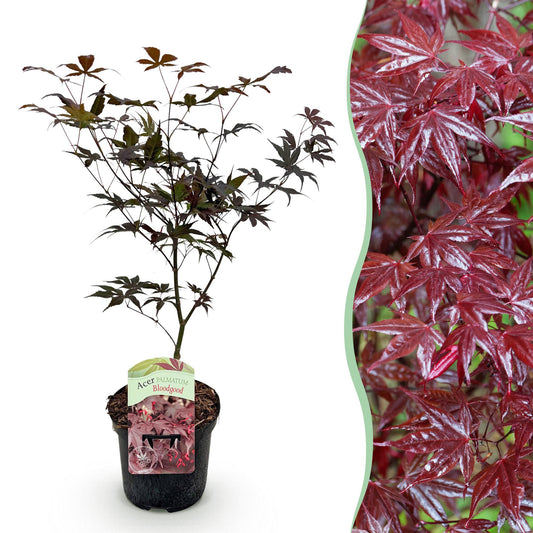
Japanese Maple 'Bloodgood' (Acer palmatum) - with fiery foliage - 19 cm pot - Height 70 cm
Regular price From 64,95 €Regular price -

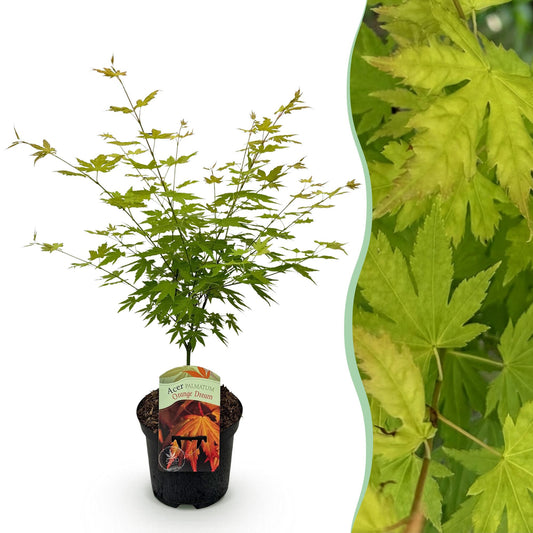
Japanese Maple 'Orange Dream' (Acer palmatum) - with fiery foliage - 19 cm pot - Height 70 cm
Regular price From 64,95 €Regular price -

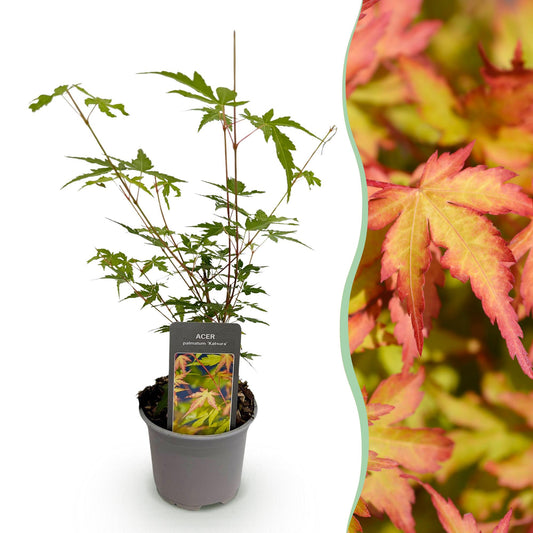
Japanese Maple 'Sangokaku' (Acer palmatum) - with fiery foliage - 12 cm pot - Height 35 cm
Regular price From 39,95 €Regular price -

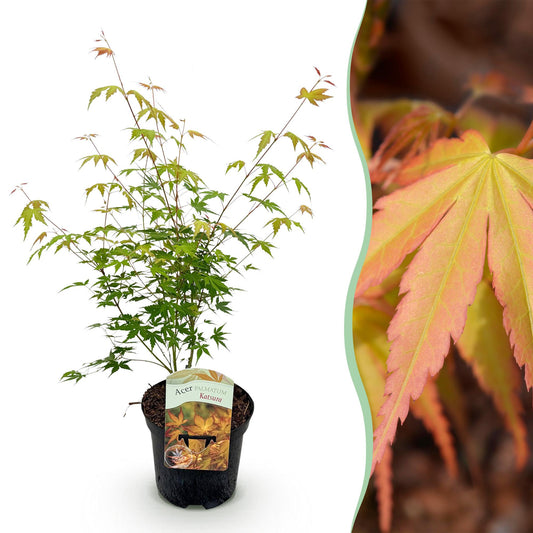
Japanese Maple 'Katsura' (Acer palmatum) - with fiery foliage - 19 cm pot - Height 70 cm
Regular price From 64,95 €Regular price -

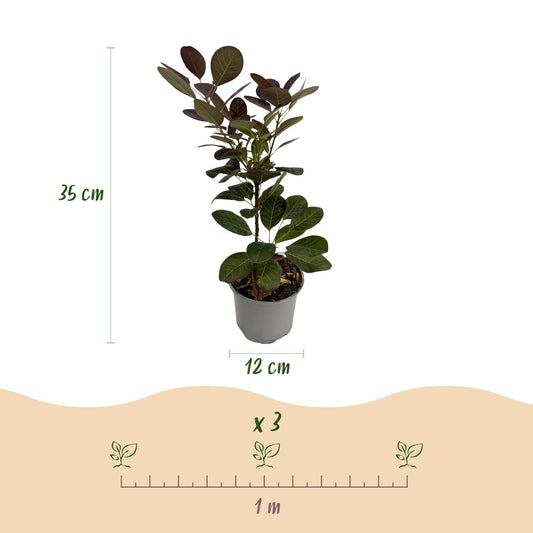
'Royal Purple' Smoke Tree (Cotinus coggygria) - purple-foliaged shrub - 12 cm pot - Height 35 cm
Regular price From 39,95 €Regular price -

 Livraison offerte
Dogwood (Cornus) – ornamental woody shrub – 17 cm pot – 45 cm tall
Regular price From 39,95 €Regular price -

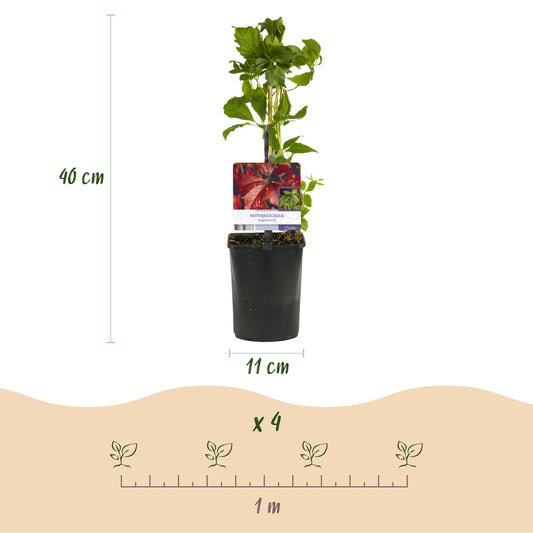
Engelmann's Virginia creeper (Parthenocissus quinquefolia 'Engelmannii') - Climbing plant with fiery foliage - 9 cm pot - Height: 35 cm - Pack of 2
Regular price 39,95 €Regular price -

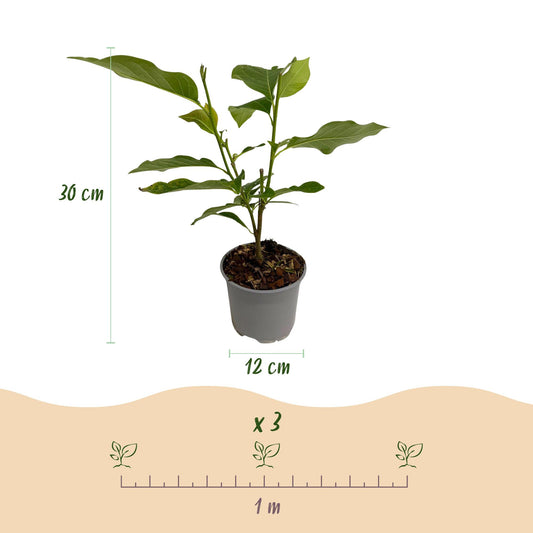
Magnolia 'Susan' (Magnolia) - spectacular flowering tree - 12 cm pot - Height 30 cm
Regular price From 39,95 €Regular price


✂️ Sweetgum care and pruning
Once established, sweetgum needs little care. The RHS places it in pruning group 1: light pruning is enough to remove dead wood, crossing branches, and competing leaders on a young tree. Water during dry spells for the first few years; NC State says the tree is drought-tolerant afterward, although it prefers moist soil.
The main issue is the soil. According to NC State, iron chlorosis can occur in alkaline soil: the leaves turn yellow between the veins because iron is no longer absorbed.
To remedy this, the RHS page on chalky soils recommends liquid chelated iron that also contains manganese and magnesium; if you need to apply it every year, the RHS advises choosing a lime-tolerant species instead, since acidifying chalky soil with sulfur is not realistic.
✂️ Pruning: Minimal: dead wood, crossing branches, and a single leader on young trees (group 1, RHS)
💧 Watering while establishing: 30 to 50 liters per m² per week in dry weather for the first few seasons (RHS)
🍂 Mulching: Apply organic mulch in a ring, leaving 10 cm clear around the root collar (RHS)
🔹 Chlorosis: Liquid chelated iron with manganese and magnesium in chalky soil (RHS)
🔹 Fruits: Collect them from lawns and patios from December to April (NC State)
🍂 Sweetgum through the seasons
In spring, sweetgum leafs out with star-shaped foliage and, in April-May, bears small greenish-yellow flowers in clusters that are barely noticeable. In summer, its glossy green leaves provide welcome shade. According to NC State, the fruits ripen in August-September: they are spiky balls about 2.5 to 7.5 cm across, made up of numerous small capsules, each containing two small seeds.
Fall is its moment in the spotlight, with colors that last several weeks on some cultivars. In winter, the bare tree sometimes reveals corky-winged branches, and the fruits continue to fall through April.
📅 Seasonal care calendar
| Season | Key task |
|---|---|
| 🌸 Spring | Recommended planting time; leaves emerge; inconspicuous flowers in April-May; collect any remaining fruits |
| ☀️ Summer | Water young trees in dry weather; watch for chlorosis in alkaline soil |
| 🍂 Fall | Orange, crimson, and purple fall colors; fruits ripen from August-September; planting possible from October (RHS) |
| ❄️ Winter | Bare tree, sometimes with winged branches; spiky fruits drop through April; planting possible when the ground is not frozen (RHS) |
🌱 Propagating sweetgum: seed and cuttings
The RHS lists two methods: sowing seed and taking semi-ripe cuttings in summer, according to the 'Worplesdon' profile. NC State mentions seed propagation only. Growing from seed produces the species, but not a particular cultivar: a seedling from a 'Worplesdon' will not necessarily have its shape or colors.
To obtain a specific cultivar, you therefore need to take cuttings or buy a grafted tree from a nursery. This is a slow process, suited to curious gardeners.
🐛 Common problems: causes and solutions
Sweetgum has few pests: the RHS says it is generally pest-free and notes only possible susceptibility to honey fungus. Most problems stem from the soil or a poorly chosen site, and its real drawbacks are easy to anticipate.
| Symptom | Likely cause | Solution |
|---|---|---|
| Leaves yellow between the veins | 🌱 Iron chlorosis in alkaline soil (NC State) | Liquid chelated iron (RHS); in the long term, choose a lime-tolerant tree instead |
| Spiky balls on the lawn | ⚠️ Fruits that have fallen from December to April (NC State) | Collect them before mowing; plant the tree away from patios and paths |
| Surface roots | ⚠️ Shallow root system (NC State) | Plant away from paths; mulch rather than mowing around the trunk |
| Dull fall colors | 🌱 Shade or overly alkaline soil (RHS) | Plant in full sun, in acidic to neutral soil |
| Dieback, fungi at the base | ⚠️ Honey fungus (RHS) | Remove the affected tree and its roots; do not replant a woody plant in the same spot |
| Slow to recover after planting | ⚠️ Roots take a long time to recover, 3 to 4 months (NC State) | Plant in spring and water regularly during the first season |
-

Acer palmatum and Japanese maples with fiery foliage, perfect for pots or...
-

Our flowering outdoor shrubs: buddleias, dogwoods, deutzias, hibiscus, mock oranges and more...


🌸 Sweetgum varieties
Data is from RHS profiles unless otherwise noted. According to the RHS profile for 'Worplesdon', 'Worplesdon' has a pyramidal shape and grows to over 12 m in 10 to 20 years. For small spaces, 'Slender Silhouette' is columnar: over 12 m tall and 2.5 to 4 m wide. Beware the claim that it is “fruitless”: the University of Arkansas Extension (UAEX) reports that this cultivar does produce spiky balls, though less regularly than the species.
| Variety | What makes it special |
|---|---|
| 'Worplesdon' | Pyramidal habit, over 12 m in 10 to 20 years, leaves with long, narrow lobes, orange and yellow fall color, AGM (RHS) |
| 'Slender Silhouette' | Columnar: over 12 m tall and 2.5 to 4 m wide (RHS); about 1.5 m wide at the base according to the University of Arkansas; AGM |
| 'Gum Ball' | Compact, rounded form often trained as a standard: 1.5 to 2.5 m according to the RHS, up to about 4.5 m according to NC State |
🎨 Liquidambar in the garden: companion planting
Planted as a specimen tree, the liquidambar is the centrepiece of an autumn display. For a garden full of color over several months, pair it with a Ginkgo biloba with golden-yellow foliage, and, lower down, with Japanese maples and Cotinus, the smoke bush.
In winter, the red or yellow stems of the dogwood take over beneath the bare tree. If your soil is acidic, it has the same requirements as ericaceous plants, making it easy to combine them in a light woodland setting.
Explore our ornamental trees and shrubs to pair with Liquidambar, our Japanese maples, our full-sun plants, and all our outdoor plants.
⚠️ Is liquidambar toxic?
The sources consulted do not report any toxicity for liquidambar. The RHS profile makes no mention of toxicity, and the NC State profile does not indicate any toxicity level. We found no entry for liquidambar or “sweet gum” in the ASPCA (American Society for the Prevention of Cruelty to Animals) plant lists.
Absence of data does not mean it is harmless: prevent dogs and children from chewing the fruits, whose tips are mainly prickly. NC State mentions the historical use of the resin in chewing gum or incense; this is not a recommendation to consume it.
✅ Our expert tips for success
Success with liquidambar comes down to three decisions: acidic to neutral soil, a spot in full sun with room for a tree over 12 m tall, and a location away from patios that could be littered with its spiny fruits. Preferably plant it in spring, water it during dry spells in its first season, and prune sparingly. In a small garden, 'Slender Silhouette' offers the same colors on a narrow form.
To plan your planting, our guide to what to plant in autumn gives you the right timing.
Liquidambar is the tree I recommend to anyone who wants a fiery autumn without waiting decades, because it grows fairly quickly. I always stress the importance of checking two things before buying: the soil pH and the distance from the patio, because you never forget stepping on those spiny balls with bare feet. When both conditions are met, it is an exceptionally generous tree.

Laura Bruneau
Jardinière & autrice