More than 100,00 € missing translation: "t:settings_schema.cart_progress_bar.settings.text_motivation_last.default" is not present in any of the ["en"] schema locale files
0 €
100,00 €
🚨 2026 Advent Calendar - Limited Edition!
9.9/10 OVER 3121 REVIEWS ⭐⭐⭐⭐⭐
FREE DELIVERY TO A PICK-UP POINT ON ORDERS OVER €100
188K ON INSTAGRAM @plantandstories.shop - JOIN US ! :)
The plant that withstands anything: the Sansevieria grows in the dark, survives forgotten waterings, and quietly purifies the air. A must-have for effortless interiors.
The Sansevieria needs infrequent watering, every two to four weeks depending on the season, allowing the substrate to dry out completely between waterings. It tolerates a wide range of light levels and room temperatures between 15 and 27°C. This tolerance makes it'one of the plants best suited to a busy lifestyle.
What kind of light is suitable for a Sansevieria?
Sansevieria'suits both moderate indirect light and a darker spot several meters away from a window. However, exposure to overly intense direct sunlight can dull or slightly scorch the foliage. Filtered light remains the'ideal exposure for preserving its colors.
Why are the leaves of my Sansevieria drooping or rotting?
This problem almost always results from 'overwatering, which causes the rhizome at the base of the leaves to rot. Immediately reduce how often you water and make sure that 'water never stands in the saucer. A well-draining growing medium is still the best way to prevent this problem.
Can you put a snake plant outside in summer?
Sansevieria can spend the summer outdoors as long as temperatures remain above 15°C and it's protected from direct rain. Choose a shady spot or one with filtered light to avoid scorching the foliage. Bring it indoors as soon as the nights start getting cooler in'autumn.
How do you repot a Sansevieria?
Repotting is done in spring, every two to three years, in a container only slightly larger, with drainage holes. Always wait two to three weeks for acclimatization after receiving the plant before considering repotting. Use a mineral, well-draining substrate to replicate its natural conditions.
Everything you need to know about Sansevieria
What are the most popular Sansevieria varieties?
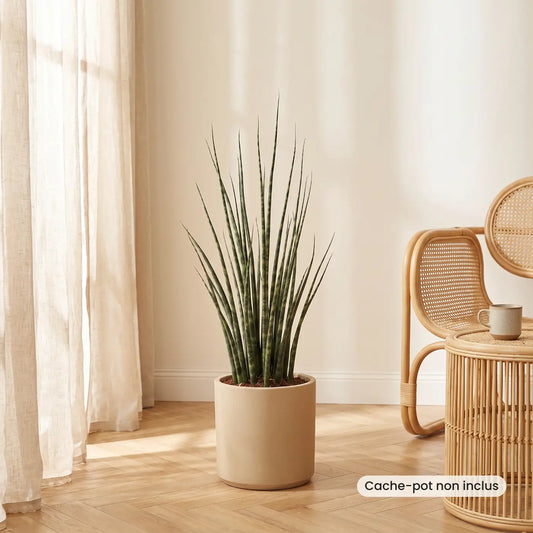
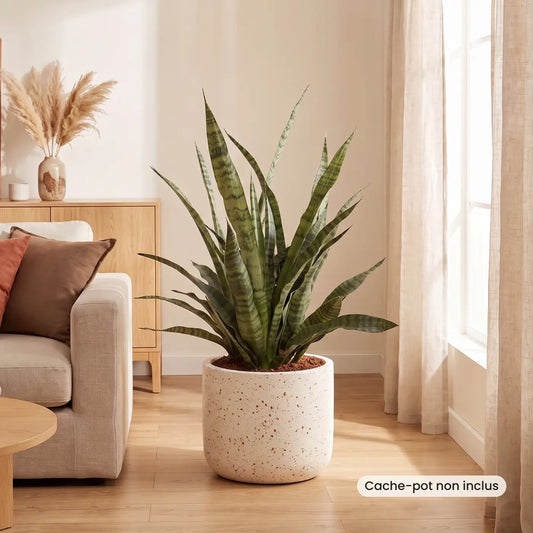
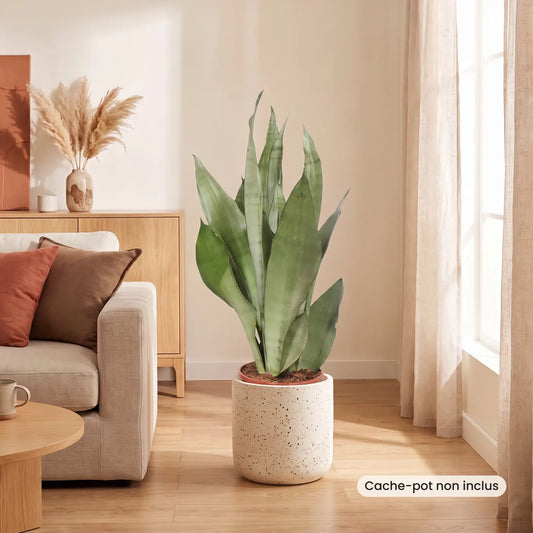
The Sansevieria Laurentii remains the most common variety, with its green leaves edged in bright yellow. Sansevieria Cylindrica stands out for its upright cylindrical leaves, while Sansevieria Moonshine charms with its almost uniformly silvery foliage. These three varieties share the same hardiness and ease of care.
Is Sansevieria toxic to cats and dogs?
Yes, Sansevieria is classified as mildly toxic to cats and dogs by the'ASPCA. If ingested, it may cause digestive upset, such as vomiting or excessive drooling. It’s best to place it out of reach of curious pets.
Which Sansevieria should you choose for a low-light apartment?
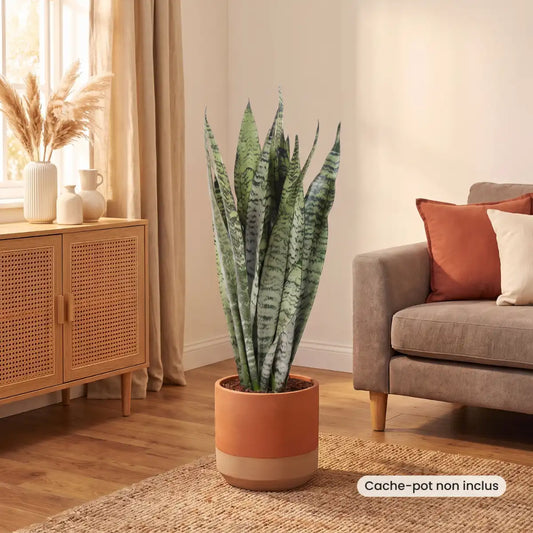
Sansevieria Laurentii and Sansevieria Trifasciata tolerate low light very well, especially in rooms without direct sun exposure. They continue to grow, even if slowly, several meters away from'a window. This tolerance makes them'some of the most reliable plants for low-light interiors.
Can you place a Sansevieria in a living room?
The living room is ideal for Sansevieria, thanks to its generally variable light levels and stable temperatures all 'year round. Its upright, striking silhouette also makes it a bold decorative feature in this living space. It 'does just as well in a bright corner as in a 'darker corner of the living room.
Where can I buy a high-quality Sansevieria?
Plant and Stories offers a selection of Sansevierias from French and European growers, chosen for the quality of their foliage. Each plant is delivered with careful packaging to ensure it remains intact during transport. Fast, secure delivery means you can receive your plant with complete peace of mind.
Sansevieria
Sansevieria grows just as well in the shade as in bright light, tolerates several weeks without watering, and thrives in temperatures of 15 to 27°C.
The essentials at a glance:
☀️ Light: from shade to bright light
💧 Watering: every two to four weeks, once the soil is dry
Sansevieria: the indestructible plant that adapts to every lifestyle
Even the most neglected interiors deserve a touch of greenery. The Sansevieria, also known as mother-in-law’s tongue, grows just as well in the shade as in bright light and tolerates several weeks without watering. Native to arid regions of Africa and Asia, this genus includes more than 70 species with stiff, striking foliage. Among the most sought-after varieties are Sansevieria Laurentii, recognizable by its yellow-edged leaves, as well as Sansevieria Cylindrica and Sansevieria Moonshine.
Sansevieria care: hardiness and everyday simplicity
Sansevieria tolerates both indirect light and darker corners of the living room, and easily handles temperatures between 15 and 27°C. Water only once the soil is completely dry, usually every two to four weeks depending on the season. Choose our nutrient-enriched, free-draining mineral substrate, which helps reduce the risk of rhizome rot.
Buy your Sansevieria from Plant and Stories
Browse our selection of Sansevieria, carefully chosen from French and European growers to ensure healthy foliage on arrival. Each plant is carefully packaged and delivered quickly and safely to your door. Choosing a Sansevieria means opting for a hardy and elegant houseplant.