Propagating cuttings in water or potting soil: which method should you choose?

Propagating in water or potting mix? The short answer: water is simpler and more satisfying to watch, while potting mix produces stronger roots and helps cuttings establish better. The rule of thumb in a nutshell: softwood cuttings and beginners in water; strong roots and an easy transition in growing medium. Find what you need for propagation in our range of growing media.
This guide compares the two methods, explains the difference between water roots and soil roots, shows which plants are suited to each, and explains how to make the transition from water to potting mix successfully.
⚖️ Propagating in water or potting mix: which should you choose?
The choice depends on your goal: water for simplicity and the pleasure of watching roots grow, potting mix for roots that are adapted from the start to their future pot. Neither method is universally better; they simply meet different needs.
Water propagation requires very little equipment: a glass and water (changed every 3 to 5 days) are enough, and you can watch the roots develop with your own eyes. Potting mix is a little more demanding, but it avoids the tricky transition stage because the roots form right away in their permanent growing medium. As a general rule, soft shoots root well in water, while woodier stems prefer a growing medium. As University of Vermont Extension puts it, both methods work, and the choice mostly comes down to personal preference: water lets you watch the roots develop, while potting mix means you don't have to transplant afterward.
🆚 Water roots and soil roots: a real difference
What many people don't realize is that roots formed in water are not the same as roots formed in potting mix. This difference explains why so many water-propagated cuttings struggle after transplanting.
Water roots are thin, smooth, and pale, and lack the tiny root hairs found on soil roots. These hairs help roots explore the soil and absorb water and nutrients; in water, roots don't need them. As a result, water roots are more fragile and less equipped to establish themselves in a growing medium, which is why transplant shock occurs. Iowa State University Extension also notes that roots formed in water have a coarser texture and are poorly suited to potting mix, so the cutting may show signs of stress (wilting, leaf drop, or browning) after being potted.
| Criteria | Water roots | Soil roots |
|---|---|---|
| Appearance | Thin, smooth, pale | Thicker, with root hairs |
| Root hairs | Absent | Present |
| Strength | Fragile | Stronger |
| Transition to potting mix | Tricky | Immediate |
Water is perfect for beginners and for the wonder of watching roots grow. But I always recommend not waiting too long: as soon as the roots are two to three centimeters long, move the cutting into potting mix. The longer you wait, the more the cutting gets used to water, and the more difficult the transition to soil becomes. After years of propagating plants, this is the one adjustment that saves the most young plants.
🌵 Propagating in water: method and suitable plants
Water propagation is best suited to plants with soft, fast-growing stems: pothos, philodendron, monstera, and tradescantia are especially good candidates. Roots often appear within one to three weeks.
Take a healthy 10 to 15 cm stem cutting with at least one node, remove the lower leaves, and place the stem in a glass, making sure the node is submerged but the leaves are not. Change the water every two to three days to oxygenate it and prevent it from becoming stagnant.
columns: 4
columns_mobile: 2
-
Pon - Hydroponic mineral substrate for plants - Hydroponic plant cultivation
Regular price From 6,50 €Regular price6,50 €Sale price From 6,50 €6,50 €From 5,20 € -
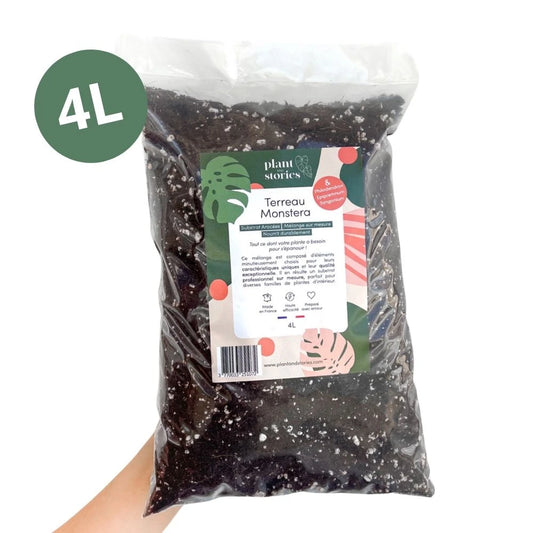
Monstera Soil - Enriched with Mycorrhiza and Bacillus - Araceae Substrate
Regular price From 9,50 €Regular price23,75 €Sale price From 9,50 €9,50 €From 7,60 €Sale -
Duo - Universal Substrate 10L + Universal Liquid Fertilizer 250ml + free graduated pipette
Regular price 32,00 €Regular price37,00 €Sale price 32,00 €32,00 €25,60 €Sale -
Graduated watering bulb pipette, precision watering bulb
Regular price From 5,00 €Regular price5,00 €Sale price From 5,00 €5,00 €From 4,00 € -
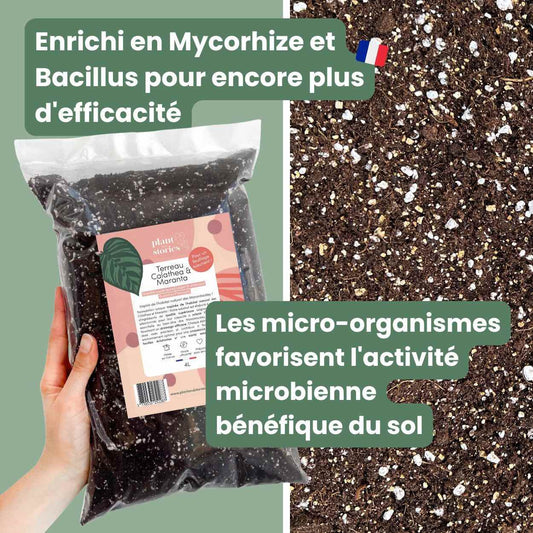
Premium Calathea & Maranta Potting Soil - Enriched with Mycorrhizae and Bacillus - Made in France
Regular price 11,99 €Regular price11,99 €Sale price 11,99 €11,99 €9,60 €




↔️ Propagating in potting mix or sphagnum moss: method
Propagation in a growing medium suits almost all plants and avoids transplant shock. Roots generally form within two to five weeks, a little more slowly than in water but with better quality.
Use a light, airy growing medium: a mix of potting soil, perlite, and, if desired, sphagnum moss. Insert the stem 3 to 4 cm deep, with the node buried, into a moist but not waterlogged medium, then cover it with a bag to maintain humidity. Well-squeezed sphagnum moss makes an excellent middle ground between water and potting mix. You can start with our horticultural perlite or a light growing medium.
| Method | Time to root | Best for |
|---|---|---|
| Water | 1 to 3 weeks | Soft shoots, beginners |
| Potting mix / perlite | 2 to 5 weeks | Strong roots, easy transition |
| Sphagnum moss | Variable | A balance of air and moisture |
🪴 Which plants suit which method?
Some plants root effortlessly in water, while others do better directly in a growing medium. Here's a quick guide by plant type.
| Plant | Recommended method |
|---|---|
| Pothos, philodendron | Water or potting mix, very easy |
| Monstera, tradescantia | Water, roots quickly |
| Hoya, fleshy aroids | Sphagnum moss or light potting mix |
| Woody stems | Potting mix, often with rooting hormone |
📋 Quick reference (for experienced gardeners)
A quick overview of how to choose your method.
| Factor | Key point |
|---|---|
| Water — advantage | Simple, roots are visible |
| Water — drawback | Fragile roots, tricky transition |
| Potting mix — advantage | Strong roots, no shock |
| Potting mix — drawback | You can't see the roots |
| Common requirement | Always include a node on the stem |
| When to change the water | Every 2–3 days |
| When to transfer to a pot | When roots are 2–3 cm long |
| Softwood vs. woody stems | Water for soft stems, potting mix for woody ones |
🔄 How to transition successfully from water to potting mix
The transition is the critical stage of water propagation: this is where most cuttings fail. The key is to transfer them early and gently, before the roots become too adapted to water.
Transplant the cutting as soon as the roots reach 2 to 3 cm, using a light growing medium kept a little more moist for the first few days while the roots adapt. Covering it with a bag for a few days creates a humid environment that eases the transition. Then gradually return to normal watering. The longer and more numerous the water roots are, the harder it is for them to adapt.
| Step | What to do |
|---|---|
| Timing | Roots 2–3 cm long |
| Growing medium | Light, moist, don't compact it |
| First few days | Keep it more moist; use a humidity bag |
| Afterward | Gradually return to normal |
🪨 What about alternatives: clay pebbles and sphagnum moss?
Between pure water and potting mix, intermediate options combine the best of both: you can see some of the roots while getting them used to a solid medium. Clay pebbles (LECA) and sphagnum moss are the most commonly used.
Clay pebbles stabilize the cutting, provide oxygen to the roots, and make the transition to potting mix easier because the roots don't grow fully submerged in water. Sphagnum moss, meanwhile, offers an excellent balance of moisture and air and produces roots that adapt to potting mix much better than those formed in water. These methods require a little more equipment but significantly reduce transplant shock.
| Intermediate medium | Main benefit |
|---|---|
| Clay pebbles (LECA) | Oxygenates roots, makes transition easier |
| Sphagnum moss | Moisture + air, well-adapted roots |
| Perlite | Very airy, good compromise |


🩺 Troubleshooting: when a method fails
Each method has its pitfalls. Here's how to read the signs.
| Symptom | Likely cause and solution |
|---|---|
| Stem rotting in water | Stagnant water: change it every 2–3 days |
| Water cutting wilting in its pot | Transition was too late: transplant earlier |
| Base turning black in potting mix | Growing medium too wet: use a more airy mix |
| No roots | No node, or the species isn't suited to the method |
For more detail, our guide to propagating in sphagnum moss explains a highly reliable intermediate method.
💚 Propagate your plants with Plant and Stories
Whether you choose water or potting mix, success comes down to the same basics: a healthy node, a suitable growing medium, and a transition made at the right time. Water appeals for its simplicity, potting mix for the strength of its roots: choose according to the plant and how much you enjoy watching the process. And there's nothing to stop you trying both methods on the same plant for comparison: it's often the best way to find what works for you, plant by plant, and learn by observing your cuttings directly.
To get started, explore our growing media and horticultural perlite, carefully selected in France. Whichever method you choose, every successful cutting grows your collection without costing a cent, and even lets you share your favorite plants with the people close to you.