Sphagnum moss: everything you need to know to keep it alive at home

Sphagnum, or sphagnum moss, is a moss of the genus Sphagnum, in the family Sphagnaceae, which grows in waterlogged mats in bogs and retains water like a sponge, making it a valuable medium for orchids, carnivorous plants and propagation.
Here is what sets it apart from moss and peat, what it is used for and how to keep it healthy and green at home. Find our sphagnum among our composts and substrates.
🌟 What is sphagnum?
Sphagnum is a rootless moss of the genus Sphagnum, described by Linnaeus in 1753 and classified, according to the GBIF (Global Biodiversity Information Facility), in the family Sphagnaceae, which grows from its top while its base slowly dies underwater.
Britannica lists more than 300 species, the IUCN UK Peatland Programme (the International Union for Conservation of Nature's peatland programme in the United Kingdom) around 380 worldwide, including 34 in the United Kingdom. Its leaves and stem contain large dead cells, called hyaline cells, open to the outside, which fill with water, as described by Britannica.
According to the Sphagnum fact sheet from Aberystwyth University, the top of the plant, the capitulum, is its main growth point.
| Asset | What it changes |
|---|---|
| A living sponge | Holds up to 20 times its weight in water (Britannica); 16 to 26 times its dry weight depending on the species (IUCN UK Peatland Programme) |
| An acidic medium | It absorbs calcium and magnesium and releases hydrogen ions, which acidifies the water around it (IUCN UK Peatland Programme) |
| A nutrient-poor medium | Ideal for plants from nutrient-poor environments: the RHS reminds us that most carnivorous plants do not need fertiliser |
| A bog builder | Below the living layer, dead matter decomposes very slowly and forms peat (OFB) |
📊 Living sphagnum, dried sphagnum, peat, moss: the differences
The difference can be summed up in one sentence: living sphagnum grows at the top of the bog, dried sphagnum is this same moss harvested and then dehydrated, and peat is dead and decomposed sphagnum, accumulated deep down.
According to the Iowa State University Extension, sphagnum peat is "dead, partially decomposed matter that accumulates in the lower layers of the bog", while sphagnum is "the living moss that grows on its surface".
Commercially, dried sphagnum often comes from Chile, which exports it mainly for horticulture and orchids according to the University of Chile, and New Zealand: long beige fibres for orchids and layering, which do not turn green again, unlike living sphagnum.
| Material | What it is | Appearance | Main use | Point of caution |
|---|---|---|---|---|
| Living sphagnum (green sphagnum moss) | Growing Sphagnum, harvested green | Green mat, star-shaped heads, damp | Top dressing, terrarium, delicate propagation, carnivorous plants | Needs light, pure water and constant humidity to stay green |
| Dried sphagnum (Chile, New Zealand) | Sphagnum harvested and then dehydrated | Long beige to light brown fibres | Orchids, layering, kokedama, stake dressing | Generally does not grow back; compacts and needs replacing when repotting |
| Ground sphagnum | Finely chopped dried sphagnum | Short fibres | Sowing, propagation | The RHS considers it more suitable for propagation, the coarse form for repotting |
| Sphagnum peat (blonde peat) | Dead, partially decomposed sphagnum (Iowa State) | Fine brown matter, without stem structure | Former pillar of composts | Non-renewable resource on a human scale: 100 years for 10 cm (RHS) |
| Forest or lawn moss | Other genera of mosses | Short mat, often compact | Terrarium decoration | Does not have the structure of sphagnum, does not replace it |
| Coconut fibre or chips | Coconut husk fibres | Brown fibres | Peat-free compost base (OFB) | Does not behave like sphagnum: dose according to the plant |
📋 Quick technical sheet
The guidelines for keeping living sphagnum healthy, according to the RHS, the American Orchid Society's The Orchid Doctor series, the CDC and our practice.
| Guideline | The rule |
|---|---|
| Botanical name | Sphagnum L., family Sphagnaceae, order Sphagnales (GBIF) |
| Light | Bright light, without prolonged direct sunlight behind glass, which can burn (RHS, for carnivorous plants indoors) |
| Water | Rainwater or demineralised water; hard water loaded with bicarbonates makes the medium alkaline and kills the moss (The Orchid Doctor archives) |
| Humidity | Constant: sphagnum must never dry out completely |
| Watering | As soon as the surface loses its damp appearance or pales, never standing water at the bottom |
| Fertiliser | None: fertilisers can kill it (The Orchid Doctor) |
| Aeration | Air circulation: a closed container must be opened regularly to prevent mould |
| Container | Transparent container, perforated pot or saucer, never a closed bag in the dark |
| Propagation | Heads (capitula) placed on a bed of damp sphagnum, under a transparent lid |
| Handling | Gloves and long sleeves: sphagnum can carry the fungus that causes sporotrichosis (CDC) |
How to keep living sphagnum alive in 7 steps
To keep living sphagnum alive, gather four simple conditions at home: bright light without burning sun, constant humidity, mineral-poor water like rainwater, and a little air circulation, without ever giving it fertiliser.
| Step | The right action |
|---|---|
| 1. Open the bag upon receipt | Take it out, shake it gently and spread it out so it can breathe and see the light |
| 2. Rehydrate with pure water | If it is a little dry, soak it in rainwater or demineralised water, then wring it out without twisting it |
| 3. Choose the right container | Transparent container or perforated pot, lid placed askew to let air through |
| 4. Place in bright light | Near a clear window, without direct noon sun behind the glass |
| 5. Keep continuously damp | Water by touch as soon as the surface pales, without leaving standing water |
| 6. Never feed | No fertiliser, no enriched compost: it lives on a nutrient-poor medium |
| 7. Remove what turns black | Cut off brown or mouldy strands to keep a healthy mat |
columns: 4
columns_mobile: 2
-
Live sphagnum moss - Sphagnum moss for plants - Sphagnum moss - Live sphagnum moss for plants
Regular price 9,50 €Regular price9,50 €7,60 € -
Plant Addict Living Sphagnum Pack - Sphagnum for Plants - Sphagnum Moss - 3 Sachets
Regular price 26,50 €Regular price28,50 €Sale price 26,50 €26,50 €21,20 €Sale -
Live Sphagnum Producer Pack - Sphagnum for Plants - Sphagnum Moss - 6 Sachets
Regular price 46,74 €Regular price57,00 €Sale price 46,74 €46,74 €37,40 €Sale -

 Livraison offerte
Nepenthes 'Gaya' - Nepenthes, carnivorous plant - 12cm pot - Height 17cm
Regular price 44,95 €Regular price44,95 €35,96 €Livraison offerte -

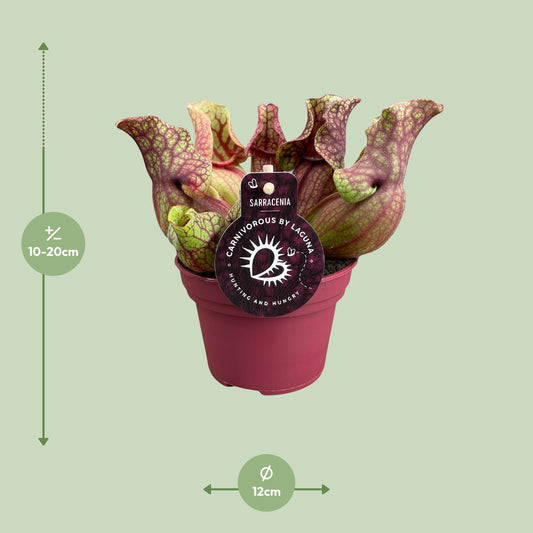
Sarracenia purpurea subsp. venosa - Purple pitcher plant, carnivorous plant - 12cm pot - Height 20cm
Regular price 44,95 €Regular price44,95 €35,96 €Livraison offerte -
Premium Orchid Potting Soil, Orchid Substrate, Potting Soil for All Orchids 4L
Regular price 11,99 €Regular price10,95 €Sale price 11,99 €11,99 €9,60 € -
Plant sprayer, mist spray bottle, fine mist, 250ml
Regular price From 5,00 €Regular price5,00 €Sale price From 5,00 €5,00 €From 4,00 € -
Horticultural Perlite - Perlite for plants
Regular price From 9,50 €Regular price8,50 €Sale price From 9,50 €9,50 €From 7,60 €







🧭 Yellowing, browning or whitening sphagnum: the diagnosis
A sphagnum that changes colour almost always signals a problem with water, light or air, which you can correct as long as the heads remain green. A whitening sphagnum is thirsty, a browning sphagnum that smells stuffy is suffocating, and a pale green sphagnum that is stretching out lacks light.
| What you observe | Probable cause and solution |
|---|---|
| Pale then white heads, brittle texture | Drying out: rehydrate with rainwater and cover the container, leaving a slight gap |
| Gradual browning, white deposit on the edges of the pot | Water too hard or chlorinated: switch to rainwater or demineralised water |
| Black strands, stuffy smell, water at the bottom | Excess water and lack of air: empty the standing water, ventilate, remove dead parts |
| Cottony white fuzz | Mould from a confined environment: open the lid more and thin out the mat |
| Long stems, very pale green, sparse heads | Lack of light: move closer to the window or add a grow light |
| Yellowing under bright sun behind the glass | Burning and drying out: move the container back or shade it with a blind |
| Uniform red or brown tint on firm and damp sphagnum | Often the natural colour of certain sphagnum: nothing to correct if the heads are growing |
🌱 Propagate sphagnum and make it grow back
To propagate sphagnum, cut off the green heads, place them on a bed of damp sphagnum in a covered transparent container, in bright light, and keep the whole thing constantly damp with rainwater: new shoots appear from these fragments.
Dried sphagnum from a shop, however, generally does not turn green again; the RHS soil scientist in charge of the trial says he has seen no regrowth on sphagnum delivered dried.
🧰 What is sphagnum used for? Orchids, carnivorous plants, propagation, kokedama
Sphagnum is used to keep moisture around the roots without ever suffocating them, in an acidic and nutrient-poor medium: it is used for orchids, carnivorous plants, propagation, layering, stakes, terrariums and kokedamas.
For top dressing, spread a thin layer of damp living sphagnum over the substrate of carnivorous plants, orchids or a terrarium: it keeps the surface fresh and shows, by its colour, when the pot is thirsty. For Sarracenia and Dionaea, which need full sun, top sphagnum can withstand direct sun provided you check often that it remains damp.
For carnivorous plants, the RHS carnivorous plants guide recommends a substrate of 100% chopped dried sphagnum, or 75% sphagnum and 25% fine pine bark (4 mm maximum). The same guide also mentions living sphagnum mixed with sand or perlite.
In the RHS trial on peat-free Sarracenia, pure ground sphagnum takes the top spot among 12 substrates, with 18 out of 28 votes for Sarracenia rosea.
For their cultivation, read our carnivorous plants guide and our Sarracenia outdoor care sheet.
For aerial layering, Texas A&M University advises soaking the sphagnum for several hours, wringing it out, then wrapping the wound with a handful of it under a film about 15 to 20 cm by 30 cm, depending on the size of the stem.
For a kokedama, the Missouri Botanical Garden softens the sphagnum in warm water before wrapping the soil ball with it; for watering, the University of Illinois Extension advises submerging the ball for 15 to 20 minutes.
To propagate, place the stem on damp and wrung-out sphagnum, in a clear and covered container, then watch for the appearance of roots before moving it to soil. For a stake, fill it with damp sphagnum so that the aerial roots can cling to it, and keep it damp to the touch.
Propagation, stakes and orchids have their guides: propagation in sphagnum, moss stake for Monstera, staking a climbing plant and repotting an orchid.
For rare varieties and root rescue, see our living sphagnum guide for rare plants; in a terrarium, read how to manage the humidity of a terrarium and which plants for terrariums to choose.
⚖️ Where to find sphagnum in nature, and what the law says
In nature, sphagnum grows in bogs and very damp and acidic environments, but do not collect it, as these environments are fragile and the genus is regulated by European law.
The genus Sphagnum is listed in Annex V of Directive 92/43/EEC, known as the "Habitats" directive, among the species whose collection from nature and exploitation may be subject to management measures, with the exception of the Pylaie sphagnum (Sphagnum pylaisii, written pylaesii in French law), listed in Annexes II and IV.
Article 14 of the directive allows, among other things, temporary or local bans on collection, authorizations or quotas, and the regulation of sales.
The National Botanical Conservatory of Brest ranks among the nationally protected species: the decree of January 20, 1982, whose list was completed by the decree of May 23, 2013, prohibited in its first article the picking, removal, marketing, sale and purchase of wild specimens.
A damaged peat bog takes centuries to recover, the RHS (Royal Horticultural Society) reminds us.
🏞️ Sphagnum and peat: why protect peat bogs
Peat is dead and decaying sphagnum and other plants accumulated underwater; extracting it destroys in a short time what the peat bog took millennia to build, and releases carbon: the RHS indicates that extractors can remove up to 22 meters at once, or 22,000 years of formation.
According to the OFB (French Biodiversity Office), it takes between 100 and 1,000 years for a few centimeters of peat to form, and peat bogs store twice as much carbon as all forests combined. The RHS adds that one hectare of healthy 30 cm peat stores more carbon than one hectare of tropical forest.
According to its scientific report on peat, at least 80% of British peat bogs have been damaged. For your repotting, prefer peat-free mixes, and read the difference between compost and substrate.
🗓️ Living sphagnum through the seasons
Living sphagnum grows mainly when there is plenty of light and the air is humid, in spring and summer, and it slows down in autumn and winter, where heating becomes its main enemy.
📅 Seasonal care calendar
| Season | Key action |
|---|---|
| 🌸 Spring | Active growth: propagation by heads, repotting orchids and carnivores, fresh top dressing |
| ☀️ Summer | Bright light but no burning sun behind the glass; watering by touch, the surface dries faster |
| 🍂 Autumn | Move closer to the window, remove brown strands, ventilate closed pots more |
| ❄️ Winter | Away from radiators, humidity raised by a lid or grouped plants; horticultural lamp if the room is dark |
🐛 The mistakes that kill living sphagnum
The mistakes that kill sphagnum are almost always the same: water that is too mineralized, a bag left closed in the dark, complete drying out or fertilizer.
| Mistake | Why it's a problem | The solution |
|---|---|---|
| Watering with hard tap water | The bicarbonates of hard water make the medium alkaline and kill the moss (The Orchid Doctor archives) | Rainwater or demineralized water |
| Leaving the bag closed in the dark | No light or air: it becomes spindly and ferments | Open it upon receipt and spread it in bright light |
| Letting it dry out completely | The cells empty, the sphagnum turns white and can die | Constant humidity, lid slightly open |
| Adding fertilizer | Fertilizers can kill sphagnum (The Orchid Doctor) | No fertilizer; feed the cultivated plant in very low doses if necessary |
| Leaving stagnant water | Asphyxiation, browning, odor | Pot with drainage and tray without water at the bottom |
| Putting it in direct sunlight behind glass | Burning and rapid drying | Bright filtered light |
| Handling it with bare hands with a cut | Risk of sporotrichosis, a skin infection linked to the Sporothrix fungus (the CDC (Centers for Disease Control and Prevention)) | Gloves and long sleeves; Iowa State specifies that peat does not carry this fungus |
| Harvesting it in the wild | Fragile environment, genus protected by the Habitats Directive | Buy commercially available sphagnum |


🌿 Our sphagnum and what comes with it
Our living sphagnum comes in three formats. To compare the formats and purchase criteria, see our page where to buy living sphagnum.
| Our selection | Why choose it |
|---|---|
| Living sphagnum, 1 bag | For a top dressing, a few cuttings or a first try |
| Plant addict Pack, 3 bags | For several pots, a stake or a terrarium |
| Producer Pack, 6 bags | For a collection, a grow tray or series of repotting |
| Nepenthes 'Gaya' and Sarracenia | Two carnivores that appreciate sphagnum on the surface; see all our carnivorous plants in pots |
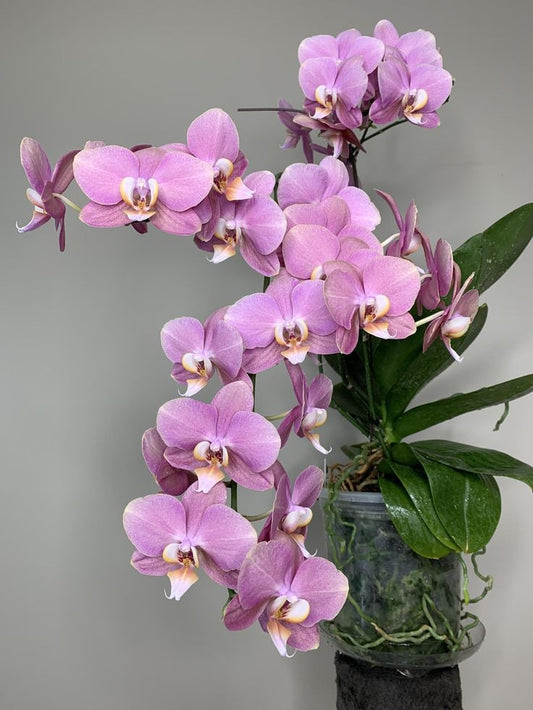
| premium orchid compost and maritime pine bark | For orchids, with a touch of sphagnum around the roots; and all our orchids |
| closed terrarium kit | A terrarium ready to be planted with living sphagnum; and our terrariums |
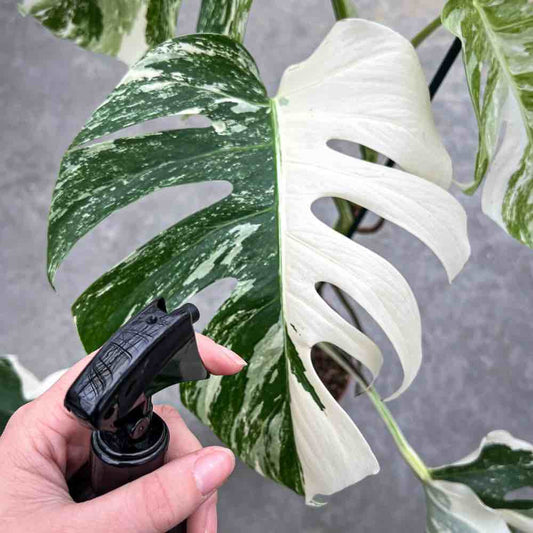
| Monstera on moss stake | The typical climbing plant for a stake covered with sphagnum; and our stakes and supports |
| Accessories | Our fine mist sprayer to humidify the surface, and our horticultural perlite to aerate a mix |
🔑 What to replace sphagnum with?
To replace sphagnum, choose according to use: coconut coir or pine bark to retain the humidity of a mix, perlite to aerate it, and granulated cork for certain carnivores.
The RHS mixes sphagnum with fine pine bark or perlite for carnivores, and a grower interviewed in its trial combines sphagnum and granulated cork in equal parts.
None of these materials alone reproduces the retention of living sphagnum: see our coconut chips and fibers, and our guides on coconut coir and perlite.
✅ Our tips for success with sphagnum
Remember three things: sphagnum is a living moss of the Sphagnum genus that stores water, peat is its dead and decomposed form, and living sphagnum stays green with bright light, rainwater, air and no fertilizer. To learn more, find all our composts and substrates.
I advise treating a bag of living sphagnum like a plant, not like compost: open it, light it, water it with rainwater. My favorite action remains the top dressing of carnivores and orchids: green sphagnum shows at a glance if the pot is thirsty. And when a sphagnum turns white, I do not throw it away right away: as long as some heads remain green, it often grows back.

Laura Bruneau
Jardinière et autrice