Cutting Not Taking Root: Understanding the Problem and Getting It Right

A cutting that isn’t growing roots is almost always a matter of a node, moisture, or patience: most often, one of these three factors is off. The rule fits in one sentence: a healthy stem cut below a node, in a moist but airy medium, in indirect light. Find everything you need for successful cuttings in our range of potting mixes.
This guide explains why a cutting has stalled, how to choose and cut the stem, how to adjust the medium and environment, when rooting hormone is useful, and how to diagnose a failed attempt.
❓ Why isn’t my cutting growing roots?
In the vast majority of cases, a cutting fails for one of these reasons: it has no node, the medium is too wet or too dry, or the environment lacks warmth and light. Correcting these basics resolves most problems.
The node is key: this is where the leaves meet the stem, and where the cells capable of forming roots are found. A cutting taken without a node, or too far from one, simply doesn’t have the tissue it needs to root. A weak, thin, or diseased stem will also almost always fail, whatever the method.
Finally, patience matters: some species root in 1 to 2 weeks, while others take 1 to 2 months. A delay doesn’t mean failure as long as the stem remains firm and green.
| Common cause of failure | Explanation |
|---|---|
| No node | No tissue capable of forming roots |
| Medium too wet | The base rots before it can root |
| Air too dry or cold | The cutting dries out or stalls |
| Weak or diseased stem | Fails regardless of the method |
| Impatience | Some species take 1–2 months to root |
✂️ Choosing and cutting the right stem
It all starts with a healthy stem taken from a vigorous mother plant: a cutting can never do better than the stem it came from. Choose a firm shoot with at least one node and one or two leaves.
Make the cut just below a node (about 0.5 cm), using a clean, sharp blade. A clean cut limits tissue damage and reduces the risk of infection. According to horticultural recommendations, disinfecting your tool helps prevent the introduction of bacteria and fungi that cause rot. Remove the lower leaves so they don’t sit in the medium.
| Criteria | Best practice |
|---|---|
| Mother plant | Healthy and vigorous |
| Stem | Firm, with at least 1 node |
| Cut | Clean, just below a node |
| Tool | Sharp and disinfected |
| Leaves | Remove the lower ones |
When a cutting stalls, the first thing I check is the node: without one, no roots will grow, whatever else you do. The second is the mother plant. We often forget that a cutting is simply an extension of a stem: if the stem is weak, the cutting will be too. After years of propagating plants, I’ll say it again: choose your stem carefully, and half the work is done.
🪴 The right medium: water, potting mix, or sphagnum moss?
The medium needs to strike a balance between moisture and oxygen: too much water and the base rots; too little and the cutting dries out. Each medium has its strengths.
Water is simple and lets you see the roots, but they sometimes struggle to adapt to potting mix afterward. A light potting mix or well-squeezed sphagnum moss offers a better balance of air and moisture. A heavy, compact, waterlogged substrate suffocates the base and causes rot rather than rooting. You can start with a light, well-draining substrate or perlite. If you choose water, change it every 2 to 3 days to oxygenate it and keep it fresh: stagnant, cloudy water is one of the most common reasons cuttings rot instead of rooting.
columns: 4
columns_mobile: 2
-
Pon - Hydroponic mineral substrate for plants - Hydroponic plant cultivation
Regular price From 6,50 €Regular price6,50 €Sale price From 6,50 € -
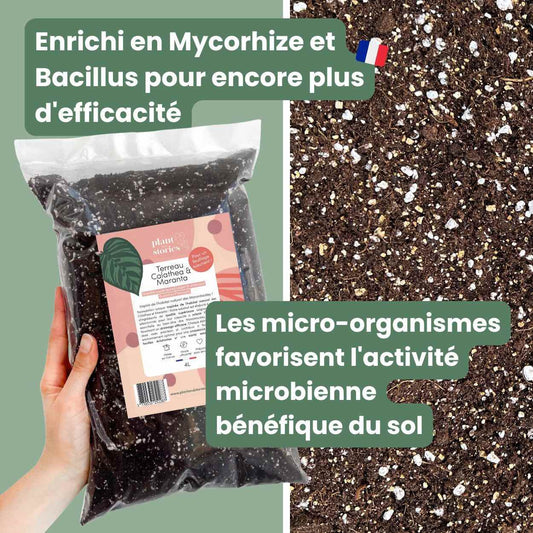
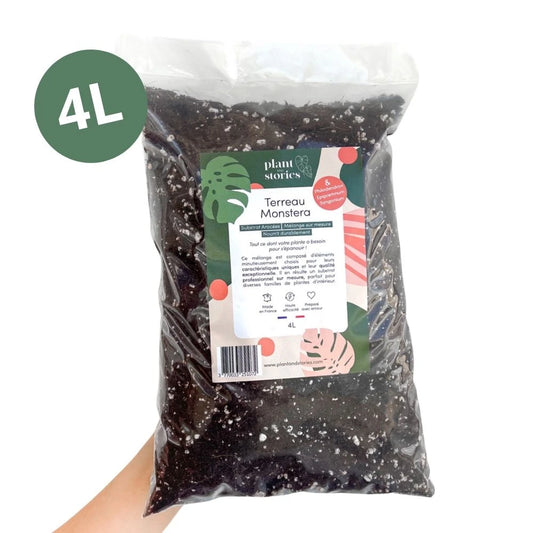
Monstera Soil - Enriched with Mycorrhiza and Bacillus - Araceae Substrate
Regular price From 9,50 €Regular price23,75 €Sale price From 9,50 €Sale -
Duo - Universal Substrate 10L + Universal Liquid Fertilizer 250ml + free graduated pipette
Regular price 32,00 €Regular price37,00 €Sale price 32,00 €Sale -
Premium Anthurium Potting Mix - Enriched with Mycorrhizae and Bacillus - Made in France
Regular price 11,99 €Regular price11,99 €Sale price 11,99 €




| Medium | Strength and limitation |
|---|---|
| Water | Simple and visible; roots are delicate when transitioning |
| Sphagnum moss | Moisture + air; squeeze out excess water |
| Light potting mix / perlite | Good balance; don’t waterlog |
💡 Adjusting the environment: warmth, light, and humidity
Three environmental factors trigger rooting: gentle warmth, indirect light, and high humidity around the cutting. Combine them and roots will appear much faster.
Warmth stimulates cell division: a spot at 20–24°C, or a heat mat out of season, makes a noticeable difference. The light should be bright but indirect, never direct sunlight, which can scorch the cutting. Finally, covering it with a bag or lid creates a greenhouse effect that limits evaporation while the roots form. Just remember to air it out occasionally to refresh the air and prevent mold, which is a threat to cuttings under a dome.
🧪 Do you need rooting hormone?
For most easy-to-propagate houseplants, rooting hormone isn’t necessary: they root perfectly well without it. It’s useful for species known to be difficult to propagate or for woodier stems.
According to Michigan State University Extension, rooting hormones (auxin-based, such as IBA) are essential for hard-to-root species, where they increase success rates, speed up root initiation, and improve root uniformity. By contrast, softwood cuttings, which are rich in natural auxin, often root without help. So rooting hormone is unnecessary for pothos or philodendron. Research from the University of Florida confirms that most herbaceous species root relatively easily and don’t need hormone when the cuttings root on their own.
One useful technical point: if you use an alcohol-based liquid hormone, avoid getting it on the growing tip (the meristem), as this can deform young leaves. Apply the hormone only to the base of the stem.
| Type of cutting | Is hormone useful? |
|---|---|
| Softwood (green shoot) | Rarely: roots easily |
| Easy-to-propagate plants (pothos, philodendron) | No, unnecessary |
| Woody / difficult stems | Yes, strongly recommended |
📋 Quick reference (for experienced gardeners)
Key guidelines for successfully rooting a cutting, at a glance.
| Factor | Guideline |
|---|---|
| Key element | At least 1 node on the stem |
| Cut | Clean, just below the node, with a disinfected tool |
| Medium | Moist but airy (water, sphagnum moss, perlite) |
| Temperature | 20 to 24°C, gentle warmth |
| Light | Bright, indirect; never direct |
| Humidity | High (bag or lid) |
| Hormone | Useful mainly for difficult stems |
| Time | From 1–2 weeks to 1–2 months, depending on the species |
🩺 Troubleshooting: a cutting that stalls or rots
When nothing seems to be happening, a few signs can point to the cause. Here’s how to read the situation.
| Symptom | Likely cause and solution |
|---|---|
| Base turns black and soft | Medium too wet: improve airflow and use less water |
| Cutting drying out | Air too dry: cover it and increase humidity |
| Nothing after weeks, stem still firm | Too cold or slow-rooting species: warm it up and be patient |
| No roots, no node | Take a new cutting with a node |
🔄 After rooting: making the transition
Once the first roots have formed, you’re not quite done: moving the cutting into its permanent pot is a delicate step where many water-propagated cuttings fail. Take it slowly.
Wait until the roots are 3 to 5 cm long, then pot up in a light substrate without compacting it. Cuttings started in water need to gradually adjust to a solid medium: keep the substrate a little moister for the first few days, then return to normal watering. A cutting repotted too early, with tiny roots, or too late, with tangled roots, is less likely to take.
| Step | Guideline |
|---|---|
| Repotting | When roots are a few cm long |
| Substrate | Light, not compacted |
| First few days | A little moister, gentle light |
| Afterward | Return to normal care |


💚 Grow all your cuttings successfully with Plant and Stories
A cutting that roots is the result of four conditions coming together: a healthy node, a clean cut, a moist but airy medium, and a warm, bright environment. Check these basics before doubting your plant. In most cases, propagation failure is nothing mysterious: it can be fixed by going back to these fundamentals, with no miracle products or expensive equipment. Every attempt teaches you to read your plants better, and success soon becomes the rule rather than the exception.
To propagate your plant treasures, explore our substrates and our carefully selected horticultural perlite, sourced in France. With the right techniques, every successful cutting becomes a new plant to keep or give as a gift.